
Love Rocks Producers Reflect on 10 Years of New York’s Most Iconic Benefit Concert
A Decade of Decibels: How Love Rocks NYC Redefined the Charity Gala

The New York City skyline thrums with the constant rhythm of live music. On any given evening, the city offers everything from underground experimental sets to sold-out arena tours. Simultaneously, Manhattan’s philanthropic circuit is equally saturated; high-society fundraiser galas are as ubiquitous as yellow taxis. While these events support essential causes, the endless cycle of formal dinners and scripted speeches can often lead to “gala fatigue.”
Recognizing this, a decade ago, an unlikely trio—real estate broker Greg Williamson, event visionary Nicole Rechter, and fashion icon John Varvatos—decided to disrupt the status quo. Their mission was simple: replace the standard sit-down dinner with a high-octane rock-and-roll spectacle featuring A-list legends. It wasn’t about reinventing philanthropy; it was about shifting it into a higher gear.
In 2017, the inaugural Love Rocks NYC concert debuted at the historic Beacon Theatre. The event benefited God’s Love We Deliver, a non-profit dedicated to providing medically tailored meals to New Yorkers battling HIV/AIDS, cancer, and other severe illnesses. That first night saw Mavis Staples, Joe Walsh, and Jackson Browne grace the stage. Since then, the executive production team has raised a staggering $65 million, enlisting a Hall of Fame roster that includes Robert Plant, Keith Richards, Alicia Keys, John Mayer, and Sheryl Crow.
The magic of Love Rocks NYC lies in its spontaneity. It’s a space where genre boundaries dissolve: Cher singing Marc Cohn in Elvis-inspired attire, the Wilson sisters of Heart reuniting, or blues legends jamming with R&B icons. Interspersed with sets from comedy royalty like Bill Murray and Conan O’Brien, the show has become Manhattan’s most anticipated annual concert, anchored by a world-class house band led by Will Lee.
This year’s sold-out milestone features Paul Simon, Mary J. Blige, and Hozier. For those unable to attend the Beacon Theatre on March 5, the event will be available as a one-time global livestream via Veeps.com at 8 p.m. ET. Virtual tickets are available for $24.99, with proceeds directly supporting the organization’s mission to deliver 10,000 meals daily.
Ahead of the 10th anniversary, the three founders sat down to discuss how a “pie-in-the-sky” concept evolved into a New York institution.
The following conversation has been edited for clarity and length.
Greg, what originally drew you to the mission of God’s Love We Deliver?
Williamson: My wife and I both lost parents to cancer, so we understood intimately that nutrition is a cornerstone of care. The mission resonated immediately, but it’s the community at God’s Love that keeps you coming back. It’s a rare, special environment.
The partnership between you and Nicole began around 2015. You didn’t actually know John Varvatos at the time—why was he the person you chose to approach?
Williamson: I reached out because I viewed him as a visionary. He lived at the intersection of fashion and music but wasn’t “industry” in a way that would make him jaded. I loved his aesthetic and his genuine passion.
Rechter: I remember Greg showing up to that first meeting dressed head-to-toe in Varvatos. He pitched the vision, and John said yes on the spot. A decade later, we’ve funded over 6.5 million meals. It’s incredible to look back at that moment.
John, what made you commit so quickly to two strangers?
Varvatos: I was already familiar with the organization’s integrity. The idea of a music-centric fundraiser aligned perfectly with my own philanthropic goals. Saying yes was the easy part; the logistics that followed were the real challenge.
The Beacon Theatre is now synonymous with Love Rocks. Was it always the first choice?
Rechter: We considered the Apollo, but the Beacon felt right for our donor base. It has a specific soul that fits the “holy ground” of rock and roll.
Williamson: It took nearly a year of planning before everything clicked. I remember the moment John secured Joe Walsh, while we were locking in Derek Trucks and Susan Tedeschi. That’s when we knew we had something lightning-in-a-bottle.
Varvatos: People often forget that while ticket sales provide the energy, sponsorships are the engine. We aren’t just selling seats; we’re building a corporate community. Now, we’re often sold out of sponsorships before the lineup is even public.
Williamson: Exactly. We might raise $40,000 in general tickets, but we’re aiming for $6 million in total funding this year. It’s a different model. People show up for Keith Richards, but they leave as lifelong donors to God’s Love.
How much of your year is dedicated to this one night?
Williamson: It’s a 365-day obsession. We start planning the next year on the morning after the show. Without the deep friendship between the three of us, the workload would be unsustainable.
Varvatos: Music and food are both forms of healing. That’s the DNA of the show. We’ve had artists like Hozier and Robert Plant fly in from overseas just for this. They don’t ask for a fee; they just want to be part of the magic.
Rechter: We also make sure the artists are treated better than they are on tour. Our production team is incredibly tight. We transition between acts so seamlessly that professional stage managers come just to watch the crew work.
The house band is legendary. How did Will Lee become the musical anchor?
Williamson: Will and I bonded through our shared journey in sobriety. When I pitched him the role of Music Director, he brought in the best of the best—horn players from SNL and icons like Steve Gadd and Shawn Pelton. They leave their egos at the door and play like a single heartbeat.
There is often talk about moving to a larger venue like Madison Square Garden. Is that in the cards?
Williamson: We want to stay at the Beacon. We actually debated moving to Radio City for the 10th anniversary, but a generous $10 million multi-year gift allowed us to keep the show’s intimate soul while still meeting our financial goals.
Rechter: The Beacon is home. It’s where Cher walks through the kitchen to meet the volunteers. You can’t replicate that intimacy in an arena.
Looking back, what is the most surprising part of this journey?
Williamson: Total ignorance was our greatest asset. If we had known how hard it would be to coordinate these schedules and sponsorships, we might have been too intimidated to start. But passion carries you through the impossible.
Varvatos: We went into this believing we could make a difference through the power of a live performance. Seeing the impact—the millions of meals and the community we’ve built—is the greatest reward of my career.
Related articles
 Maya Hawke Says 2 Taylor Swift Songs Are Like Epic Poetry and Explains Why Eminem Is the GOAT
 Miley Cyrus, Megan Moroney, Bella Kay and Others Land New Music on ‘Nobody Wants This’ Season Three Soundtrack, With Participants Calling It a Win-Win
 Cardi B Says She Is Done “Beefing With Rap B—hes” and Calls It “Kinda Boring”
 Daft Punk Team Up With Classic Toy Brand in New Collaboration
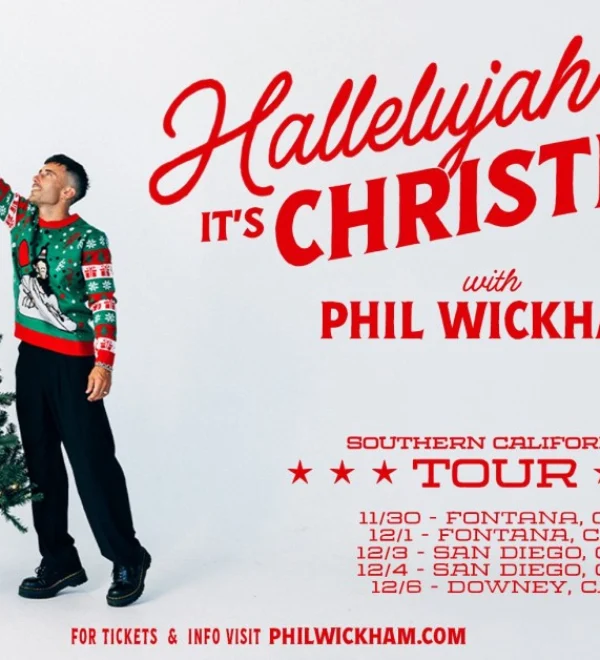 Phil Wickham Announces Return of His SoCal Christmas Tour, Saying He Can’t Wait to Worship and Celebrate With Fans This Christmas
 Martin Garrix Enlists Madonna, U2 and Ed Sheeran for Debut Pop Album ‘MARTY’
 Travis Kelce Reveals Early Morning Call From Jason Kelce That Taylor Swift Called ‘F–ked Up’
 Hilary Duff Announces Holiday EP Featuring 3 Original Songs, “What Christmas Dreams Are Made Of”