Kennedy Center Board Approves Renaming D.C. Landmark After President Trump
Kennedy Center Board Approves Rebranding to Trump-Kennedy Center Amid Political Friction
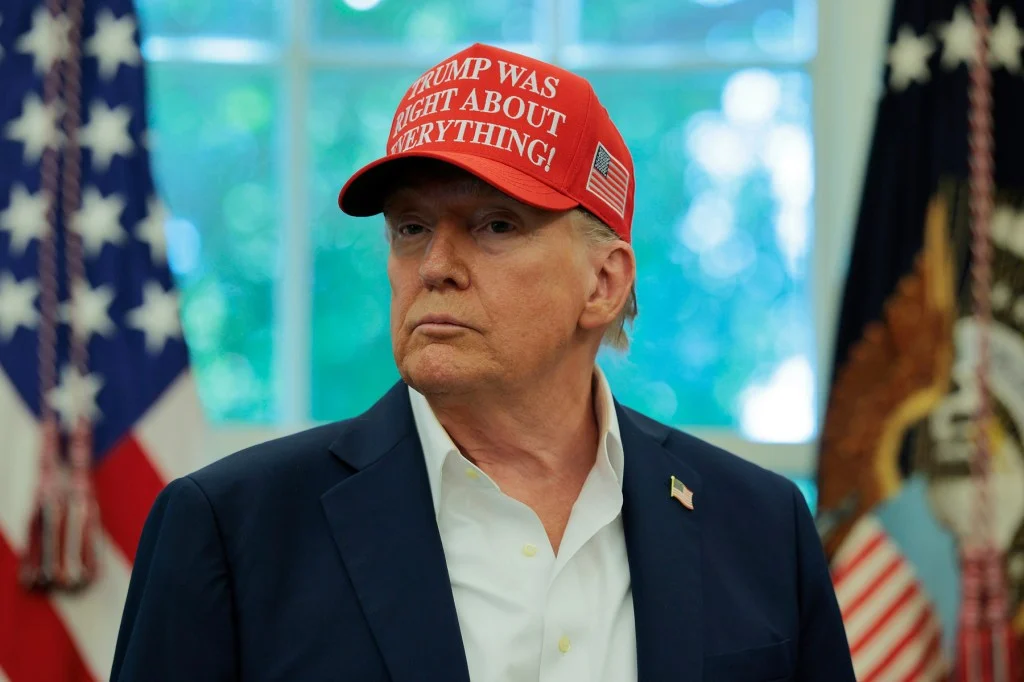
In a move that has sent shockwaves through Washington’s cultural landscape, the board of the Kennedy Center has voted to rename the landmark institution the Donald J. Trump and The John F. Kennedy Memorial Center for the Performing Arts. The announcement was made Thursday by White House Press Secretary Karoline Leavitt, who noted the new title would colloquially be known as the Trump-Kennedy Center.
According to Leavitt’s statement on X, the board—which she described as composed of “highly respected” and “successful” global figures—voted unanimously to honor President Trump’s recent efforts to revitalize the facility. “This partnership represents a historic bridge between two eras,” Leavitt remarked, suggesting the venue is poised to reach “unprecedented levels of grandeur.”
Speaking from the White House, President Trump expressed his gratitude for the board’s decision, claiming he was both “surprised” and “honored” by the gesture. He emphasized that the proposal originated from a distinguished board member and was met with total consensus.

Allegations of Muted Dissent
The narrative of a “unanimous” vote was quickly challenged by Democratic lawmakers and members of the Kennedy family. Representative Joyce Beatty (D-Ohio), who serves as an ex-officio board member, claimed she was intentionally silenced during the virtual proceedings. “I attempted to voice my opposition and ask critical questions, but I was muted,” Beatty told reporters at the Capitol. she added that she received a notification stating her audio would not be restored.
Jack Schlossberg, grandson of President John F. Kennedy and a candidate for New York’s 12th congressional district, echoed these concerns. Taking to social media, Schlossberg alleged that the meeting was a procedural sham designed to exclude dissenting votes. He framed the rebranding as a direct response to his own political campaign, stating that the Trump administration is motivated by a desire to “erase or defeat” the Kennedy legacy.
Microphones were muted and the board meeting and vote NOT unanimous. I’m told Trump is explicitly motivated by our campaign, which represents everything he can’t stand.
— Jack Schlossberg (@JBKSchlossberg) December 18, 2025
Legal and Statutory Hurdles
The rebranding effort faces significant legal obstacles. House Democratic Leader Hakeem Jeffries argued that the change lacks legal standing, noting that the Kennedy Center was established as a living memorial through specific federal legislation. Legal experts suggest that because the name is codified in law, any formal change would require an act of Congress rather than a simple board resolution.
Despite these barriers, President Trump has aggressively sought to reshape the center’s identity since the start of his second term. In February, he dissolved much of the existing board, appointed himself as chairman, and vowed to “Make the Kennedy Center Great Again.”
A Shift in Cultural Direction
The ideological shift at the institution has already manifested in its programming. Trump personally selected this year’s Kennedy Center Honorees—George Strait, Gloria Gaynor, KISS, Michael Crawford, and Sylvester Stallone—after reportedly vetting a list of 50 candidates and discarding those he deemed “too woke.” Breaking with decades of tradition, Trump also hosted the gala himself on December 7.
The reaction from the arts community has been swift and divisive. Several high-profile artists, including Rhiannon Giddens, Ben Folds, and Issa Rae, have publicly distanced themselves from the center. Furthermore, the Broadway hit Hamilton and the play Eureka Day recently canceled scheduled performances at the venue, signaling a growing boycott by the creative elite.
Kennedy family members continue to lead the opposition. Kerry Kennedy, daughter of Robert F. Kennedy, condemned the rebranding as an affront to her uncle’s values of “justice, diversity, and compassion.” Similarly, former Rep. Joseph Kennedy III stated that the memorial is a permanent federal fixture that “can no sooner be renamed than the Lincoln Memorial.”
As the interim executive director Richard Grenell takes the helm, the battle over the soul—and the name—of Washington’s premier performing arts venue appears destined for the courts.
Related articles
 Dolly Parton’s Sister Stella Criticizes AI Garbage and Tweets About Singer’s Death
 Billboard Reader Poll: Vote for Your Favorite New Music Release by BLACKPINK’s LISA and JISOO, Miley Cyrus, Beyoncé, and More
 Lisa Says BLACKPINK Members Had to Hide While Dating and Recalls Secret Relationships
 Miley Cyrus, Beyoncé, and ADÉLA feature in the New Music Friday guide
 Madonna, Olivia Rodrigo, and Jennifer Lopez Honor Gloria Steinem
 Suno Pulls Mary J. Blige Ad Calling AI Music Generator Pretty Dope
 Ciara Miller Reveals She Wants to Dance to Sabrina Carpenter Song on DWTS After Summer House Drama
 Krewella Returns With a New Album After a Two-Year Hiatus