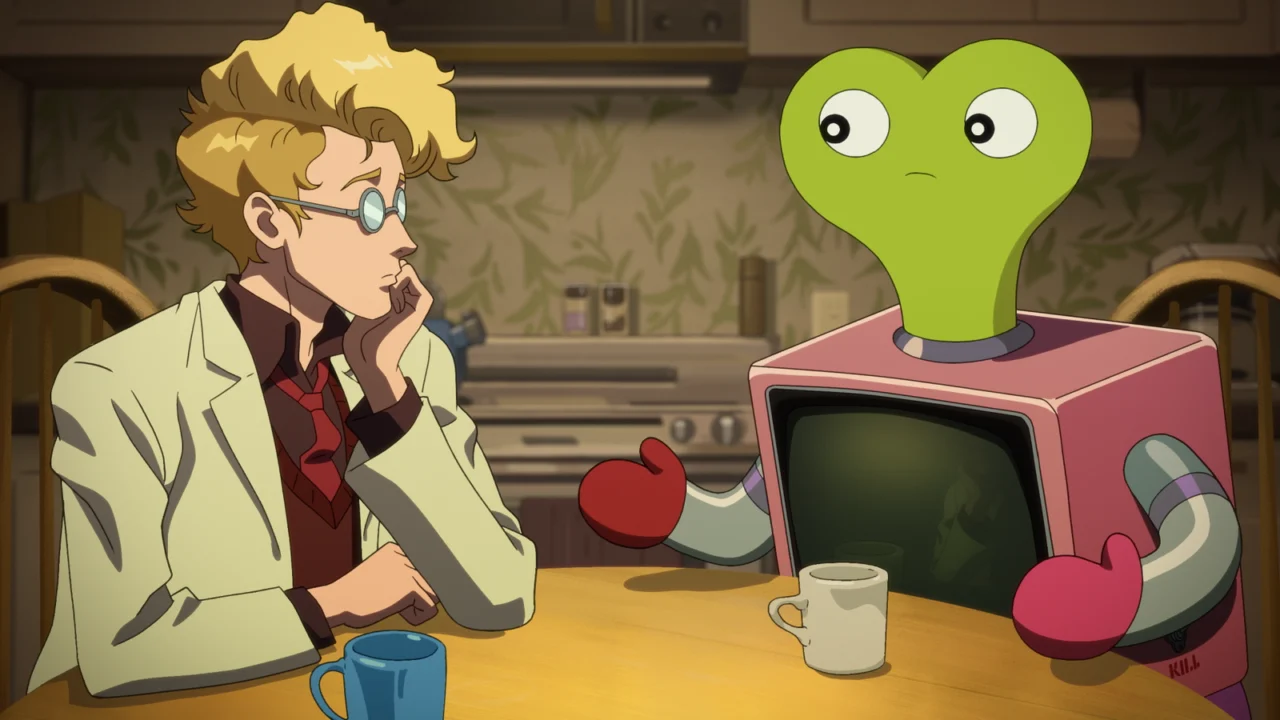
Inside the Adventure Time Reunion Behind 2025’s Wildest New Series
During the interwar period of the early 20th century, a collective of Surrealist artists devised a collaborative game to spark the subconscious. Known as Exquisite Corpse, the exercise required participants to contribute to a drawing or narrative while only seeing the final sliver of the previous person’s work. This blind hand-off ensured that the final product was a delightful tapestry of the bizarre, the nonsensical, and the unintentionally hilarious.
Decades later, Vishnu Athreya—Senior Vice President at Warner Bros. Animation—found himself fascinated by this surrealist methodology. Seeking to inject fresh creative energy into the studio, he envisioned an animated project built upon these same foundations. His goal was to assemble a premier team of animators and task them with constructing a cohesive story in total isolation from one another. In essence, he set out to produce the world’s first “Exquisite Corpse” cartoon.
The fruit of this experiment is The Elephant, now available for streaming on Max. This 23-minute psychedelic anthology is composed of three stylistically clashing acts. While they share a loose connective tissue, the segments function best as a triptych of distinct artistic visions:
- Act I: A futuristic, gaming-inspired odyssey from Adventure Time creator Pendleton Ward.
- Act II: A contemporary, rhythm-heavy sequence helmed by Rebecca Sugar (Steven Universe) and Ian Jones-Quartey (OK K.O.! Let’s Be Heroes).
- Act III: A melancholic, nostalgia-drenched finale crafted by Patrick McHale (Over the Garden Wall).
The four creators, who all previously collaborated on Adventure Time, immediately embraced Athreya’s unconventional pitch and its rigid constraints: there was to be absolutely no communication regarding the content of their respective segments. Despite these hurdles, the team naturally sought out creative loopholes to give the project a sense of underlying structure.
“We found ways to pass little tokens back and forth,” Ward explained to Polygon.
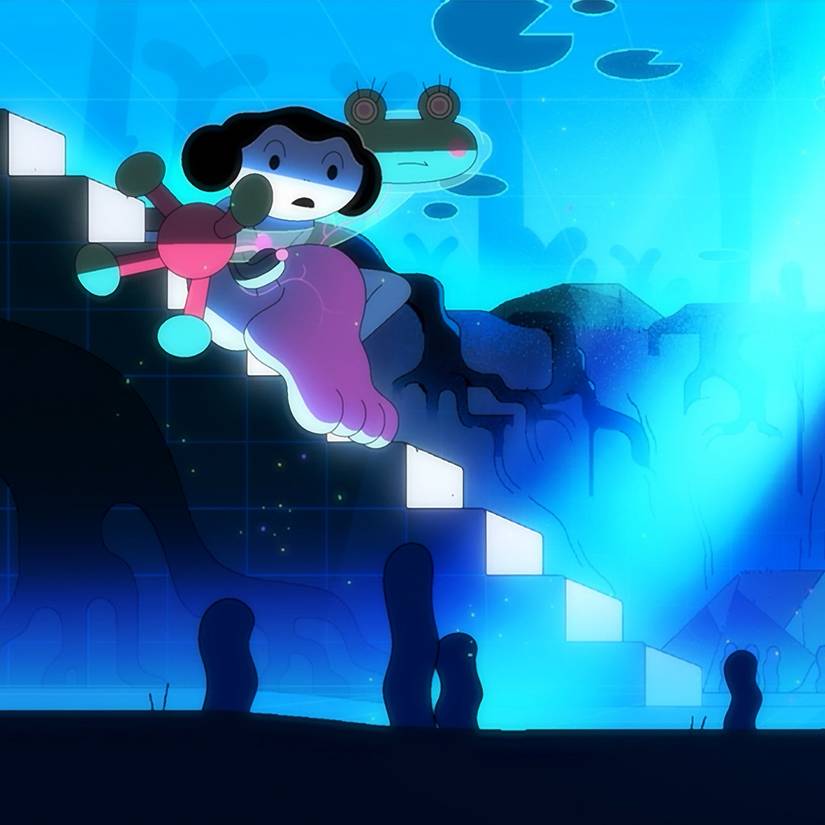
These subtle links provide a deeper layer of appreciation for The Elephant once discovered. Polygon sat down with Ward and McHale to discuss the logistical gymnastics required to co-author a film without speaking to their collaborators.
[Warning: The following contains spoilers for The Elephant.]Before retreating into their individual silos, the animators engaged in a traditional game of Exquisite Corpse to design three grotesque characters, each selecting one to be their protagonist. They also established a singular narrative anchor: every act had to conclude with the character’s demise, facilitating a “rebirth” into a new form for the subsequent segment.
For McHale, this presented an immediate hurdle. He had inherited a design that was essentially a Frankenstein’s monster with haphazardly placed limbs.
“I was the last to pick, and the character I was left with was undeniably peculiar,” McHale admitted via email. His solution to this aesthetic challenge was simple: he killed the character off almost instantly.
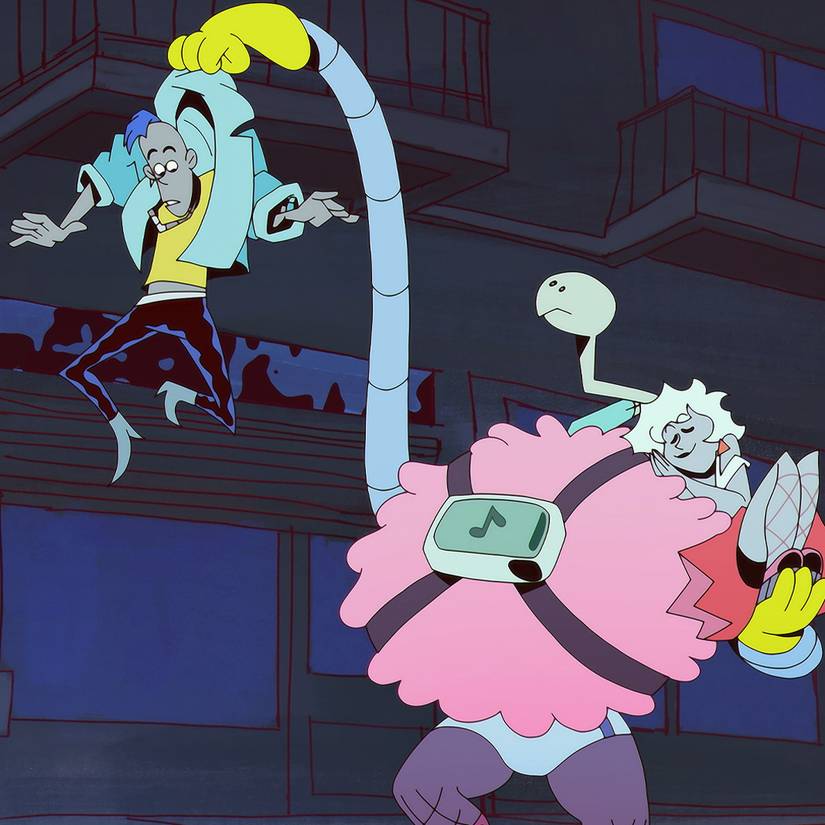
This decision allowed McHale to lean into the overarching themes of reincarnation. In his segment’s opening, we witness the protagonist cycling through several lives before inhabiting a clunky, DIY robot. This served as a thematic insurance policy in case his colleagues strayed from the agreed-upon death-and-rebirth cycle.
“I wanted to ensure there was a narrative safety net,” McHale says. “By showcasing a rapid succession of deaths, I could re-establish the core concept so the ending felt earned.”
While McHale focused on coherence, Ward was intent on sowing “creative chaos.” To circumvent the “Gamekeepers”—producers assigned to censor any cross-talk—Ward devised a “jam comic” strategy.
“I wanted to find a way to communicate despite the silence,” Ward notes. “I invented a physical device within the cartoon that could carry a message from my act into the next.”
This manifest as a mousetrap at the end of Ward’s segment, which catches a scrap of paper featuring a sketch of two birds. Ward managed to get a copy of this drawing to Sugar and Jones-Quartey, hoping they would carry the torch. While the duo did pin the drawing to a detective-style clue board in their act, the chain of communication failed to reach McHale’s finale.
“I wasn’t sure what they’d do with it—maybe burn it for warmth,” Ward laughs. “But the attempt at a ‘jam’ was the fun part.”
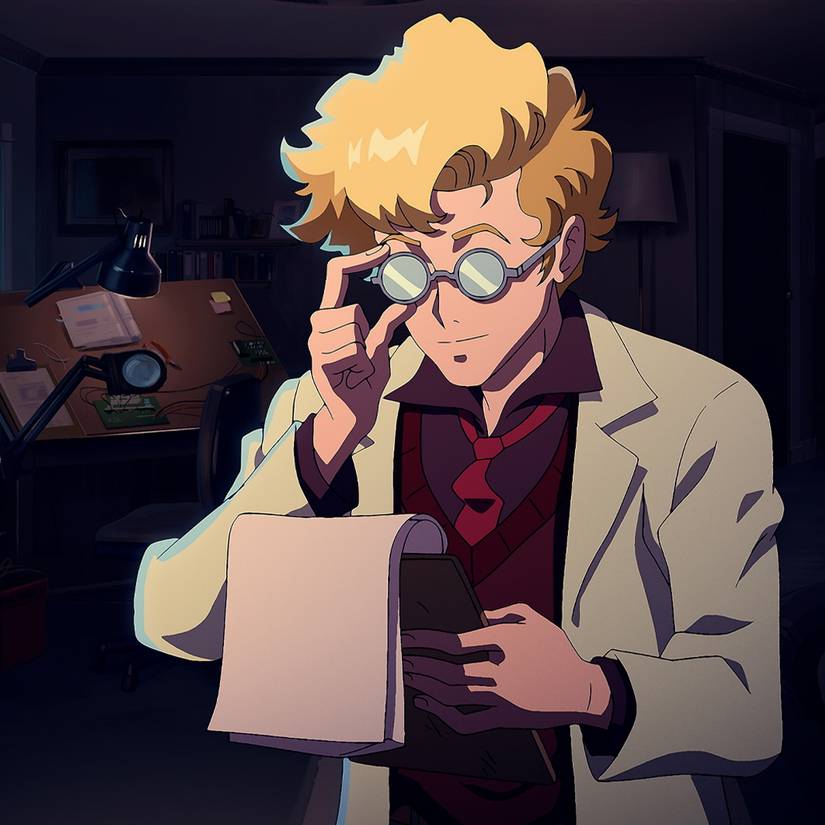
Tasked with resolving a story he hadn’t actually seen, McHale eventually abandoned high-concept grandiosity for emotional intimacy. His segment shifts the gears of the film, transforming the frenetic energy into a charming, tech-infused romantic comedy where a robot falls for its creator.
“My primary motivation was to avoid ruining the hard work of the others,” McHale admits. “I wanted to tell a small, human story that felt right for the end of a long journey.”
The result is a testament to the power of collaborative isolation. By attempting to subvert the very rules that bound them, this “dream team” of modern animation created something that feels entirely unprecedented.
The Elephant is currently available to stream on Max.
Source: Polygon
Related articles
 CD Projekt Red Begins Development on New Game Outside The Witcher and Cyberpunk Franchises
 Dragon’s Dogma 2 Receives Performance Boost From 25 to 60 FPS
 Devil May Cry Creator Reveals His Biggest Fear Beyond the Death of Physical Discs
 Journalists Praise Silent Hill: Townfall Demo
 Developers Say Tomb Raider Catalyst Retains 2013 Trilogy Lara Croft
 Ori Creator Evaluates Media Scores and Notes Discrepancies With Player Opinions
 Saros to Receive Free Expansion with New Modes and Secrets
 Bodycam 0.8 Locked & Loaded adds Trenches map and 400 weapon attachments