Christopher Walken’s Most Unsettling Performance is Hidden in This Forgotten ’90s Psychological Thriller

Christopher Walken reigns as the unrivaled architect of the cinematic monologue—those sprawling, serpentine narratives that command a film to pause, pulling the audience into a vivid, often unsettling mental landscape. While Pulp Fiction remains his most cited masterpiece, his filmography is rich with such moments, from the neurotic energy of Annie Hall to the gritty intensity of Poolhall Junkies, Catch Me If You Can, and The Addiction. Walken’s magnetism is undeniable, fueled by a dancer’s physical poise, a piercing, unblinking gaze, and that famously idiosyncratic, rhythmic delivery.
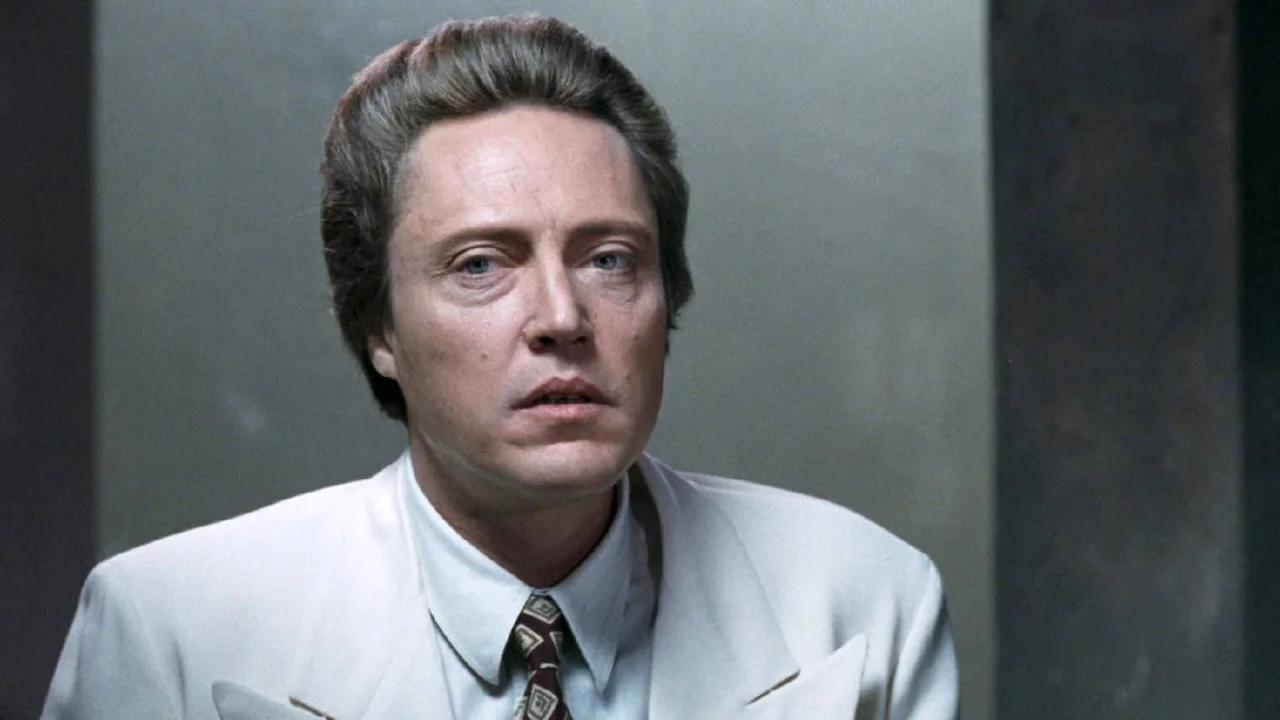
One of Walken’s most profound performances can be found in The Comfort of Strangers, a chilling 1991 psychological thriller directed by Paul Schrader. Adapted by Harold Pinter from Ian McEwan’s novel, the film features Walken as Robert, a sophisticated yet menacing Italian aristocrat perpetually dressed in ivory Armani. He resides in a Venetian palazzo with his Canadian wife, Caroline (portrayed by Helen Mirren).
The film’s tension crystallizes when Robert encounters a vacationing English couple, Colin and Mary (Rupert Everett and Natasha Richardson), and lures them to his bar. Despite the lack of food, Robert keeps the wine flowing and traps them in a mesmerizing, disturbing recount of his upbringing—detailing his father’s severity and his sisters’ influence. As he speaks, the camera drifts away, exploring the bar’s rituals and the ominous presence of a mounted swordfish, before inevitably being pulled back into the gravitational field of Walken’s performance.

“My father was a formidable man,” Walken intones, using a strange, cosmopolitan accent that reflects a life spent between London and Canada. “He kept a black mustache his entire life. When the gray appeared, he used a small brush to maintain the color—the kind ladies use for their eyes. Mascara.”
The monologue delves deeper into betrayal and perverse cruelty, themes that resonate throughout the film. These words, which open the movie in voiceover and return for the finale, pulse with an air of masculine authority and sexual ambiguity. Walken’s unique cadence is the perfect instrument for Pinter’s sharp, minimalist dialogue, establishing a persistent sense of dread in a story defined by obsession, isolation, and latent fascism.
Initially, The Comfort of Strangers follows Colin and Mary as they wander through the dreamlike, labyrinthine streets of Venice, struggling with their own relationship’s stagnation. At times, the pacing feels deliberately sluggish. While Everett and Richardson are capable, and the aesthetics—Armani wardrobes, stunning Venetian vistas, Dante Spinotti’s lighting, and Angelo Badalamenti’s haunting score—are exquisite, the protagonists themselves are somewhat vapid. The collision of Schrader’s and Pinter’s austere sensibilities creates a film that feels beautiful but remarkably cold.

The energy shifts dramatically once Robert’s stalking comes to light. Walken lingers at the periphery of the frame, a ghostly, white-suited presence reminiscent of the red-clad figure in Don’t Look Now. His entry into the narrative provides a jolt of electricity. Robert is sophisticated yet predatory, holding the couple in a state of hypnotic discomfort. He lures them to his opulent home, where a voyeuristic Caroline monitors them in their sleep. In a sudden burst of violence, Robert strikes Colin, only to follow it with a signature Walken wink. The encounter leaves the couple shaken but strangely aroused, spiraling the story into even darker territory.
The Comfort of Strangers is a beautifully decayed portrait of a double date gone wrong. While Mirren feels slightly underutilized in a role that asks her to be more passive than her usual screen persona, she is vital to the film’s shocking conclusion. However, the movie belongs to Walken. He effortlessly embodies centuries of Old World decadence, using his talent for blunt intimidation and volatile seduction to dominate the screen.
The undisputed peak of the film is that initial, haunting monologue. It is a sequence perhaps too powerful for the surrounding movie, which struggles to match its quiet, psychological terror. Christopher Walken has rarely been this menacing—and that alone makes this twisted journey through Venice essential viewing.
Source: Polygon
Related articles
 Battlefield 6 Developers Respond to Memes About Paid “AI Slop” Skins and Explain Design Choices
 SPINE Gets New Trailer Focused on Main Character Customization
 Unofficial Android Port of Call of Duty 4: Modern Warfare Reportedly Runs at 60 FPS in Gameplay Videos
 Cyberpunk 2077 Co-Op Mod in Development, Gameplay Trailer Released
 Toxic Arc Raiders Players Found a Way to Harass Others in PvE Mode
 First Look at Drova II Torn Lands, Sequel to the Pixel Art Gothic-Like RPG
 CDPR Didn’t Expect Such Big Interest in The Witcher 3 Remaster, Which Set a New Record
 9 Best Single-Player Zelda-Like Games Nobody Plays, Ranked