
Developer Diary | Republic of China: A Turning Point in History
As promised, here’s a breakdown of the changes coming to China in the update.
Please remember to join the Developers’ Livestream tomorrow, October 30th, when they’ll present the full China experience.
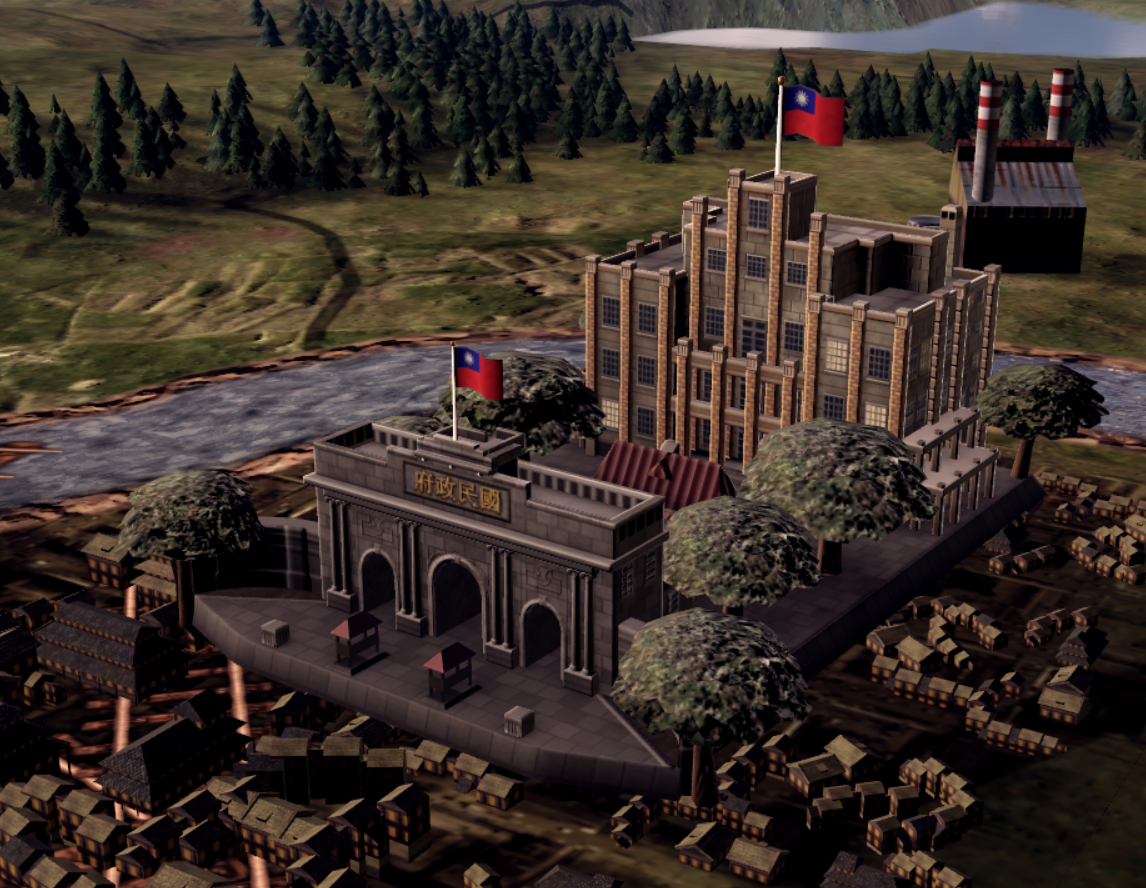
ImaginedPanda here — I’m one of the designers behind the Nationalist China content in No Compromise, No Surrender. If this is your first Dev Diary from me, hello — if you’ve seen my name on the bug reports, thank you for your feedback. Keep it coming!
The scenario begins near the end of the Nanjing Decade, an era of relative stability and reform. Economic growth and institutional change had begun to shape a modern state — yet the threat of Japanese expansion remained a constant shadow after the 1931 Mukden incident.
The Kuomintang (KMT), founded by Sun Yat-sen and led by Chiang Kai-shek in 1936, heads the central government. Internal factions and regional warlords limit central reach: your objective as China is to unify the nation and establish undeniable authority. How you achieve that depends on the political path you choose.
Chiang — The Generalissimo
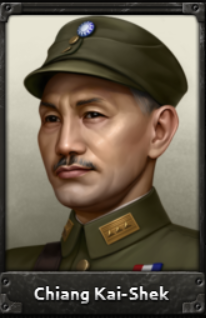
Chiang Kai-shek is the military backbone of the KMT. His power relies on the army and institutions like the Whampoa Military Academy. Playing Chiang emphasizes the new faction system: you’ll use military influence and political pressure to absorb or subdue regional warlords.

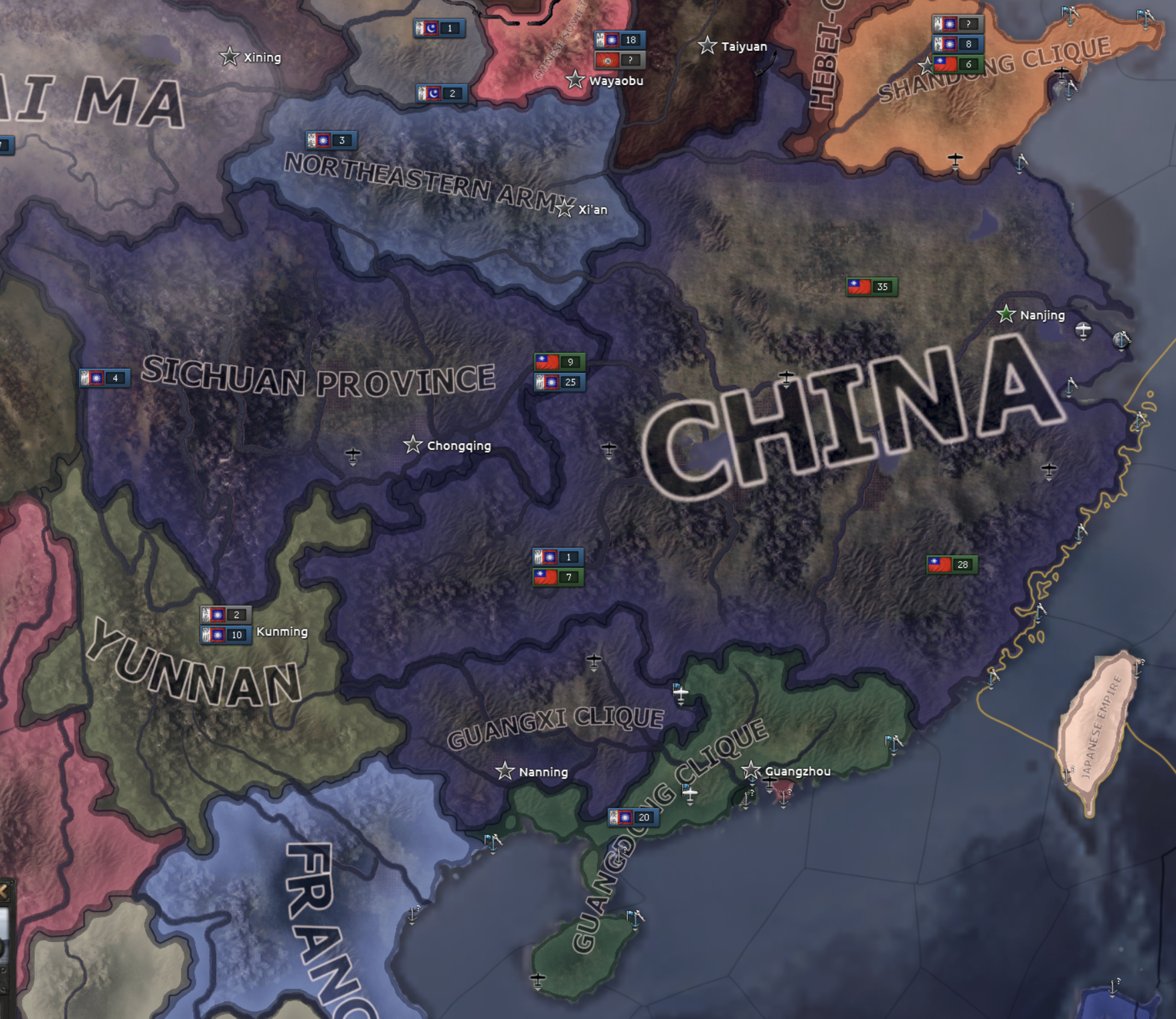
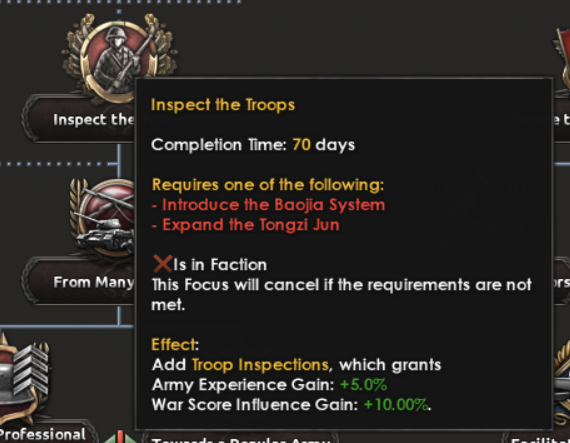
Stronger military leadership improves your ability to integrate rival commanders. We’ve also added a concise branch focused on lend-lease: develop your economy and armaments while leveraging foreign support.
Wang Jingwei — The Bureaucratic Opponent
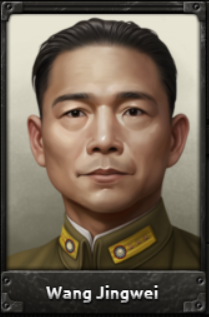
Wang Jingwei represents the KMT’s political factionalism. Less a soldier and more a politician, his route focuses on consolidating civil institutions — replacing Chiang by capturing central Yuans and entrenching bureaucratic control. This path emphasizes legitimacy through administrative competence rather than military might.
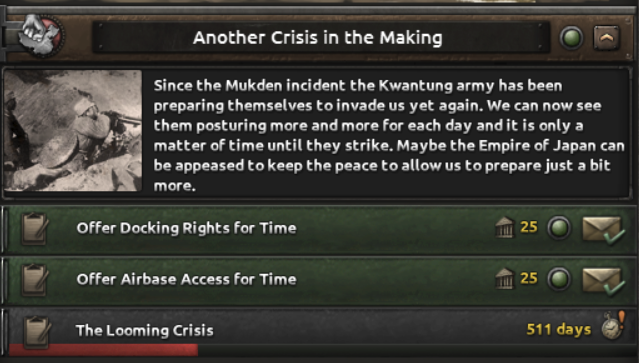
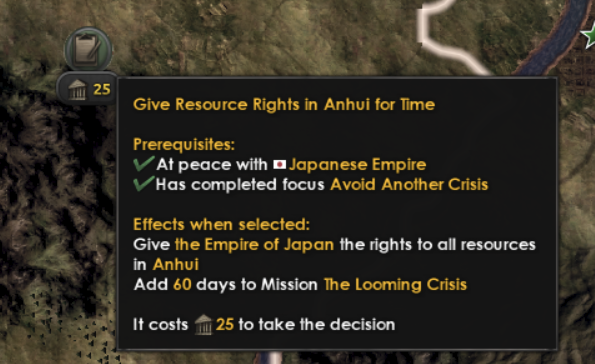
Because Wang could be opportunistic, this path often reads as regulatory capture rather than idealized reform — but it can buy you time to prepare for Japan. We’ve expanded options to placate or appease the Japanese: you can now see a countdown until the Kwantung Army openly challenges your sovereignty. Concessions extend that timeline, but any territory handed over becomes inaccessible to you and invites future aggression.
After repelling invaders and reuniting China, you’ll gain opportunities to support liberation efforts across the region — and be rewarded for assisting fellow Asian nations in breaking colonial control.
The Blue Shirts — A Different Path
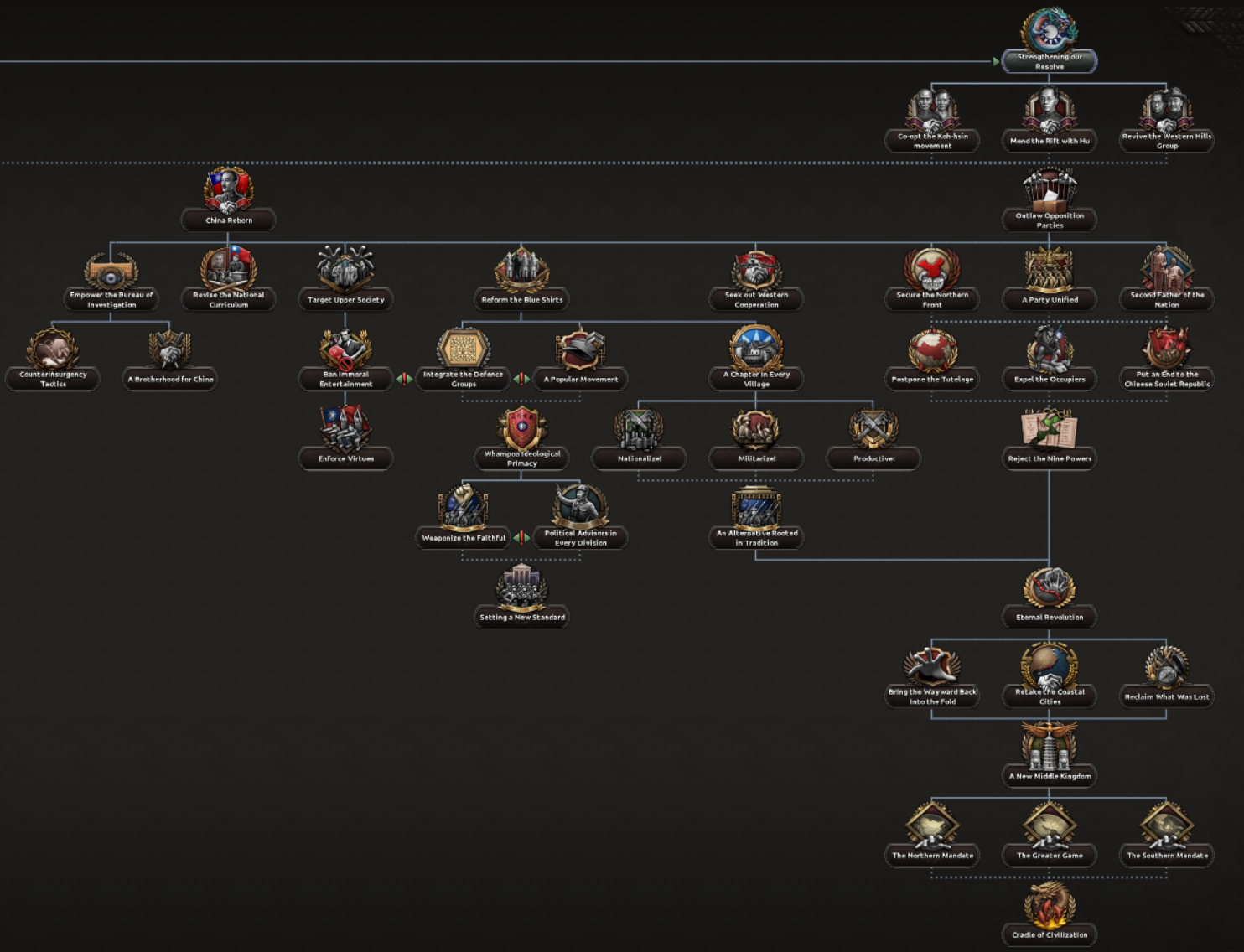
Armed conflict is likely to come sooner than many players prefer. For those who embrace internal consolidation and ideological discipline, the paramilitary Blue Shirts offer a distinct avenue. Historically marginal, we imagine an alternate path in which they evolve into an organized force promoting the New Life Movement — Chiang’s vision of cultural renewal rooted in Chinese traditions.
Rebuilding the Blue Shirts enables you to establish chapters across states, spreading ideology, increasing popular support, and strengthening your ability to capture and hold territory. Successfully integrating claimed states boosts resource extraction and streamlines later incorporation into your state apparatus.
The China Democratic League — A Civil Alternative
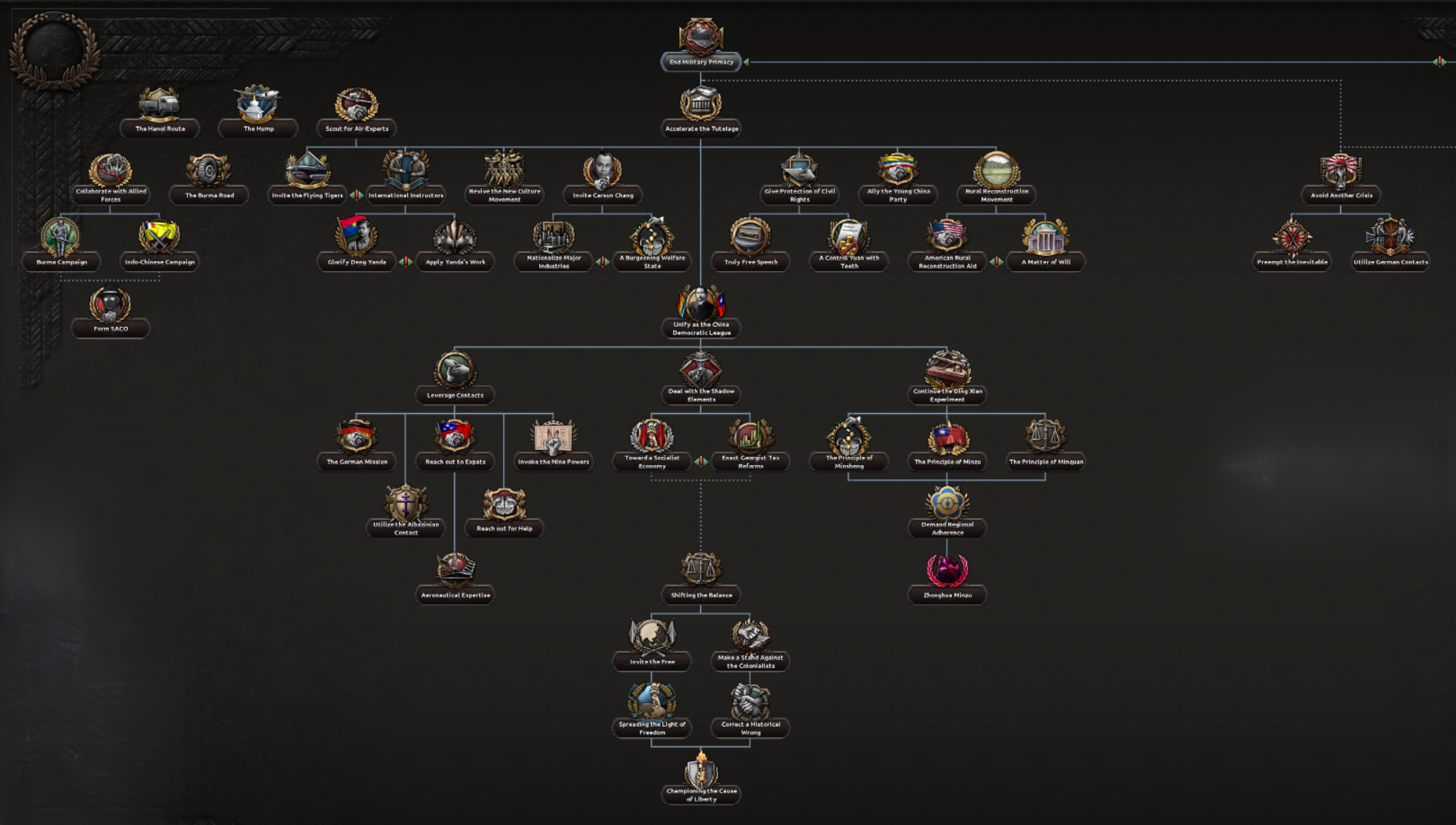
Beyond KMT variants, we modeled a democratic coalition built from smaller groups — an expanded China Democratic League (CDL). If you attract multiple civic factions, you can choose new leaders and shape a democratic project grounded in Sun Yat-sen’s teachings.
Democratic consolidation requires popular backing. You’ll work to win hearts and minds, draw on expatriate networks (notably communities in the United States), and — if you endure — seek early American factional support. Aligning the CDL with distant allies can accelerate allied involvement and open possibilities for promoting decolonization across Asia and Oceania.
A Nanjing Century — Industrial Expansion
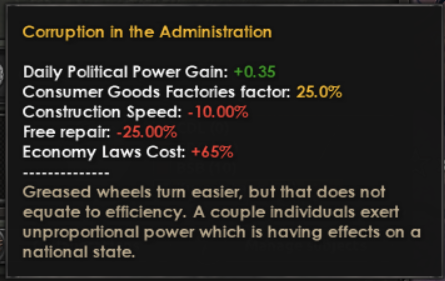
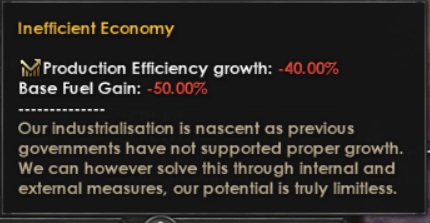
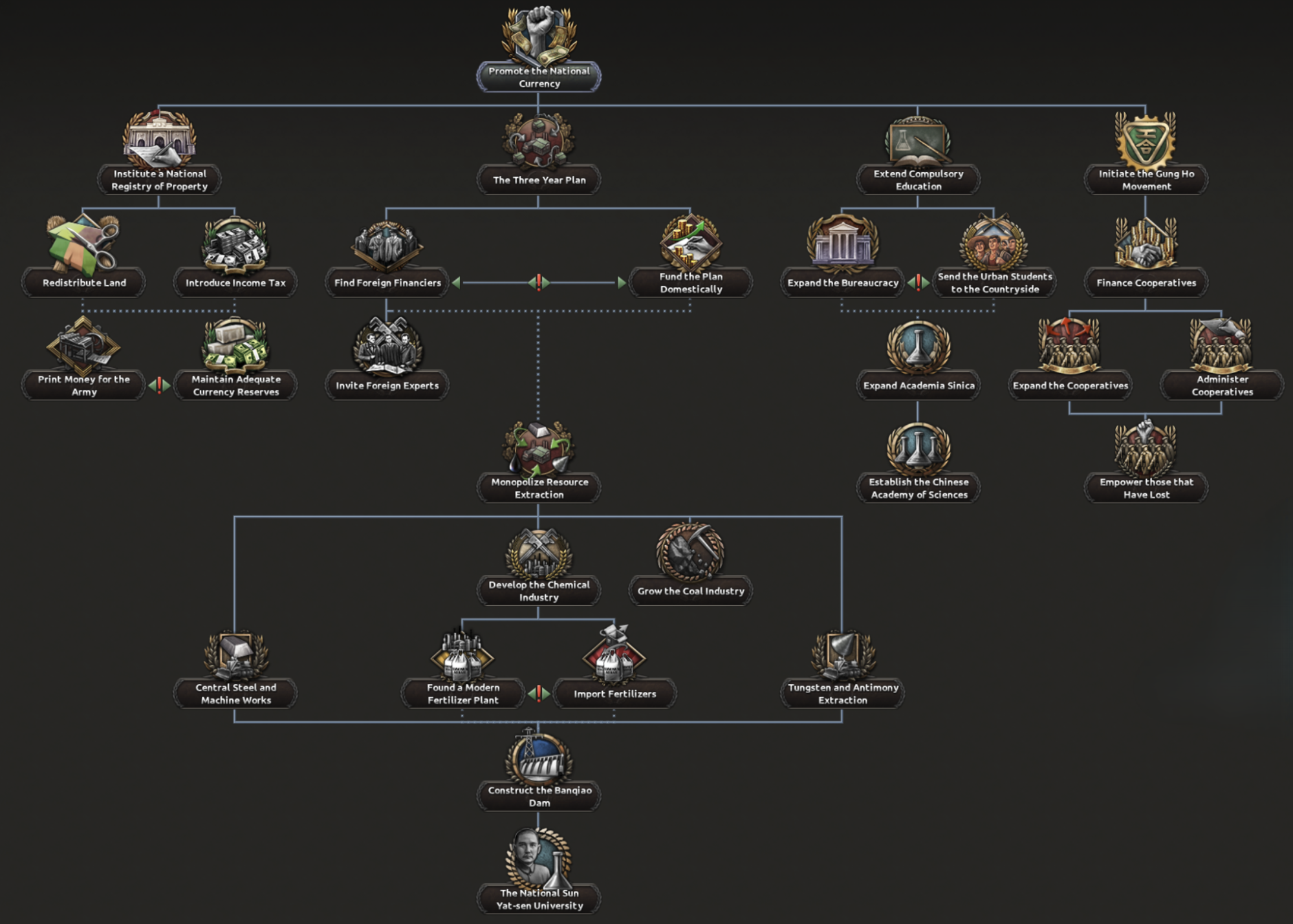
China’s industrial might was limited in the 1930s and often supported by foreign capital. You can pursue foreign investment to accelerate development, and use policies aimed at spreading growth beyond urban centers — a strategic counter to communist rural influence.
When war arrives, you’ll be able to expand Chinese Industrial Cooperatives: bottom-up production efforts that can evolve into significant industrial contributors and sustain war production while strengthening local economies.
The National Revolutionary Army
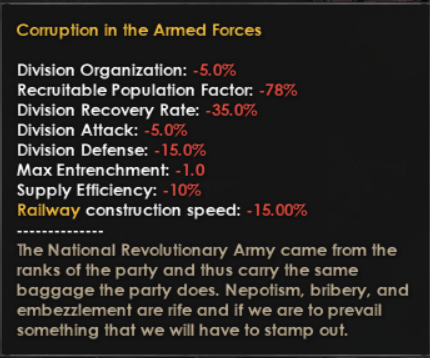
The NRA of the era was undertrained and under-equipped, but strategic debates were central: Protracted Warfare versus Decisive Battles. Protracted Warfare assumes the invader cannot sustain a long campaign; it rewards defensive resilience and interdiction of enemy supply lines, letting you shape the battlefield regionally.
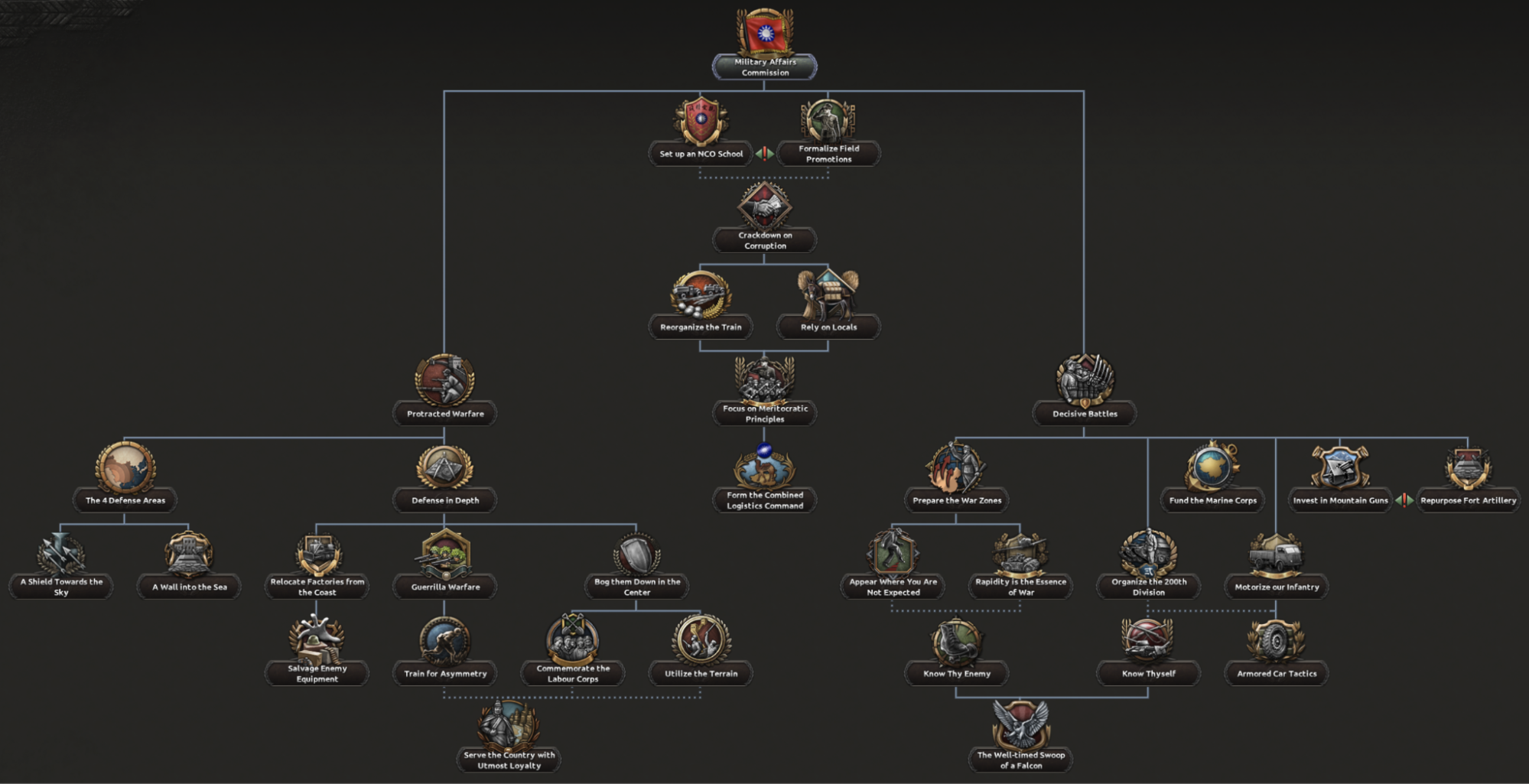
Decisive Battles, inspired by early 20th-century doctrines, focuses on swift, high-impact engagements designed to shatter enemy will. This approach emphasizes offensive capability and targeted strikes against critical areas.
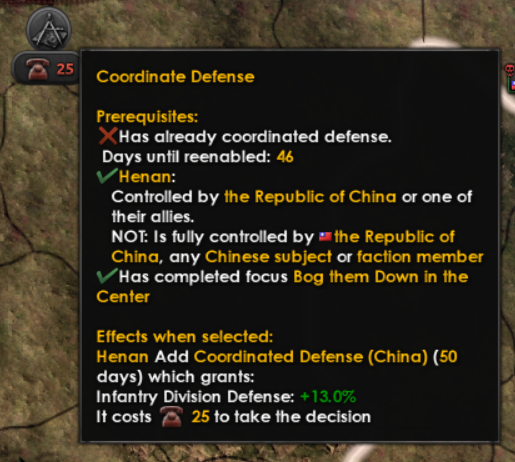
Importantly, these are temporary strategic branches: selecting one does not permanently lock you in. You can adopt defensive measures to buy time, then switch to offensive focuses once you’re prepared.
The Aviation Affairs Commission
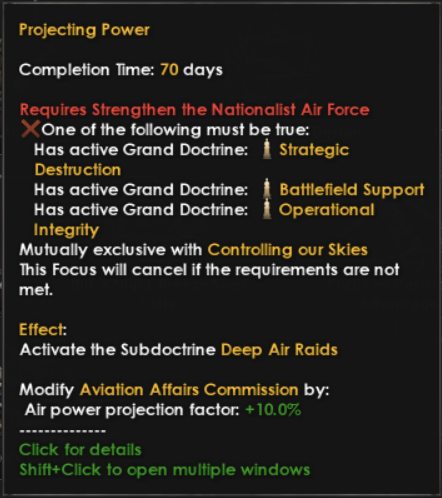
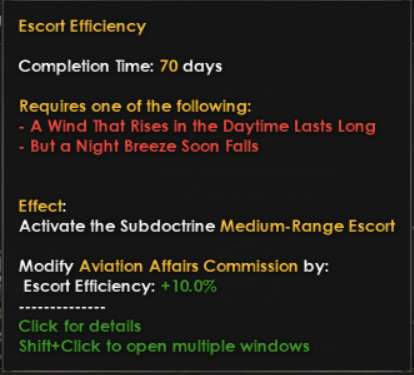
The air service will be shaped less by foreign mercenary legend and more by your policy choices. Rather than making the branch wholly dependent on external support, the air tree emphasizes intent: will your airforce be optimized for projecting power abroad, or for strict territorial defense?
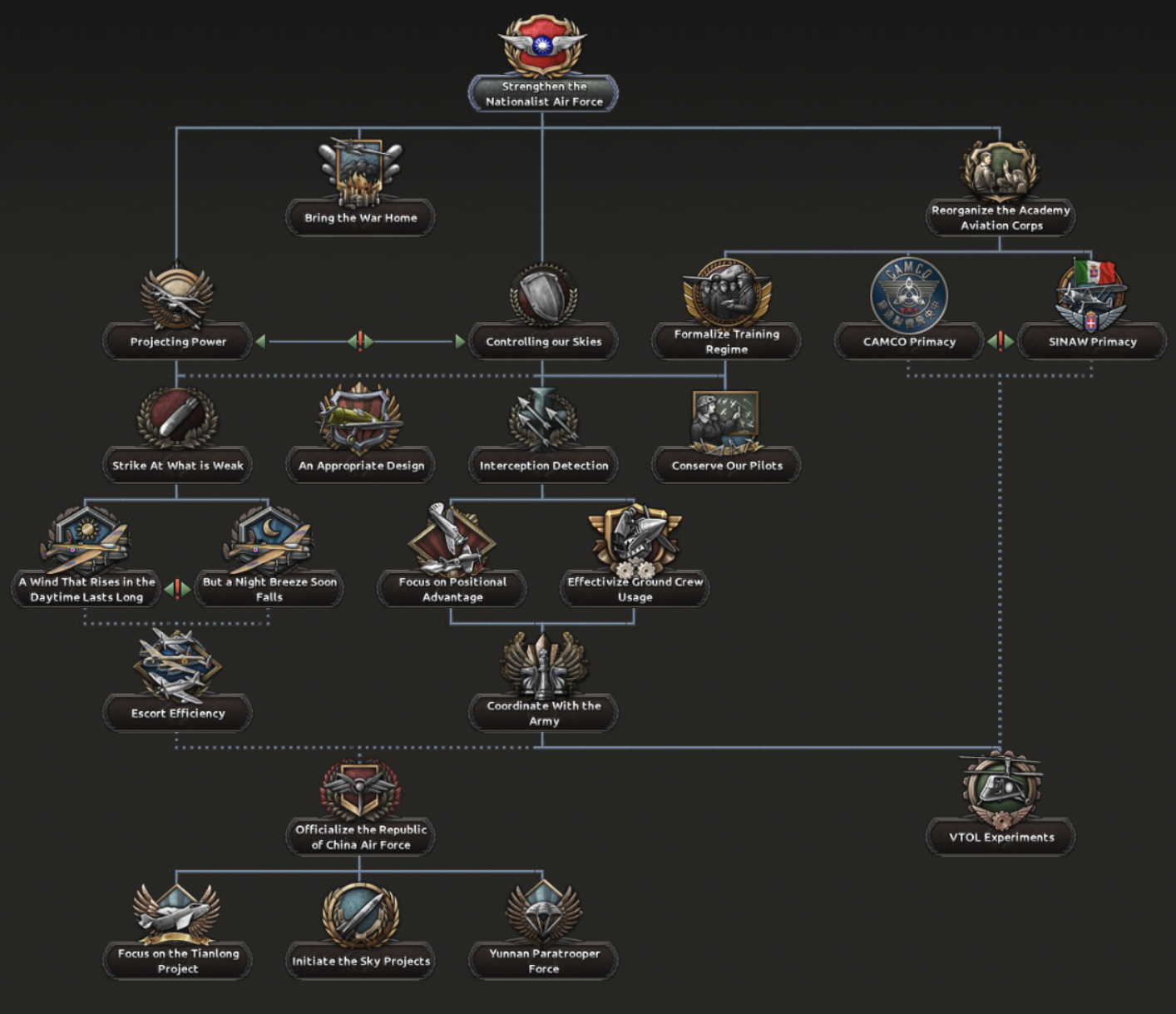
You’ll also choose where aircraft are produced: the Central Aircraft Manufacturing Company (CAMCO) focuses on high-performance interceptors, while the Sino-Italian National Aircraft Works (SINAW) specializes in medium bombers. And sometimes you simply build an aircraft to make a statement.
The Republic of China Navy
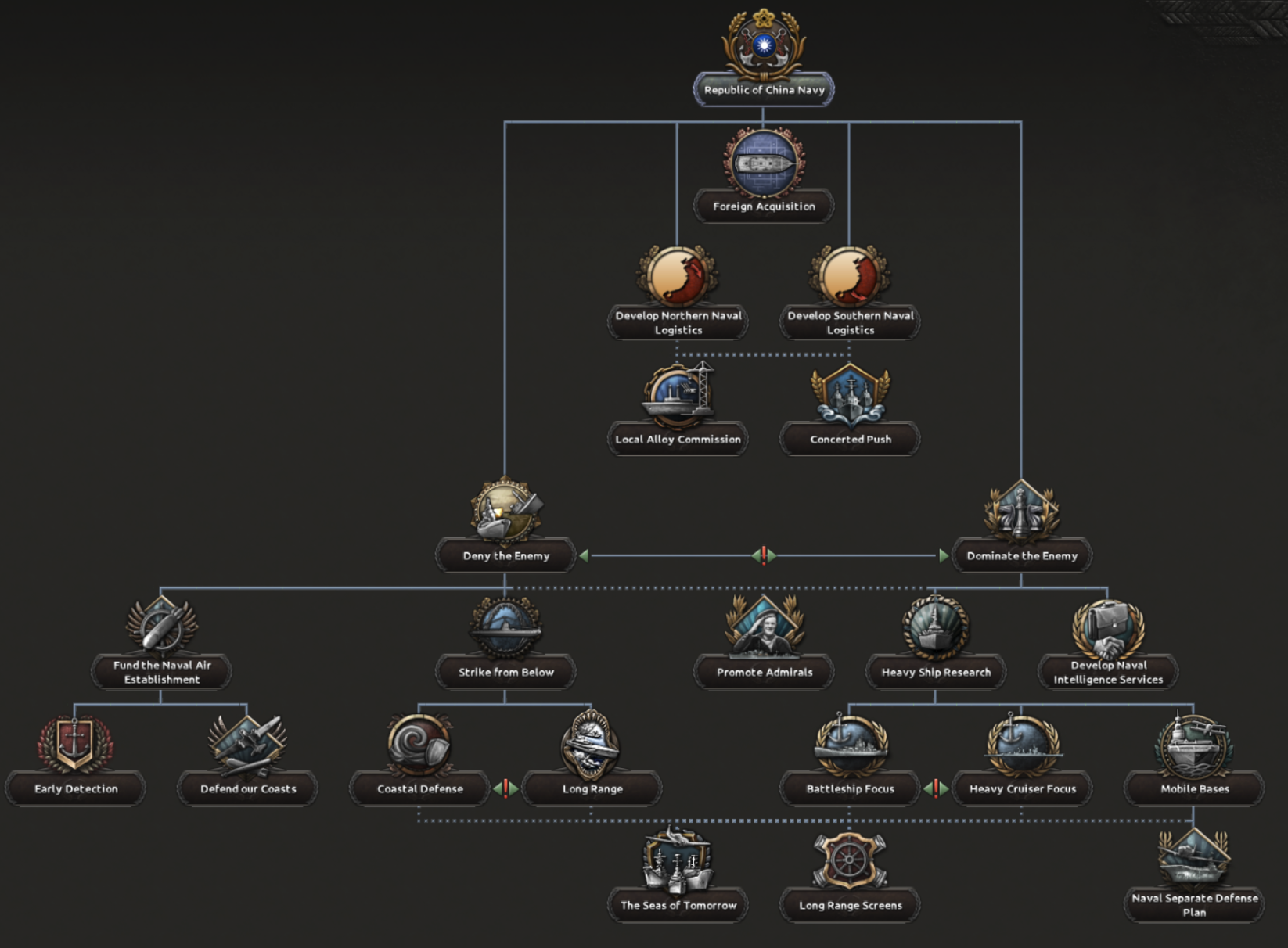
The ROC Navy was modest and inherited much from earlier regimes; when war broke out it struggled against better-equipped foes. In gameplay, you’ll choose between investing to contest the seas outright or focusing on denying enemy naval dominance — sometimes simply preventing enemy victory is tactically sufficient.
We’ve added options to accelerate fleet growth so you can close the gap with global naval powers — and yes, there are now Admirals to command your forces.
Warlords and Regional Flavor
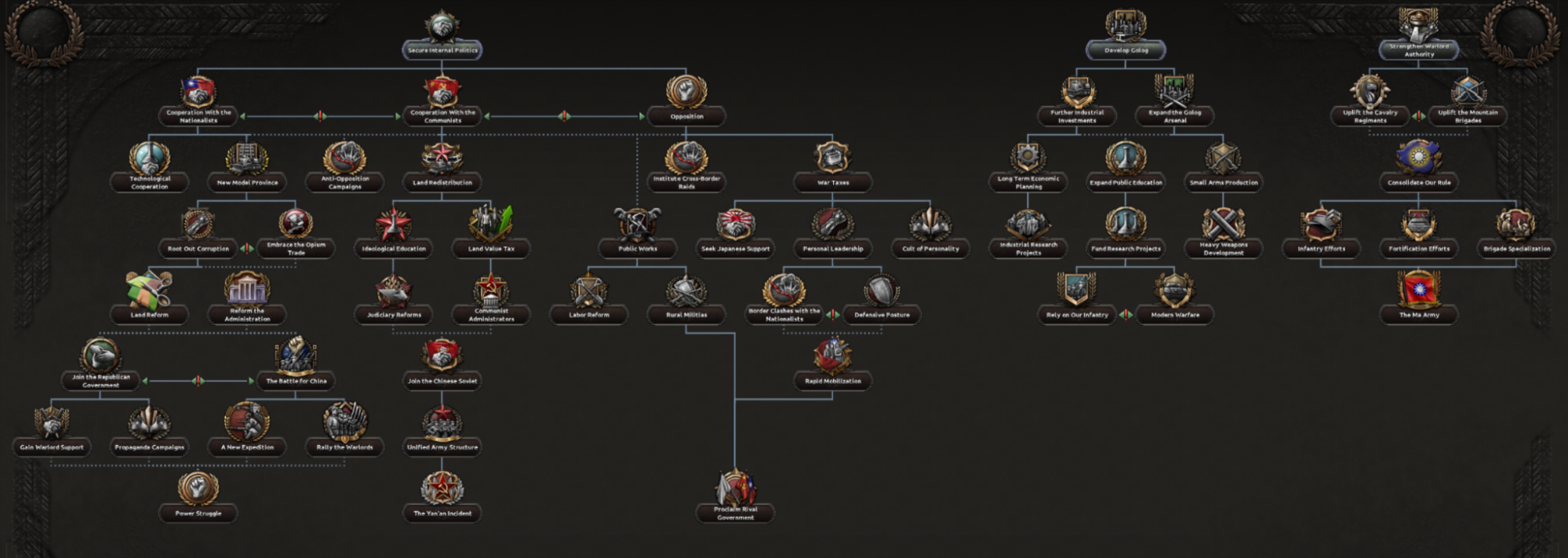
We introduced several new warlords and have modestly expanded the shared generic tree to better integrate with the new Chinese and Japanese content. A few warlords received minor sub-branches to reflect local realities:
- Ma Cliques — options toward unification.
- Sichuan Clique — a subbranch reflecting divided administrations and local particularities.
- Khotan Ma Clique — mechanics for attempting to unify Sinkiang.
Manchukuo also received small adjustments to improve compatibility with Japan and China focus trees. Additionally, we added a new Field Marshal who could become a Mongolian leader.
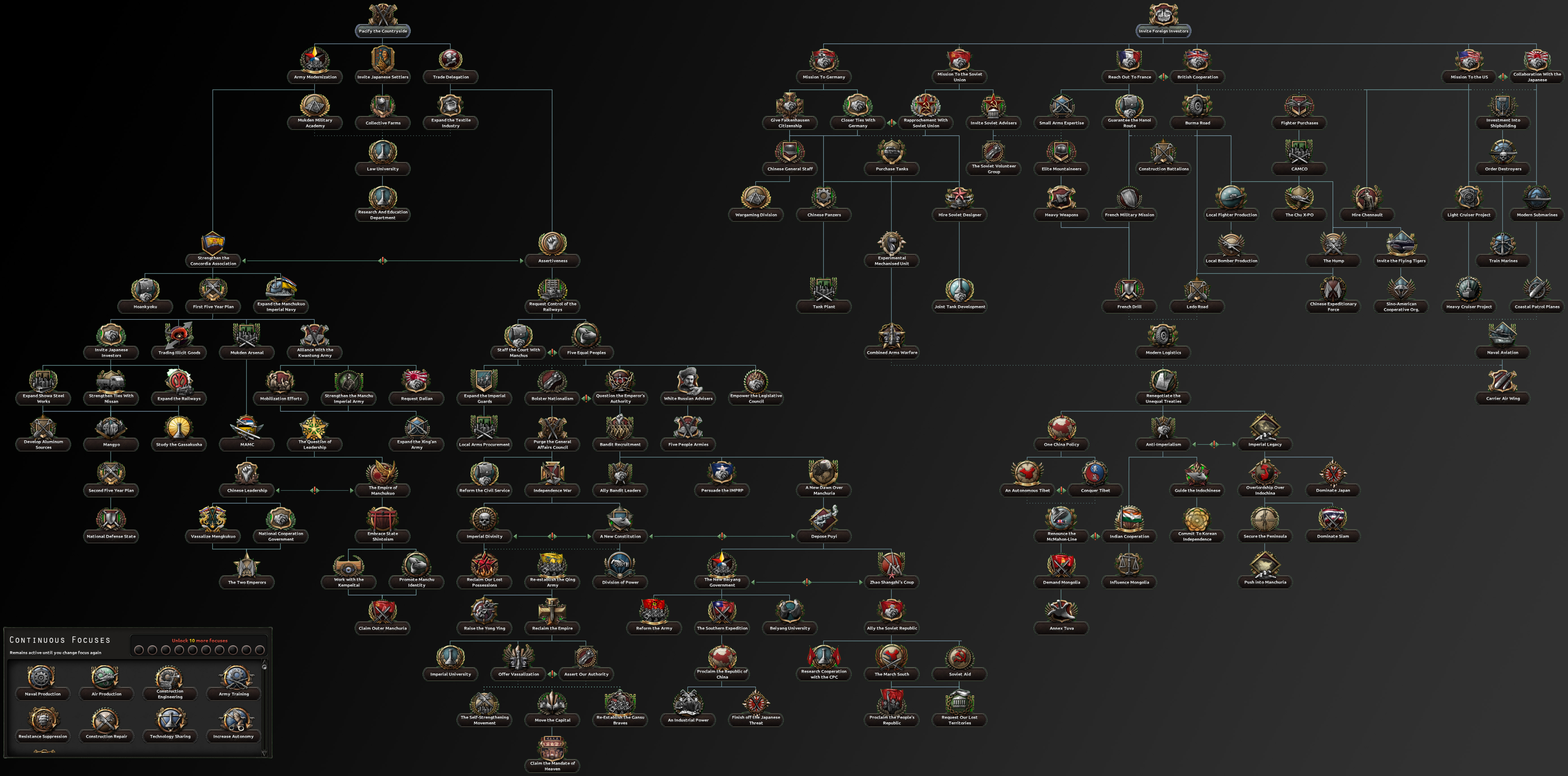

I hope this overview gives you a clear sense of the Nationalist China update for No Compromise, No Surrender. Next, D3vil will cover the updates to the Warlords and regional designs.
Related articles
 HOI IV Developer Diary | Romania: A Flawed Democracy
 Developer Corner & Open Beta: Energy #2
 Hearts of Iron IV Dev Corner | Strikes!
 Hearts of Iron IV Dev Corner: Old Canada Questions Before New Canada
 Hearts of Iron IV Dev Corner | Energy
 Steam Autumn Sale 2026
 HOI IV Dev Corner | The Great Depression
 Hearts of Iron IV | Patch 1.19.3