
Developer Diary | Philippines: The Pearl of the Orient
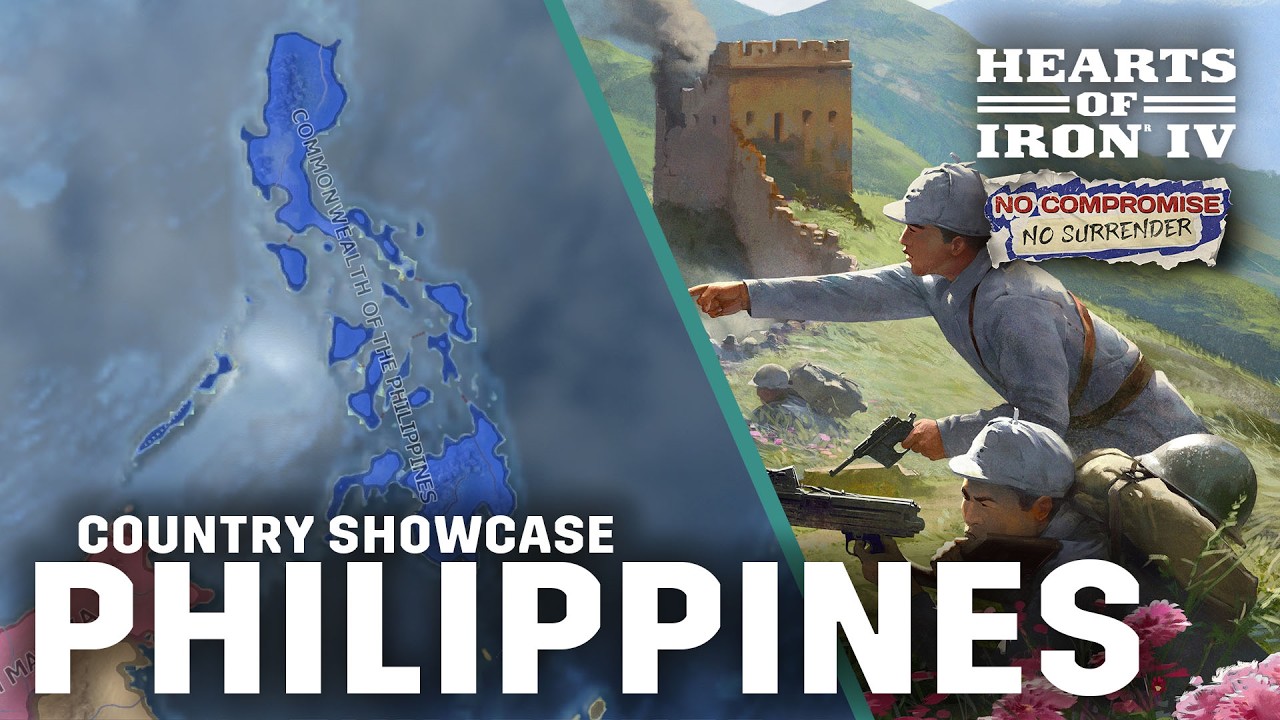
Hello — I’m Mordred Viking (Gareth). Thank you for the thoughtful feedback you shared in the Dev Corner. Your questions and suggestions helped shape what follows. As always, this content is a work in progress and some values or layouts may change.
Where were the Philippines in 1936?

After the 1898 conflict that ended Spanish colonial rule, the Philippines entered a complex period under U.S. control. A revolution against American authority continued into the early 20th century, but by 1902 the islands were effectively an American possession. Economically the archipelago focused on agriculture and trade, and political negotiations with the United States culminated in the 1935 Commonwealth arrangement — a staged path to independence. By the mid-1930s the Philippines enjoyed relative prosperity, driven especially by sugar exports; in regional terms they ranked high in wealth, though not industrial output.
Economic reality in 1936
The story continues in 1936 within the Hearts of Iron timeline, where the Great Depression still strains the global economy. The Philippines are affected, but they retain several trade advantages that can be leveraged to recover and grow.
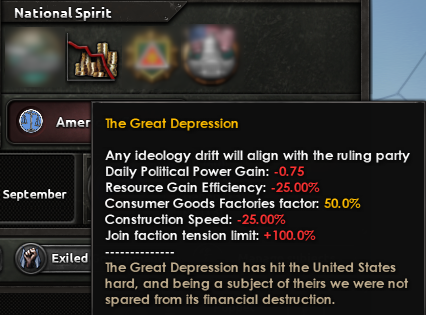
Recovery is possible, and the national focus tree provides multiple routes to rebuild and prosper.
Economic tiers
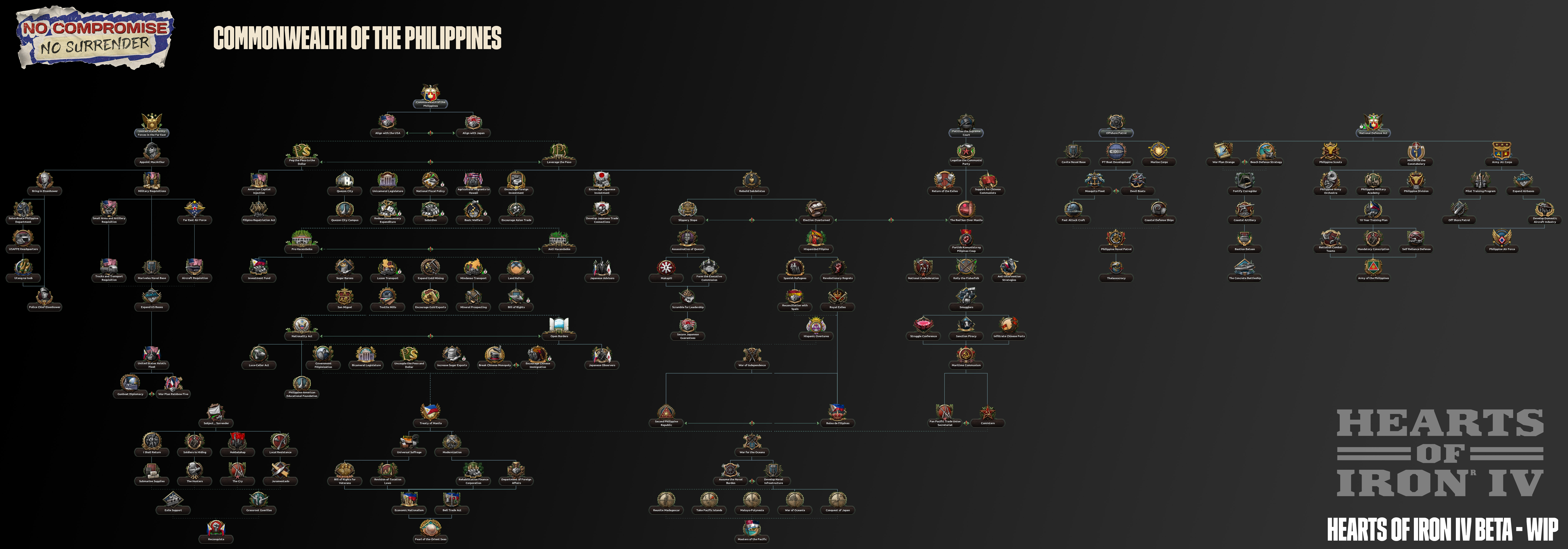
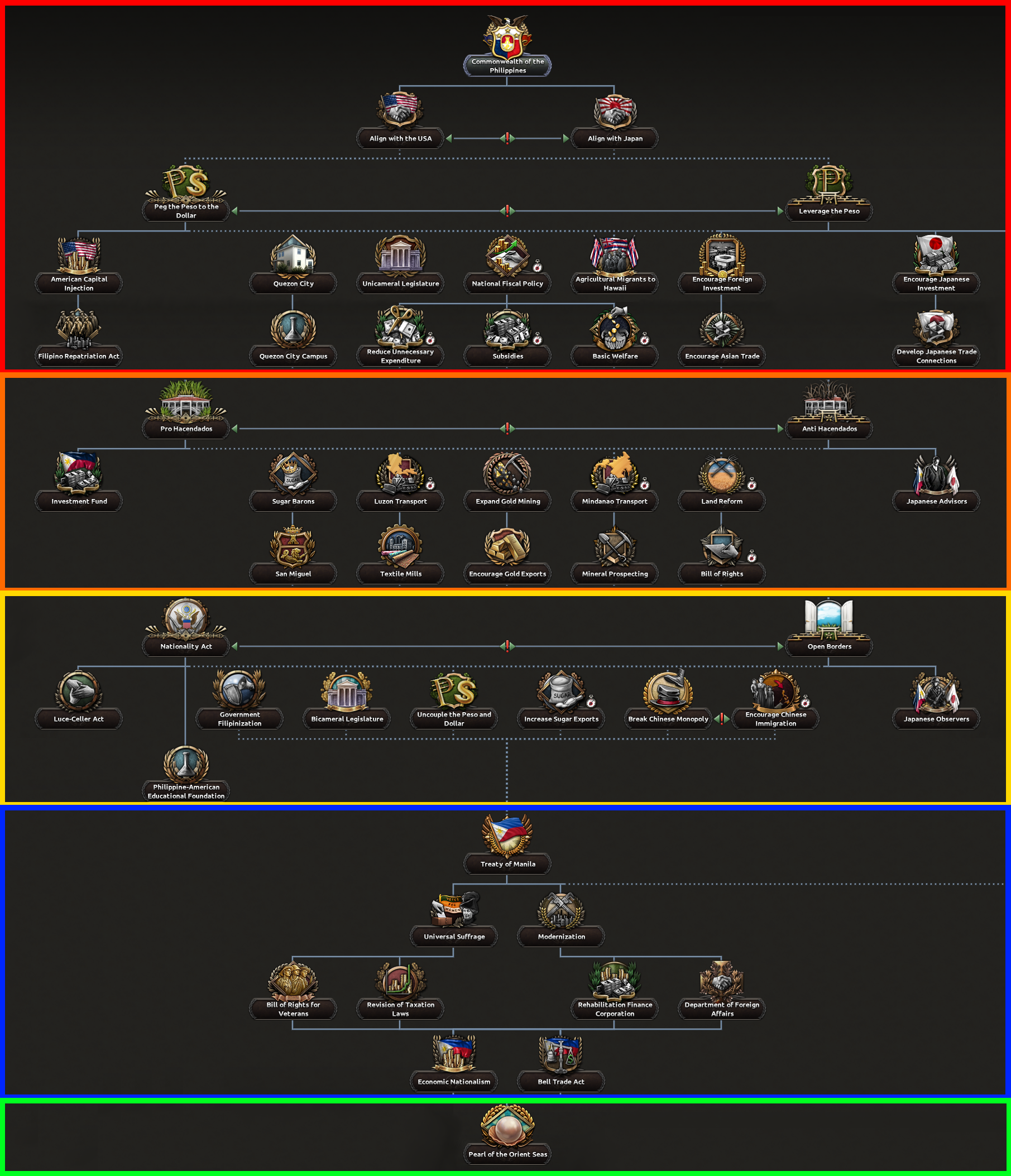
The economic branch is organized into five progressive tiers that guide recovery and eventual expansion:
- Great Depression (Red) — Reduce severe negative modifiers so the economy can stabilize.
- Shaken Economy (Orange) — Regain lost ground and set the stage for growth.
- Recovering Economy (Yellow) — Begin specialization and steady improvement.
- Economic Growth (Blue) — Accelerate prosperity, especially after independence.
- Pearl of the Orient (Green) — Realize the Philippines’ deep economic potential.
Before deep recovery can begin you must choose whether to align more closely with the United States or with Japan. Each patron grants distinct advantages: diplomatic opens, manufacture support, and equipment representation (American or Japanese). Playing the two powers off each other is central to maximizing gains as a minor nation.
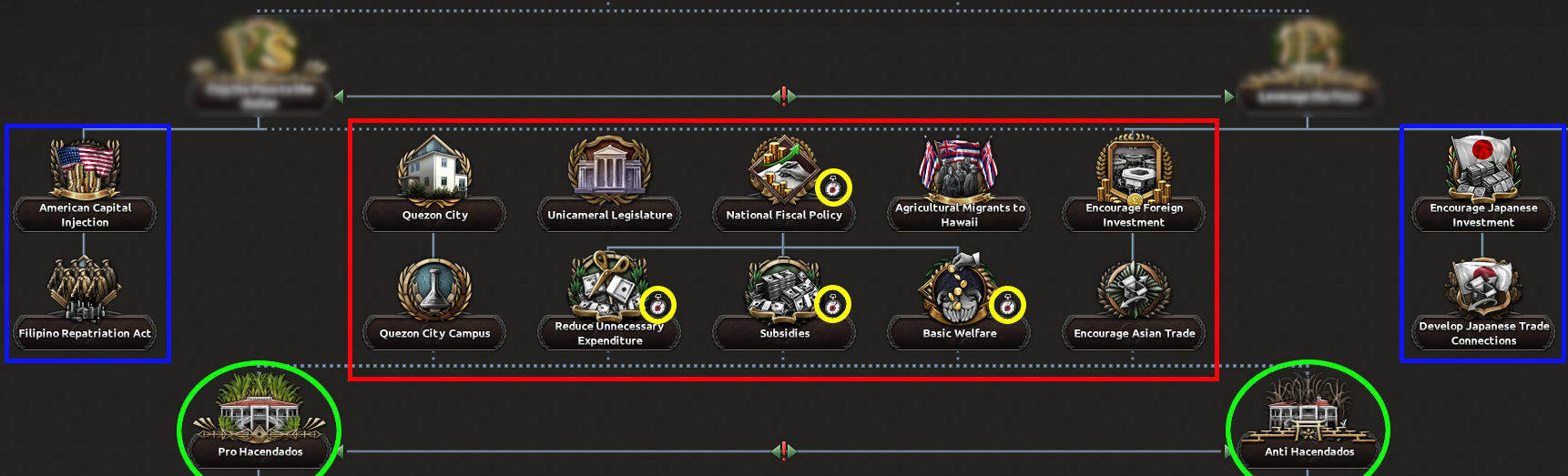
Progressing through each tier requires selecting five generic economic/political choices (central nodes) to unlock that tier’s milestone. Some branch-specific (left/right) benefits are available but do not count toward tier completion. If you pick the pro-Japan path, certain focuses halve their time (70 → 35 days), letting you reach milestones like the Treaty of Manila faster and attain diplomatic independence more quickly.
While economic revival is the primary objective, independence remains the narrative throughline. The branch is designed to offer meaningful choices and distinct playstyles depending on whether you lean toward the United States or Japan.
Historical context
The U.S. response to Japan’s growing Pacific presence was to establish United States Army Forces in the Far East under General Douglas MacArthur. This instigated a large-scale rearmament program: rifles, artillery, aircraft, trucks, and more were requisitioned for the Philippines. Many supplies were in transit when Pearl Harbor occurred and were diverted — a useful counterfactual to explore: what if rearmament had begun earlier?

In the focus tree the long rearmament branch rewards closer alignment with the United States; staying loyal unlocks requisitions and command-and-control improvements. Historical play typically follows the American-aligned path, but the tree deliberately keeps routes flexible so players and AI can pursue opportunistic alternatives.
Radical alternatives
If peaceful transition feels slow, you can pursue more extreme options — including reviving the Sakdalista movement and exploring authoritarian or foreign-oriented outcomes.
Rebuild Sakdalistas — Fascist route
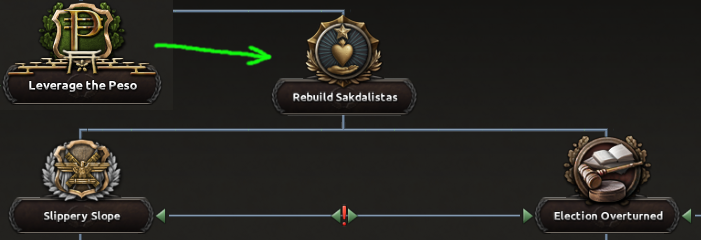
In 1935 the Sakdalista uprising demanded independence and was suppressed. Choosing certain early economic milestones (for example, leveraging the peso) can allow this movement to be rebuilt. From there, the nation can slide toward fascism: overthrow democratic leadership, manufacture a crisis using the death or removal of leaders like Manuel Quezon, and elevate a militant faction that seeks Japanese backing. The endgame can still be independence (Treaty of Manila) or an aggressive confrontation — Japan might offer guarantees that deter U.S. intervention.
Rebuild Sakdalistas — Spanish Reconciliation
Many readers in the Dev Corner requested Spanish-oriented content — and this branch answers that call. Under a revitalized Sakdalista movement, figures like Emilio Aguinaldo can contest election results and claim the presidency, then pursue closer ties with Spain and Hispanic America.
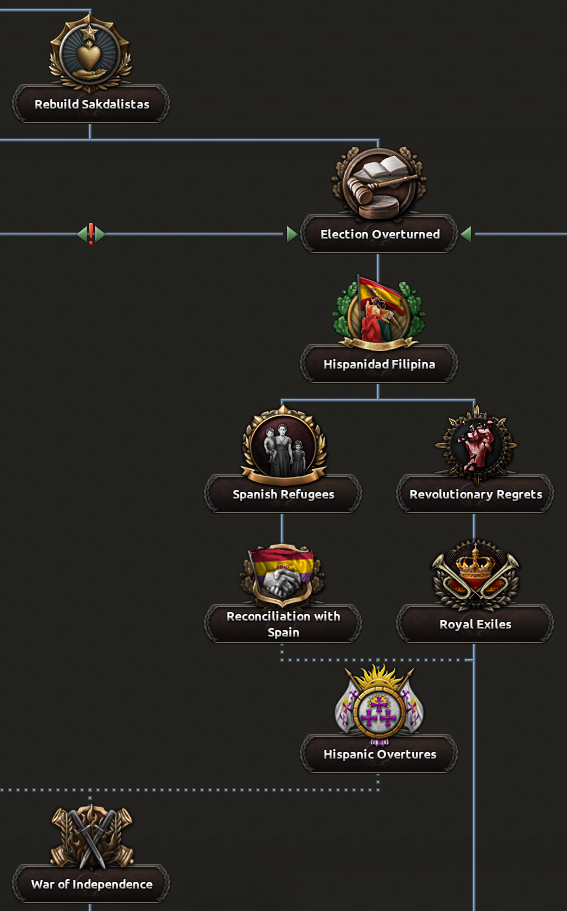
Historically Aguinaldo fought Spain, but in this alternate path he reinterprets the Spanish era as offering a sense of belonging denied under U.S. rule. The Philippines could send volunteers to fight in the Spanish Civil War, accept refugees, and cultivate relationships with Spain and Spanish-speaking American states (Argentina, Mexico, Chile, Cuba). If Spain favors the Philippines, Madrid might reciprocate with diplomatic or material support for independence — even a restoration of monarchical ties.
Fascist and Spanish Reconciliation outcomes
Should a fascist or pro-Spain faction secure independence, new state forms are possible. A fascist victory might produce a Second Philippine Republic; the pro-Spain route could crown a monarch (Juan III) and create a Reino de Filipinas (Kingdom of the Philippines). The proposed flag concept swaps the central revolutionary sun for the crest associated with Infante Juan, aligning iconography with the new regime.

Maritime Communism
Communism is the final major political branch. The Partido Komunista ng Pilipinas (PKP) was banned in 1932 and re-legalized in 1938; this arc provides a plausible route for communist resurgence in-game. Because this setting is pre-Cold War, the U.S. reacts but does not yet operate with McCarthy-era paranoia. If communism expands, Washington will demand concessions — naval and air base access, exiling advisors, or other mitigations. Success placates the U.S. and can result in independence; failure draws hostility without strong allies.
Historically the Communist movement in the Philippines was peasant-led. For gameplay interest, this branch imagines a maritime-focused communist state where fishermen and coastal communities propel the movement. The Philippines can then specialize in a large navy rather than a massive army, offering a fresh naval communist playstyle similar to but distinct from other communist nations.
War for the Oceans
Once independent — be it peaceful or violent — the Philippines may pursue maritime expansion. The naval-focused branch improves ship production and dockyard capabilities. If aligned with Japan, a unique option lets the Philippines “assume the naval burden,” receiving part of the Japanese fleet under an agreement that the Philippines handle regional naval threats so Japan can concentrate on land campaigns.
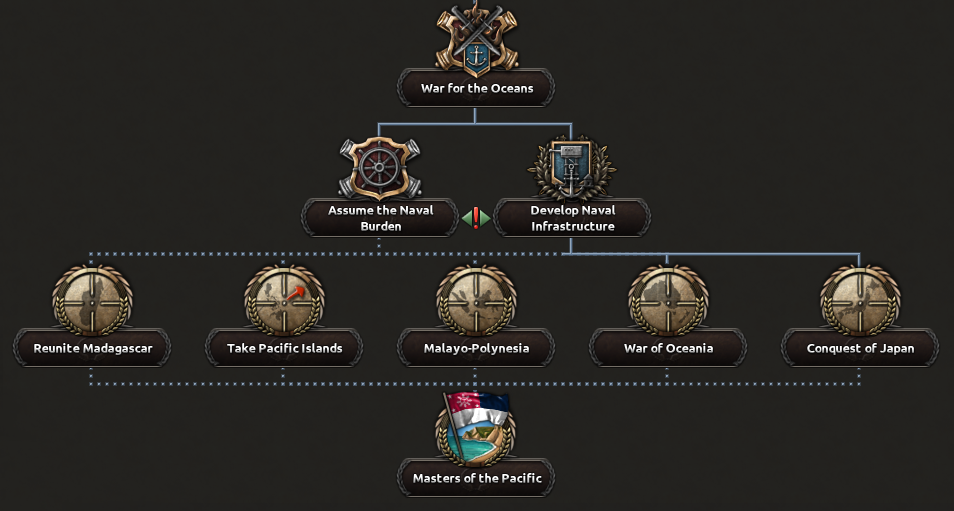
Expansion grants claims across the Pacific; many islands may be annexed or cored depending on Austronesian ties. Regions with substantial Austronesian populations were prioritized for claims and cores (which explains inclusions like Madagascar), while Oceania and Japan typically grant claims but not cores due to weaker cultural links.

Subject… surrender
Despite aspirational expansion, historical realism matters: the Philippines were occupied by Japan. That remains a likely outcome in many scenarios, particularly for AI on the Historical setting. We design minor nation content with AI playability in mind, so predictable and plausible behaviors are encouraged.
Even in defeat, the Philippines have strong resistance potential. Historically the resistance movements were among the most organized and effective in the region; the focus tree supports an enduring insurgency composed of USAFFE remnants, the Hukbalahap, Moro fighters, and other guerrilla elements. If in a faction with the United States, MacArthur can arrange supplies for underground forces. Conversely, a fully occupied state may become the Japanese-backed Second Philippine Republic, with the occupier gradually consolidating control.
National Defense Act

The National Defense Act is the gate to most military branches. It’s deliberately long — 245 days initially — but its duration can be shortened to 35 days by completing economic milestone focuses. Activating the Defense Act is a strategic choice: it dramatically improves factory and dockyard outputs and unlocks the Defensive, Army, and Air Force branches.
Specifically, the National Defense Act increases factory output by 75% and dockyard output by 50%, removing the dockyard penalty and leaving just a -15% factory modifier. That unlocks fortifications, army modernization, and a small air industry investment path (the latter being a speculative “what if” since much pre-war Philippine air power relied on U.S. equipment).
The Offshore Patrol
The naval branch is separated from the National Defense Act so the Philippines can field a meaningful fleet earlier in the campaign. Early naval focuses grant dockyards and dockyard output to get ships afloat before conflicts escalate. To reach advanced naval nodes like PT Boat Development you’ll still need the National Defense Act completed.
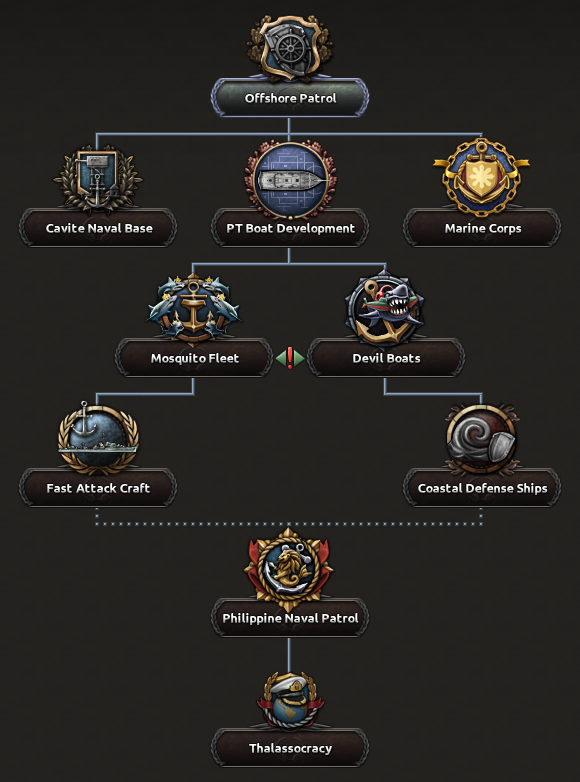
Patrol boats (PT boats) are implemented via the doctrine system: a Patrol Boat doctrine is introduced, giving bonuses to doctrine mastery and altering destroyer hull behavior. This approach provides a distinct Philippine naval identity focused on coastal interdiction and asymmetric maritime warfare.

On the national spirit front, the Philippines start with the Island Nation spirit, which boosts convoy production, improves convoy retreat speed, and reduces visibility — all conducive to hit-and-run naval warfare. Convoy capacity can also be traded for infrastructure and weapons through certain economic focuses.
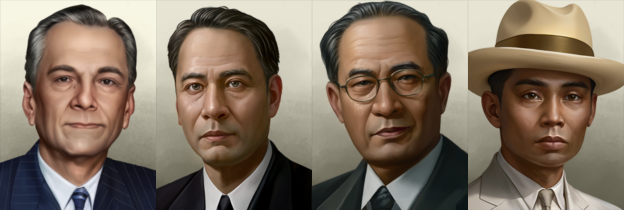
Characters
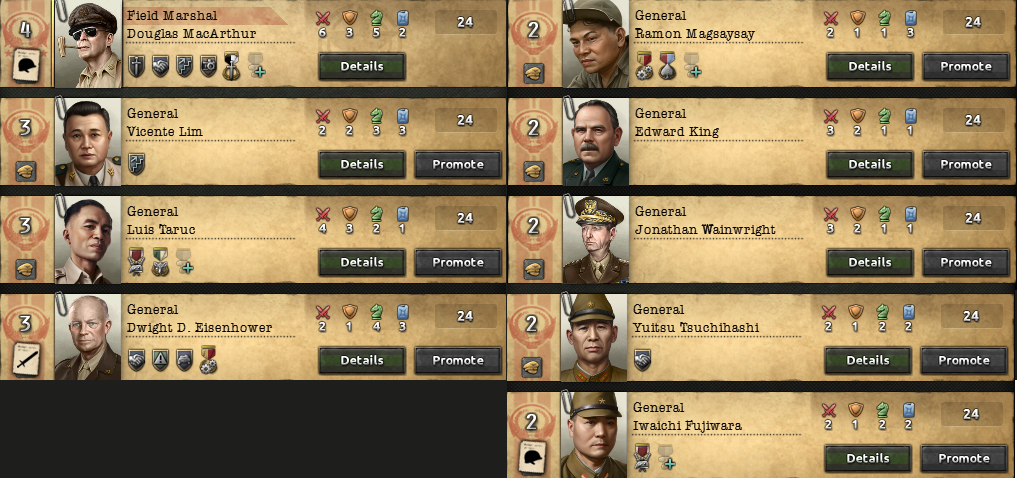
Generals
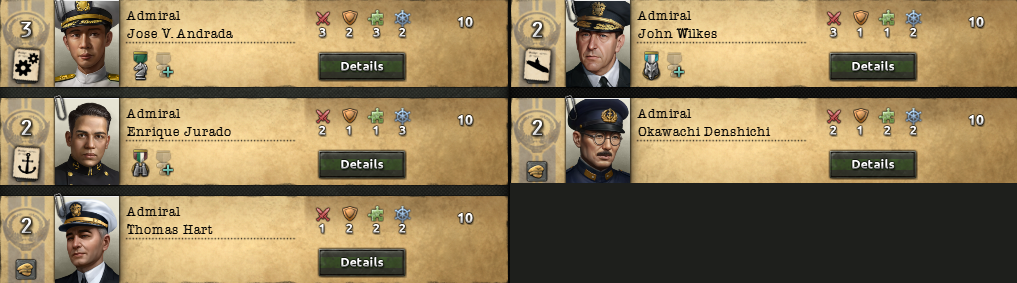
Admirals
Advisors

Country Leaders
Unlocking leaders will vary by path and player choices — experiment to discover them.

Unit art
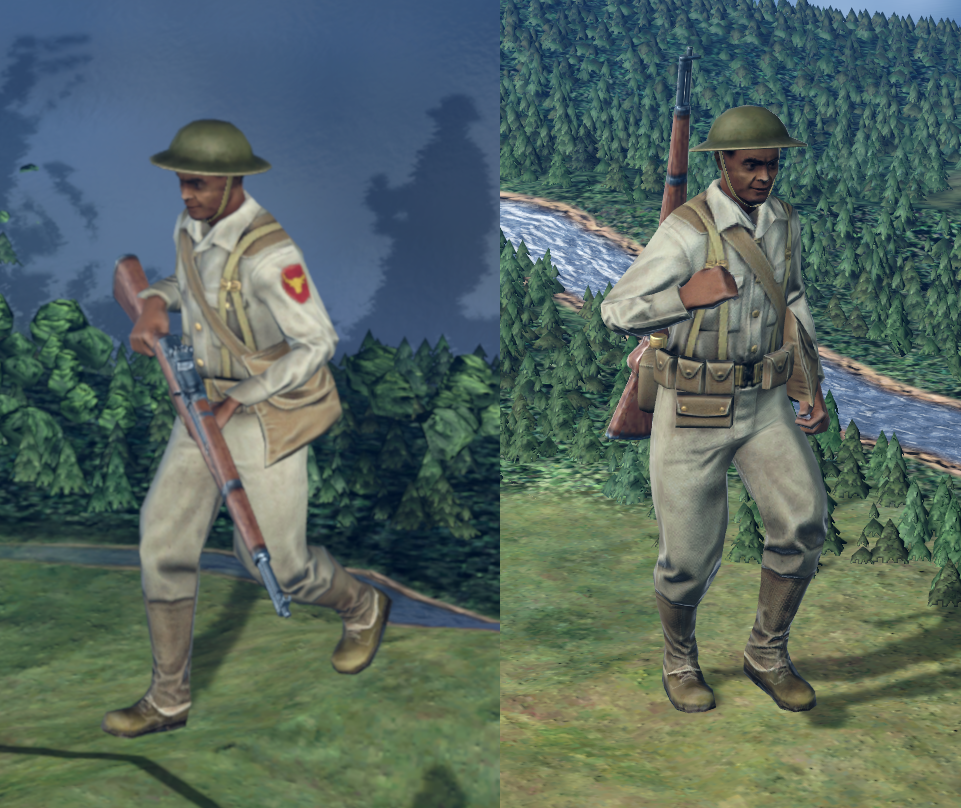
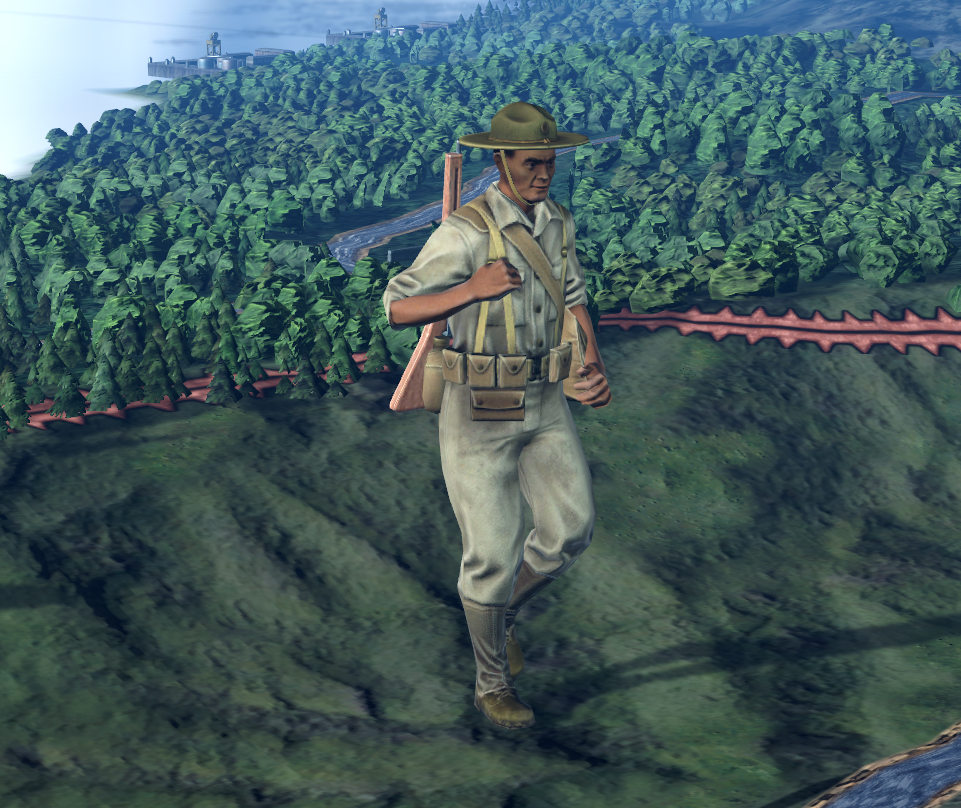
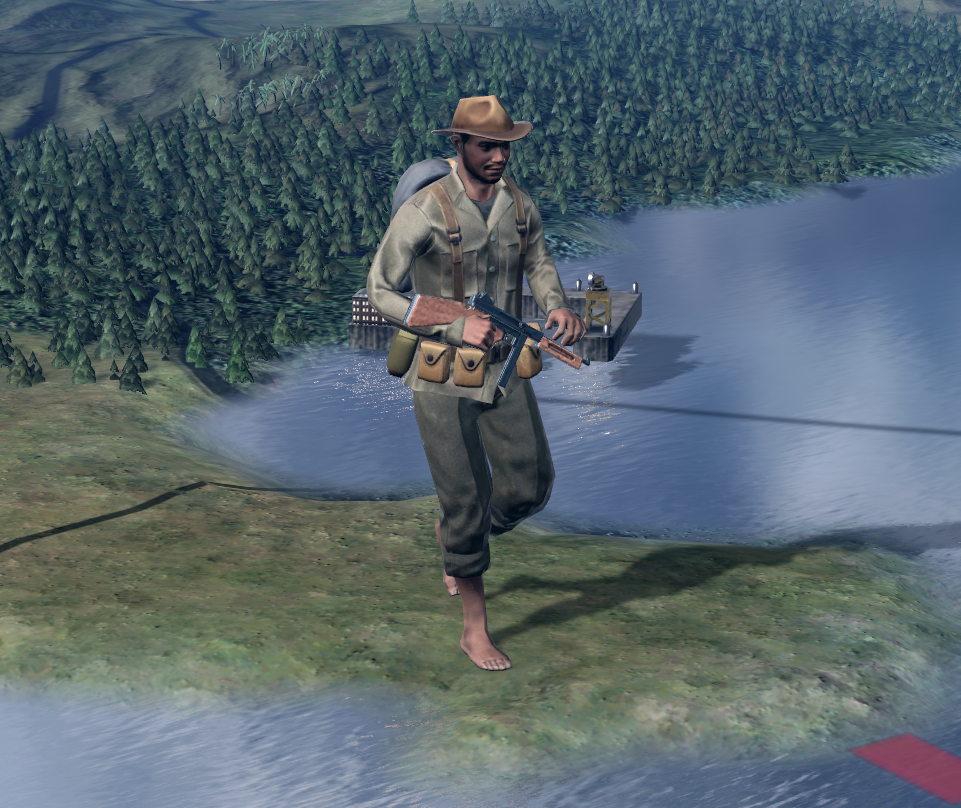

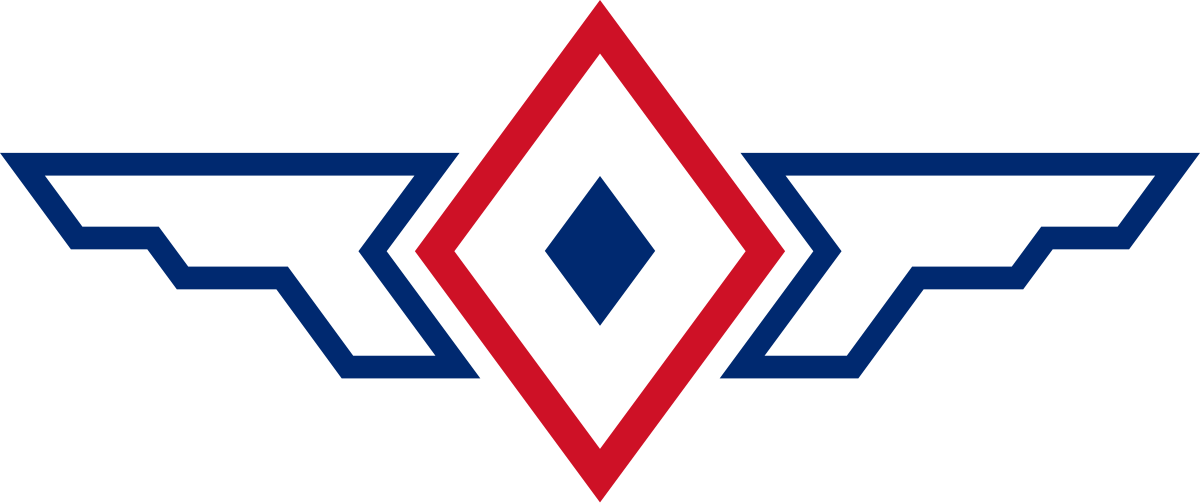
Many Philippine vehicles and aircraft historically matched U.S. equipment; we differentiated them by recoloring, adding a Philippine roundel (land units with a simplified roundel), and improving texture quality to give the nation a distinct visual identity.

That’s the overview for now. Please leave feedback — it’s invaluable. We can still tweak details, and we welcome questions about both revealed and unrevealed content.
Related articles
 HOI IV Developer Diary | Romania: A Flawed Democracy
 Developer Corner & Open Beta: Energy #2
 Hearts of Iron IV Dev Corner | Strikes!
 Hearts of Iron IV Dev Corner: Old Canada Questions Before New Canada
 Hearts of Iron IV Dev Corner | Energy
 Steam Autumn Sale 2026
 HOI IV Dev Corner | The Great Depression
 Hearts of Iron IV | Patch 1.19.3