Developer Diary | Australia: Until the Tide of Battle Turns
G’day! The development trenches have been busy, and we—Punchrullar and Mordred Viking—have finally emerged to share the news. The time has arrived to overhaul the Australian landscape, giving nine-year-old content a much-needed, fresh coat of war paint. Whether you’re a veteran of the southern front or a newcomer ready to test your mettle, we hope this update makes your experience even more engaging. Without further ado, let’s explore the new Australia.
Australia 1936
By 1936, Australia was still grappling with the scars of the Great Depression. The economic collapse hadn’t just devastated employment and industrial growth; it had severely hampered population stability. While low fertility rates had been a headache for leadership since the Great War, the looming threat of Japanese expansion made Australia’s sparse population an increasingly critical concern.
Following Japan’s incursions into Manchuria in 1931 and China in 1937, anxiety over southern encroachment intensified. Compounding this, Australia’s military remained severely underdeveloped and woefully unprepared for modern warfare. Even if Japan remained contained, Australia faced the distinct possibility of being dragged into conflict by its own allies.
With the Statute of Westminster yet to be ratified, a war for Britain was, by extension, a war for Australia. Memories of the disastrous Gallipoli campaign in World War I left many Australians hesitant to rush back into imperial service. As civilians, veterans, and officials clashed over the path forward, the inevitability of the approaching global conflict grew impossible to ignore.
Fight, Work, or Perish
Historical Path
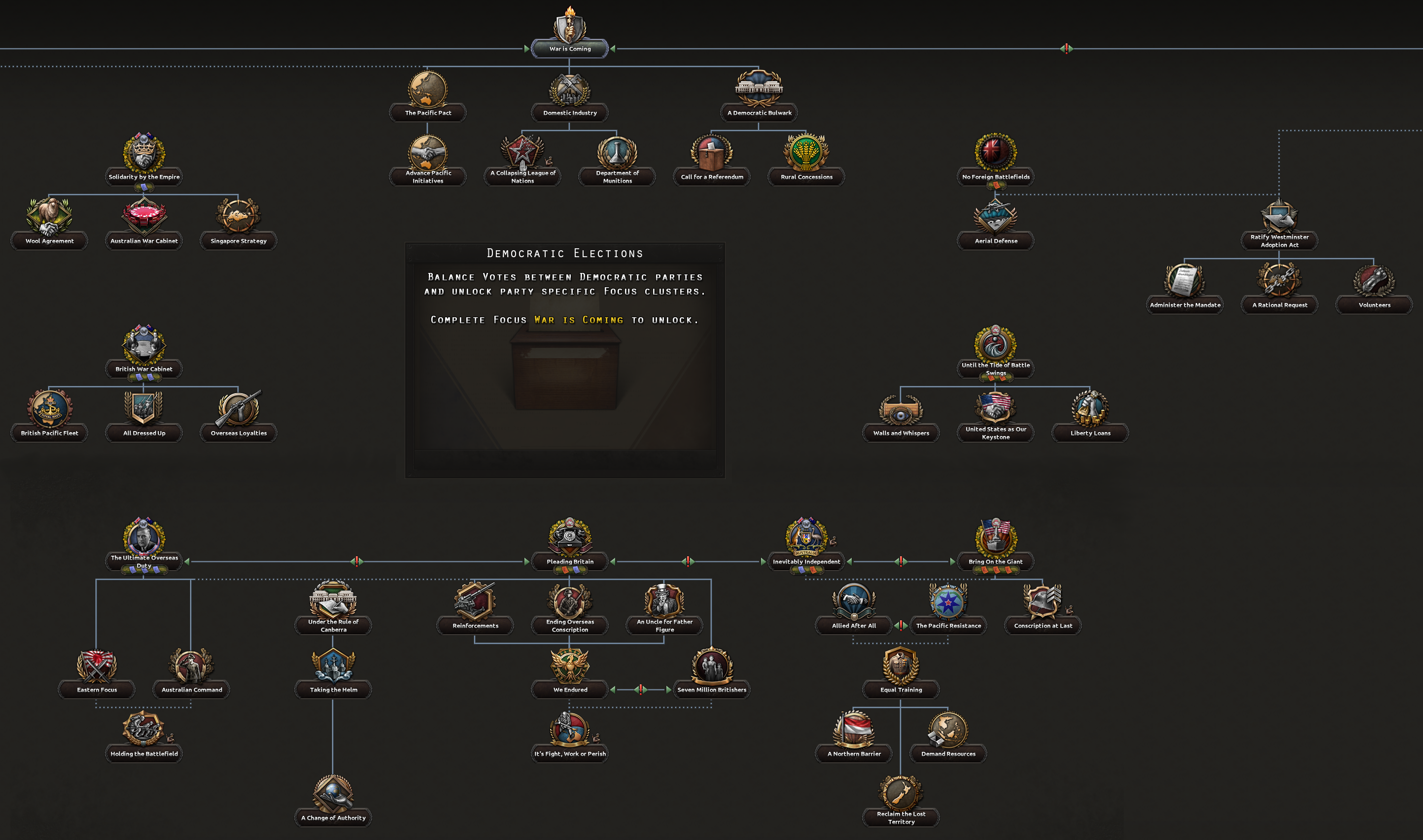
The historical route requires a delicate balancing act: appeasing British requirements while prioritizing pressing domestic necessities. Just as Australian leaders walked a tightrope in the 1930s, players will face similar pressures. By choosing to back the governing party or their opposition, players unlock distinct focus clusters aligned with specific democratic platforms.
The United Australia Party (UAP), representing conservative liberals, leans heavily into British cooperation. Conversely, the Australian Labor Party (ALP), representing social democrats, prioritizes self-sufficiency and reducing foreign dependency. You can switch between these paths dynamically as the game progresses; even when a party is out of power, their previous initiatives will continue to influence your available options.
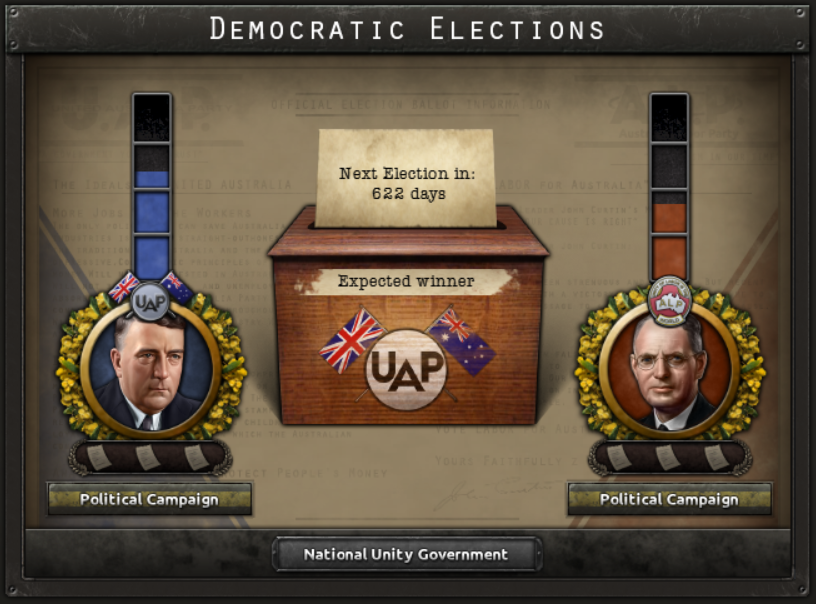
Elections now carry significant weight, regardless of whether they lead to a shift in governing ideology. We’ve introduced a “Democratic Elections” window within the focus tree, allowing you to track the projected winner and upcoming election dates. Players can invest Political Power into “Party Campaigns” to sway popularity, while various focuses and events will also subtly shift the political landscape.
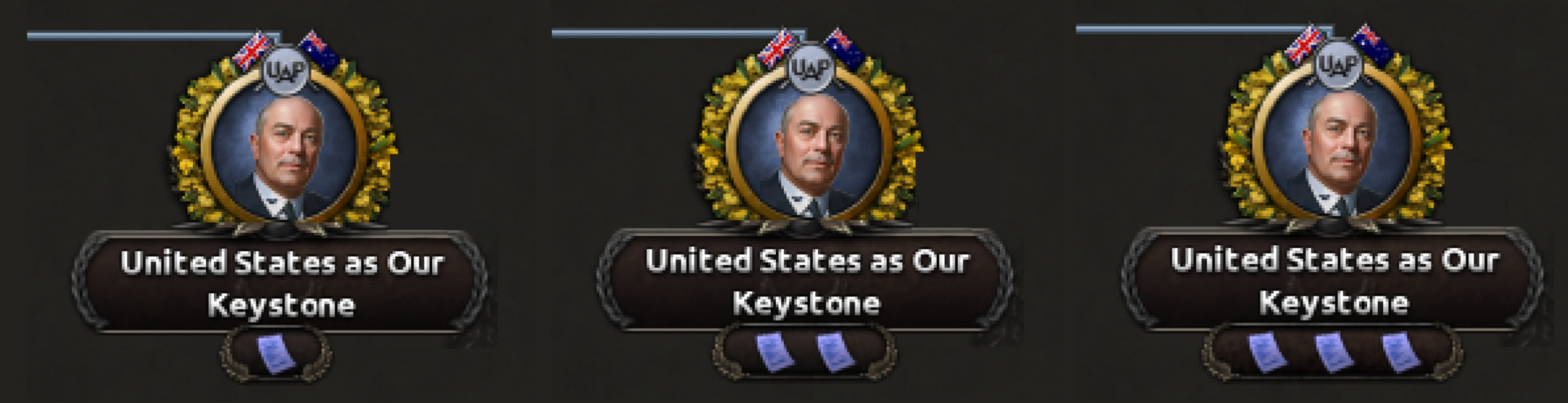
Unlockable focus clusters are highlighted by a golden wattle frame and the corresponding UAP or ALP logo. Once a cluster is unlocked, it remains active even if the government changes, ensuring you are never unfairly restricted by timing. Ultimately, players choose their own destiny: maintain the historical status quo under John Curtin, proactively build a self-reliant military industrial base to secure autonomy, or embrace total British alignment to extract every possible colonial advantage.
Wartime Leaders
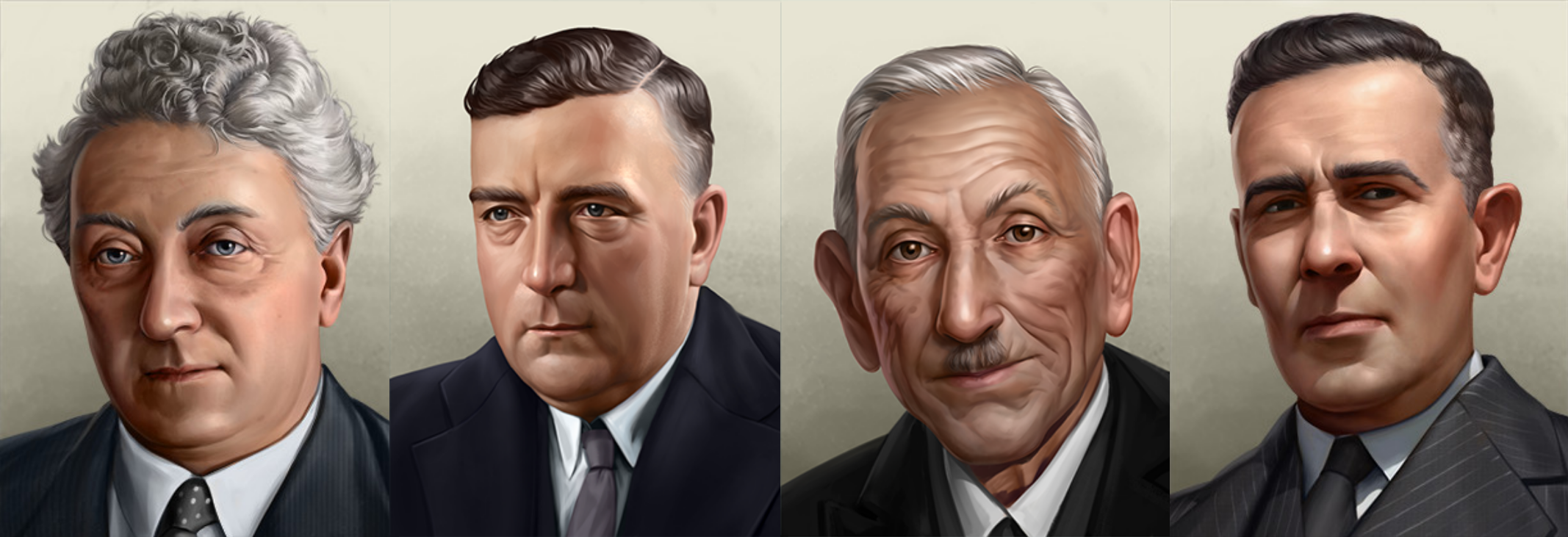
While John Curtin remains a cornerstone of Australian leadership, he wasn’t alone in steering the nation. We are proud to introduce a new roster of playable democratic leaders: Joseph Lyons, Robert Menzies, Billy Hughes, and Ben Chifley.

We’ve also added some intriguing advisors to the mix, including the polarizing Jack Lang and the dependable coalition ally Arthur Fadden.
The Canberra Air Disaster
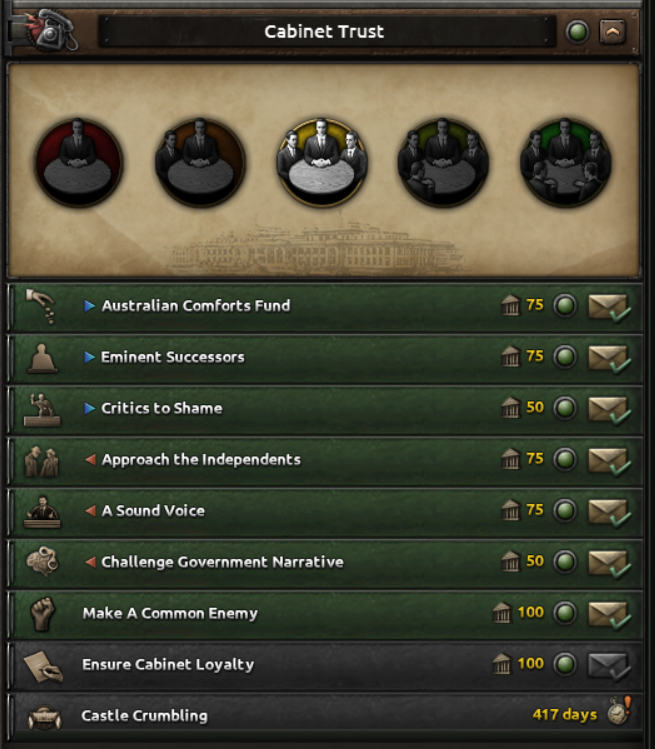
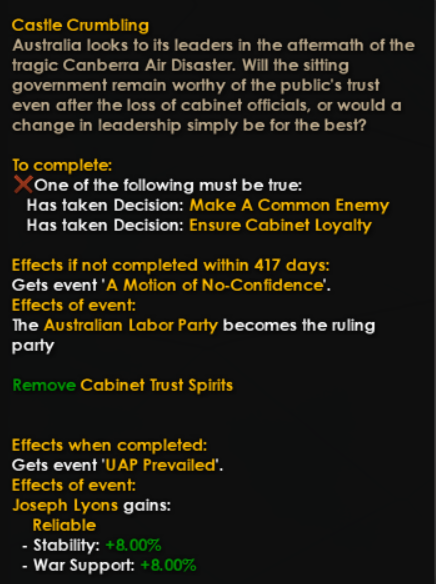
The Canberra Air Disaster—a tragic crash that claimed the lives of key military advisors—is now a central mechanic. This event acts as a crucible for your government; you must decide whether to weather the political fallout or resign, clearing the way for new leadership. This system functions as a vital turning point, triggering the unlocking of new focus clusters. We’ve also introduced the “Eminent Successors” decision, which provides a temporary discount for recruiting new advisors, helping you recover from such losses more efficiently.
Populate or Perish
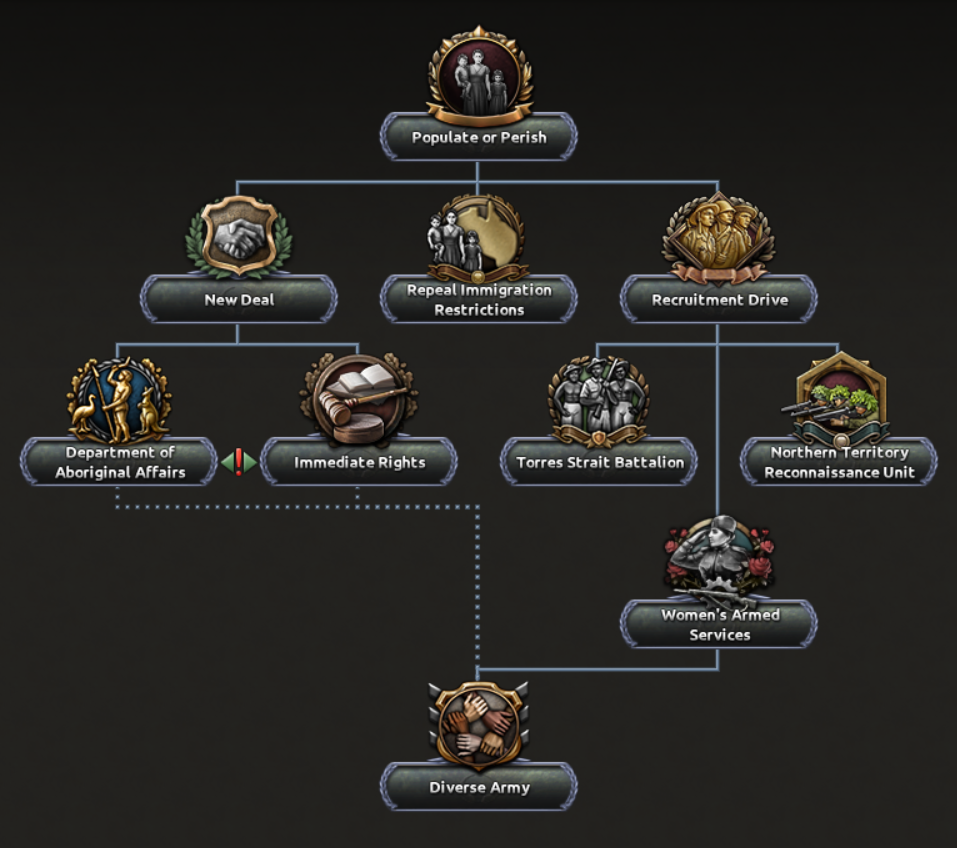
Addressing the critical issue of low birthrates is essential for national growth. The “Populate or Perish” branch allows players to overhaul immigration laws, bolster social welfare, and relax recruitment restrictions to expand both the civilian workforce and the military. Thanks to community feedback, we’ve also integrated the Northern Territory Recon Unit and the Torres Strait Battalion into this progression.
Industrial Development
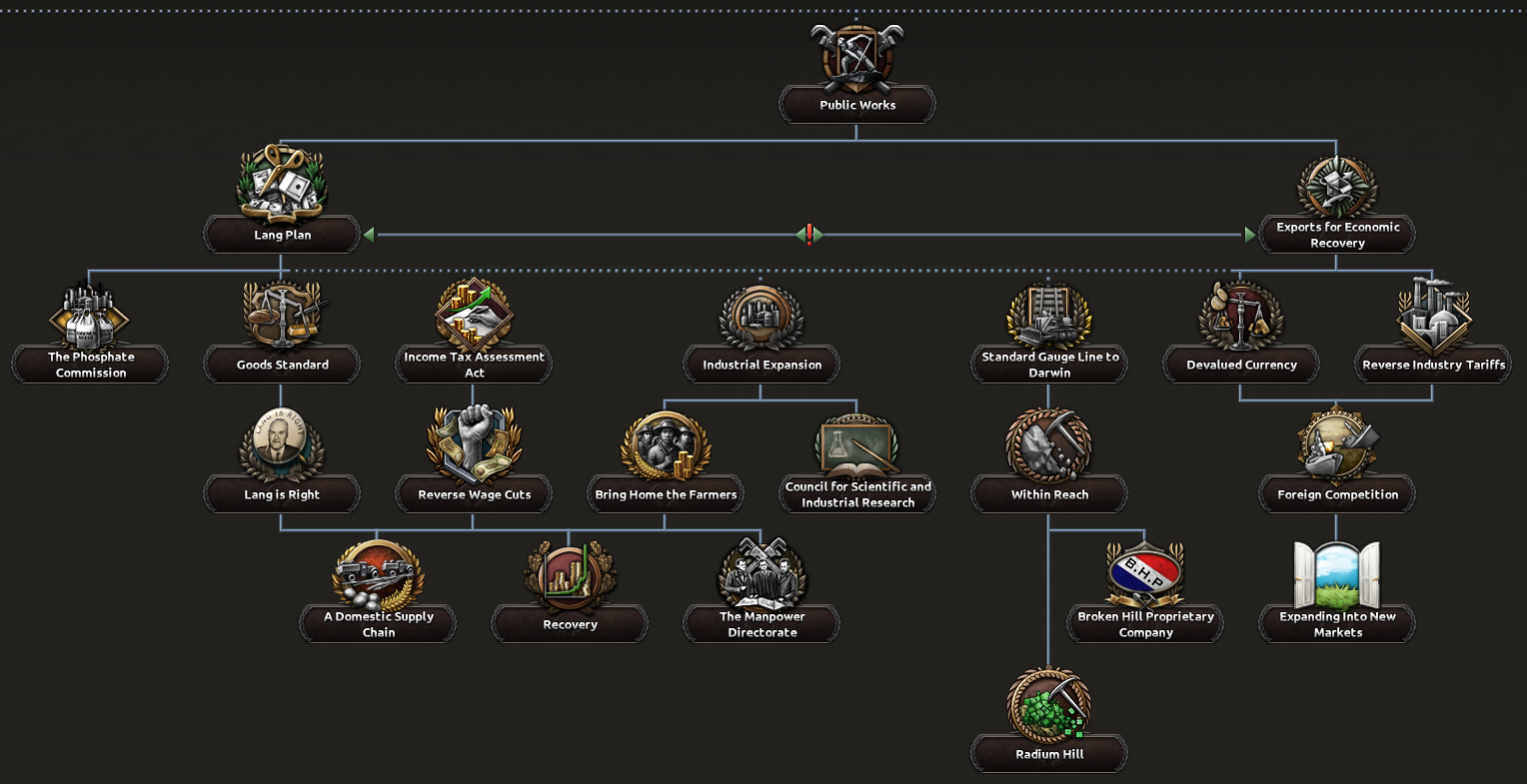
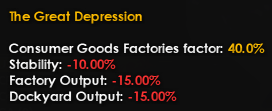
Democratic and Fascist paths now share a unified industrial branch, while the Communist path will be unveiled in Part 2. All paths must eventually overcome the stagnation of the Great Depression, eventually securing full recovery.
Choose your economic destiny: “Lang’s Plan” focuses on immediate domestic infrastructure and consumer goods, while “Exports for Economic Recovery” shifts focus to international trade and resource extraction, including access to the lucrative Pitbara mines for a virtually infinite steel supply.
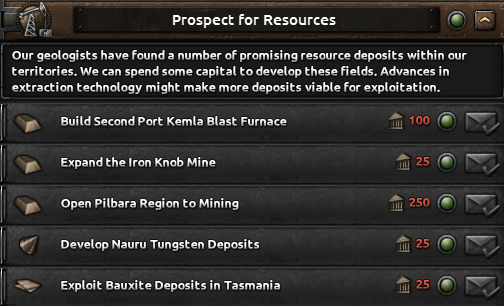
Resource distribution has been reworked to make you more dependent on strategic development over time. Furthermore, we’ve upgraded industrial concerns like Broken Hill (extraction boost), Mount Isa Mines (resource penalty mitigation), Whyalla Steelworks (steel and dockyard capacity), and the Bradmill Denim Factory (infantry equipment production).
Military
Army
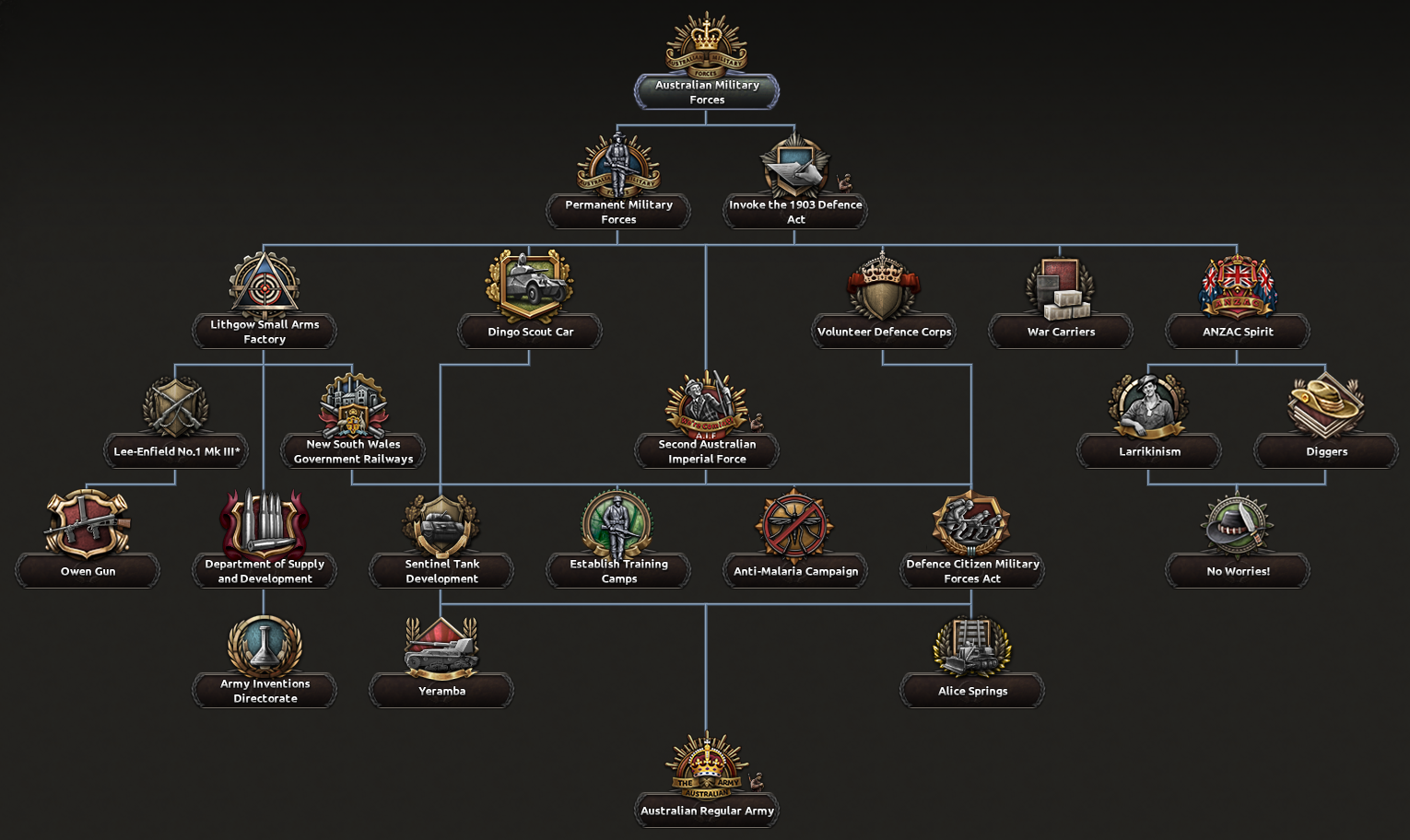
Historically, the Australian Army was designed for home defense, with separate expeditionary forces raised for overseas service. We represent this through the new “Expeditionary Leader” trait. This trait offers massive bonuses to attack and defense in non-core territory but severely limits command capacity, encouraging the use of specialized, highly potent strike forces rather than massive, uncoordinated armies.
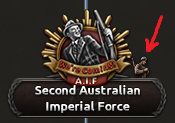
Manpower remains a constant challenge. You must now cultivate the political will to increase conscription, with key focuses allowing you to incrementally step up your mobilization efforts. Finally, the “ANZAC Spirit” branch honors the national identity born from the Great War, granting unique organizational bonuses that reflect the tenacity of Australian soldiers.
Air Force
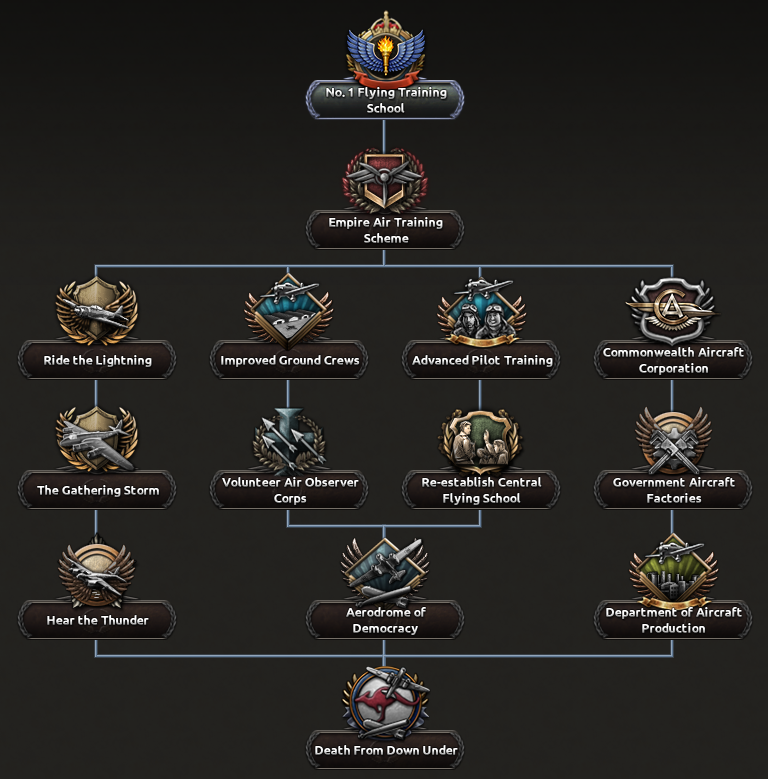
Reflecting the RAAF’s growth into the world’s fourth-largest air force by 1945, this branch provides significant production and technology bonuses. We’ve also included an alternate-history path exploring the “what-if” scenario where Australia served as the primary host for the Empire Air Training Scheme.
Navy
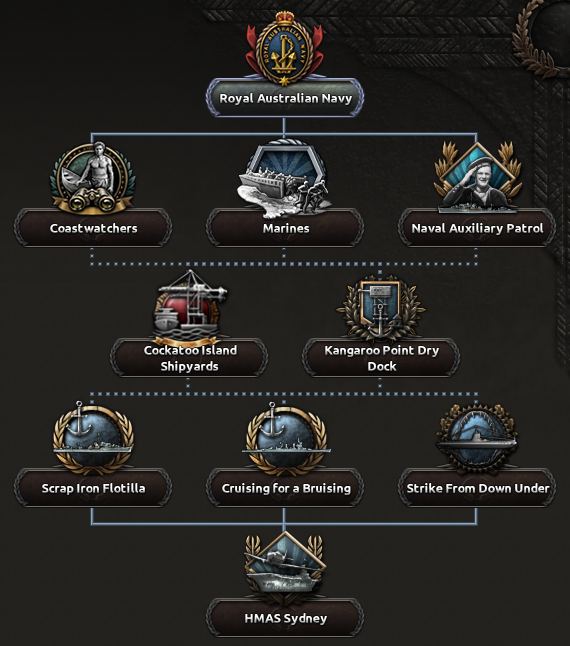
As an island nation, your navy is paramount. Beyond simply rebuilding, you can leverage the Coastwatchers for superior early-warning intelligence, deploy the legendary “Scrap Iron Flotilla” of destroyers, and aim for the ultimate prize: operating your own fleet carriers like the HMAS Melbourne.
Until Next Time!
Cheers for checking in with us! We’ll be back shortly to dive into the alternate-history paths for Fascism and Communism. Until then, take it easy!
Related articles
 HOI IV Developer Diary | Romania: A Flawed Democracy
 Developer Corner & Open Beta: Energy #2
 Hearts of Iron IV Dev Corner | Strikes!
 Hearts of Iron IV Dev Corner: Old Canada Questions Before New Canada
 Hearts of Iron IV Dev Corner | Energy
 Steam Autumn Sale 2026
 HOI IV Dev Corner | The Great Depression
 Hearts of Iron IV | Patch 1.19.3