
Developer Diary: Alternate-History Japan
Hisashiburi — welcome back to another Japan developer diary. I’m D3vil, and in this entry I’ll walk you through the alternate political directions Japan can pursue in the upcoming No Compromise, No Surrender DLC. If you want to revisit the historical and common branches before reading on, you can find that diary here: Developer Diary — Historical Japan.
The Imperial Way
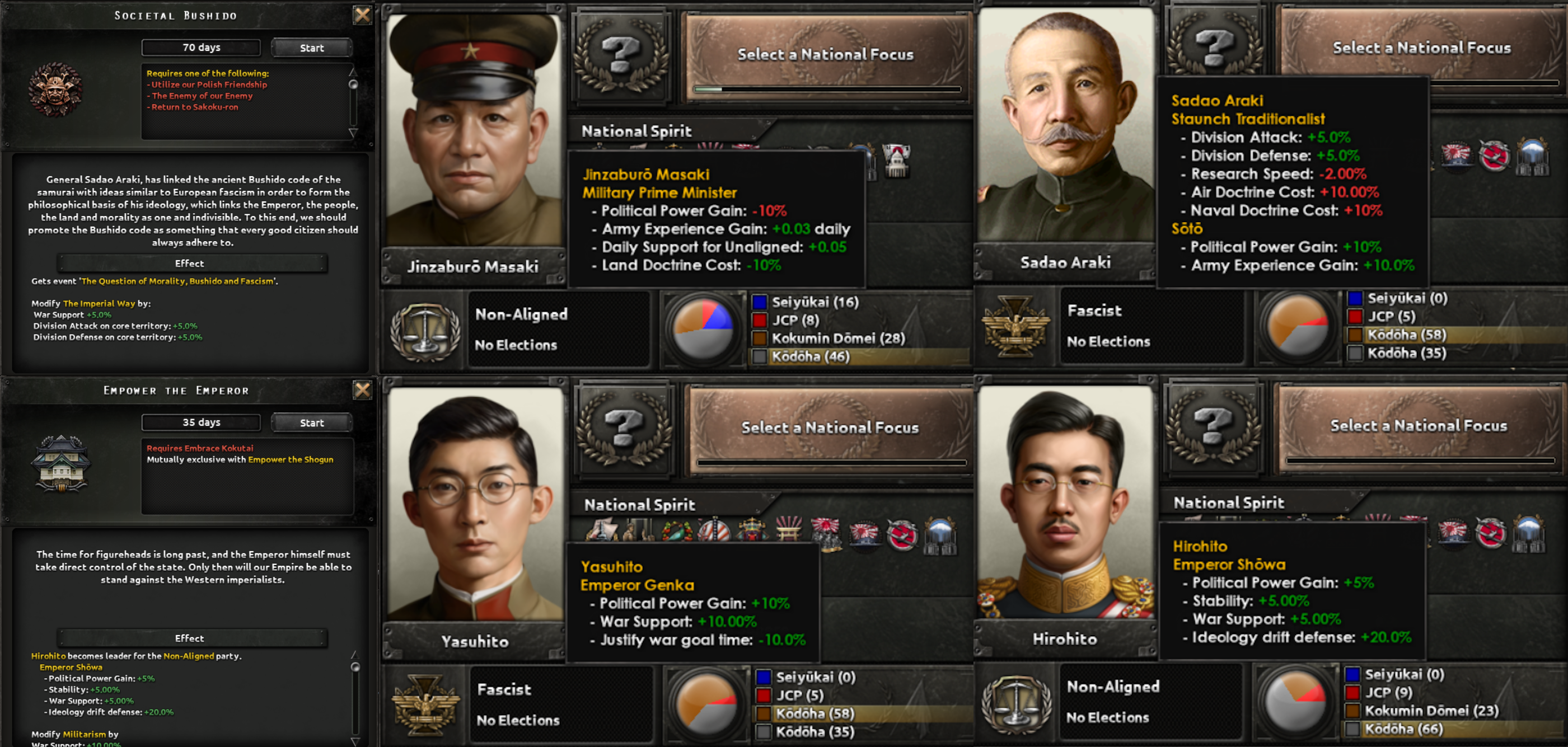
We’ll start with the route closest to what players have already seen: a Kodoha-driven path that emphasizes the army and the Emperor’s authority. Previously this branch only enabled a Strike North doctrine and a non-aligned Japan centered on the Emperor. In the new content, selecting the Kodoha option after the Coup Attempt mission steers the nation toward a more militaristic, imperial-focused trajectory.
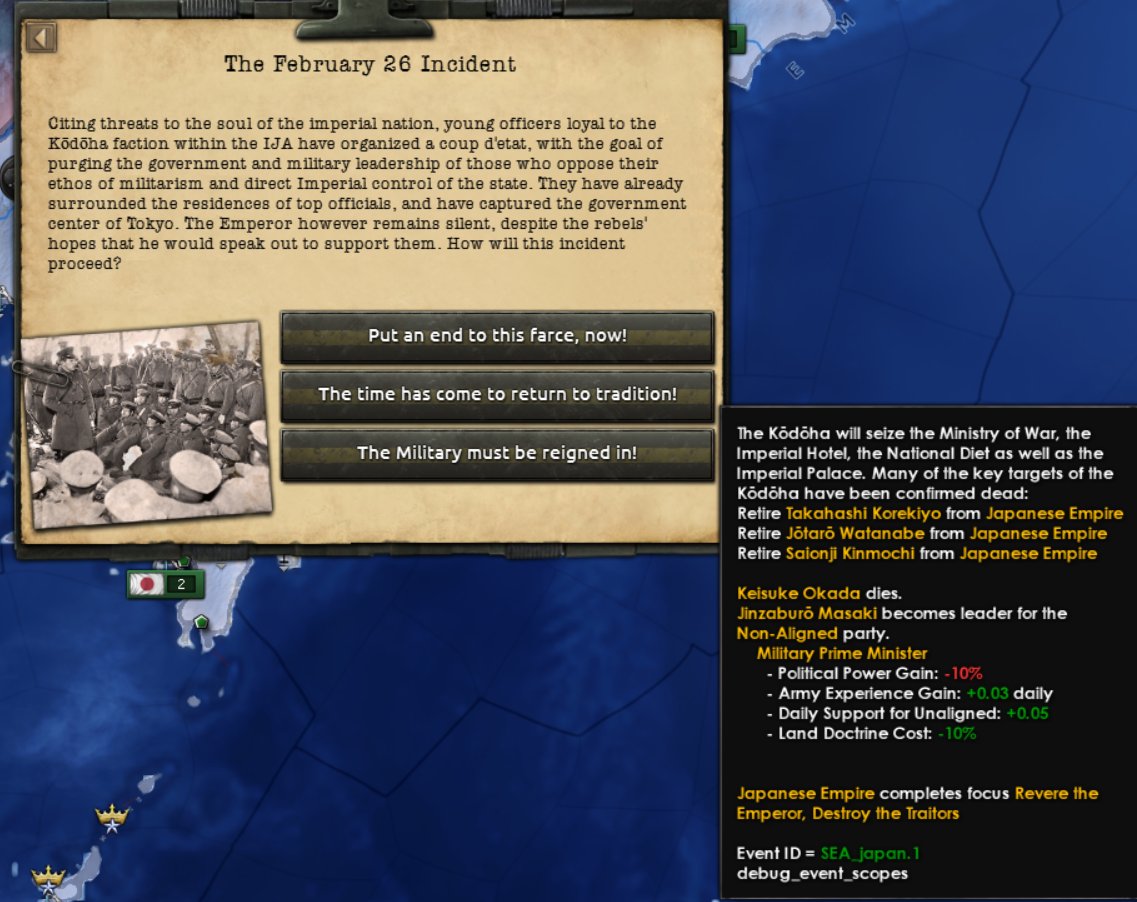
This branch grants access to the same foreign-policy choices as the historical line, so you can still pursue Strike North or Strike South — or attempt both — but the army will dominate strategy. Achieving a successful naval-centered Strike South requires more effort, since priority and resources favor ground forces.
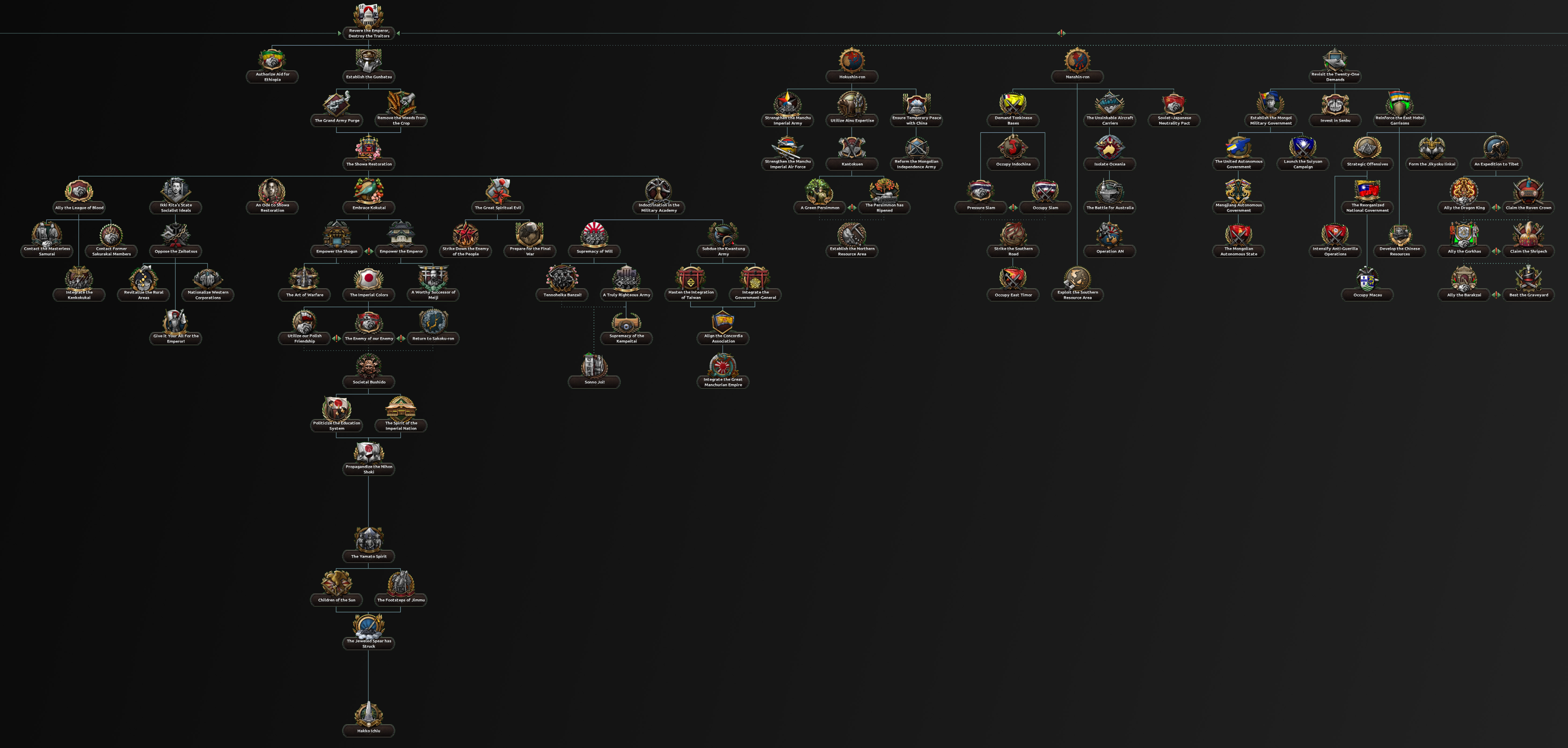
The Imperial Way favors direct annexation and central control rather than puppet networks. Annexing Manchuria and pursuing centralized governance are central mechanics, reflected in faction options that reduce puppet bonuses in exchange for tighter control.
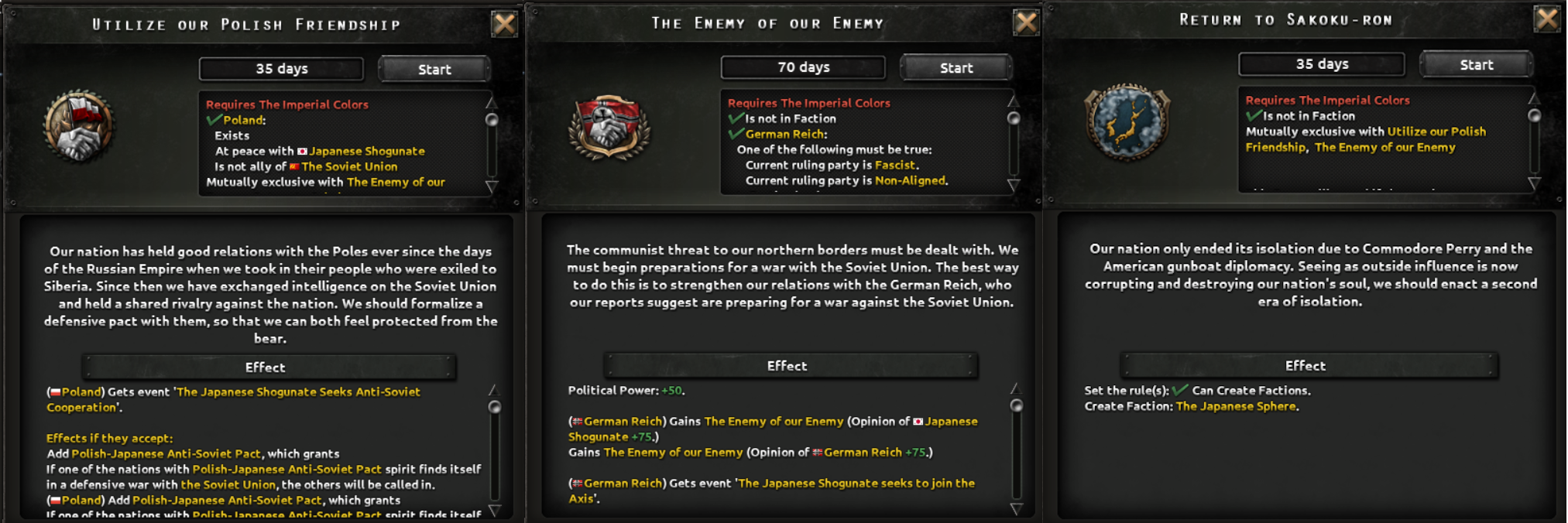
Players can, with sufficient internal pressure, curb the Kwantung Army’s autonomy — giving you flexibility over when and how to press into China. Ideologically, the path can evolve toward fascism or remain non-aligned depending on leadership choices and political maneuvers.
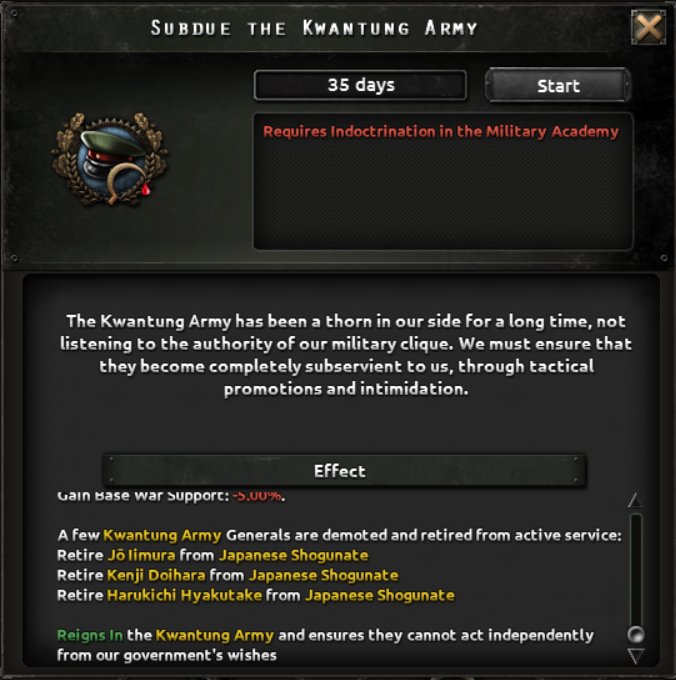
Economically and culturally, the Kodoha route leans pro-rural and valorizes a “will-over-technology” doctrine: devoted, disciplined soldiers from remote provinces are idealized as the decisive factor in warfare. Propaganda eventually elevates Japan’s mythic origins and mobilizes society for a final, world-spanning conflict — a campaign to secure Japan’s supremacy across the globe.
A Turn Toward Democracy
Next: a less militarized option, triggered when Keisuke Okada publicly opposes the army’s growing influence after the failed coup. Choosing this route flips Japan to democracy immediately, but stability is fragile — defying the military risks renewed unrest.
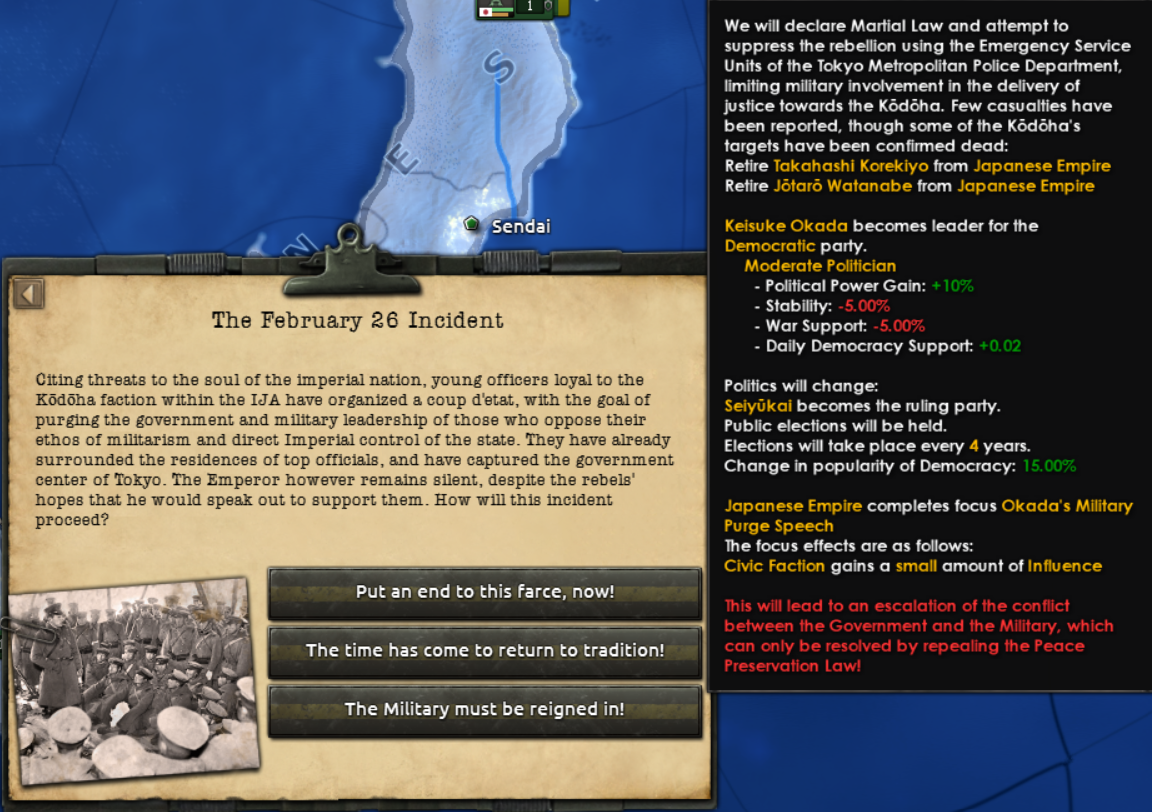
Political tensions rise quickly. Emperor Hirohito may install Machida Chuuji — leader of Rikken Minseito — as interim prime minister to shepherd the country through the crisis. An internal election follows to determine who can unify the democratic factions and resist another coup attempt.
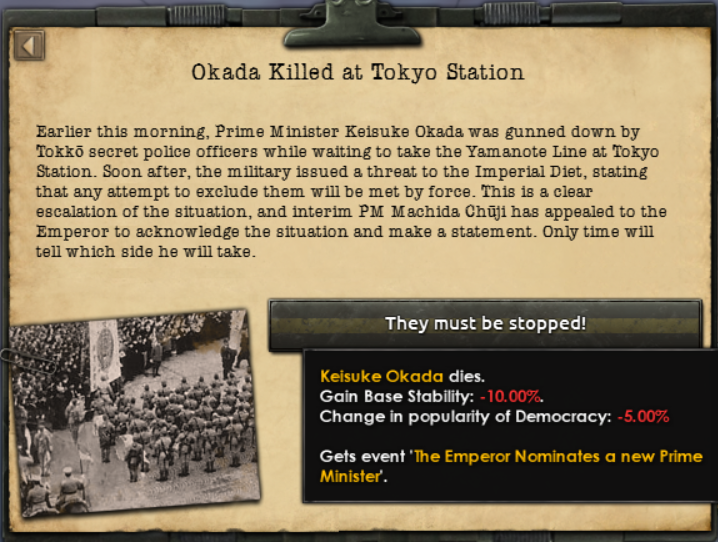
The democratic government must secure key prefectures, win over military leaders, and shore up civilian institutions. Once prepared, the cabinet can repeal the Peace Preservation Law — a repressive statute imposed by militarists — to restore civil liberties and stabilize the cabinet. This transition is rarely seamless and may provoke further conflict.
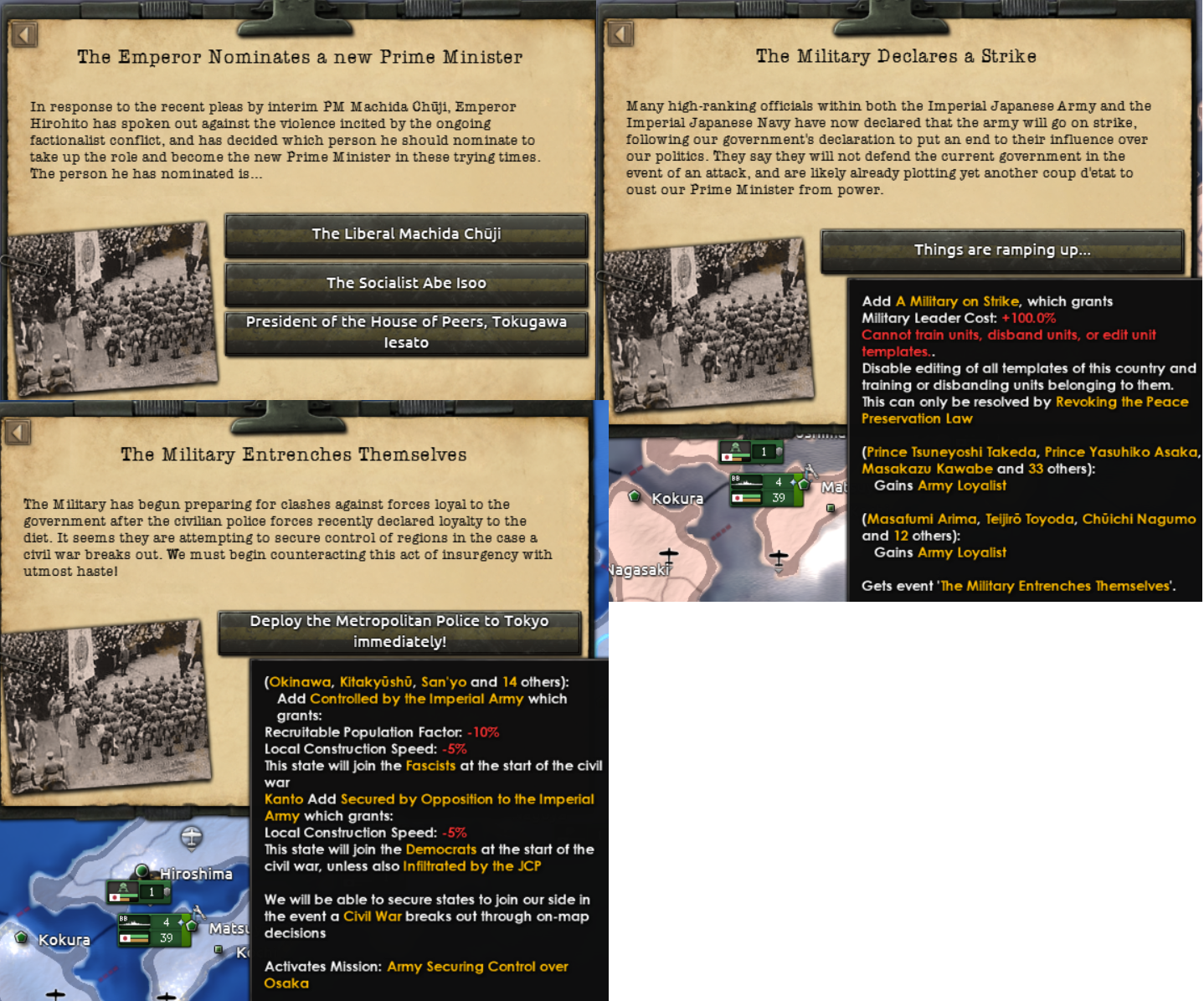
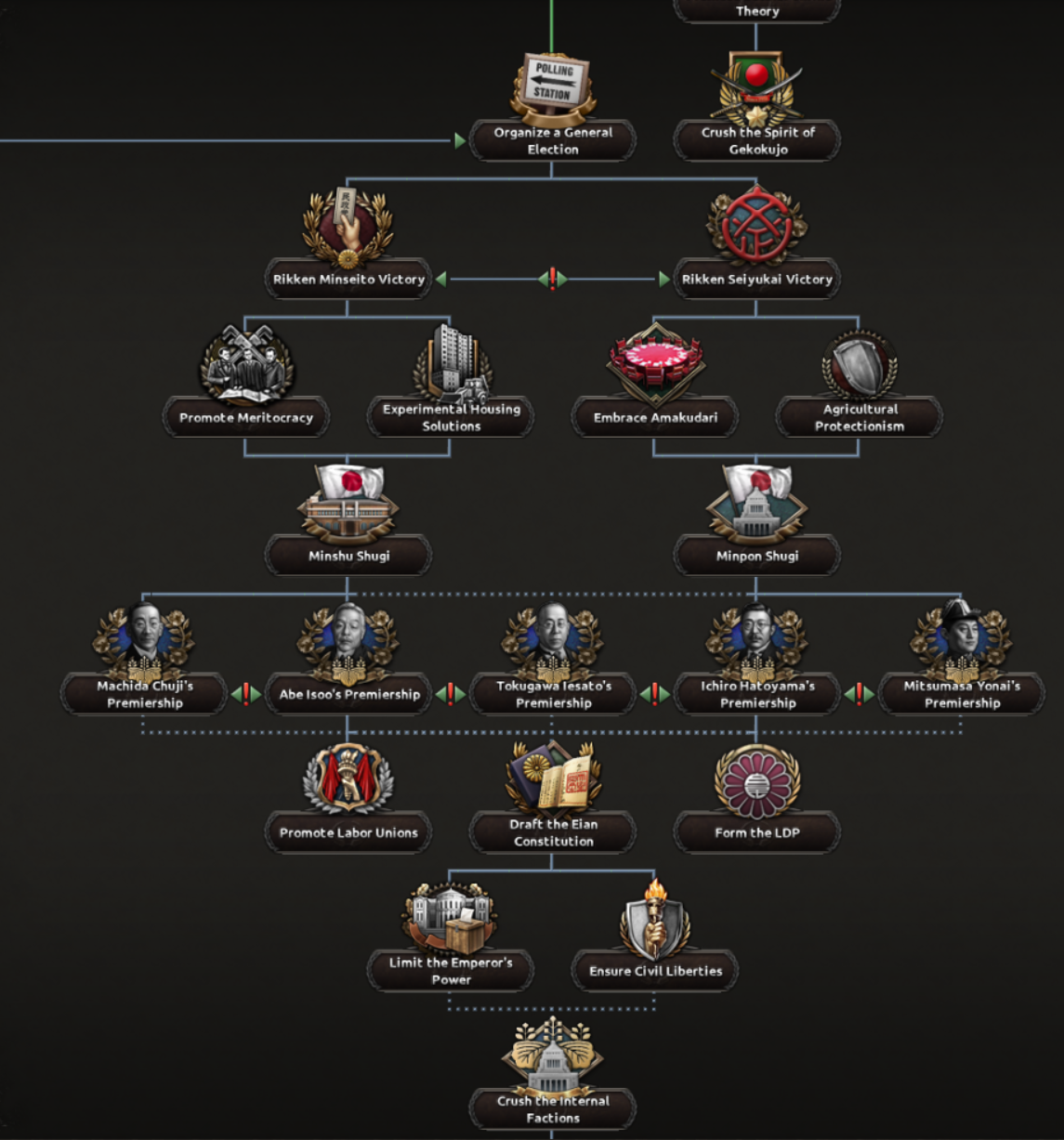
If civil war is avoided, the democrats gain the chance to reform the military, purge militarist influence, and hold Japan’s first genuinely free elections since the Taisho era. Election outcomes will determine economic recovery policies, industrial focus, and the nation’s diplomatic direction.
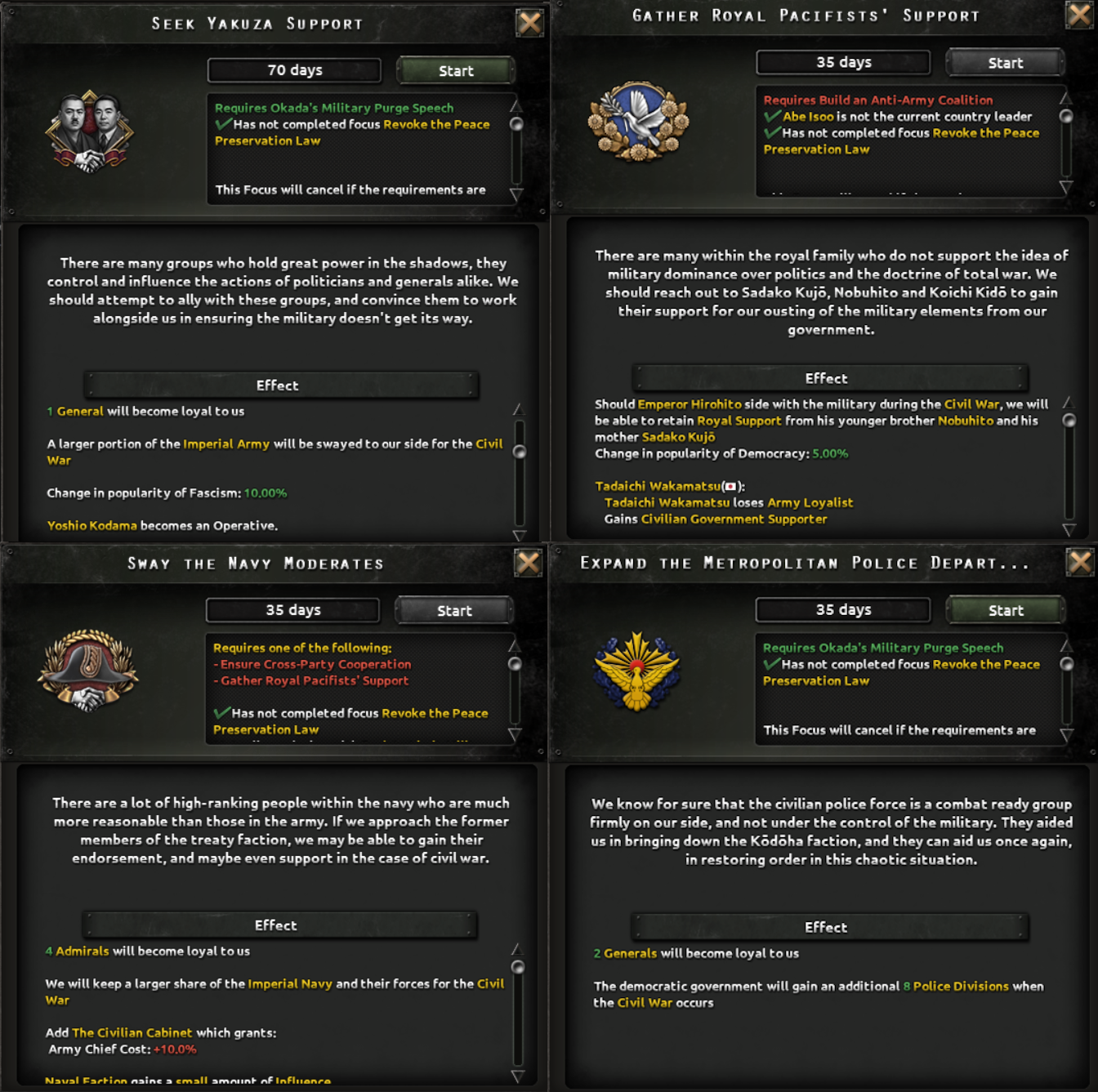
Democrats pursue two core objectives: rapid modernization to lift Japan out of economic malaise, and the promotion of democratic ideals across Asia. This branch excels at industrial and research expansion, and allows you to rekindle old alliances or forge entirely new ones. Expansion is possible, too — framed as exporting democracy and unifying Asia under democratic governance.
The Unthinkable Option
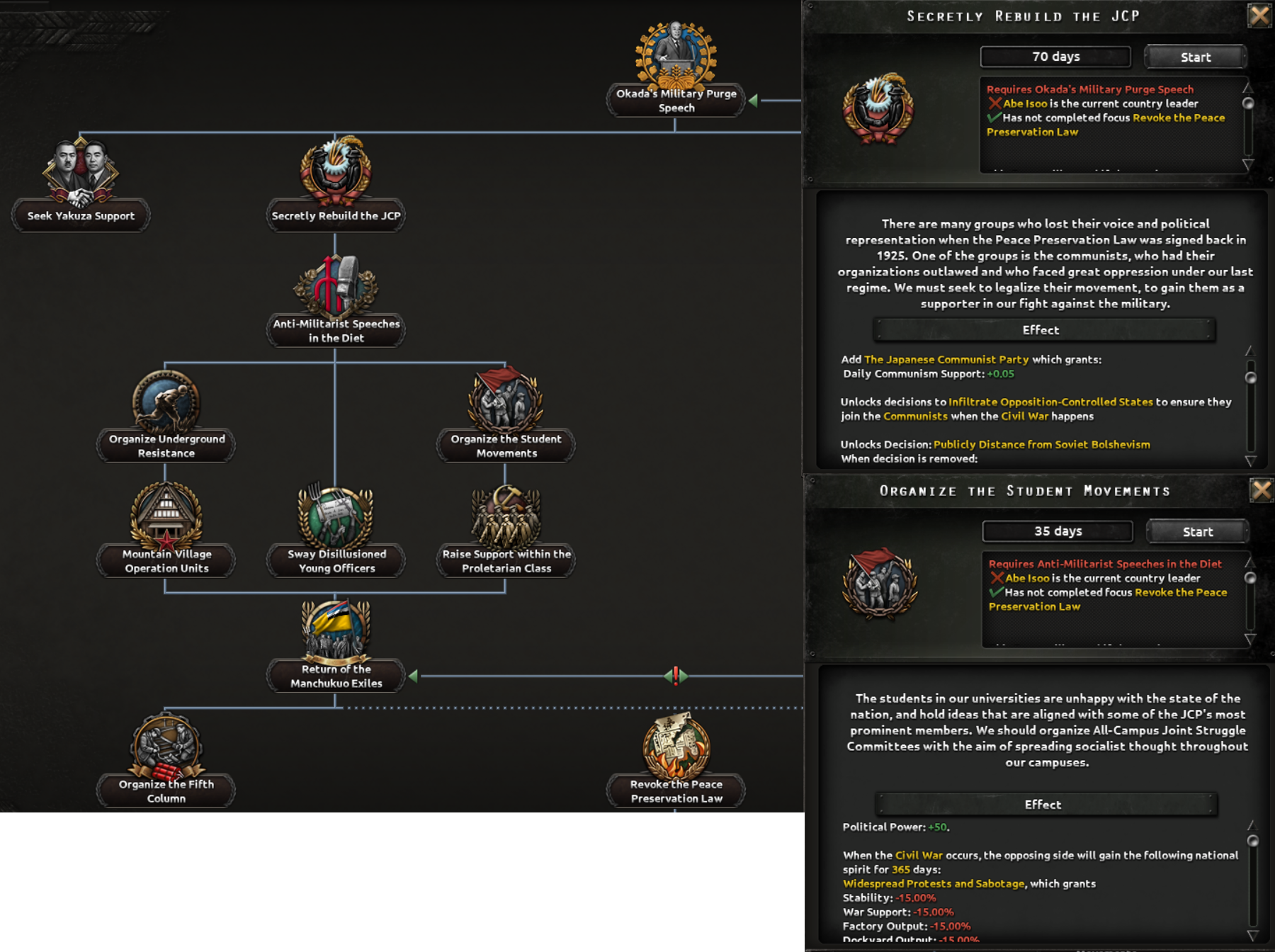
Finally, the radical left: a resurgent communist movement. Normally marginal and ruthlessly repressed by the Thought Police, the communists become plausible after Okada’s challenge to the military. If Isoo Abe, a socialist democrat, is installed as interim prime minister, the left’s pre-civil war focuses become available — strengthening labor networks and preparing clandestine resistance.
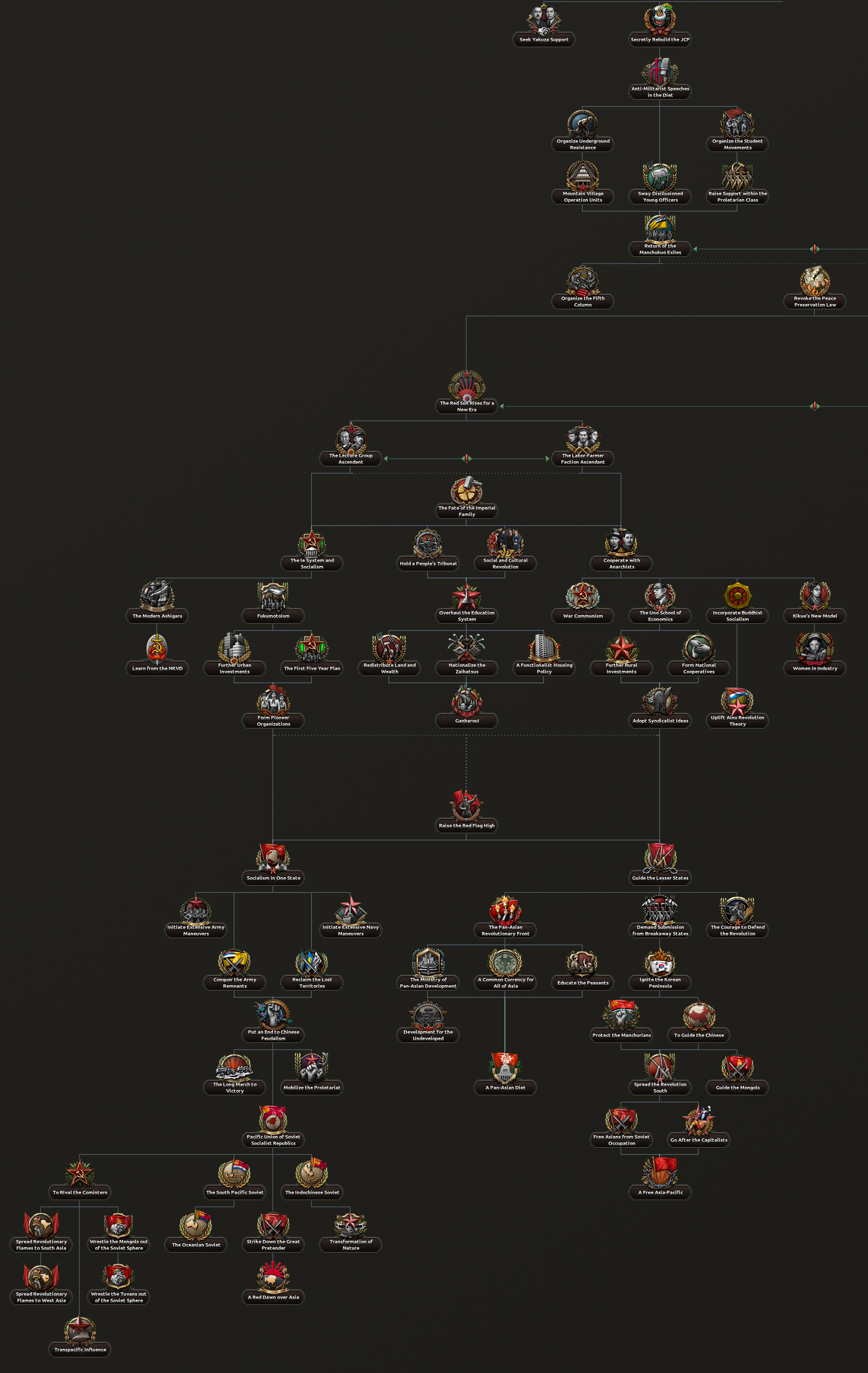
Under Abe’s leadership, left-wing organizers can expand influence among workers and sympathetic junior officers, build secret bases and peasant militias, and attempt to sway disaffected elements of the military. If civil war erupts, the communists may break with their erstwhile allies and plunge the nation into a three-sided conflict — employing sabotage, guerrilla tactics, and covert operations to survive.
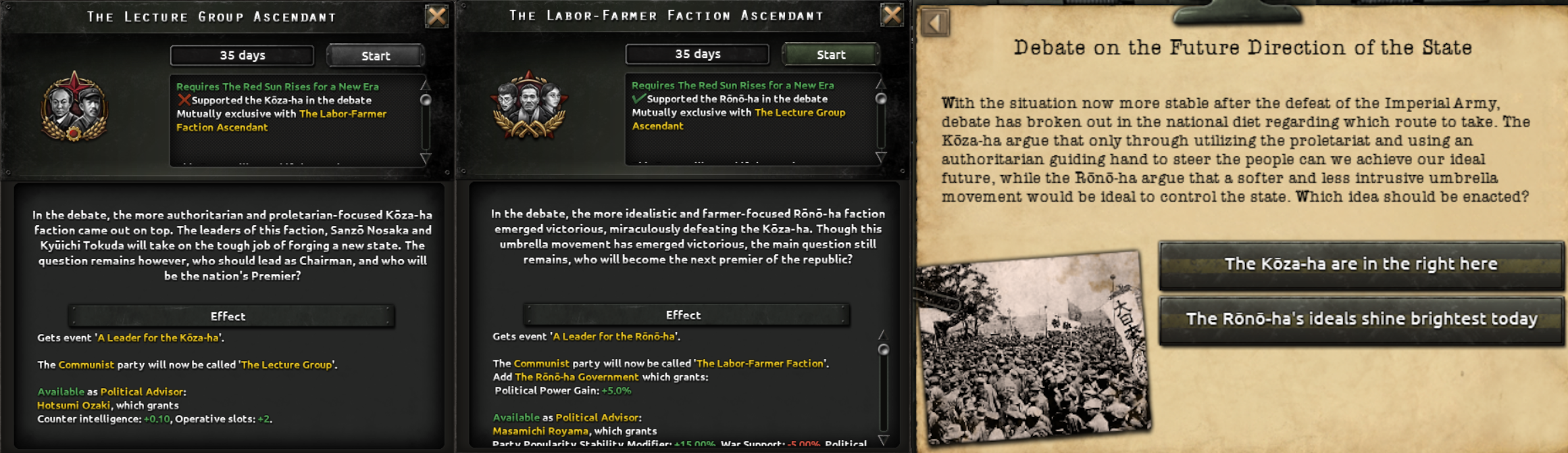
Victory forces the party to decide its internal balance. Two competing currents emerge: the Lecture Group, favoring a centralized, Leninist-Stalinist model that seeks to expand by force; and the Labor–Farmer bloc, which pursues a broader coalition of socialist movements and emphasizes rural reconstruction.
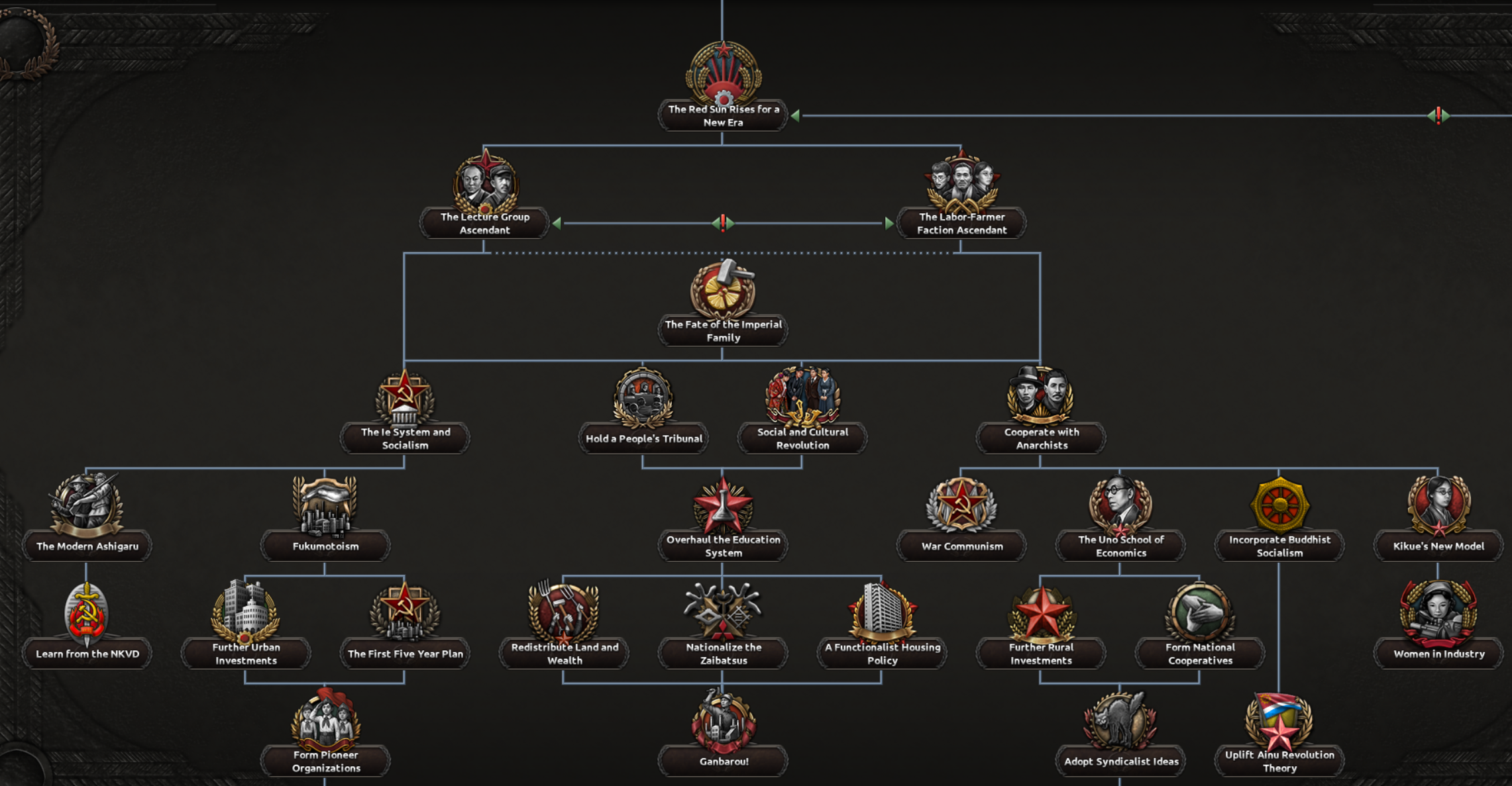
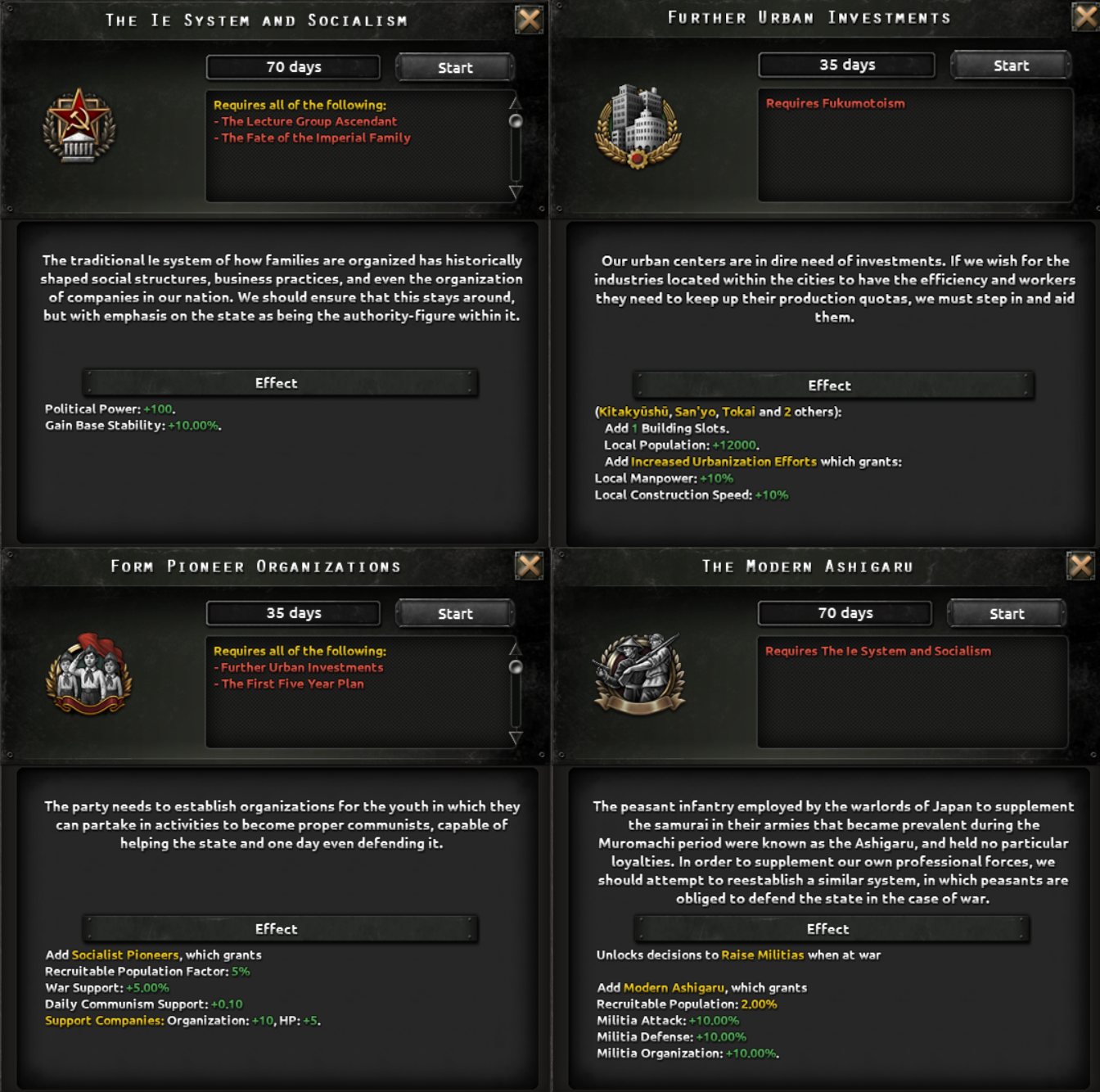
Both paths share aims to dismantle imperial structures, reform the education system, and break the power of Meiji-era oligarchs — all while rebuilding industry to close the development gap. Once sufficiently consolidated, the communist regime will target the liberation of Asia from colonial powers, although neither faction trusts the Soviet Union and both intend to act as independent counterweights in regional geopolitics.
The Lecture Group aims to unify East Asia through force, creating a continental power capable of standing against the USSR, the Commonwealth, and the United States. The Labor–Farmer faction prefers establishing sympathetic governments across the region, employing subtler means to spread influence and undermine imperial structures.
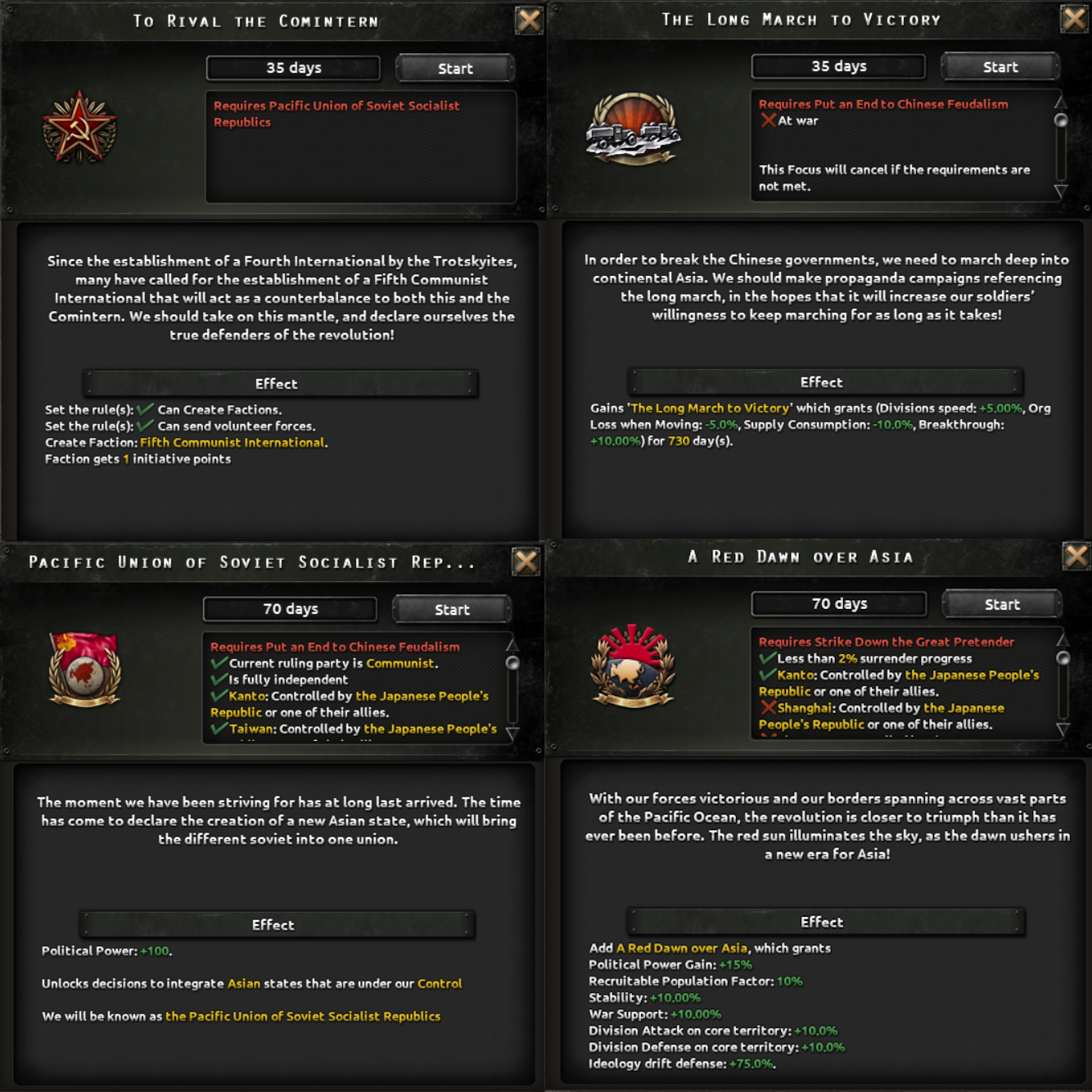
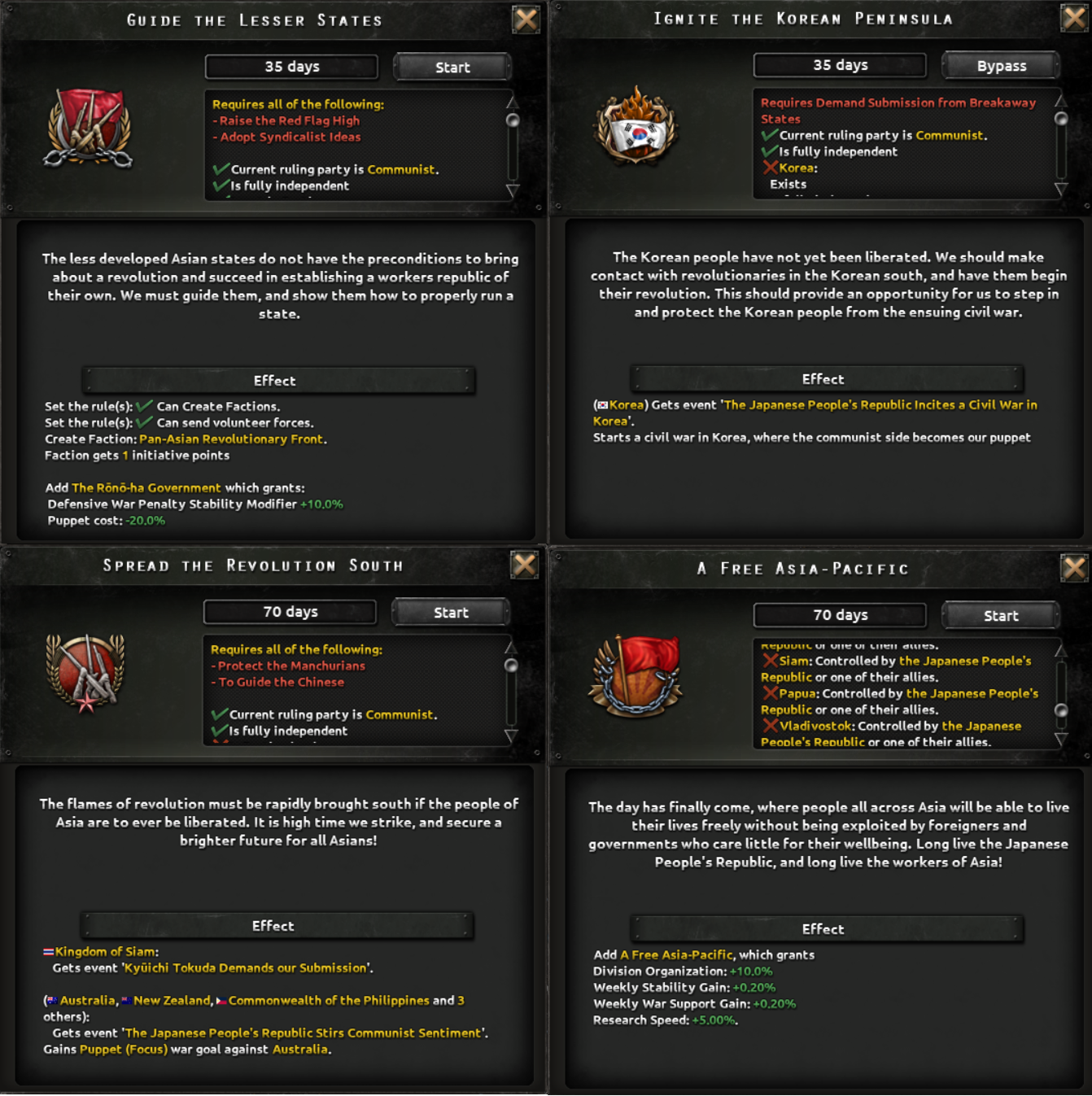
Final Teasers
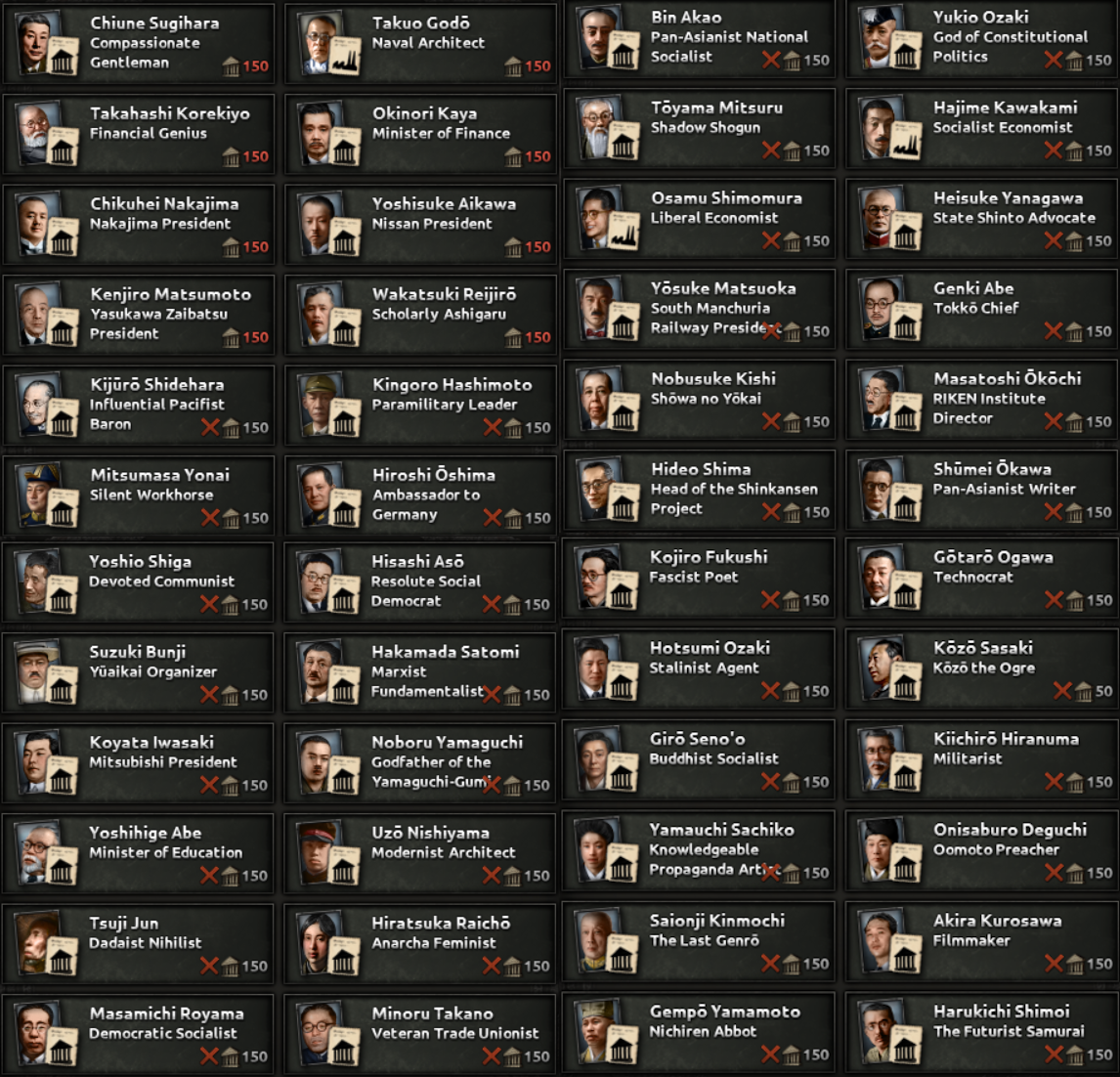
That covers the new focus branches coming to Japan. To finish, here are a few character portraits and a glimpse of new equipment and 3D models you’ll encounter:
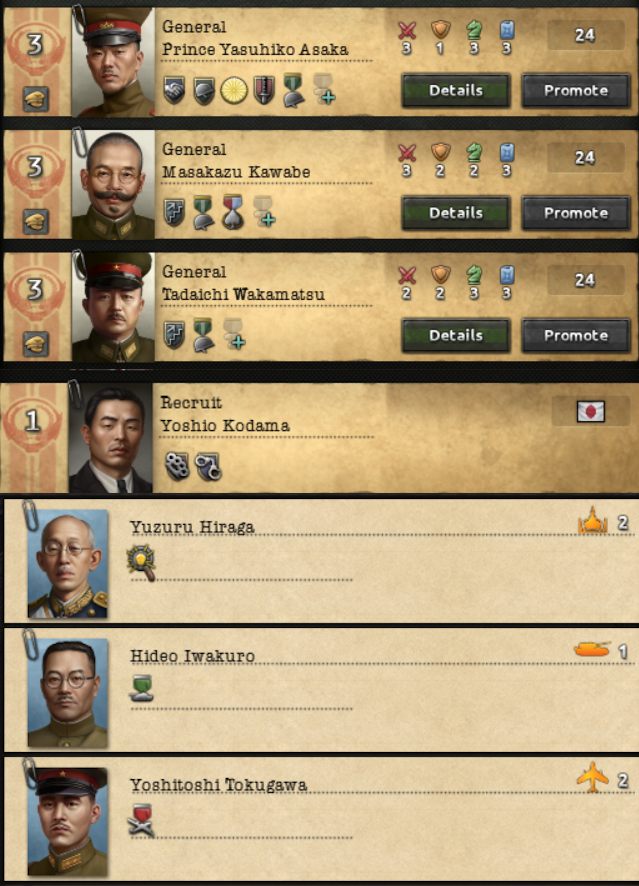
Japan also receives updated 3D models and new equipment assets to reflect these divergent paths:
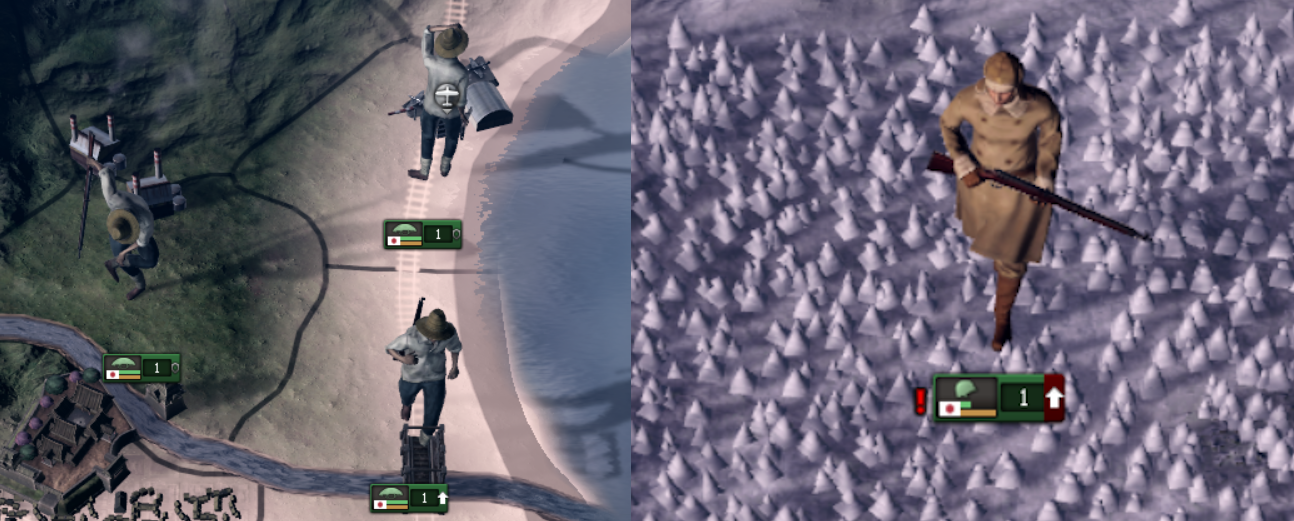
That’s all for this dev diary — the last deep dive into Japan before you get to play these branches. Thanks for reading, and I hope you enjoy the many ways Japan can shape the world in No Compromise, No Surrender.
Related articles
 HOI IV Developer Diary | Romania: A Flawed Democracy
 Developer Corner & Open Beta: Energy #2
 Hearts of Iron IV Dev Corner | Strikes!
 Hearts of Iron IV Dev Corner: Old Canada Questions Before New Canada
 Hearts of Iron IV Dev Corner | Energy
 Steam Autumn Sale 2026
 HOI IV Dev Corner | The Great Depression
 Hearts of Iron IV | Patch 1.19.3