
Demon Slayer’s New Film Solves Anime CG Problems Better Than Any Other Franchise
Image: © Koyoharu Gotoge, SHUEISHA, Aniplex, ufotable
Demon Slayer: Infinity Castle arrives in U.S. cinemas on September 12, 2025, shouldering enormous expectations. The franchise earned its stature largely on Ufotable’s breathtaking visual craftsmanship, and this film arrives intending to deliver that same, uncompromising spectacle on the big screen.
Happily, Infinity Castle lives up to those promises: it is stunning to look at, emotionally resonant, and relentlessly kinetic. The movie feels cinematic in scale while preserving the series’ emotional core, taking time to illuminate opponents’ histories so that every triumph and setback carries meaningful weight. It strikes a rare equilibrium between narrative clarity and set-piece spectacle, rewarding viewers with exquisitely staged and choreographed combat.
One striking takeaway from an early press screening was how naturally the film fuses two-dimensional animation with computer-generated imagery—no other contemporary anime marries the two so fluidly.
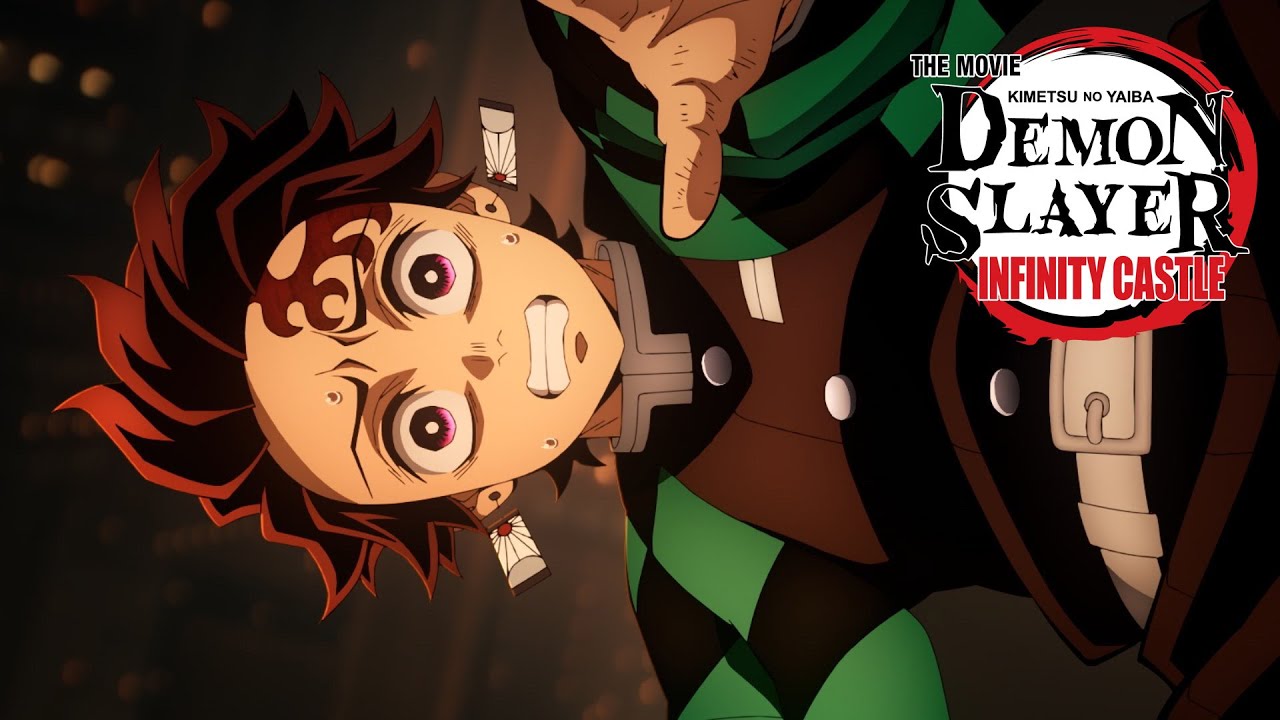
In anime production, CGI usually means 3D models and animation employed to handle mechanical designs, crowds, or dynamic camera moves that are difficult in hand-drawn frames. When misapplied, it can feel stiff or intrusive; when used thoughtfully, it deepens the visual language, adding texture and kinetic possibilities that elevate the storytelling.
CGI’s reputation in the medium is mixed—several projects that leaned too heavily on rough 3D work drew criticism, and abrupt shifts between 2D and CG can break immersion. But the problems are not inherent to the technology; they stem from poor integration and inconsistent art direction.
With Demon Slayer, the integration is so subtle that it took me several seasons to notice CG was being used at all. That restraint makes sequences like Tanjiro’s clash with the Temari and Arrow demons even more impressive on a technical level; once you recognize the craft, you can fully appreciate the precision behind the movement and framing.

On Infinity Castle, Ufotable leverages six additional years of experience to refine that synthesis. Scenes such as Shinobu’s confrontation with the Upper Rank demon Doma demonstrate how cinematic CG can be used during transitions to convey scale, reflections, and complex motion—moments that feel almost balletic in their execution.
While 2D animation remains beloved for its immediacy and hand-crafted aesthetic, CGI is steadily earning its own artistic identity. Recent full-3D films have shown how spectacular and emotionally potent purely digital animation can be. At its peak, the technology doesn’t distract—it becomes invisible, serving the story and amplifying the artistry. Ufotable’s work here argues that few studios, if any, blend 2D and CG as well, and Infinity Castle may stand as one of their most accomplished achievements.
Demon Slayer: Kimetsu no Yaiba – The Movie: Infinity Castle opens in theaters worldwide on September 12, 2025.
Source: Polygon
Related articles
 “The Bunker” starring Bardem and Cruz screened at Venice
 The Librarians: The Next Chapter Season 2 Has Concluded
 “The Mummy 4” filming has begun
 Urfin Jus Movie Announced
 Ellen Burstyn Receives Honorary Golden Lion
 Danny Boyle used artificial intelligence in his new film “Inks”
 Gary Oldman Reveals the Name of the New Bond
 Summer 2026 Becomes the Highest-Grossing Season in U.S. Box Office History