
Crimson Desert Review Leaked: A “Diamond in the Rough” with Brilliant Combat
Crimson Desert stands as one of the most anticipated titles in the gaming world, and early impressions are already fueling intense debate. Spanish YouTuber Revenant, who boasts over 700,000 subscribers, briefly published a review that was quickly retracted, but not before the community archived its most striking revelations.
According to the leak, Crimson Desert deviates from the standard RPG formula, placing spectacle and epic encounters ahead of narrative depth. While the story is said to surpass that of Black Desert, it allegedly doesn’t reach the cinematic heights of The Witcher 3 or the historical immersion of Kingdom Come: Deliverance. Instead, the game thrives on high-octane moments and visual grandeur.
The combat system is the undisputed highlight, described as one of the most sophisticated ever implemented in an open-world setting. Drawing comparisons to character action heavyweights like Devil May Cry and Ninja Gaiden, the mechanics offer an incredible degree of fluidic freedom. Character animations shift dynamically based on positioning and enemy momentum; for instance, a grapple from behind results in a visceral takedown where the hero slams the opponent aside.
Players are encouraged to interact creatively with their surroundings. The protagonist can utilize trees as makeshift catapults or launch foes into the air for aerial combos, a tactic that proves particularly devastating when squaring off against gargantuan creatures.
The game refuses to hold the player’s hand and demands significant patience. The reviewer noted that the first eight hours essentially serve as an extended tutorial phase. While it isn’t a “Soulslike” in the traditional sense, it mirrors the design philosophy of FromSoftware by requiring players to internalize a specific combat rhythm. Only after mastering these fundamentals does the gameplay experience truly begin to flourish.
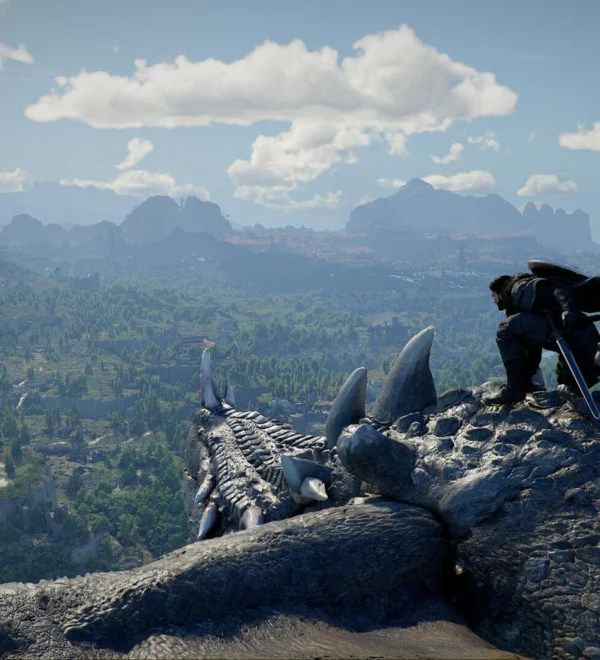
The world design is equally ambitious, featuring remarkable verticality. The environment feels like a fusion of the grounded realism found in Red Dead Redemption 2 and the exploratory freedom of The Legend of Zelda: Tears of the Kingdom. The sheer scale is immense—even after 50 hours of gameplay, the reviewer found himself still exploring the map’s initial region.
Atmosphere and sound design are pivotal to the experience. The soundtrack is likened to the melodic excellence of The Witcher 3, characterized by serene yet hauntingly atmospheric compositions. The game captures a sense of awe-inspiring scale reminiscent of Shadow of the Colossus. Furthermore, the nocturnal cycle introduces a dense, realistic darkness similar to Dragon’s Dogma, making nighttime exploration a genuinely tense affair.
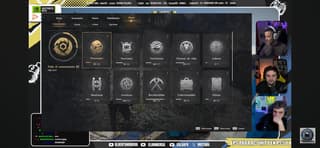
However, the game is not without its frustrations. The reviewer pointed out several quality-of-life issues, most notably a cluttered inventory system where quest items linger indefinitely even after their purpose is served. Furthermore, player outposts lack dedicated storage chests, offering only a basic banking system for currency exchange.
There are also some eccentricities in the game’s logic. For instance, once an enemy camp is fully cleared, the fallen bodies vanish immediately. This forces players to leave at least one enemy alive if they wish to loot the area safely without the remains disappearing.
Based on these impressions, Crimson Desert is expected to land in the 80–85% score range among critics, largely due to its steep learning curve and lack of polished convenience features. However, the source suggests that if players can push past the initial friction and embrace the deep progression, scores could potentially soar into the 90–95% bracket.
The reviewer concluded by calling the game a “diamond in the rough,” boldly stating that it has become his favorite open-world title—ranking it above legends like Elden Ring, Red Dead Redemption 2, and The Witcher 3.
Source: iXBT.games
Related articles
 Crimson Desert Nominated for Golden Joystick Awards 2026
 Crimson Desert: Charting the Unknown Release Date Update
 Crimson Desert: Patch 2.03.02 Fixes Progression Issues
 Why Crimson Desert Does Not Use Unreal Engine 5
 Crimson Desert Expansion Release Canceled in Multiple Regions
 Crimson Desert: Charting The Unknown DLC Introduces Underwater Diving, Naval Combat, And More Next Month
 First Trailer for ‘Crimson Desert’ DLC Takes the RPG to Unexpected New Places
 Crimson Desert Patch 2.00.01 Fixes Frame Rate Drops and Launch Issues