
First Official Details of Xbox Project Helix: Microsoft Preparing Next-Gen Hybrid Console
During the Game Developers Conference, Microsoft pulled back the curtain on the inaugural official specifications for Xbox Project Helix, its ambitious next-generation platform.
Jason Ronald, Vice President of Xbox Next Generation, spearheaded the keynote, providing the first concrete insights into the hardware the tech giant is currently engineering.
Ronald highlighted Microsoft’s commitment to establishing a unified development environment, aimed at streamlining the process of launching titles across a diverse range of devices.
The highlight of the showcase was the deep dive into Project Helix. Microsoft confirmed that the system is designed to blur the lines between consoles and PCs, featuring the capability to run both native Xbox games and PC-centric projects seamlessly.
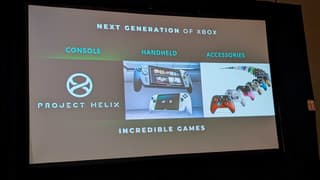
Among the primary confirmed technical features are:
- Full cross-compatibility for Xbox and PC gaming libraries;
- A custom-engineered SoC developed in partnership with AMD;
- An architecture built from the ground up for the next generation of DirectX;
- Advanced ray tracing capabilities and cutting-edge rendering pipelines;
- GPU Directed Work Graph Execution for optimized task management;
- Native support for AMD FSR Next integrated with Project Helix.

Microsoft also detailed a suite of emerging technologies focused on AI-driven rendering and efficiency:
- Next-gen neural visualization techniques;
- Advanced machine learning-based upscaling;
- Multi-frame image generation powered by AI;
- Ray reconstruction for high-fidelity ray and path tracing;
- Deep and neural texture compression protocols;
- Integrated DirectStorage utilizing Zstd compression.
Ronald further noted that the company’s objective is to adapt the Xbox ecosystem to the evolving preferences and habits of modern players.
Microsoft envisions the future of gaming as a frictionless, device-agnostic experience, with Project Helix serving as the foundational pillar of this expansive new strategy.
Source: iXBT.games
Related articles
 Saros Beats Major Game Brands in Three Categories
 PlayStation Developing Technology to Predict Players’ Movements, Sony Says
 Ghost of Yotei Nearly Matches Ghost of Tsushima in Revenue Despite Fewer Copies Sold
 Shrek 2 Remastered Listed in Microsoft Store With Details on Improvements and Co-Op
 Analogue Revives Its Flawless SNES and Sega Genesis Replacements
 Model Shows Off Lady Dimitrescu Cosplay From Resident Evil Village
 Ken Kutaragi, Known as Father of PlayStation, Says Supporting Discs Indefinitely Isn’t Economically Viable
 Eight Best Vampire Books Not Written by Anne Rice, Ranked by Polygon