
Christopher Nolan’s top sci-fi film is currently more influential than 2001: A Space Odyssey

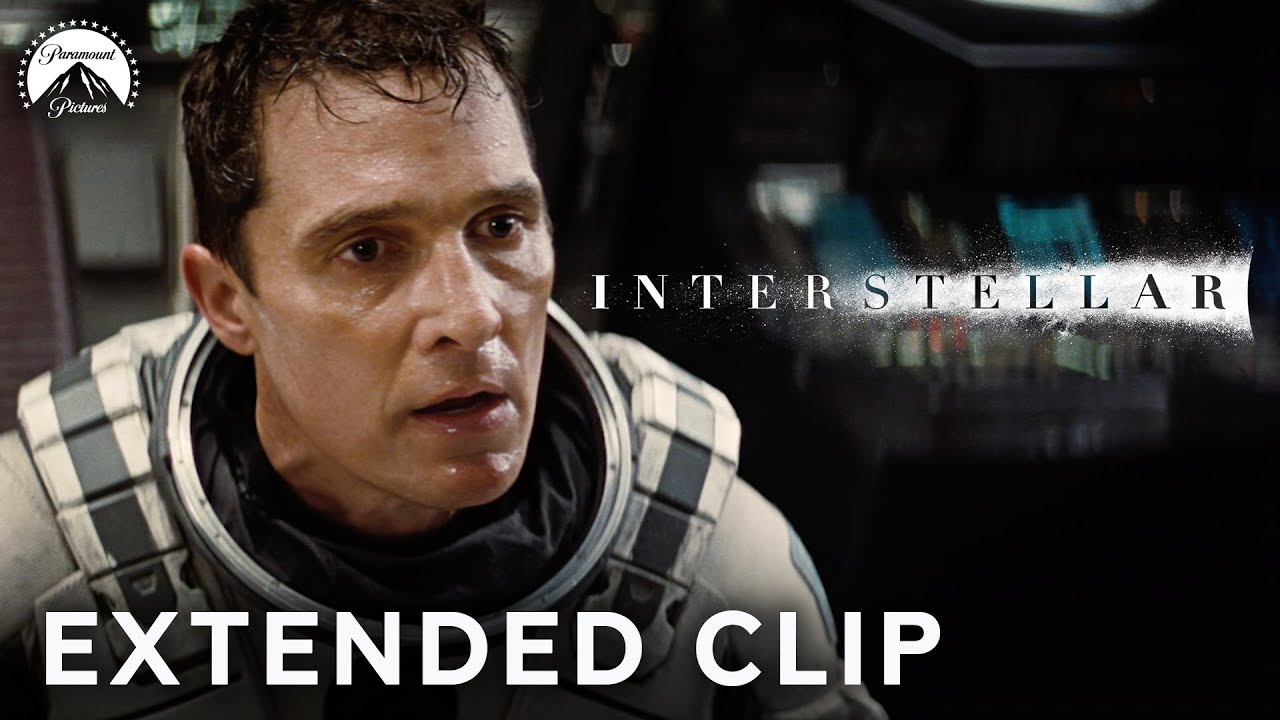
Even when pitted against the commercial juggernauts of Middle-earth, the X-Men, and the Transformers, Christopher Nolan’s Interstellar emerged as a definitive cinematic event of 2014. At the time, its long-term cultural footprint remained a subject of debate: was this poignant tale of a father’s cosmic sacrifice a burgeoning masterpiece, or simply another high-budget spectacle in Nolan’s prestigious filmography?
Viewed from the perspective of 2026, the film’s significance has only magnified, arguably surpassing the influence of the director’s iconic Batman trilogy. With its seamless visual effects and profound narrative ambition, Interstellar issued a silent mandate to the science fiction genre, recalibrating a standard that had been held by 2001: A Space Odyssey for decades. Contemporary works, such as the upcoming Project Hail Mary, naturally inherit the DNA of Kubrick’s classic, yet they are increasingly measured against the bar Nolan set—a sophisticated synthesis of digital wizardry and tangible, practical craftsmanship.
Stanley Kubrick’s seminal 1968 work left an indelible mark on a generation of visionaries, including Steven Spielberg, Denis Villeneuve, and Martin Scorsese. Nolan, a devoted disciple of the film, has frequently recounted how a childhood screening of 2001 in London dictated his obsession with large-scale filmmaking.
“The sheer magnitude of that experience stayed with me,” Nolan remarked during the promotion of Interstellar. “It’s the fundamental reason I pursued IMAX technology for a space epic. It represented the absolute pinnacle of what cinema could achieve.”

While Kubrick provided the spark, Interstellar evolved into a distinct collaboration between Christopher and Jonathan Nolan, the latter known for Westworld. Their objective was an uncompromising commitment to authenticity. This ethos was embedded in a screenplay that translated Kip Thorne’s complex theoretical physics into a visceral human drama, supported by groundbreaking practical designs like the unique, modular robots TARS and CASE.
The production methodology itself became a point of fascination for the industry. Cinematographer Hoyte van Hoytema avoided overly stylized aesthetics, opting instead for a “matter-of-fact” visual language inspired by the gritty realism of The Right Stuff and Tarkovsky’s The Mirror.
To ground the film’s celestial journey, many of the spacecraft sequences utilized massive miniatures built by New Deal Studios. These physical models provided a sense of weight and texture that digital assets often lack. Furthermore, Nolan eschewed traditional green screens for cockpit scenes, instead projecting actual celestial imagery outside the set windows. This allowed the actors to react to real light, while van Hoytema captured authentic reflections and shadows in real-time.
This dedication to “photographable reality” has secured the film’s status as a modern milestone. Whether it’s the heart-pounding tension of the docking sequence or the overwhelming resonance of Hans Zimmer’s organ-heavy score, Interstellar maintains its emotional and technical power even on home screens, transcending its original theatrical intent.
The industry’s current trajectory confirms Nolan’s lasting impact. Over a decade later, filmmakers are still attempting to replicate that specific sense of scale. Christopher Miller, co-director of the upcoming Project Hail Mary, recently generated headlines by touting a green-screen-free production.
“The entire ship was constructed as a physical set,” Miller told ComicBook.com. “We even built a massive section of the exterior. Having [the character Rocky] physically present allowed for a level of naturalism that digital environments can’t mimic.”
While the claim of “no green screen” invited scrutiny from the VFX community—given the thousands of digital enhancements required for any modern space film—Miller later clarified that the goal was to maximize physical elements before augmenting them with technology.

Image: Amazon MGM
While films like Moon and Gravity preceded it in tactile production design, Interstellar carried a unique cultural gravity. Its influence is visible in Ridley Scott’s The Martian and James Gray’s Ad Astra. Even the advent of LED volume stages used in The Mandalorian is a technological evolution of Nolan’s desire to surround performers with tangible environments rather than sterile voids.
The “Nolan Method” is now a standard reference point in production meetings for major sci-fi features. Even the film’s cast remains profoundly affected by the work. Timothée Chalamet recently reflected on his early role in the film with deep reverence.
“It remains the most cherished project of my career,” Chalamet shared during a recent Q&A. “It’s the film I find myself returning to more than any other.”
While 2001: A Space Odyssey remains the genre’s philosophical north star, Interstellar has provided the modern technical blueprint. The aspiration is no longer just to visualize the stars, but to convince the audience they are truly standing among them. As filmmakers like Lord and Miller strive to reach this benchmark, the legacy of Nolan’s odyssey only grows more formidable.
Interstellar is currently available to stream on Paramount Plus and for free with advertisements on Pluto TV.
Source: Polygon
Related articles
 Quiet Express: Cabin 909 Is a Blue Prince-Style Mystery About a Train That Crashes Every 7 Days
 Three Resident Evil Remakes Launch on Switch 2
 Leap of Faith in a Ruined World: Where the Seeds Fall Demo Is Out
 Stranger Than Heaven Opening Act Trailer Shows Snoop Dogg’s Orpheus Captaining Ship in 1915
 Doug Cockle, Geralt’s game voice actor, initially mistook Henry Cavill’s invite for a scam, per an interview with Ginx TV (Cockle’s own account). Final headline: Witcher Game Voice Actor Doug Cockle Initially Mistook Henry Cavill’s Premiere Invite for a Scam
 Hellraiser Creator Hints at New Projects After Hellraiser: Revival Success
 Final Trailer Released for Bleach: Thousand-Year Blood War – The Calamity Anime
 Robert De Niro’s Best Gangster Movie Quote From Goodfellas Endures 36 Years Later