China Regional Pack

Hello, everyone! Welcome to the developer’s journal for the China Pack in Cities: Skylines II! My name is VictoriaCity, and I’m one of the asset creators for this collection. Today, I am thrilled to discuss the creative concepts and development processes that shaped the China Pack, alongside its rich blend of historical and contemporary architecture to lend authenticity to your cities.
Upon first observation, the modern cities of China appear uniform with their endless rows of skyscrapers and office towers. However, a closer look reveals profound variety and complexity. Shaped by centuries of history, Chinese cities boast a landscape where age-old architectural marvels stand side by side with cutting-edge skyscrapers.
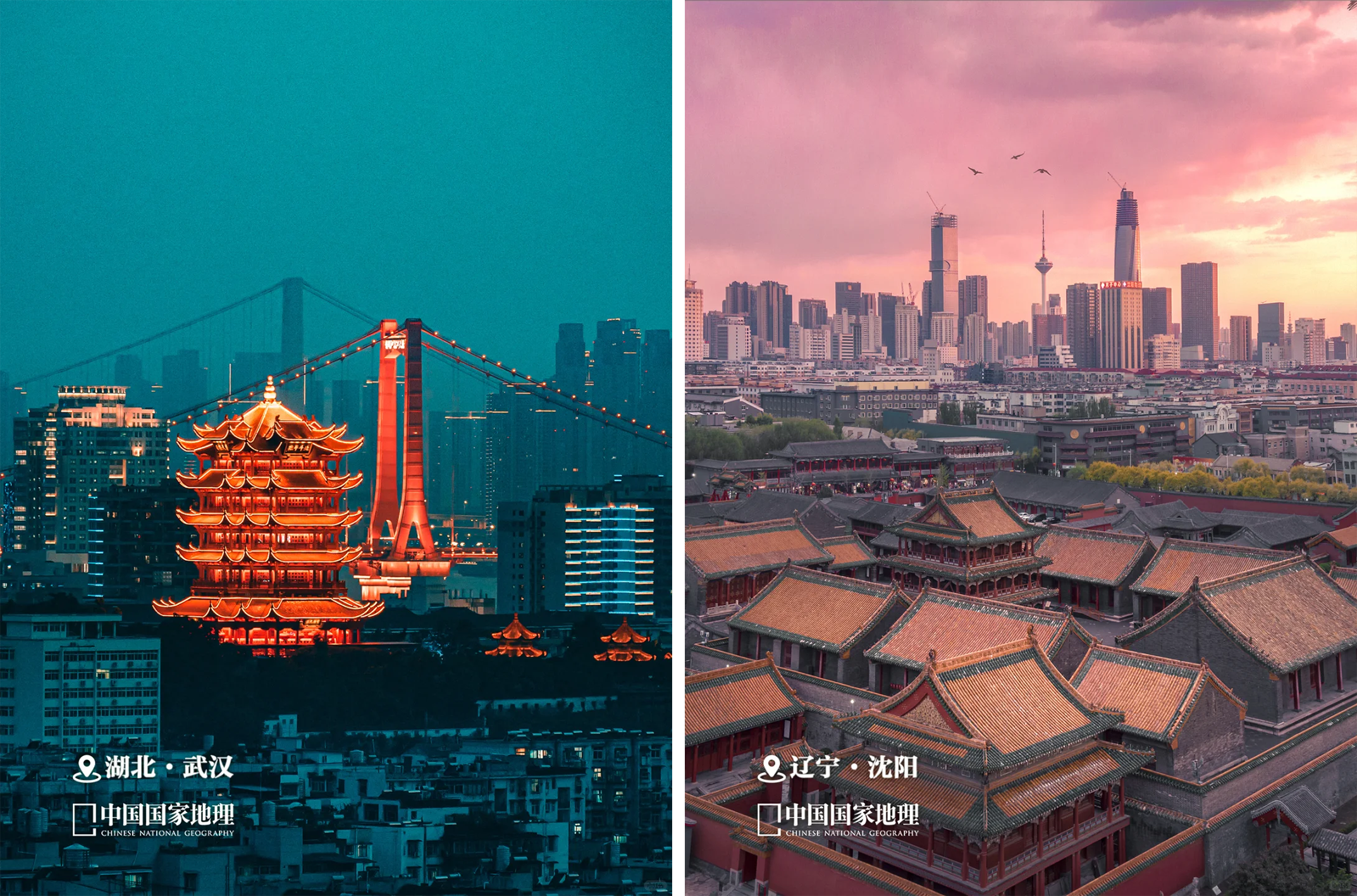
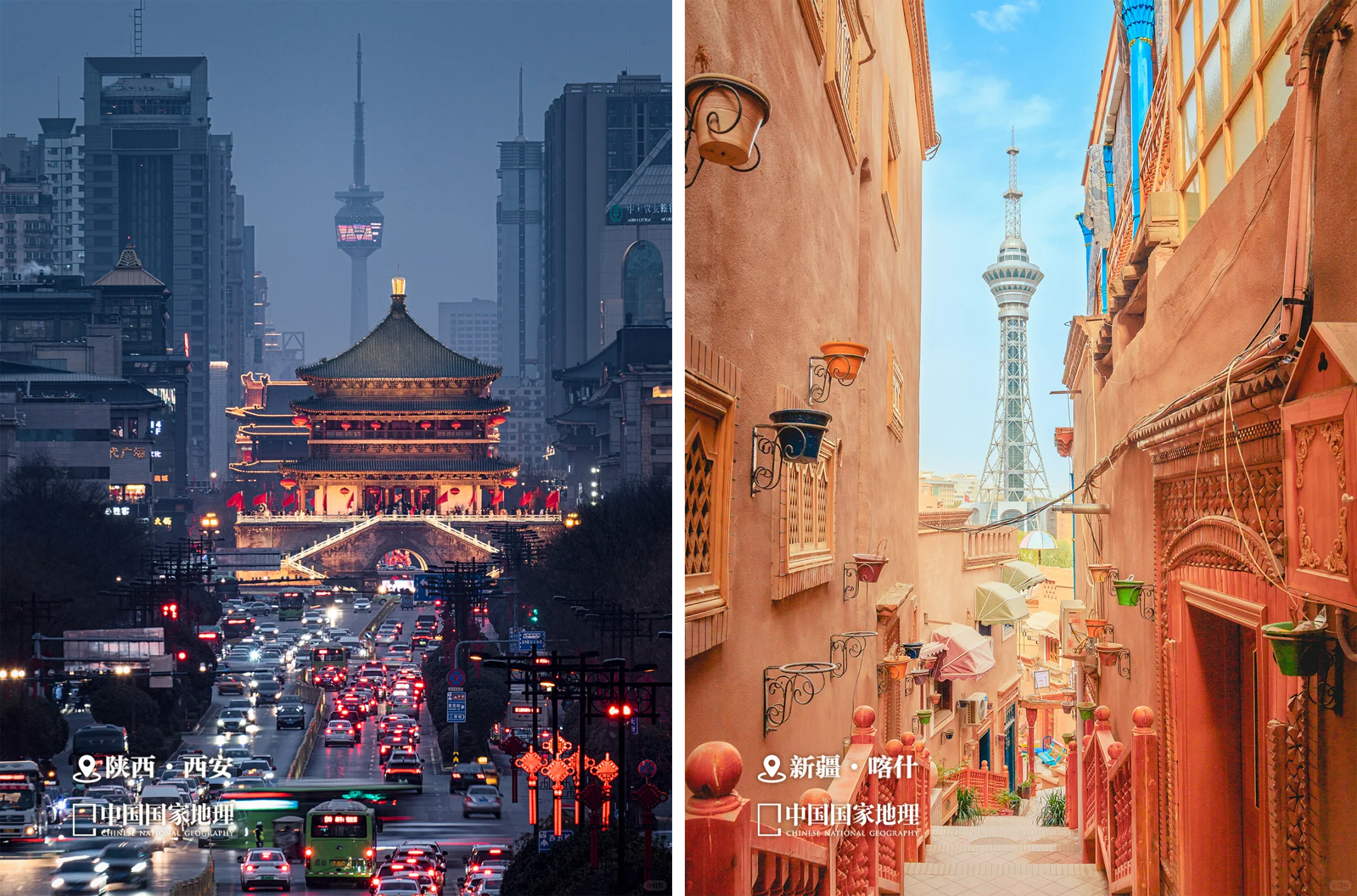
Cityscapes in Shenyang, Wuhan, Xi’an, and Kashgar.
Source: Chinese National Geography
With the China Pack, we aimed to encapsulate this unique blend—from the timeless allure of courtyard homes to the monumental scale of modern high-rises. The variety of zones, service buildings, and iconic structures in this pack reflects the intricate layers of identity found in Chinese cities. Here are some inspirations we used to create the buildings of the pack:
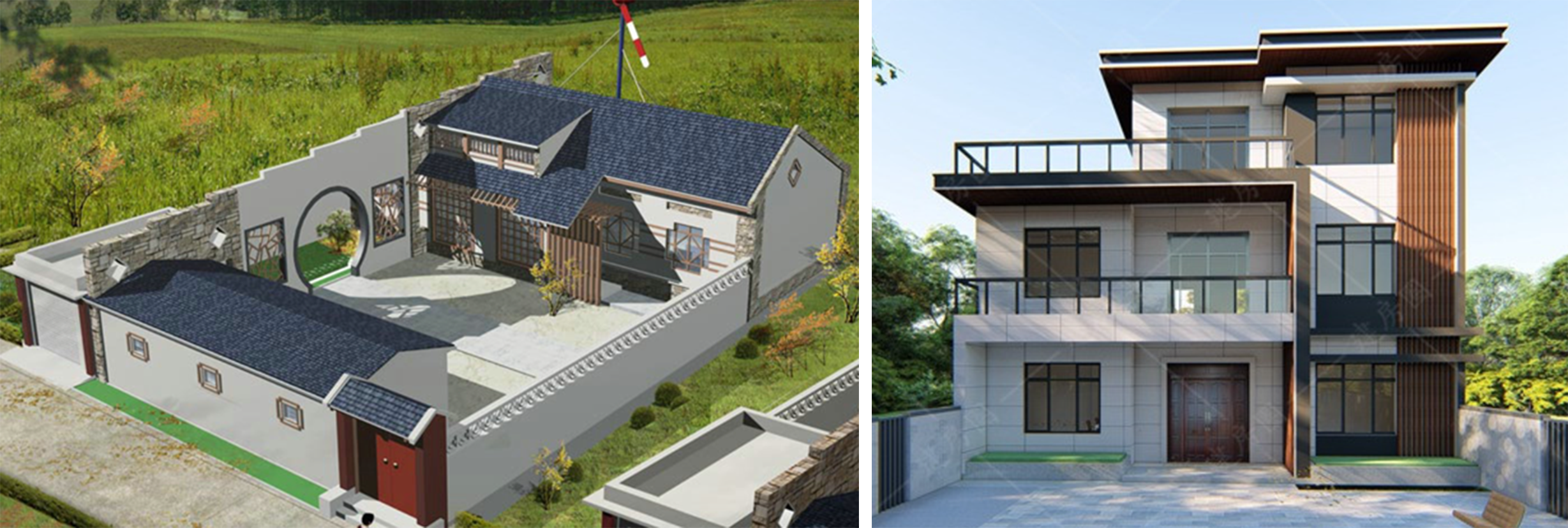
Low Density Residential
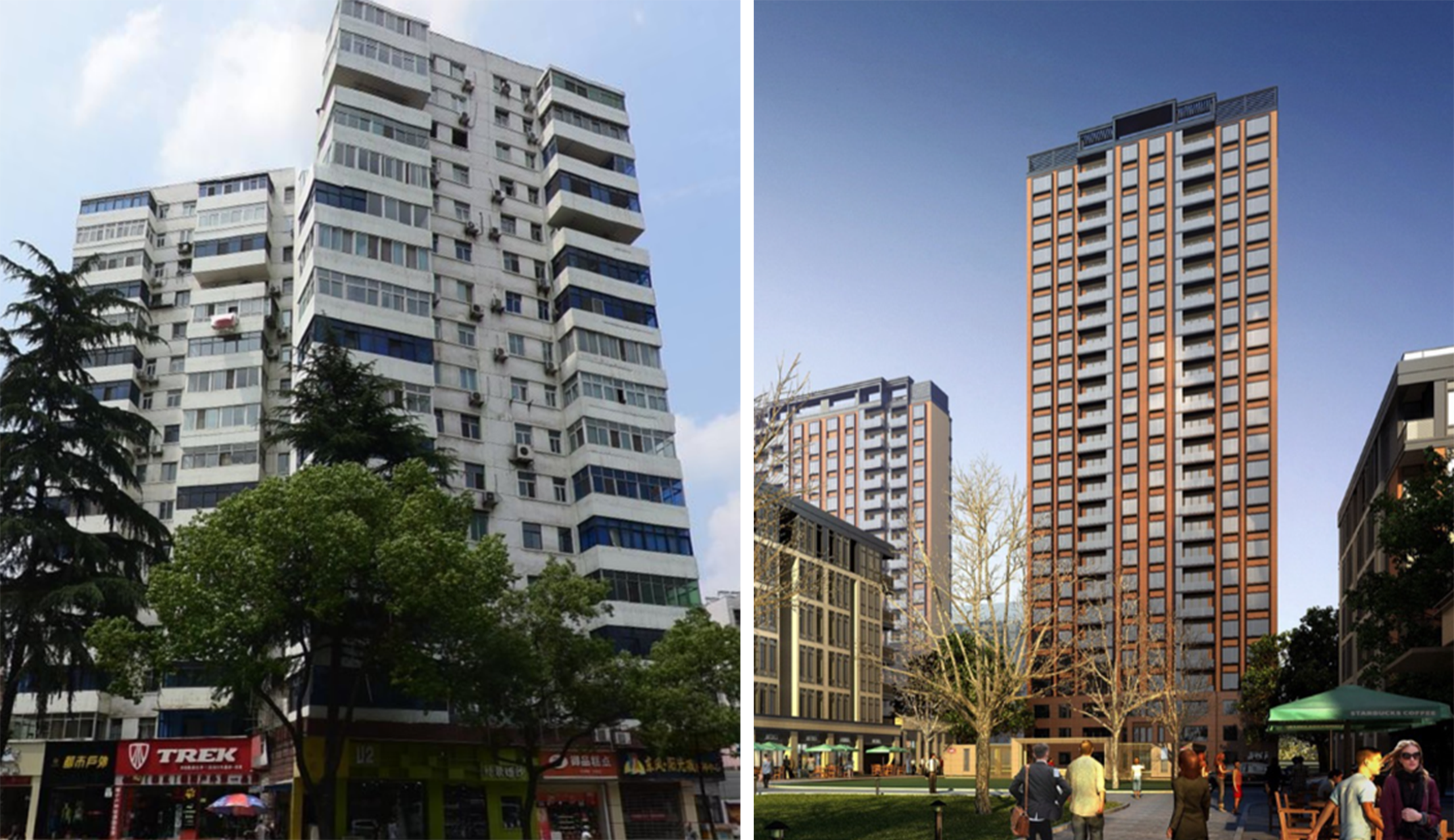
High Density Residential
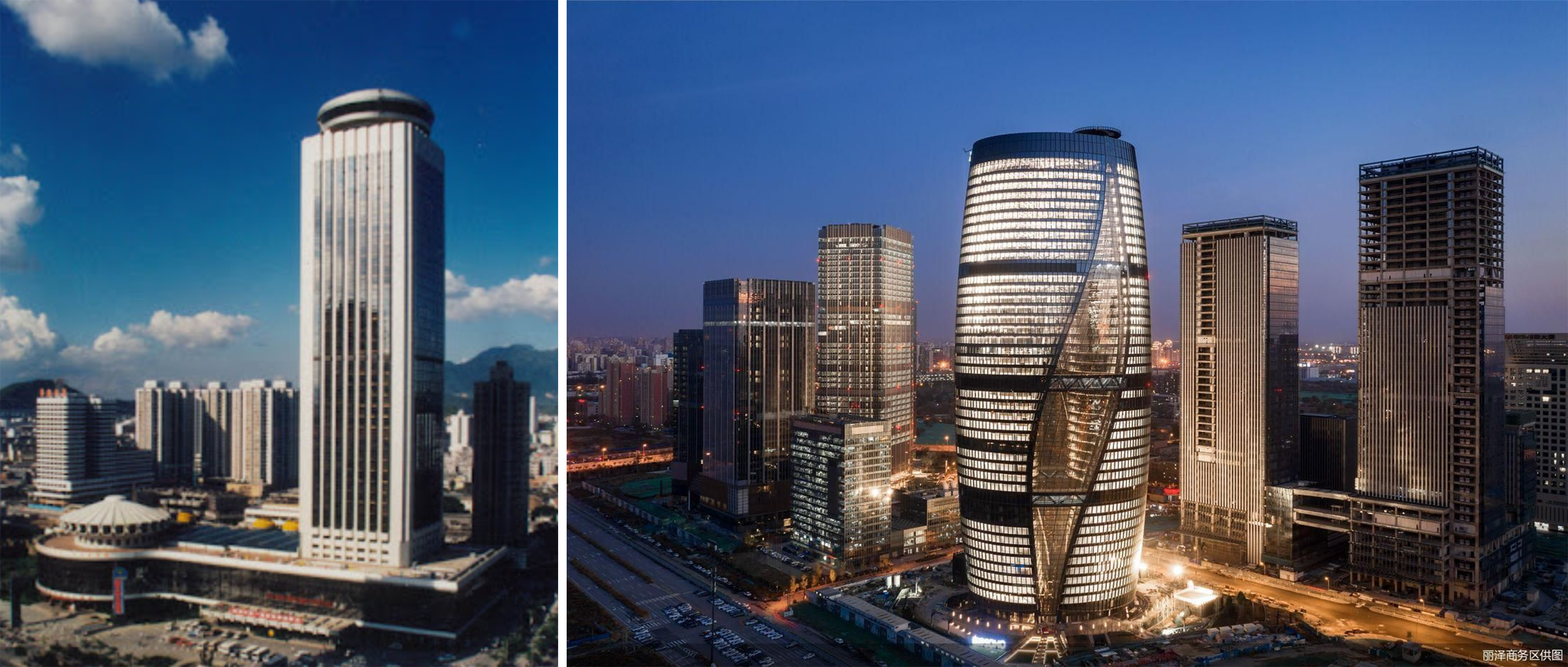
High Density Office
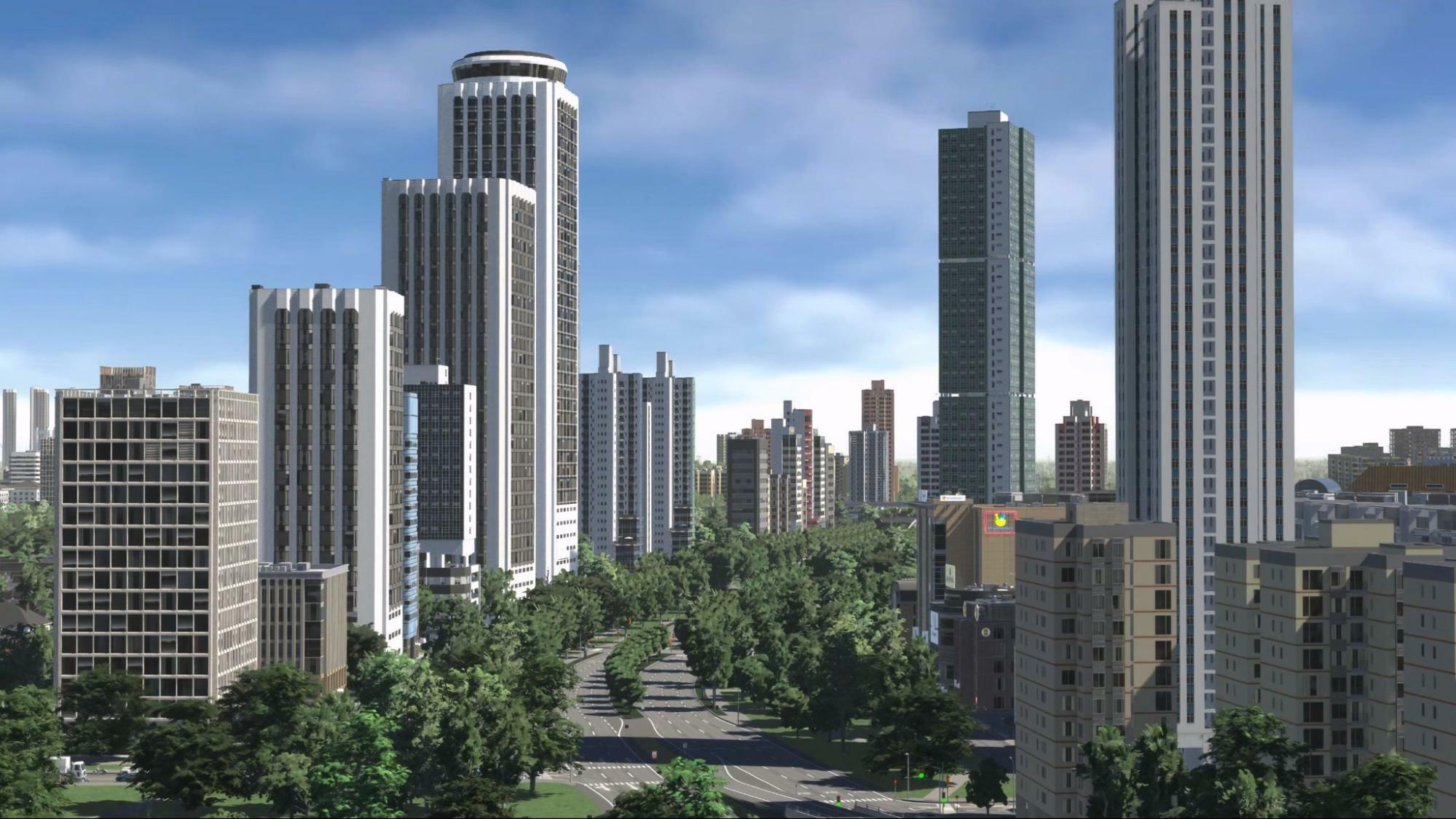
The rapid urbanization in China in recent decades has left a notable imprint on residential architecture, highlighting distinct time periods. The game’s zoned buildings feature multiple levels, which aligns seamlessly with our ambition to represent various eras of residential advancement. Thus, we’ve crafted high-rise apartments typical of the 2000s and modern luxurious condos that have grown popular in recent times. As buildings upgrade, they reflect the dynamic evolution of your city, showcasing its growth and modernity.
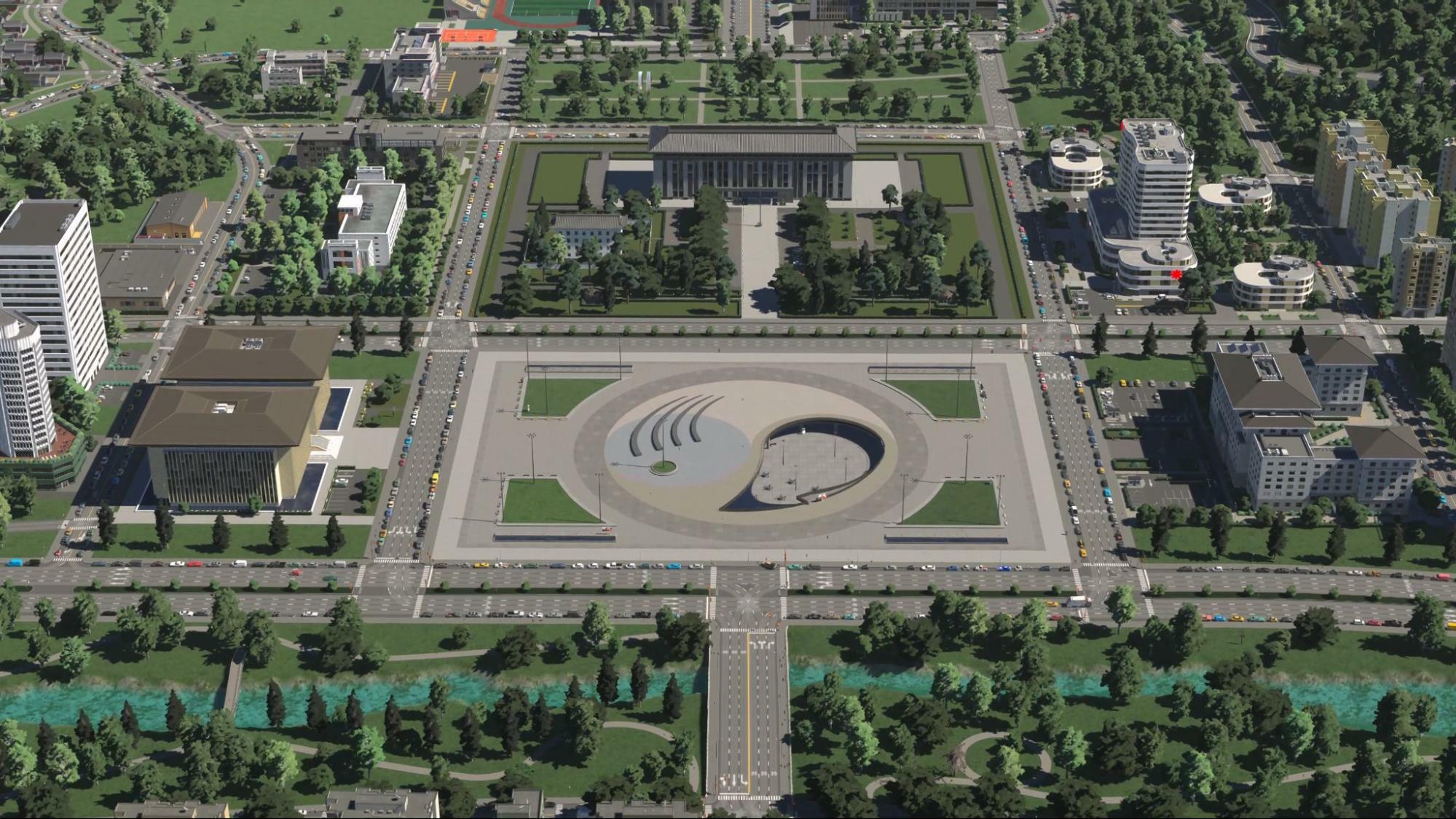
Moreover, modern reinterpretations of traditional architecture have become a significant trend in current Chinese urban design, particularly noticeable in public service buildings and educational institutions. Integrating this architectural style into the China Pack was one of our primary objectives, facilitating the incorporation of culturally authentic designs into your cities.
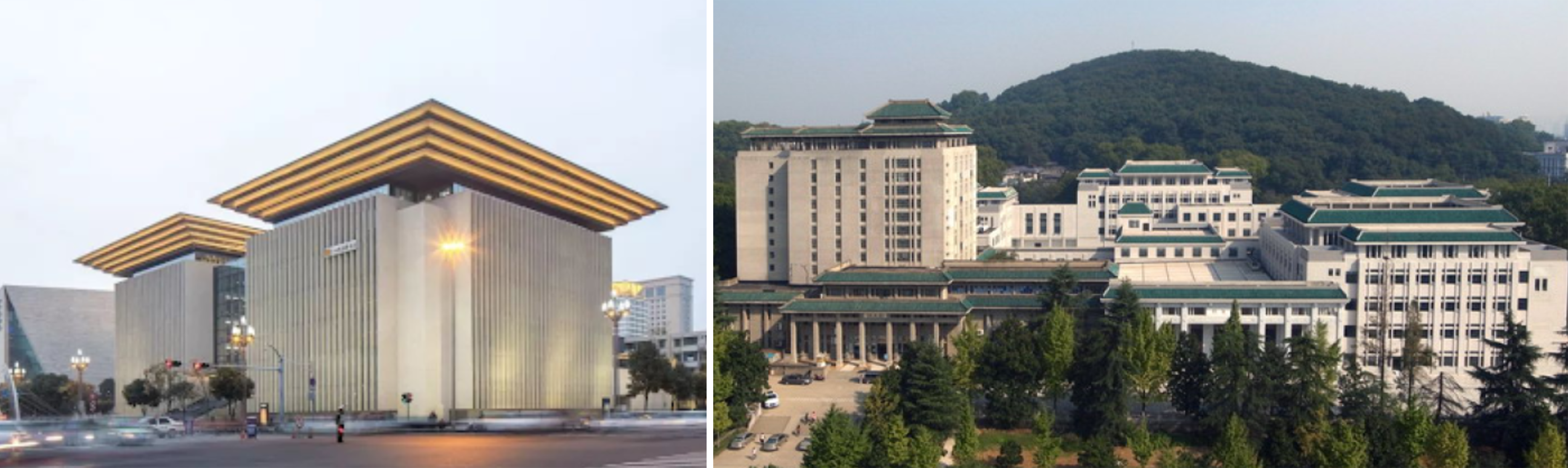
Service Building Inspirations.
- 6 Zones
- 13 Service Buildings
- 10 Signature Buildings
- Growable Zones
- The 6 new growable zones are:
- Low Density Housing – Features a mix of modern and classic rural single-family residences.
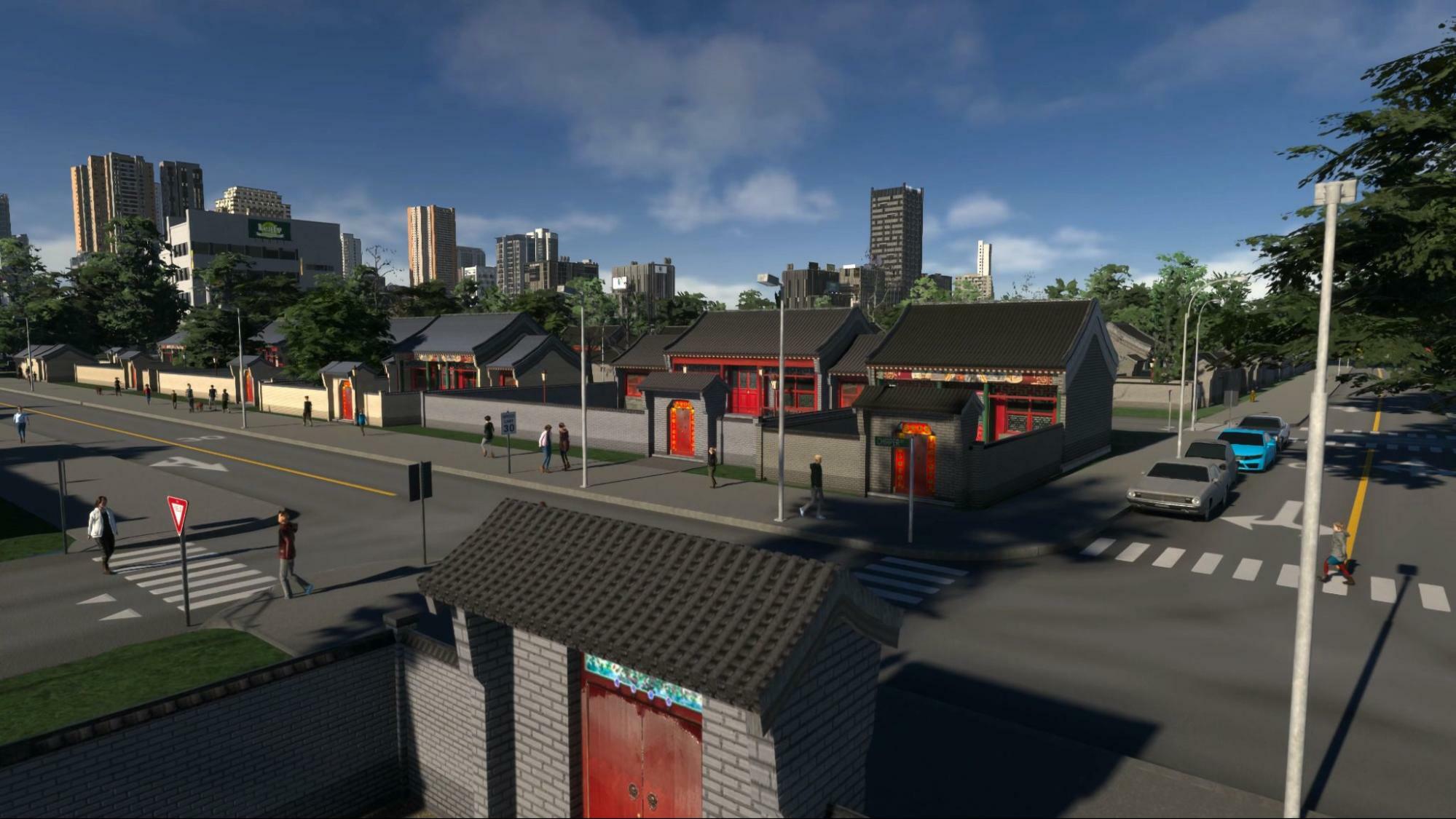
- Low Density Courtyard Housing – Traditional walled homes inspired by Siheyuan, commonly seen in Beijing.
- Medium Density Housing – Incorporates older urban apartments from the 1990s and more recent mid-rise structures.
- Low Rent Housing – Similar to medium density residential, designed to mimic utilitarian housing blocks seen in Chinese urban areas.
- High Density Housing – A highlight of the pack, showcasing 80s-90s residential towers, modern high-rises, and luxury penthouse apartments.
- High Density Office – The first high-rise office zone in any Region Pack released thus far. Features 80s-90s towers, modern box-style buildings, and curved skyscrapers, providing flexible placement options for standalone towers or business districts.
Rather than concentrating solely on the number of assets, we crafted 37 unique styles of growable buildings in this pack to facilitate an extensive array of combinations, enabling you to create authentic Chinese urban layouts.
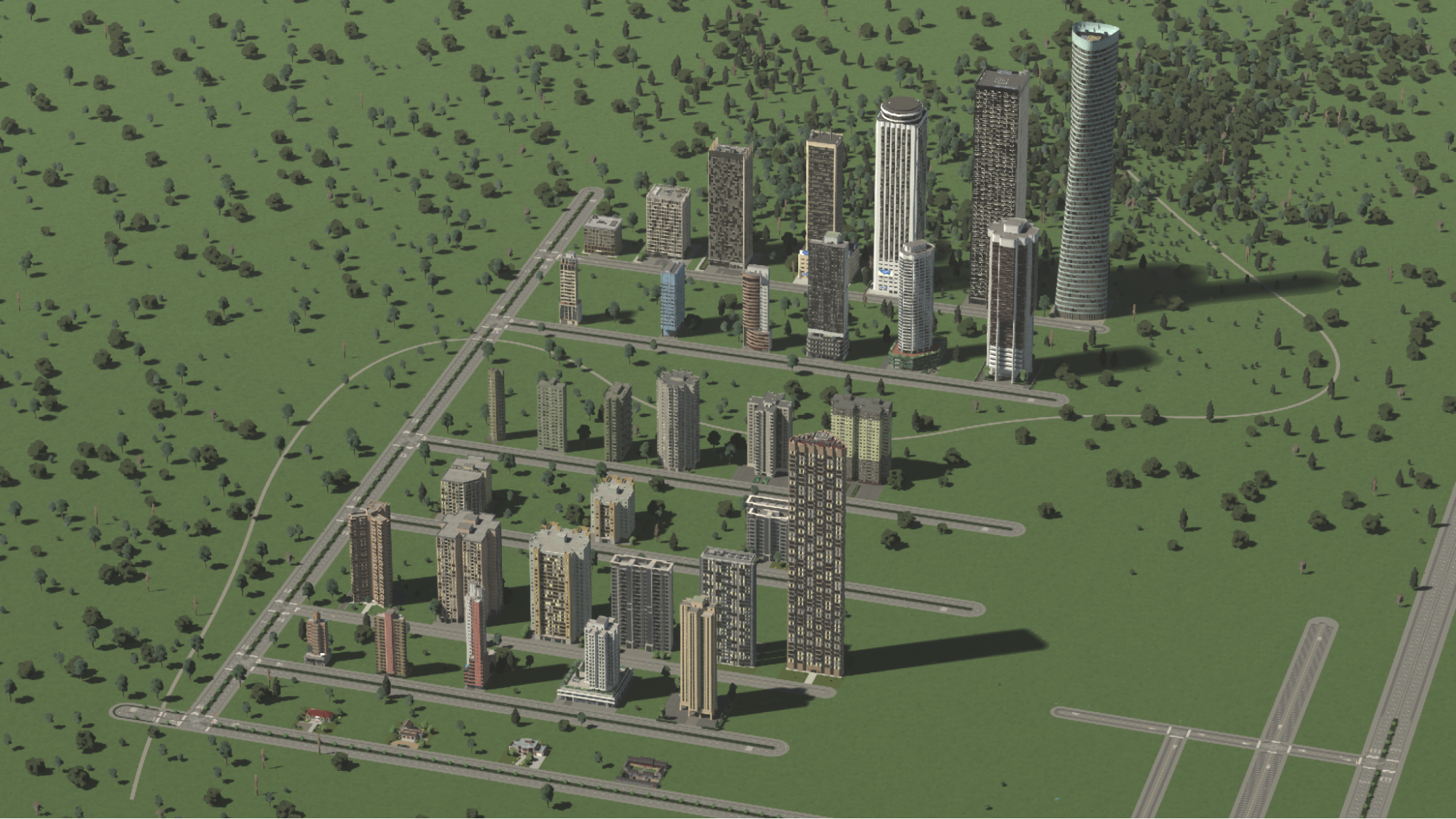
Collection of all styles of growable buildings. The overall number of unique constructions is significantly higher!
High-rise residential buildings in China are typically designed as part of gated communities, often without fixed “street-facing” facades. This posed a unique challenge in the game, where zoning rules assume buildings align along roads. To overcome this, we developed more facade variations than usual and drew building entrances inward via pedestrian paths. Additionally, to satisfy required lot size combinations for each zone, we created some compact, smaller-footprint high-rise buildings. These will be particularly advantageous for ultra-dense city centers, allowing you to construct cities inspired not only by China but any part of the world where efficient urban space utilization is critical!
The service buildings in the China Pack include:
- Community Kindergarten
- Ruby Rock Elementary School
- High School
- Community College (also known as Junior College in China)
- University
- People’s Hospital (often the name of the premier hospital in town)
- Local Police Station
- Fire Rescue Brigade
- Fire Station
- Fire Department
- City Library
- District Hall
- City Hall
One observation is that modern Chinese residential communities almost invariably include a kindergarten as part of their planning blueprint. Kindergartens are a vital component of Chinese urban neighborhoods, usually housed in standalone buildings with dedicated facilities. However, since the game’s education system commences with primary school, we had to creatively adapt how kindergartens function within the game. Thus, we are excited to introduce a modern-style kindergarten as a Service Building in the Administration category. It employs the mechanics of the welfare office template, amplifying Well-Being within an 800 m radius and enhancing outdoor recreation – clear indications that your citizens’ young children are well-cared for!
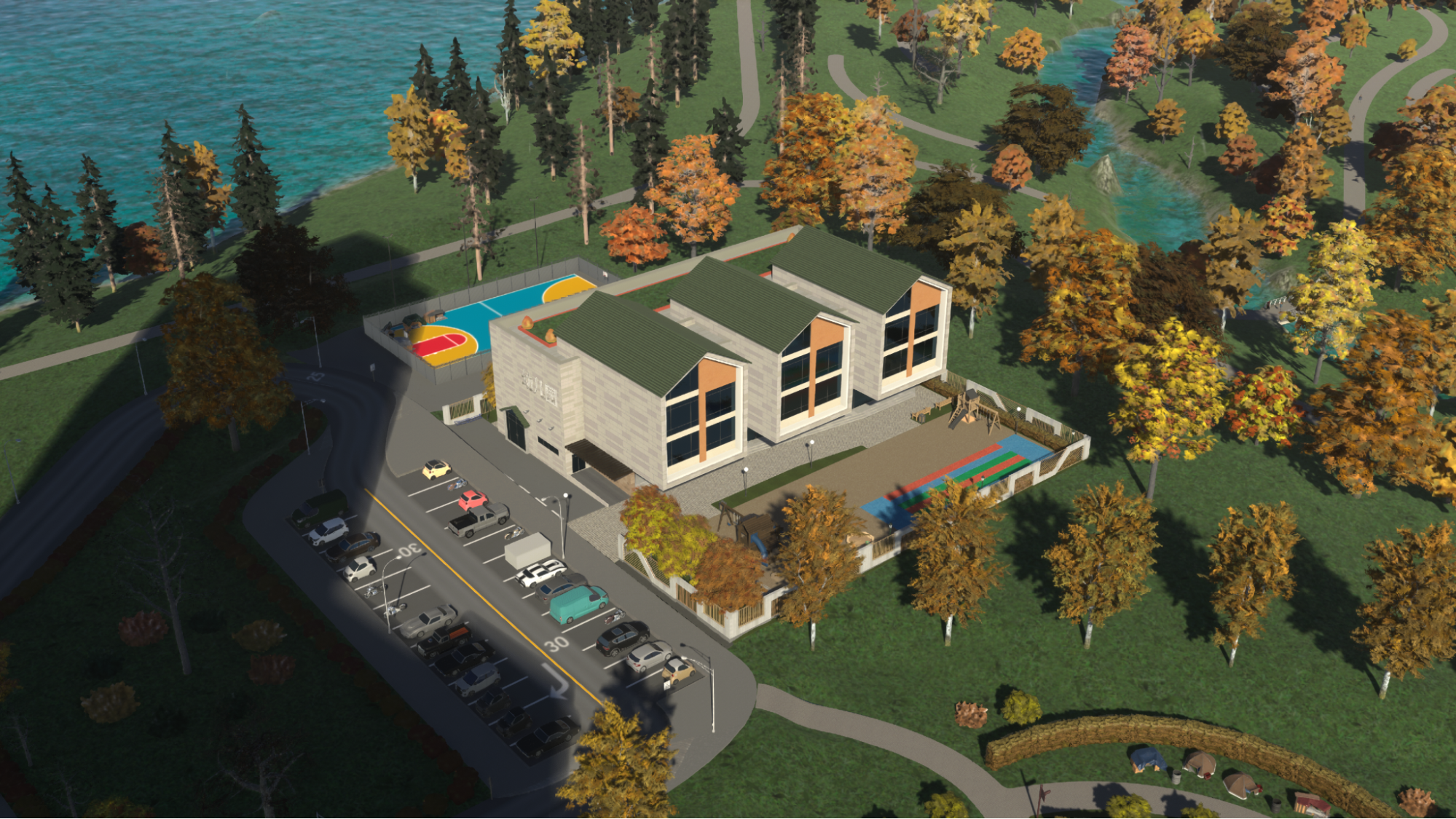
The Community Kindergarten can be located under the Administration menu.
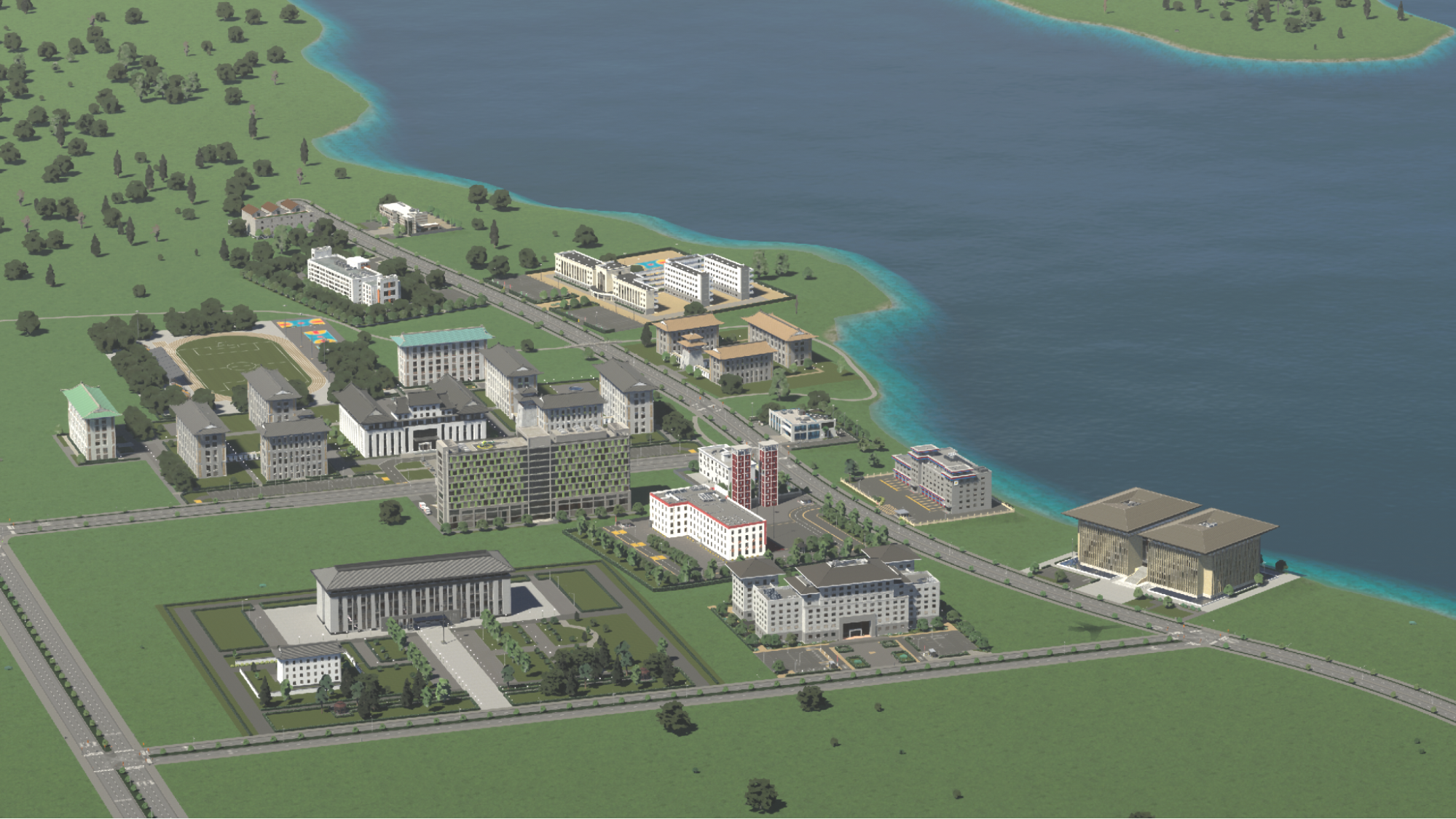
Lineup of all Service Buildings.
For signature buildings, we introduced:
- Book Shop
- City Shopping Mall
- United Mall
- Local Office Building
- Downtown Office Building
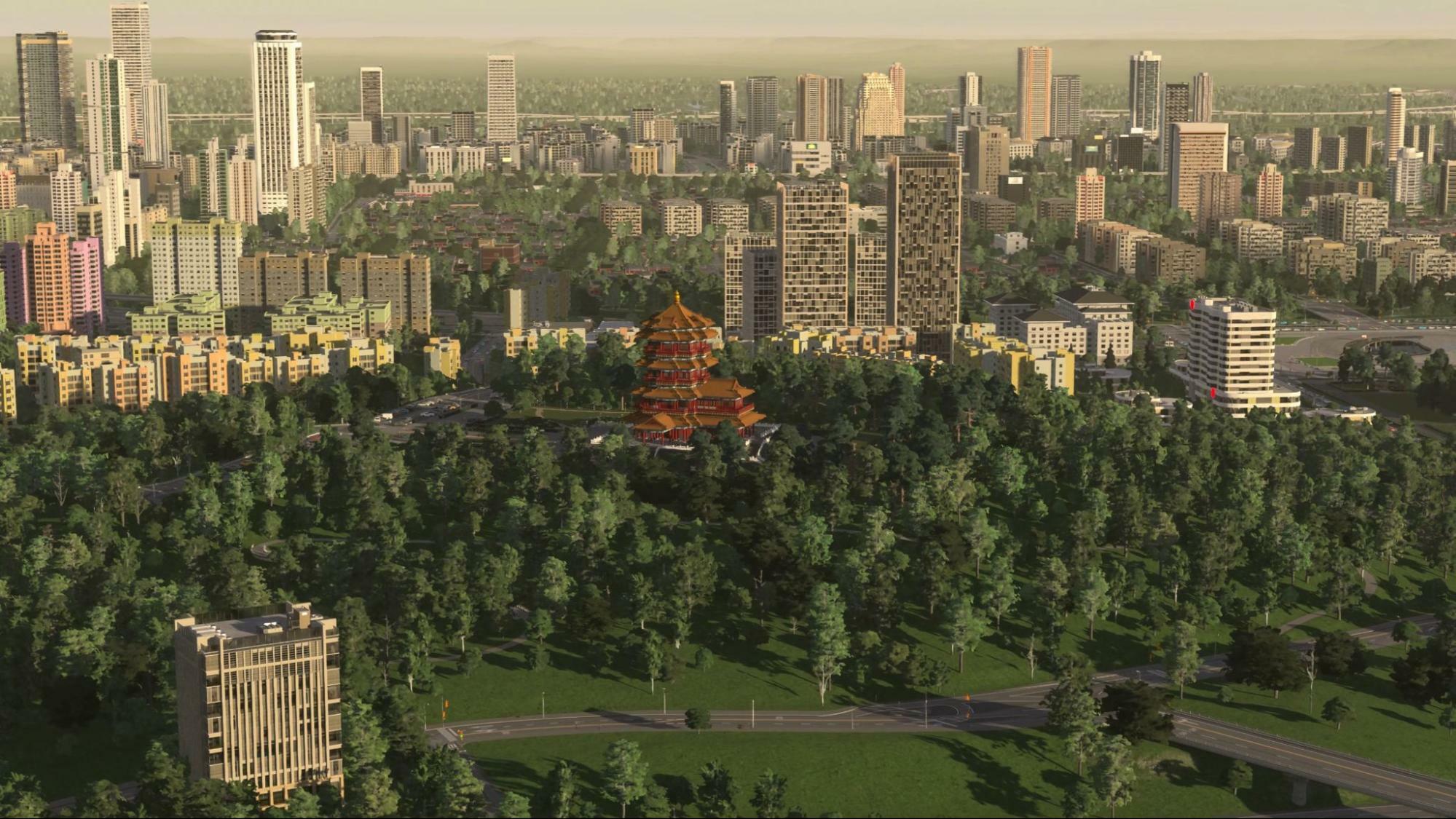
- Yin Yun Tower (a traditional Chinese tower)
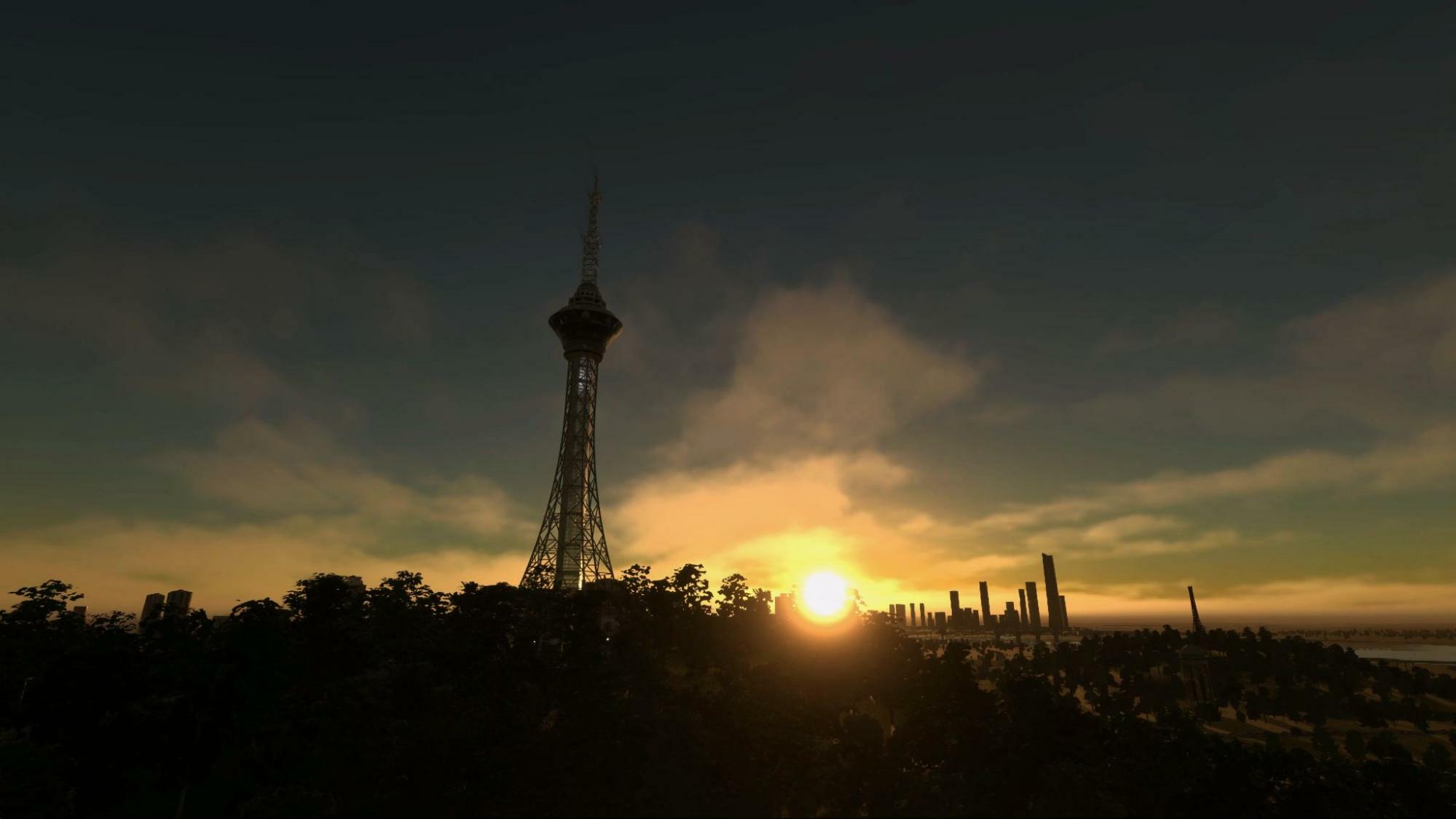
- Western Observation Tower (a modern TV tower)
- Peony Tower (a supertall skyscraper)
- Financial Center (another supertall skyscraper)
- Skyline Palace (the tallest structure to date!)
Collection of all signature buildings. Only a fragment of the three skyscrapers is depicted – leaving the rest for you to discover in the game!
While the China Pack comprises a variety of traditional and ancient style buildings, here we shall focus on the creation process of high-rise buildings, as it presents entirely different challenges compared to creating smaller structures. Overcoming these challenges requires us to establish a workflow that guarantees both efficiency and quality.
The polygon count for each building is significantly higher in Cities: Skylines II compared to Cities: Skylines. For the boxy residential and office towers, we had to meticulously manage the polycount – a polygon budget of fewer than 80000 triangles distributed across more than 50 floors limits us to only 400 triangles per facade. Increasing either height or floor area does not proportionally provide more texture space. We still need to achieve a similar texel density as that of much smaller buildings using a 4K texture. These challenges encouraged us to embrace a modular approach to high-rise buildings, balancing detail, efficiency, and diversity.
Our building designs commenced from minimal repetitive units, such as a single panel of the facade or a corner element. We’ll use a series of residential towers as an example. This building block comprises five types of panels featuring windows, two types of wall panels, and an extruded corner. Each unit was modeled and UV unwrapped separately, and the UV maps of all units were unified into a single texture. Once the base units were constructed, we assembled them into complete buildings through a mix-and-match approach, along with a few custom-created ground floor and roof modules. Here’s a glimpse of how the base units look and how the final buildings appear within the game:
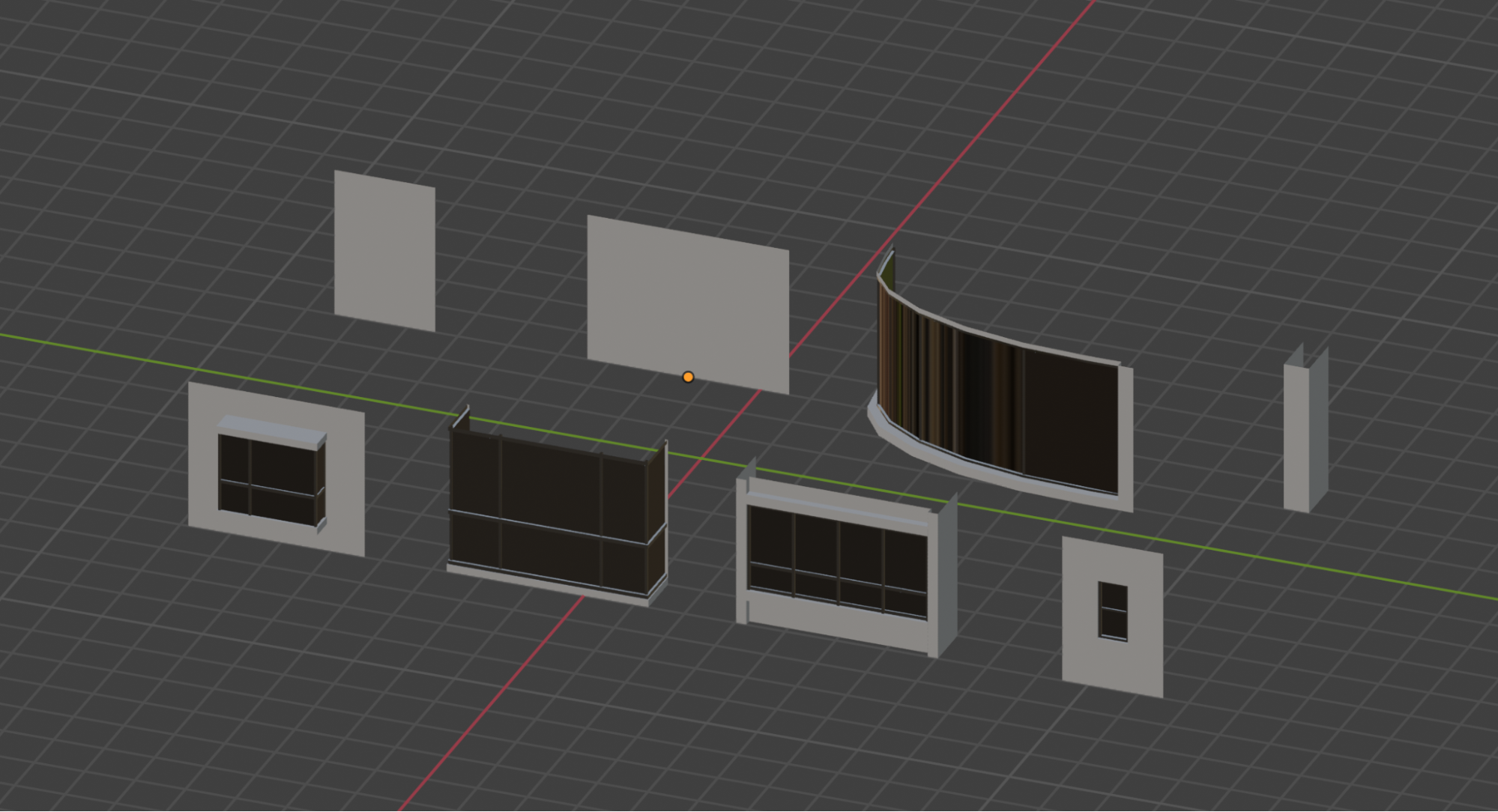
Building blocks of a high density residential set in Blender (ground floor and roof units excluded)
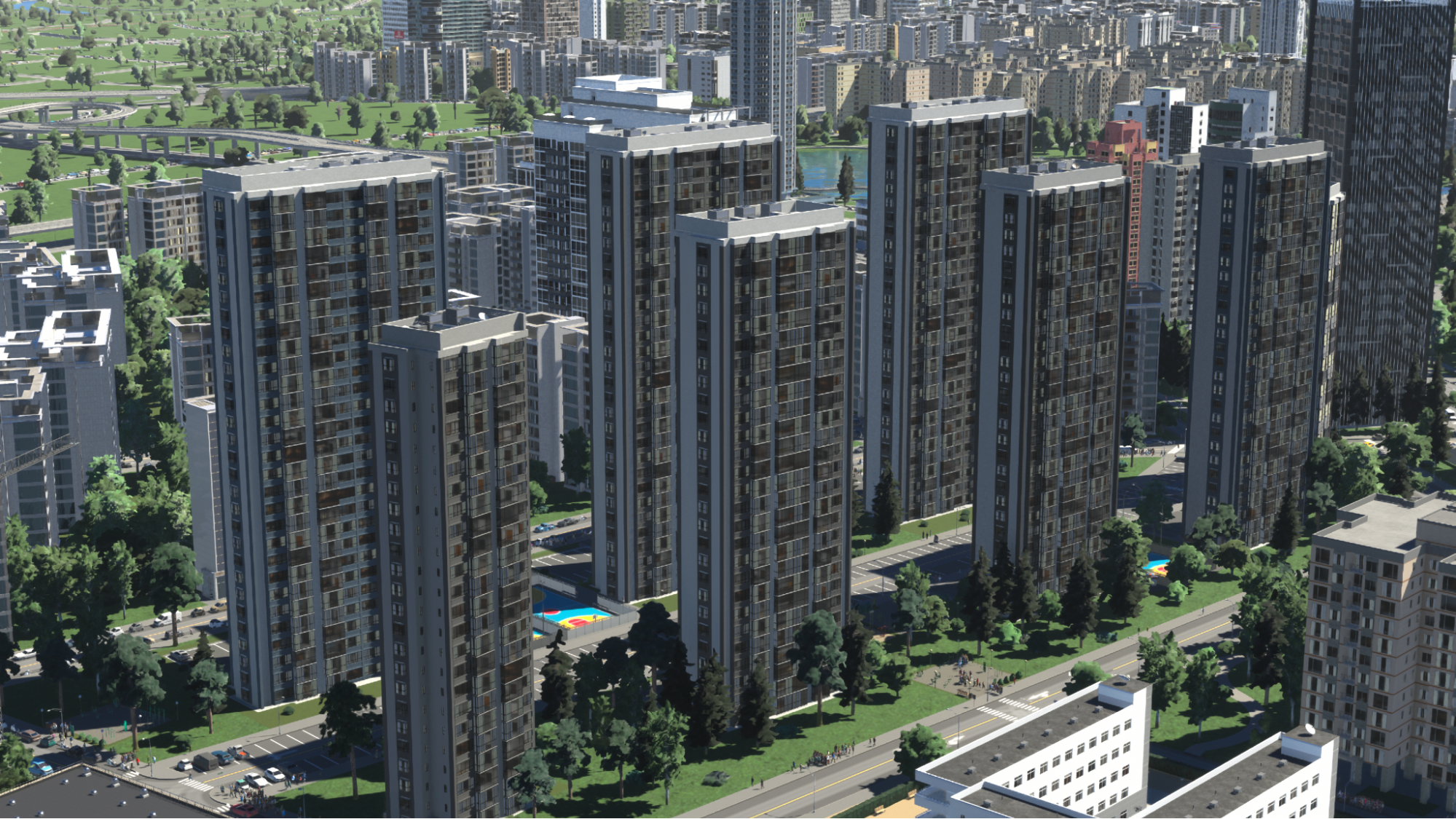
The high density residential set in game.
21st-century China has served as a proving ground for architectural innovation, with organic and curvilinear designs playing a pivotal role in sculpting its contemporary skyline.
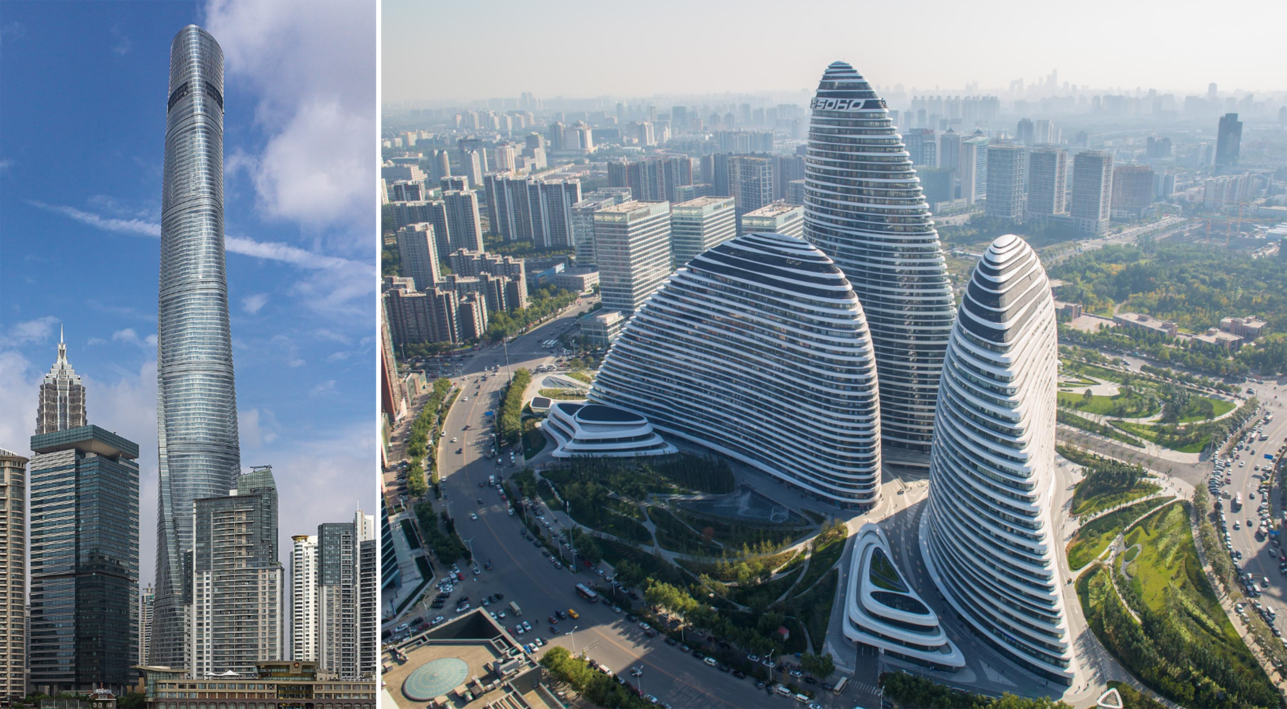
Illustrative organic architecture in China (Shanghai Tower, Shanghai / Wangjing SOHO, Beijing).
Moving beyond conventional box-like structures, modern architecture embraces fluid, sculptural forms that enhance aesthetic allure, energy efficiency, and structural performance. In the China Pack, several buildings mirror this trend, necessitating procedural techniques to achieve their intricate geometries. When creating the set of high-rise office buildings in the organic style, we began with a similar approach using foundational units.
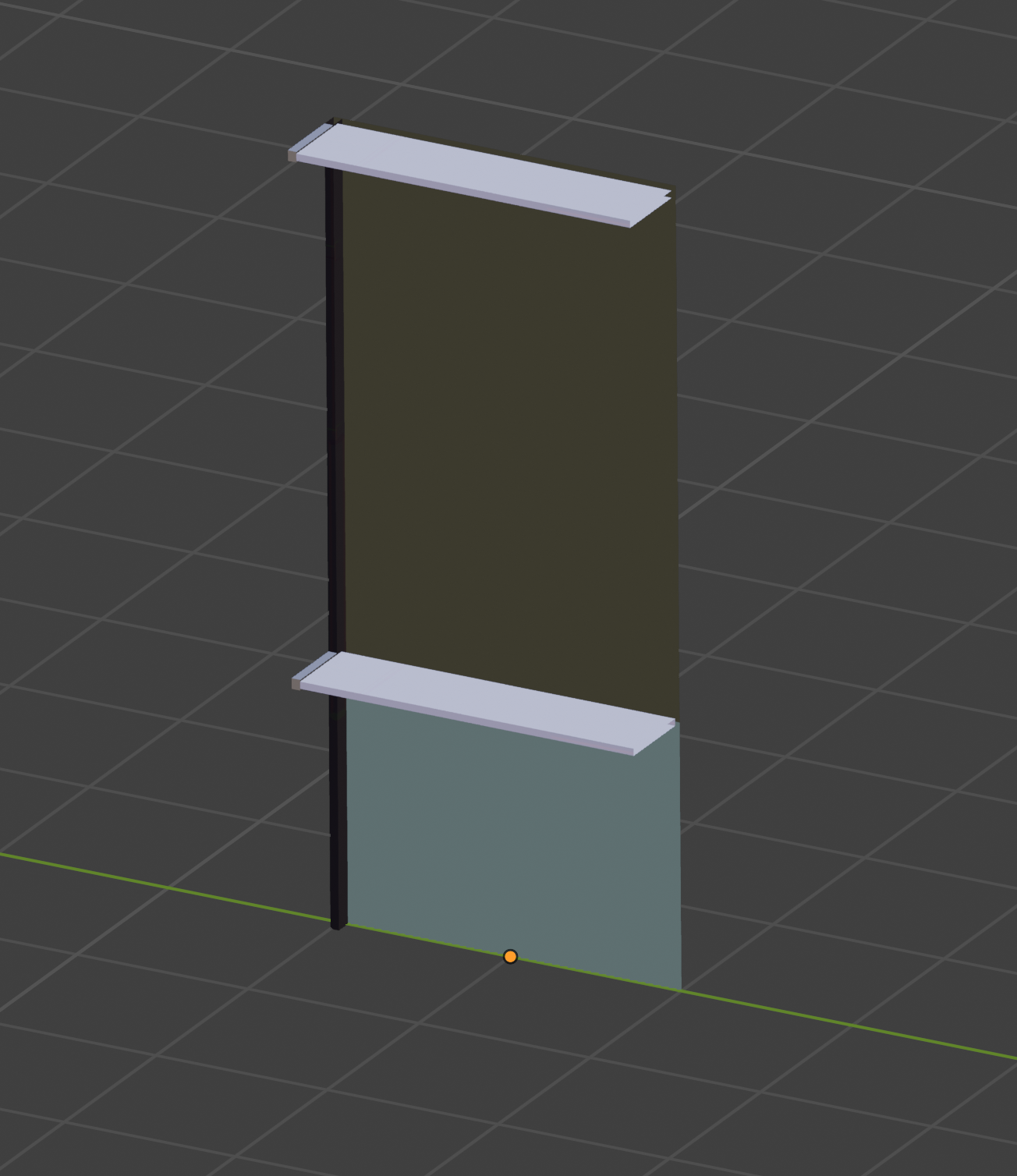
Most facades in the organic High Density Office set are crafted from this singular unit.
However, this time, we relied on a single unit. All other parts of the facade were addressed using non-destructive workflows, specifically a Blender modifier stack. We employed a Bezier spline to outline the horizontal section of the building, followed by two array modifiers to distribute the unit horizontally and vertically, and concluded with a lattice modifier to distort the overall structure for a dynamic appearance.
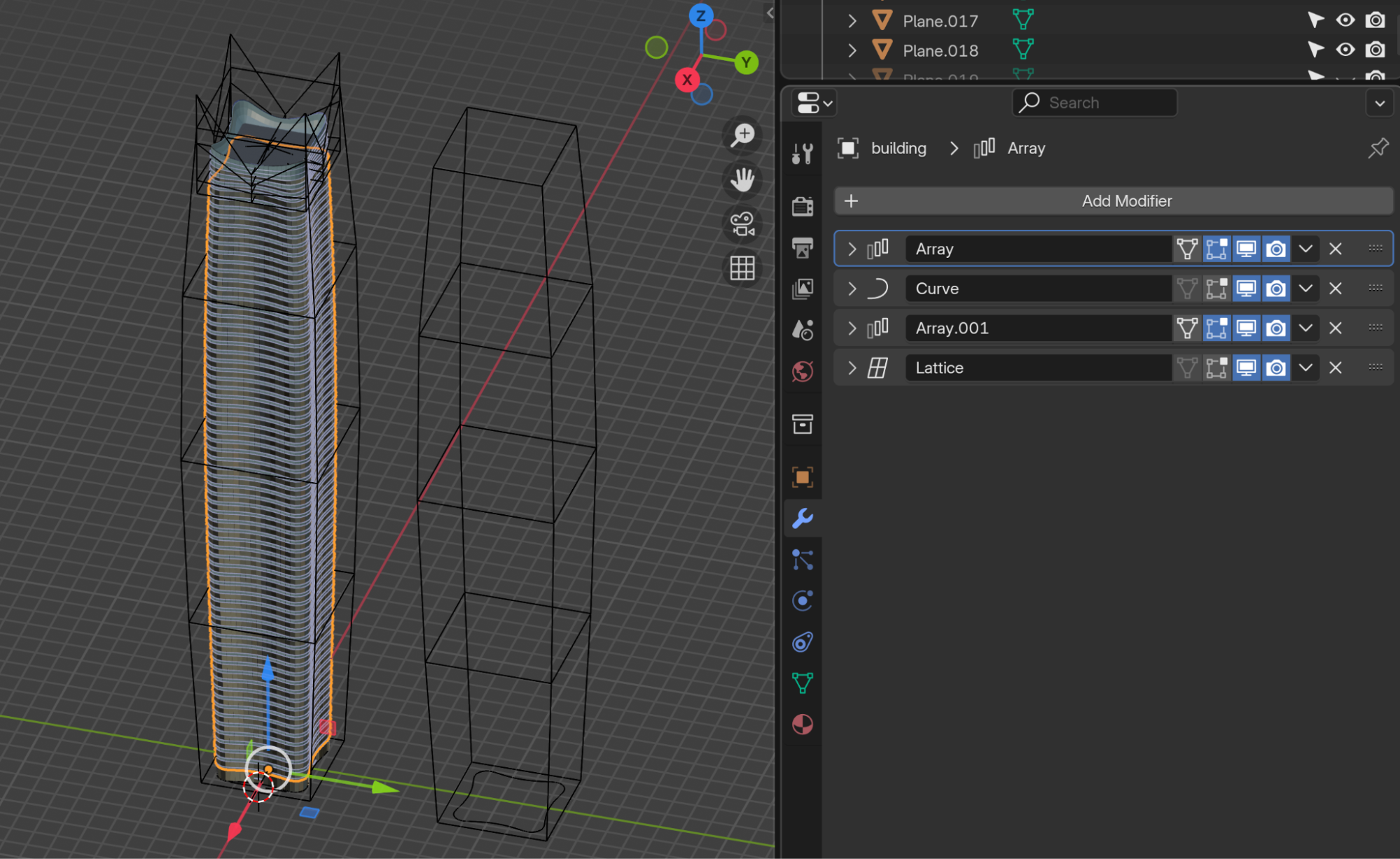
Blender modifier stack to construct the overall structure (excluding the ground floor and roof) with a controlling spline and lattice displayed aside.
Despite being crafted from incredibly simple building blocks, they turned out impressively in the game!
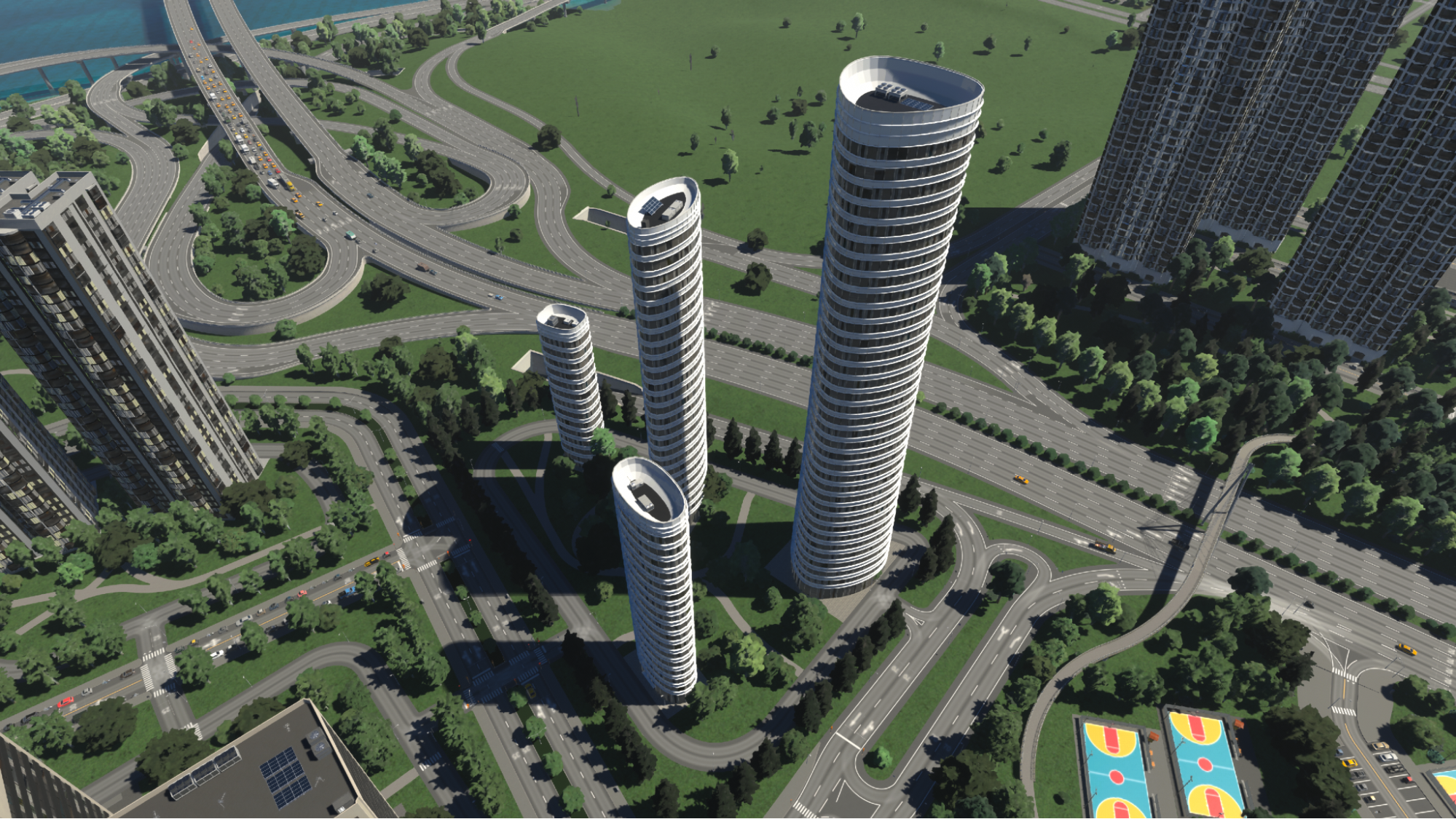
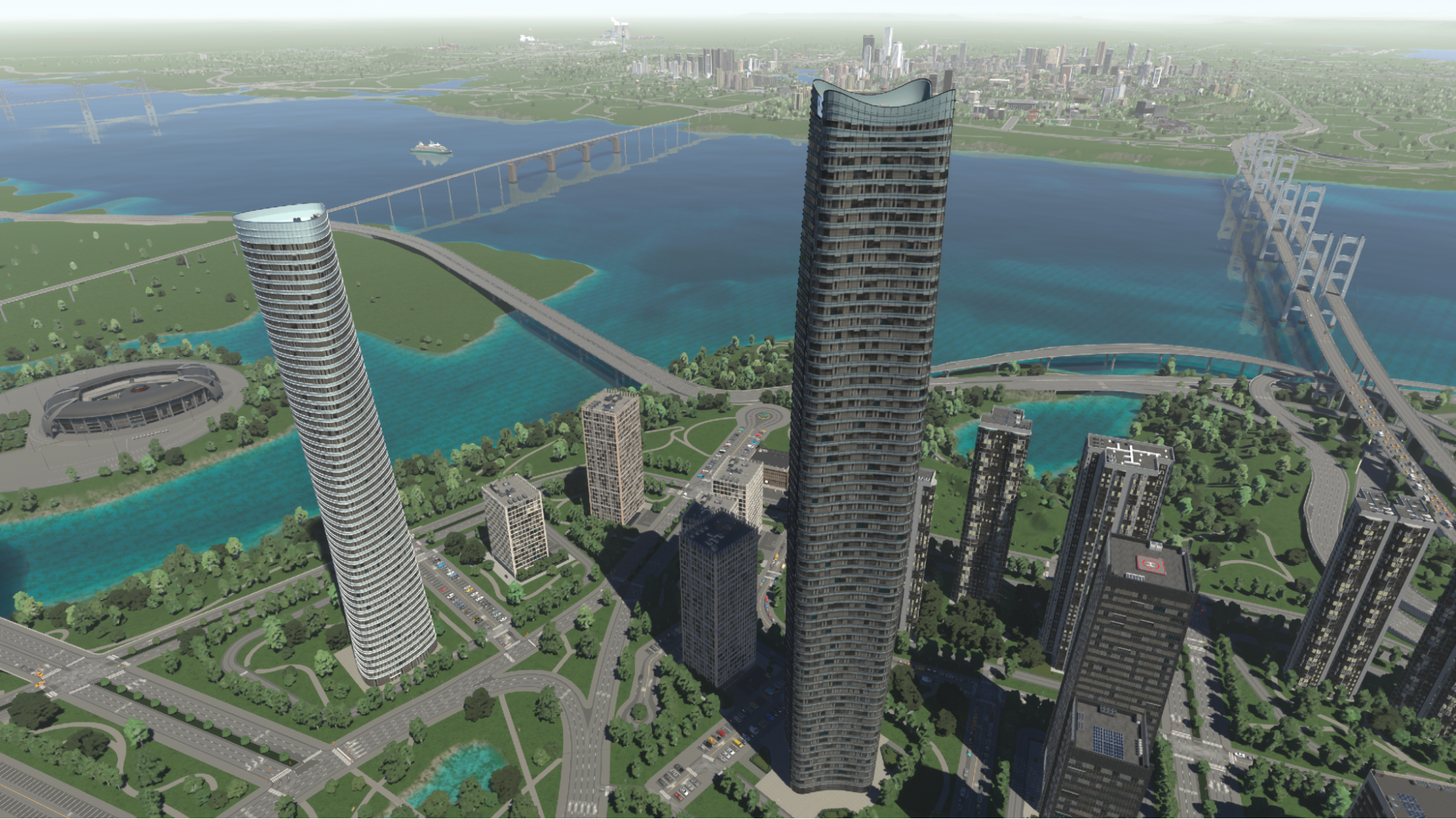
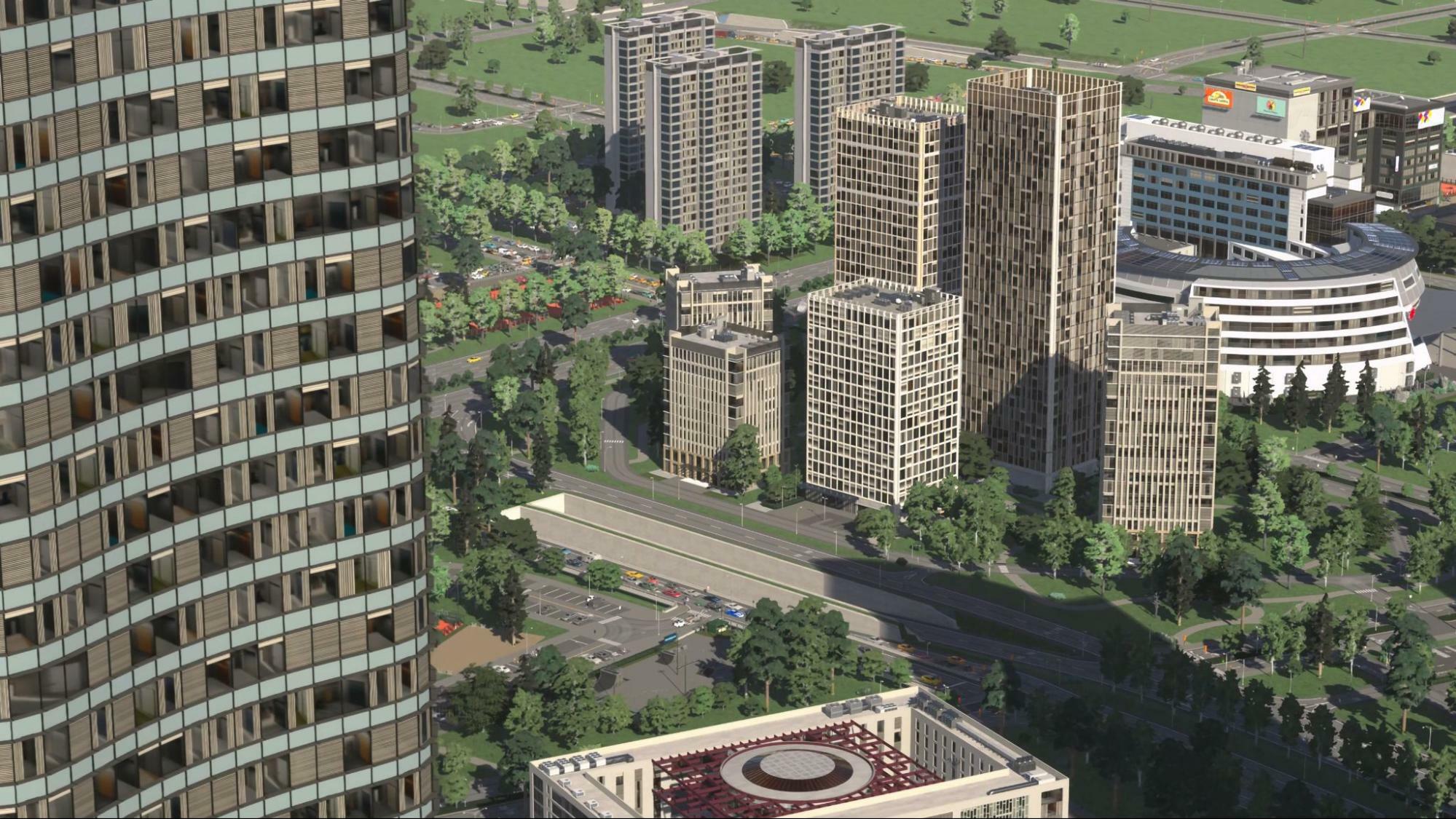
The organic High Density Office set within the game. The Peony Tower Signature Building also belongs to this set.
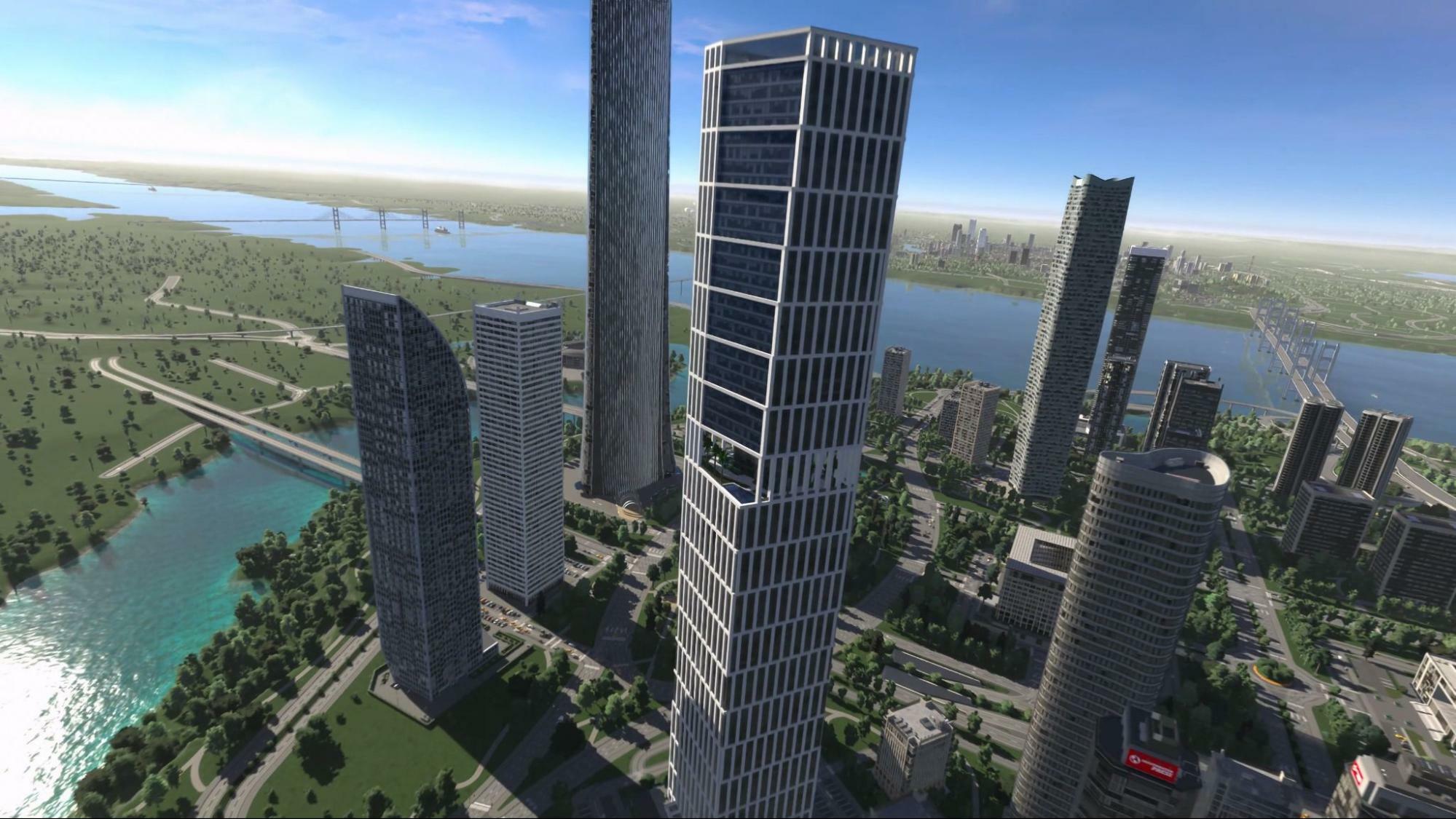
The most complex high-rise structure we designed was the Skyline Palace, the tallest building in the pack and in the whole game to date. This monumental structure transitions from an oval-like base to a nearly triangular top, for which we utilized Blender’s Geometry Nodes for its design. The underlying concept was akin to Blender’s shrinkwrap modifier, yet we had to recreate the wheel in Geometry Nodes to make the shrinkwrap offset height-dependent.
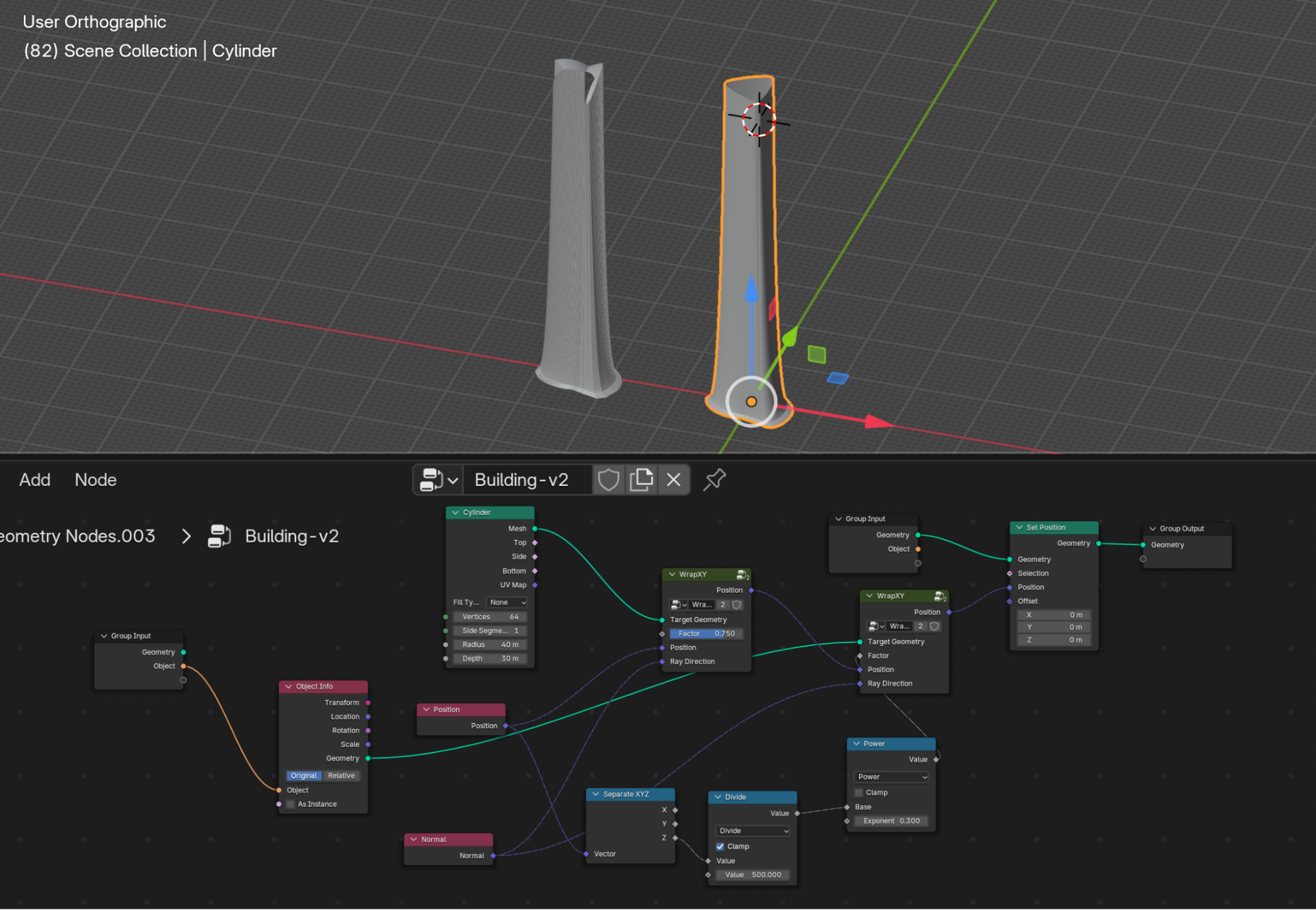
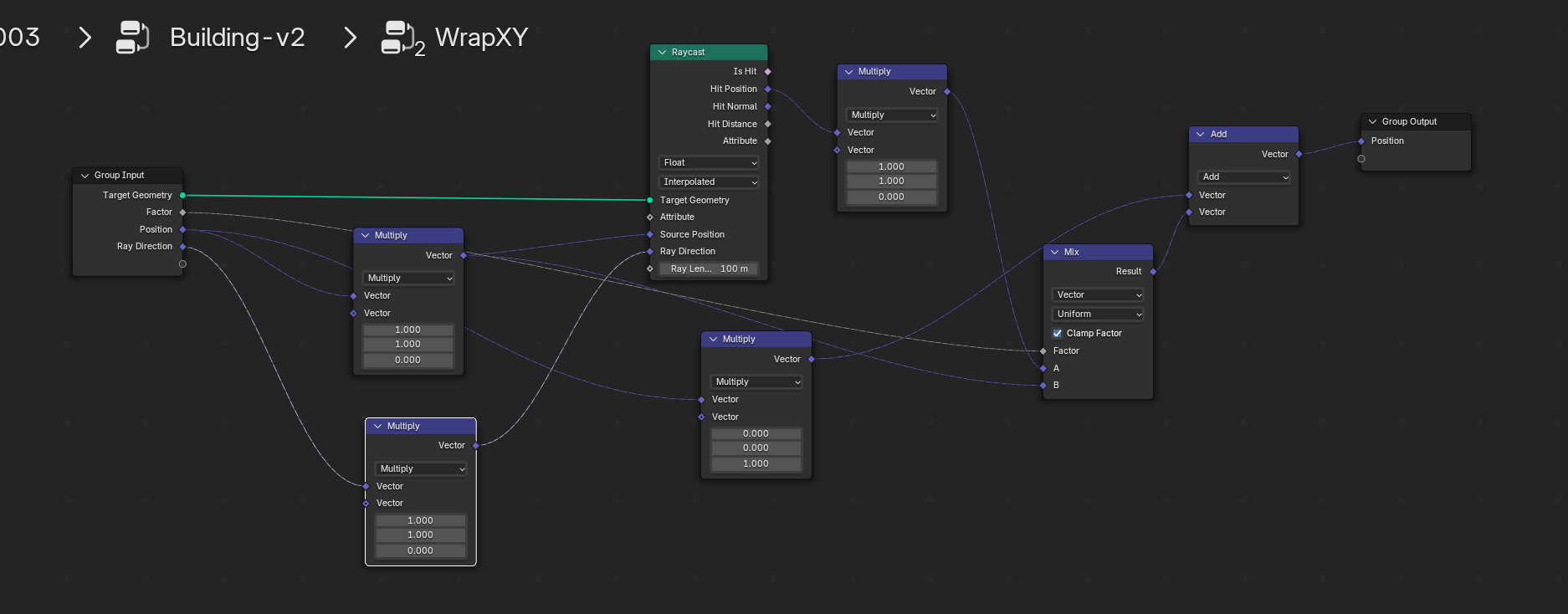
Geometry Nodes graph to generate the shape profile of Skyline Palace and the tailored implementation of shrinkwrap.
In contrast to manually creating cross-section profiles, this technique allowed for precise manipulation of the shape, ensuring a smooth and consistent transition from base to top. It also facilitated rapid iterations and precise fine-tuning of the design.
Following the completion of the general shape, we employed additional Geometry Node modifiers to instantiate the base building blocks, involving significant geometry calculations to ensure UV-unwrapped panels and frames align perfectly with the curved contour.
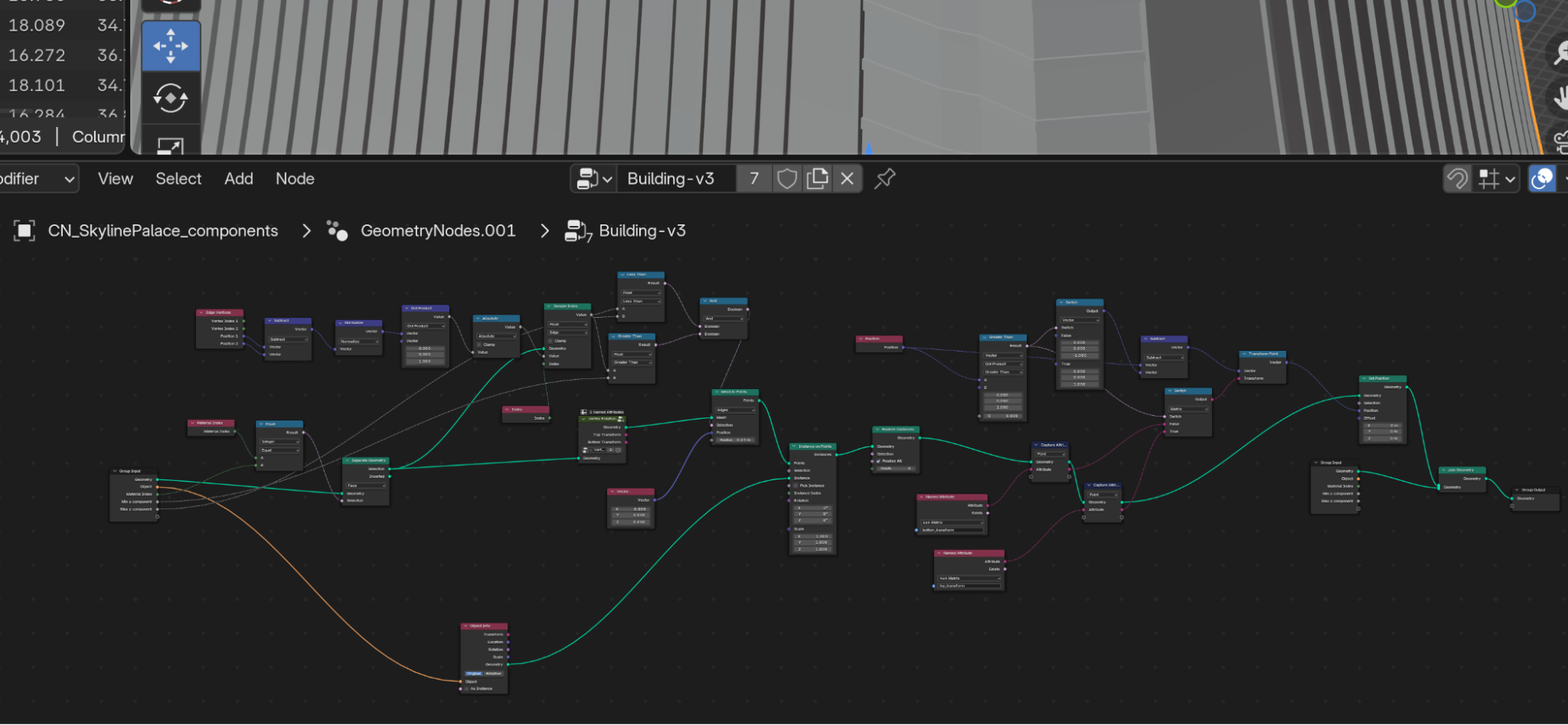
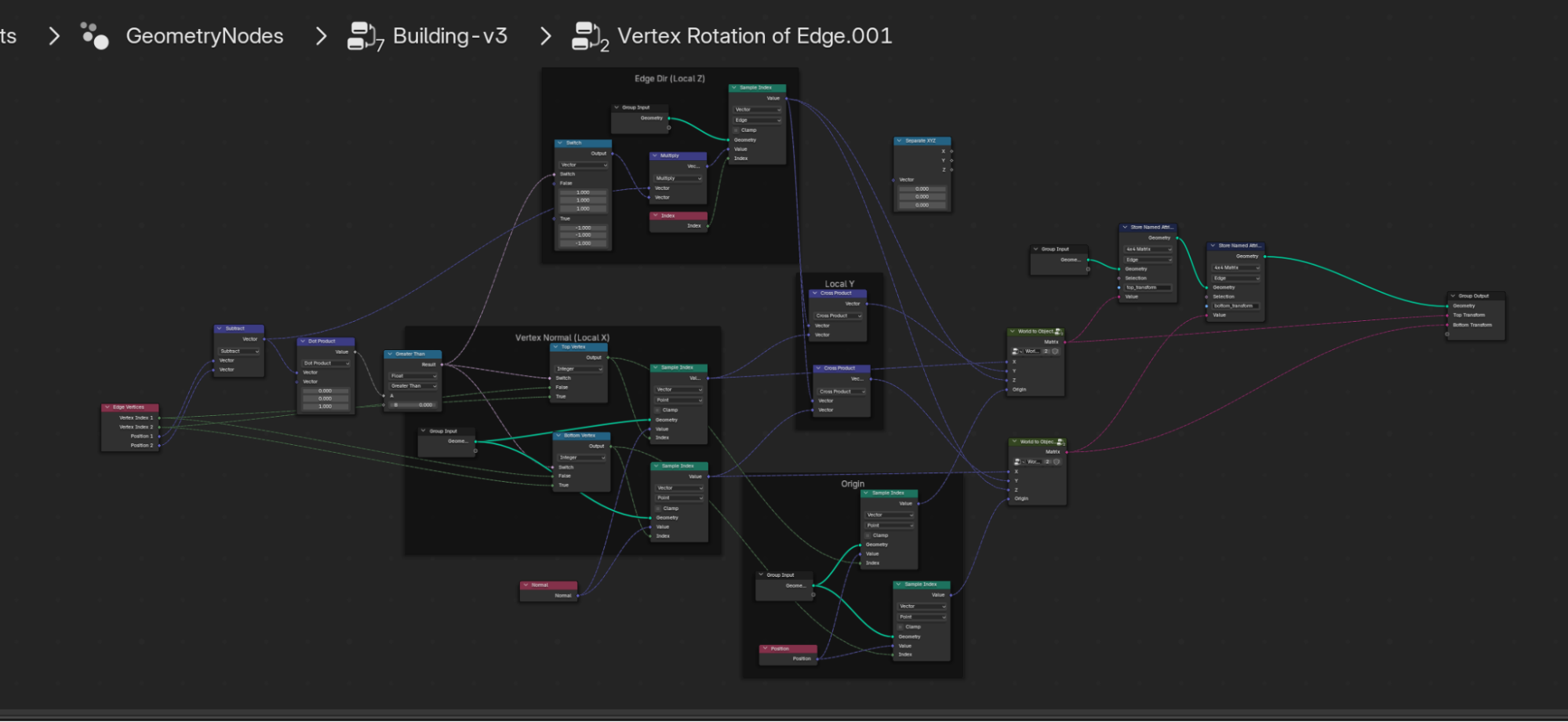
Geometry Nodes graphs to position frame units on the seed mesh.
The result is nothing short of spectacular!
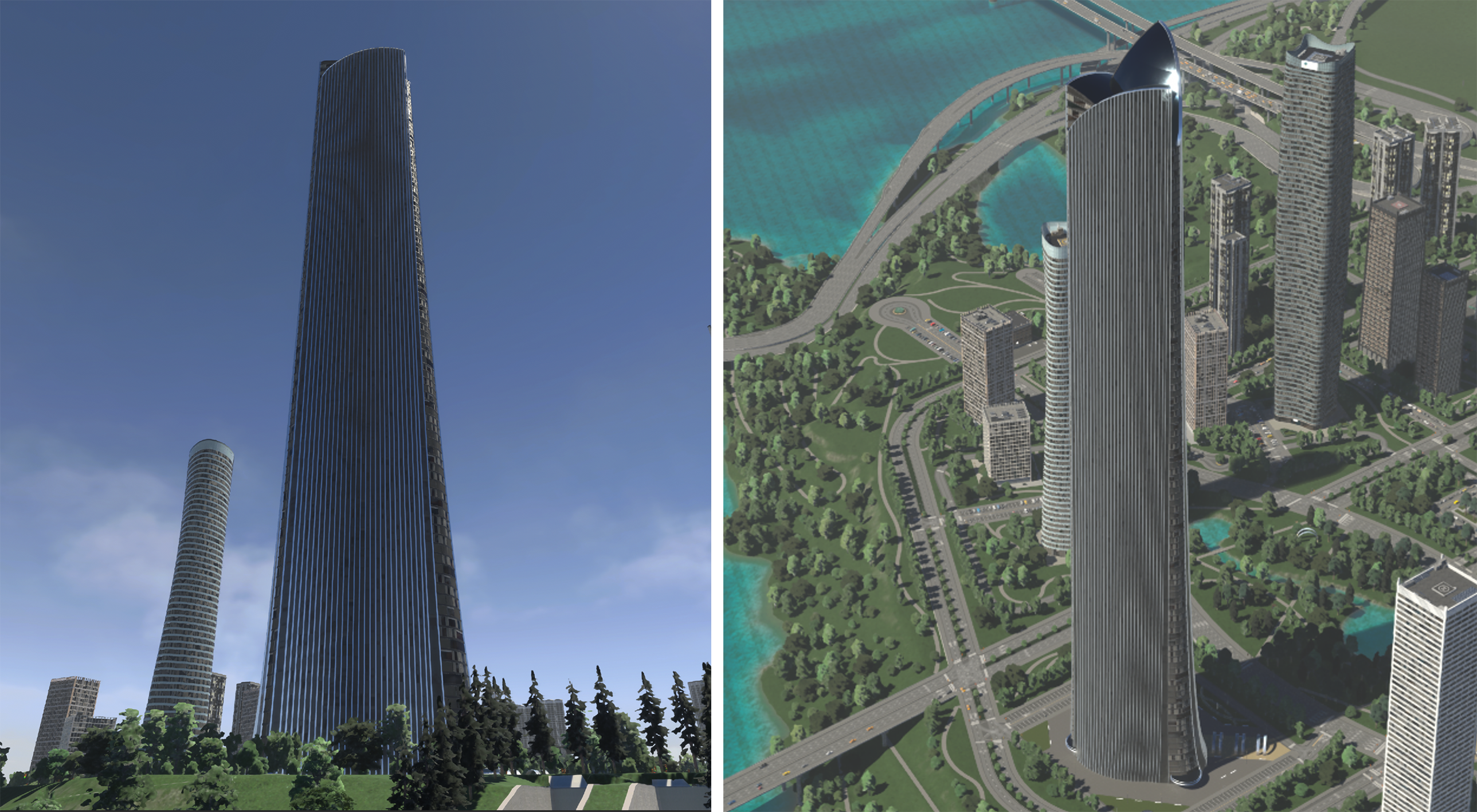
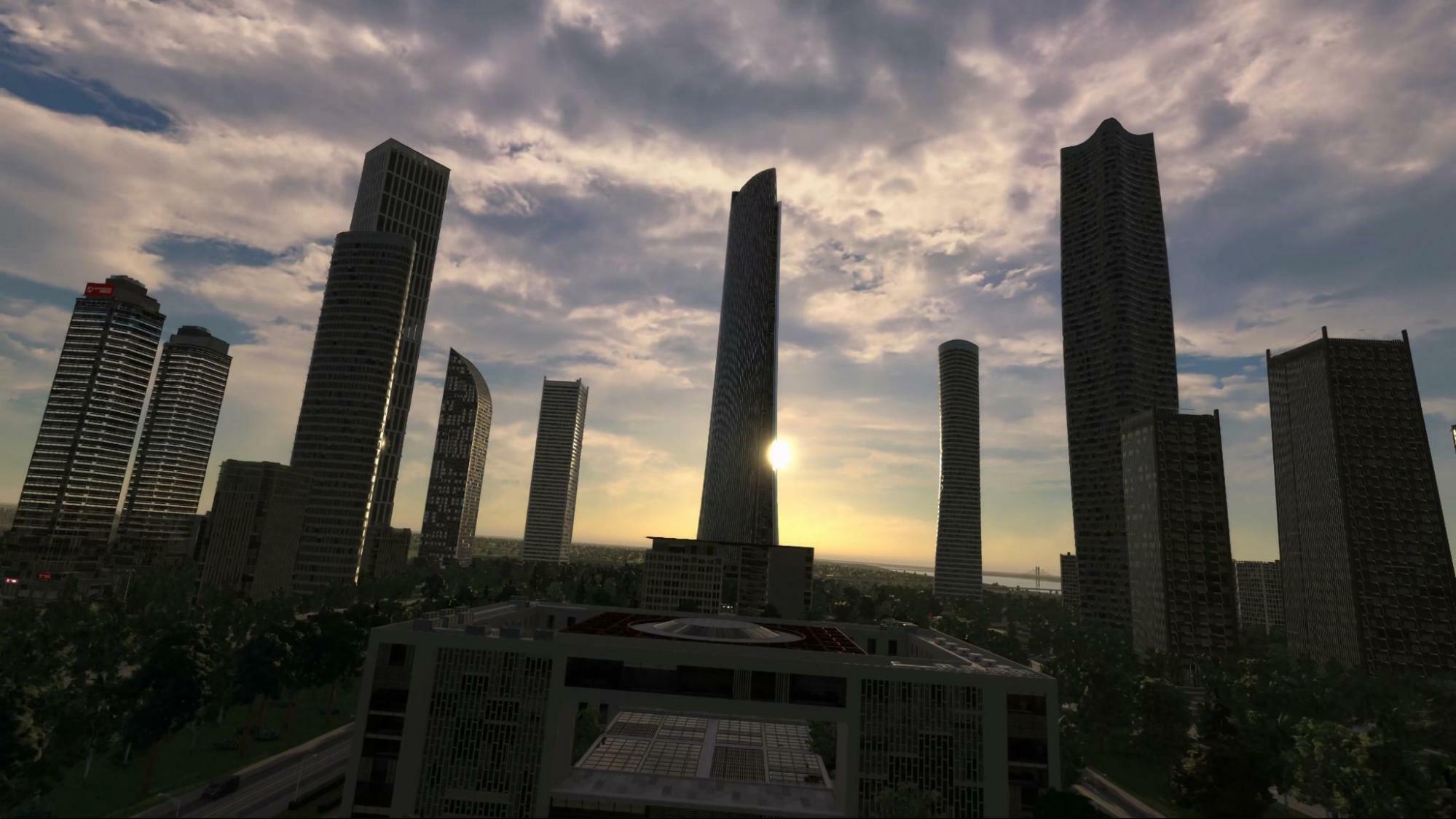
Skyline Palace within the game.
This pack is a genuine collaborative endeavor, so let us extend our gratitude to all the other incredible creators who contributed to the China Pack: RichardShi, CM, MC100, Emperor Li, Feindbold, and Tomas13TO. We hail not only from China but diverse corners of the world, a testament to the expansive Cities: Skylines community that united us! Special thanks also to RichardShi for his invaluable insights and contributions, shaping this Dev Diary!
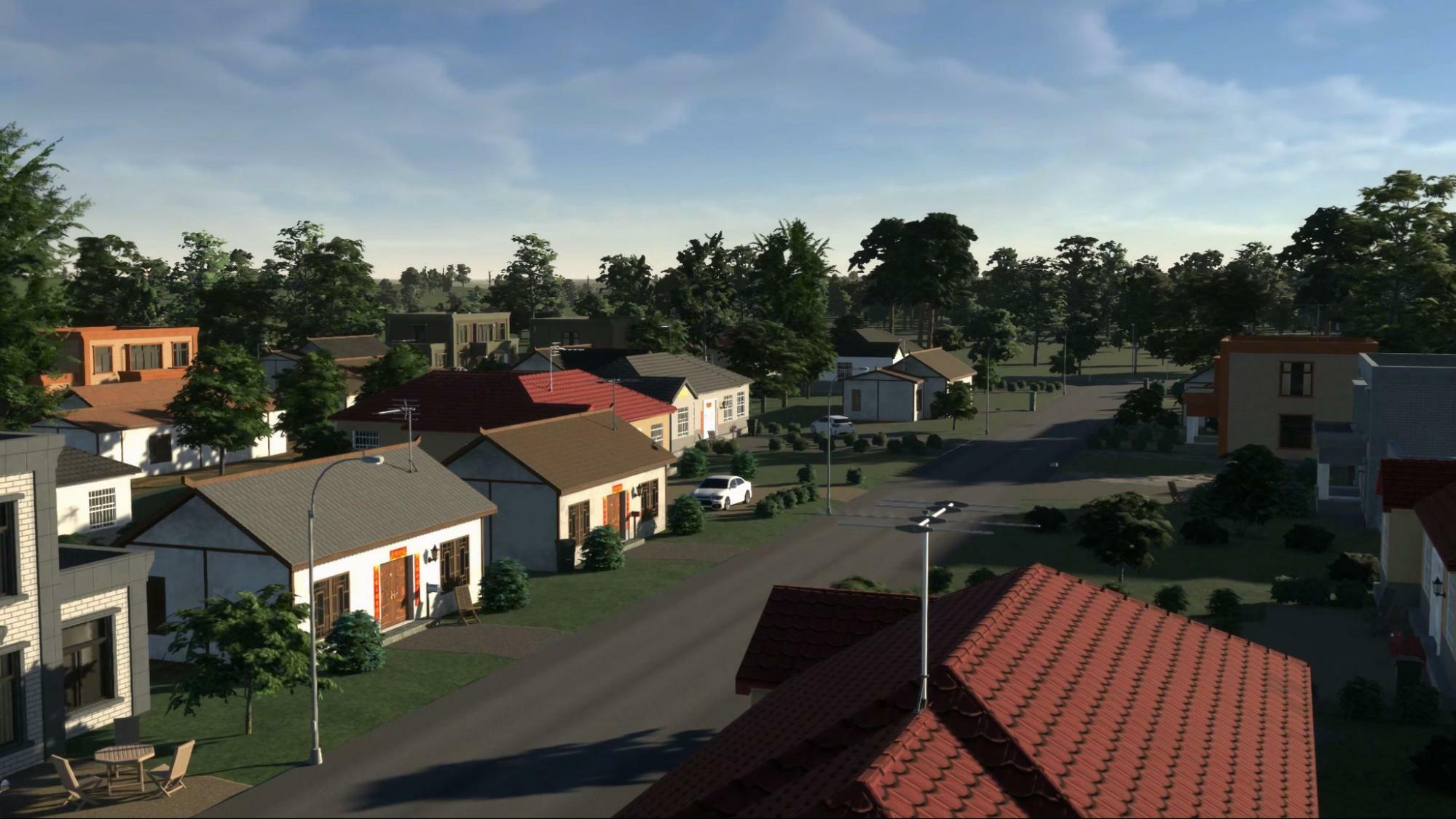
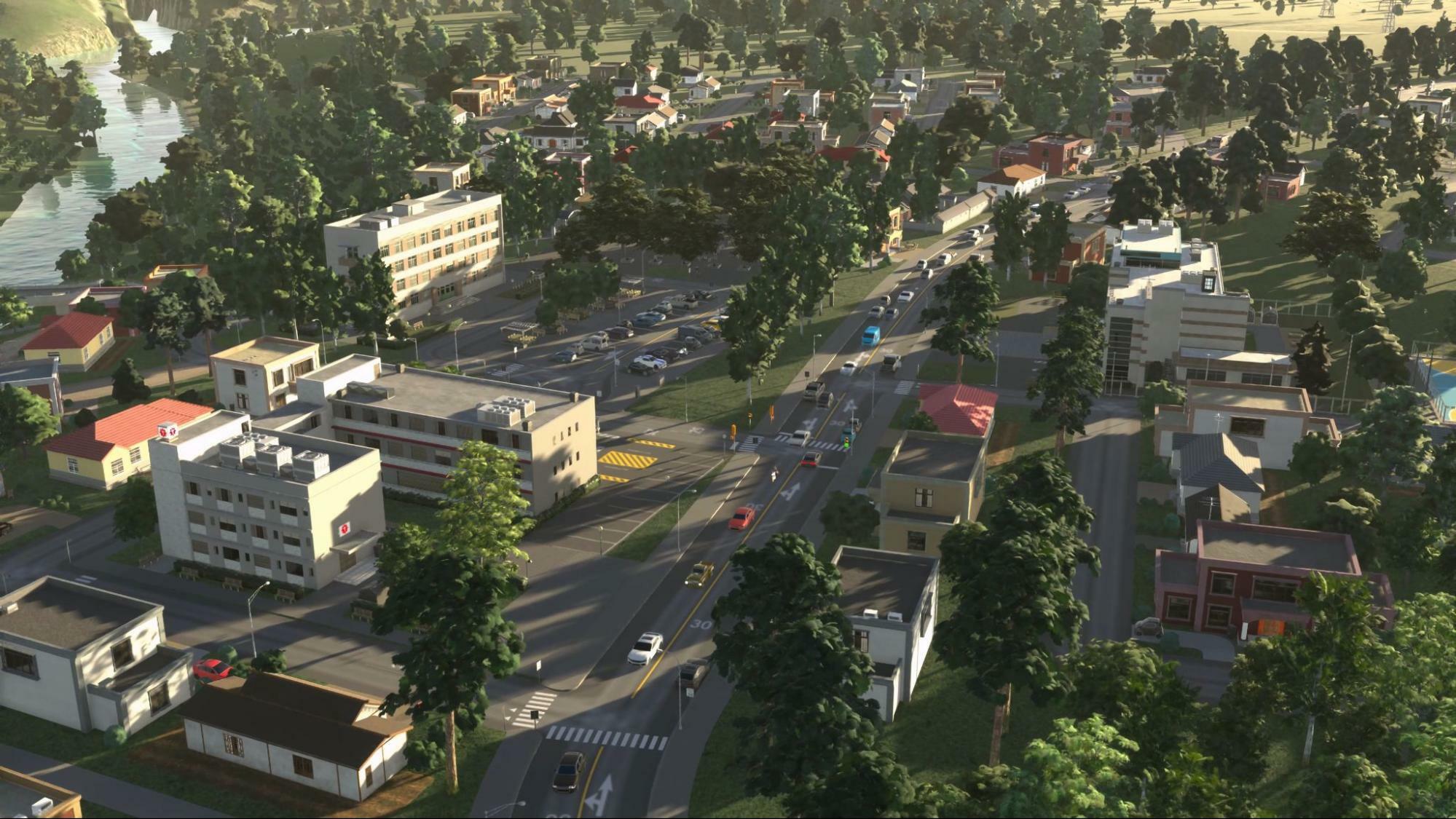
Crafting the China Pack was an ambitious project, but it pushed the limits of what’s conceivable in Cities: Skylines II. While this pack lays the groundwork for constructing Chinese cities, it is but the beginning. The diversity of Chinese cityscapes suggests that there remains a multitude of avenues to explore—and we eagerly await observing how the Cities: Skylines II community further expands upon it!
You can download the pack now for free on Paradox Mods – https://pdxint.at/3EvqFBO
 Patch 1.6.2f1 – Autumn Breeze
 Official Q&A Thread | 2026
 City Corner #12: Collected Questions
 City Corner No. 11: Autumn Breeze
 City Corner #10 – Expanding the Modding Tools
 City Corner #9 – Happy Six-Month Anniversary!
 Patch 1.6.0f1 – Summer Solstice
 City Corner #8 – Reshaping the Landscape