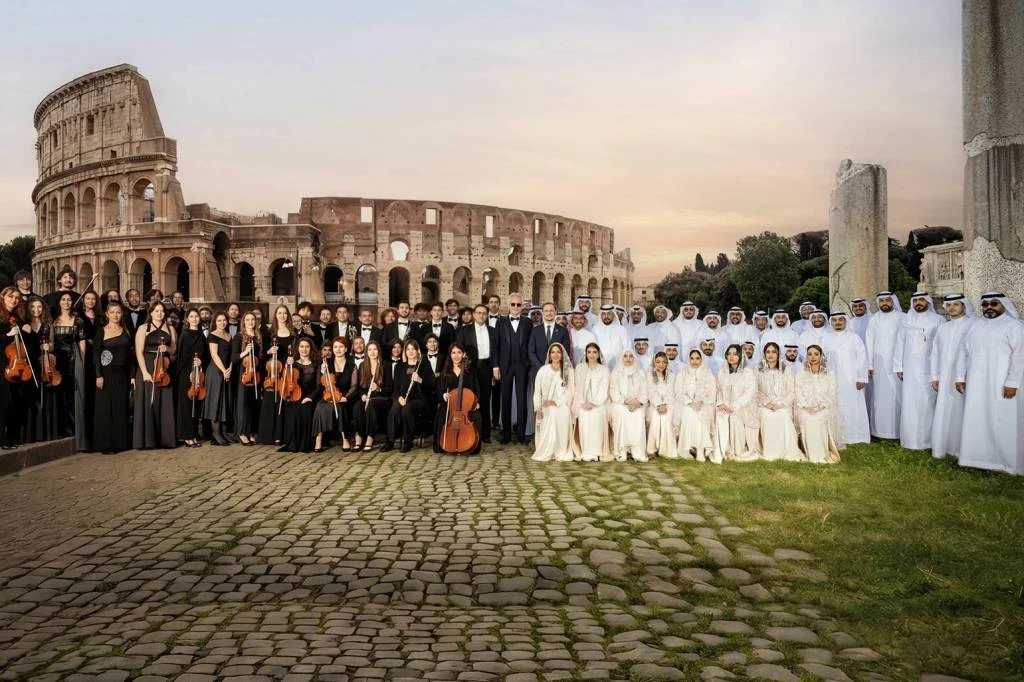
All Ears: The Saudi National Orchestra and Choir in Rome
The Saudi National Orchestra and Choir take the stage in Rome.
Fabrizio Cestasri/Courtesy of Billboard Arabia
Against the timeless backdrop of the Colosseum, the “Marvels of Saudi Orchestra” world tour reached a breathtaking milestone this May. The ancient stone of the Roman landmark provided a monumental setting for the ensemble’s 11th international performance.
The evening featured a collaborative ensemble of 62 musicians: 32 members from the Saudi National Orchestra and Choir performing alongside 30 instrumentalists from the Fontane di Roma Youth Orchestra, all under the baton of maestro Marcello Rota. Adding a layer of historical significance, the legendary tenor Andrea Bocelli joined the stage, marking his first performance with the Saudi collective—a homecoming of sorts for the artist, whose professional ties to the Kingdom span years.
This performance serves as a vibrant testament to Saudi Arabia’s rapid evolution into a global music powerhouse. By investing heavily in live entertainment, educational frameworks, and international touring, the Kingdom is establishing itself as a key player in the global arts landscape. The “Marvels of Saudi Orchestra” tour is, in many ways, the public face of this cultural renaissance.
These initiatives trace their roots back to the establishment of the Ministry of Culture in 2018 and the Saudi Music Commission in 2020. Reflecting on the Rome concert, Bocelli noted, “Performing at the Colosseum is always a transformative experience, but sharing this stage with the Saudi National Orchestra and Choir added a profound layer of meaning. It was an honor to witness such a seamless blending of musical traditions in the heart of Rome.”
Since its Paris debut in 2022, the ensemble has cultivated an impressive resume, gracing iconic venues from London’s Central Hall Westminster to the Sydney Opera House and New York’s Metropolitan Opera. Their touring philosophy is refreshingly collaborative; rather than simply presenting a static show, the ensemble weaves local musical identities into their performances. Whether it is reinterpreting Frank Sinatra with the traditional ney flute in New York or performing anime theme songs in Tokyo, these strategic arrangements demonstrate a deep respect for the host city’s culture.
Collaborating with Bocelli in Rome—the birthplace of opera—was a particularly ambitious undertaking. Maestro Rota observed that the two orchestras found a natural harmony, creating a unified voice that celebrated both distinct styles and shared emotional depth. The program featured a bespoke fusion of Saudi and Italian classics, anchored by a special composition titled “Al-Hijr and Rome,” which draws inspiration from ancient inscriptions found at Saudi Arabia’s first UNESCO World Heritage Site.
The impact of these efforts extends well beyond the stage. With the first cohort of formally trained Saudi classical musicians graduating in 2025, the Kingdom is building a sustainable, high-caliber musical ecosystem. Paul Pacifico, CEO of the Saudi Music Commission, emphasized that these concerts are about more than just entertainment; they are building enduring partnerships that will define the future of the regional and international music industries.
From hosting global superstars to fostering local talent through institutions like the Riyadh University of Arts, Saudi Arabia is successfully integrating itself into the worldwide music circuit. As consumption of local music within the Kingdom rises and digital initiatives like the “Saudi Beats” sound library roll out, it is clear that Saudi Arabia is no longer just observing the global conversation—it is actively shaping the future of it.
Related articles
 Travis Kelce Discusses Spending His Birthday With Taylor Swift
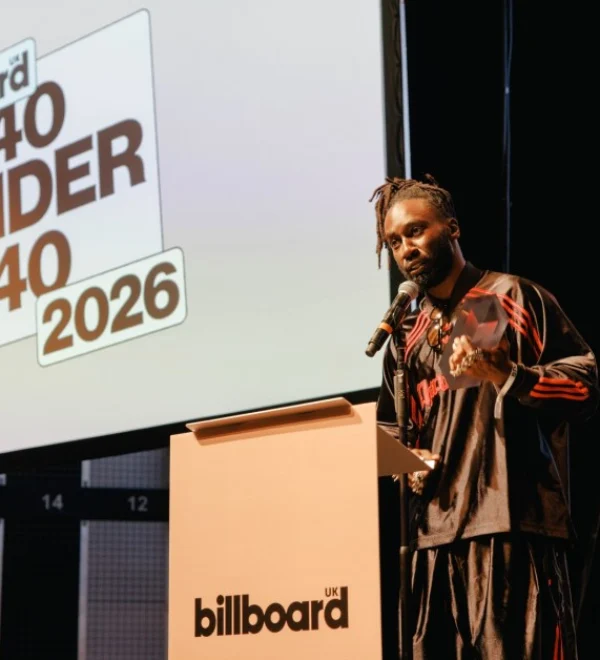 Kojey Radical Received Trailblazer Award at Billboard U.K.’s Inaugural 40 Under 40 Event
 Olivia Rodrigo Clarifies AI Stance Following Tech Investor Dating Rumors
 New Year’s Rockin’ Eve Set to Simulcast Live on ABC and Disney+ for the First Time
 Olivia Rodrigo Spent a Large Amount of Money on a White Stripes Artifact
 Travis Barker Shares Pre-Op Hospital Photos With Wife Kourtney Kardashian
 Bruno Mars performs ‘Marry You’ live at SoFi Stadium for Lakers star Ziaire Williams’ proposal
 KATSEYE, Joji, Noah Kahan and Others Are Getting Special Releases for Record Store Day Black Friday