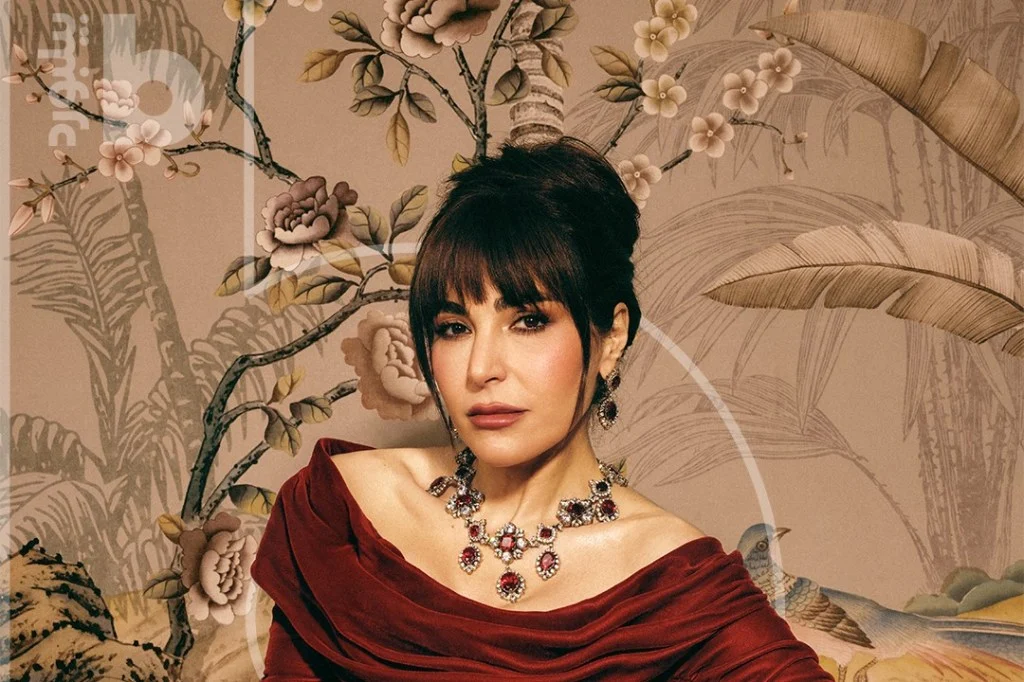
Abeer Nehme on the Cover of Billboard Arabia: A Voice Guided by Emotion
Abeer Nehme
Patrick Mecherkany/Courtesy Billboard Arabia
My introduction to Abeer Nehme occurred nearly two decades ago through her artistry. When we finally met in person, just 24 hours prior to this cover story interview, it became immediately evident that there is no divide between the artist and the individual. Sitting across from her, I realized I was speaking with someone who has woven music into the very fabric of her existence; it is not merely her career, but the core of her identity.
I had eagerly awaited this conversation for over a year, mentally rehearsing the inquiries I longed to pose. For months, I found myself constantly revisiting her live album from the Cairo Opera House, a collection that captured some of her most evocative performances. I was intent on asking about her creative choices—why she opted to open that night with “Wainak,” the collaborative process behind the orchestral reimagining of “Wadda’t El Leil,” or the profound experience of singing the operatic passages of “Ghani Qalilan Ya Asafir.” That track, in particular, solidified my conviction that she is the definitive songbird of contemporary Arabic music.
However, when she entered the room, I set those prepared questions aside. I felt it was best to forgo the fan-driven narrative and simply allow her the space to share her journey on her own terms.
Abeer arrived at our designated café with punctuality, apologizing repeatedly despite being right on time. She engaged with everyone present with sincere focus, posing thoughtful questions and listening intently, as if she wanted to ensure that whatever she revealed would be shared with genuine mutual understanding. Within an hour, I realized the interview had pivoted, and I had shared far more about myself than she had about her own life.
Long before she achieved widespread commercial success, Abeer was already a luminary in the Arab world, held in high regard by musicians, composers, and dedicated listeners who value genuine craftsmanship over fleeting trends. Her early public exposure via a talent competition belied the fact that she was already deeply committed to rigorous academic music studies. Her body of work includes significant collaborations with figures like Charbel Rouhana, Marcel Khalife, and Jean-Marie Riachi, alongside extensive performances of classical and tarab repertoire across the globe. She has even ventured into unconventional territories for the sake of musical research and archival preservation.
Then, with deliberate grace, the artist blossomed into the global pop figure we recognize today. Her most significant mainstream breakthrough occurred only as she entered her forties. While mid-career surges are not entirely unprecedented in Arabic music, the deliberate pacing of Abeer’s evolution is what distinguishes her trajectory.
“I don’t subscribe to the idea of instant fame,” she explains to Billboard Arabia. “I was investing in my growth—as both an artist and a person. I was exploring various cultures and musical traditions. In hindsight, I feel as though every experience was a stepping stone, preparing me for this moment, perhaps even subconsciously.”
Prior to this commercial renaissance, critics often pigeonholed her as an “elite” artist, a term intended to honor her technical mastery of demanding vocal styles, ranging from opera to classical Arabic. Yet, as she moved into the mainstream sphere, she has actively dismantled that reductive label.
“People often meant it kindly,” she notes, “as if it were a prestigious accolade. But it troubled me. What does ‘elite’ actually signify? I perform for everyone—the young, the old, everyone. Music is a universal language meant to connect with every soul.”
She pauses, adding with a knowing smile, “Deep down, I would just think: just wait.” It is the quiet confidence of an artist whose perseverance has been fully vindicated.
Over the past six years, her stardom has ascended to new heights. A succession of hits—including “Wainak,” “Bisara7a,” and “Bala Ma N7es”—has garnered millions of streams and solidified her presence on the Billboard Arabia Artist 100. These tracks have become deeply woven into the emotional lives of her listeners, often eliciting tears from both the audience and Abeer herself during live performances.
Raised during the Lebanese Civil War, Abeer learned early on about the harsh realities of existence. Yet, she simultaneously discovered the indomitable power of music to persist through adversity.
She inherited this resilience from her father. Despite enduring a lifelong injury from the war, he remained devoted to singing, instilling that same discipline in his nine children. His guidance shaped her early vocal phrasing and introduced her to the masters—Asmahan, Umm Kulthum, and Fairuz. These formative lessons allowed her to traverse musical genres with fluid expertise while maintaining an authentic, singular voice.
By the time her father lost his own voice due to illness, audiences around the world were flocking to Abeer’s concerts, seeking in her performance a sense of home and an escape from the turmoil of the present.
Shortly before our interview, Abeer performed at the Royal Albert Hall while her home country, Lebanon, faced profound challenges. Her rendition of the iconic Fairuz song “Li Beirut,” originally released during the civil war, was a deeply emotional moment.
Following that performance, she returned to Beirut. When I asked her about the necessity of creating art during such dark times, she cited Friedrich Nietzsche: “Without music, life would be a mistake.”
She added, “During times of conflict, the imperative to create music with profound depth, beauty, and devotion is greater than ever. Music may not be a solution to the world’s geopolitical strife, but it is a vital tool for healing and sustaining the human spirit.”
Despite her serene presence and poetic temperament, every response reaffirms that she is a woman of immense strength, approaching her craft and her emotions with the calculated precision of an expert.
The word “expert” is fitting. Abeer has not reached this pinnacle through convenience or compromise; her path has been defined by unwavering discipline, insatiable curiosity, and a steadfast refusal to conform to conventional expectations.
As our session neared its conclusion, one final query surfaced: If she could, would she change any aspect of her journey?
A mere 24 hours in her presence was sufficient for me to know the answer before she even uttered it.
Related articles
 Travis Scott, Charli xcx, and Sombr to Headline Estéreo Picnic Festival 2027
 Cardi B, Eminem, and Troye Sivan Featured in Weekly New Music Release Poll
 Alanis Morissette Announces First Christmas Album and Releases Lead Track Featuring Brandi Carlile and Steve Martin
 Instagram Admits Suggesting Creed’s Higher to More People Than Intended
 Lorde Quotes Taylor Swift Lyric While Reflecting on Final Virgin Shows
 Troye Sivan, Remi Wolf, Slayyyter and Pitbull featured in New Music Friday Guide
 Cardi B Cancels BZR WKND Jamaica Headlining Set
 Mariska Hargitay Praises Taylor Swift’s Acting and Cookies on Emmys SVU Set