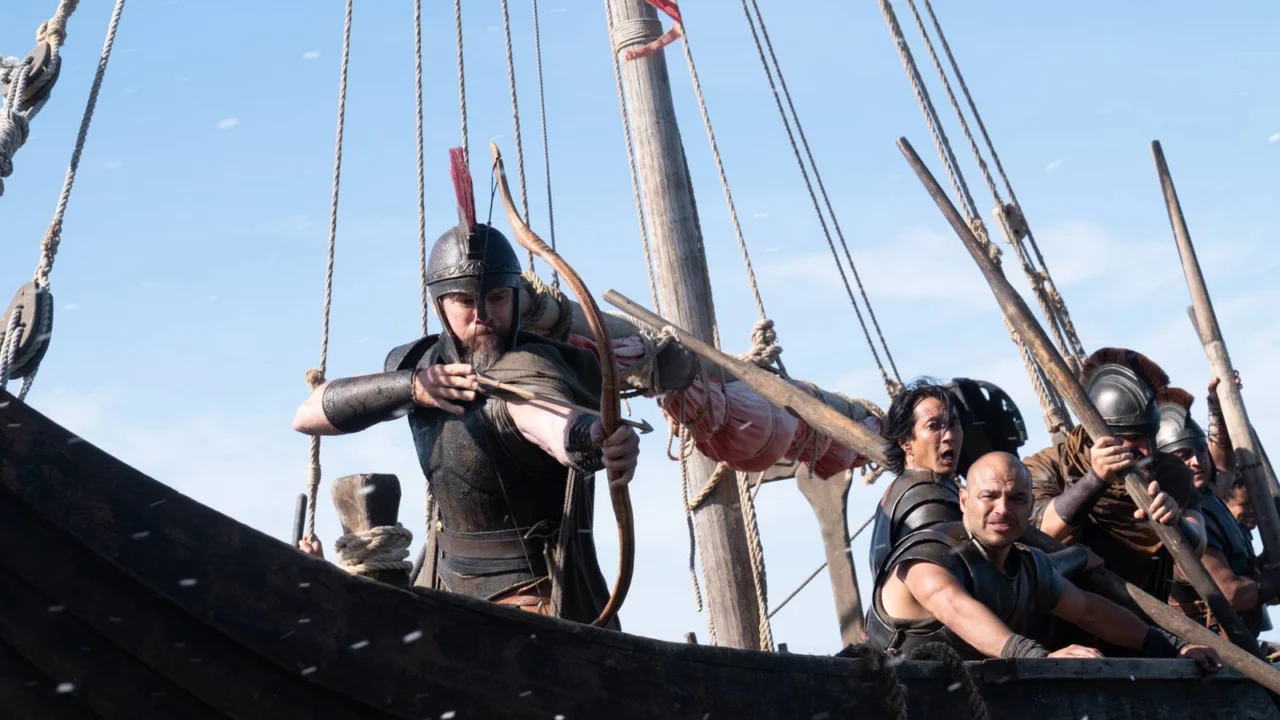
Who Were the “Sea People” in Christopher Nolan’s The Odyssey?

Throughout Christopher Nolan’s expansive reimagining, The Odyssey, the narrative is fraught with perils both tangible and abstract. Between the monstrous Cyclops and the fury of Poseidon, Odysseus and his weary troops navigate a gauntlet of legendary threats. Perhaps most unsettling, however, is the recurring specter of the “Sea People”—a shadowy, marauding force that serves as a persistent omen of doom for Ithaca and the broader Mediterranean landscape.
Warning: This article contains major spoilers for The Odyssey.
In the film’s portrayal, the Sea People are an elusive, violent collective that pillages coastal civilizations. For Queen Penelope (Anne Hathaway), holding the throne in Ithaca while awaiting the return of King Odysseus (Matt Damon), these invaders represent a mounting existential crisis. Surrounded by opportunistic suitors, she views the Sea People’s approach as a justification for the urgent need to reclaim a strong, centralized military leadership. Their name surfaces repeatedly, functioning as a shorthand for the encroaching chaos threatening the status quo.
While the film leaves their true identity shrouded in ambiguity, the narrative hints that Odysseus and his men might inadvertently be the architects of this terror. By arriving from the sea, orchestrating the Trojan Horse deception, and systematically dismantling Troy, their own campaign of conquest may have laid the groundwork for the legend—and the subsequent wave of lawlessness that followed the fall of great cities.
Though Homer’s source material stops short of explicitly labeling Odysseus’ soldiers as the “Sea People,” it remains a compelling theory among scholars. This speculation is rooted in the “Cretan Lie,” a sequence where a disguised Odysseus regales the pig farmer Eumaeus (John Leguizamo) with a fabricated tale of his exploits in Egypt. By blurring the lines between myth and historical context, Nolan successfully bridges the gap between epic fantasy and the gritty realities of the Bronze Age.
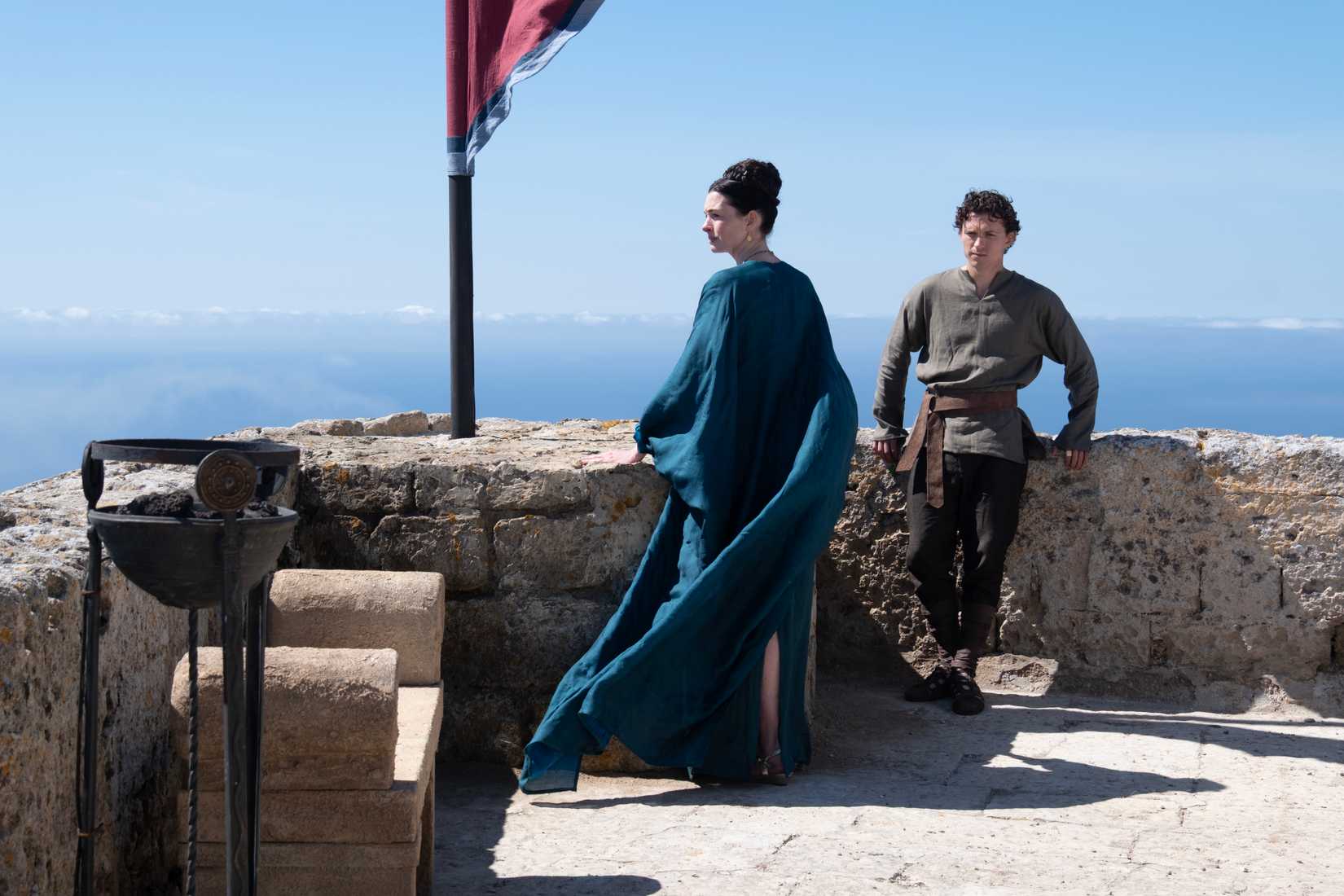 Image: Universal Pictures
In actual history, the “Sea Peoples” refer to a mysterious, heterogeneous coalition that disrupted the Eastern Mediterranean around 1200 BC, contributing to the collapse of the Bronze Age. Our primary records of these groups come from inscriptions at Medinet Habu, which detail various tribes like the Peleset (likely the Philistines) and the Shekelesh. Historians generally classify the Sea Peoples not as a structured military force, but as a migratory, desperate mass of refugees and warriors—a socioeconomic phenomenon rather than a single unified army.
Whether this collapse was driven by their raids or if their raids were merely a consequence of a crumbling society remains a subject of intense academic debate. Either way, the cinematic link between Odysseus’s soldiers and the Sea Peoples provides a fascinating layer of historical subtext.
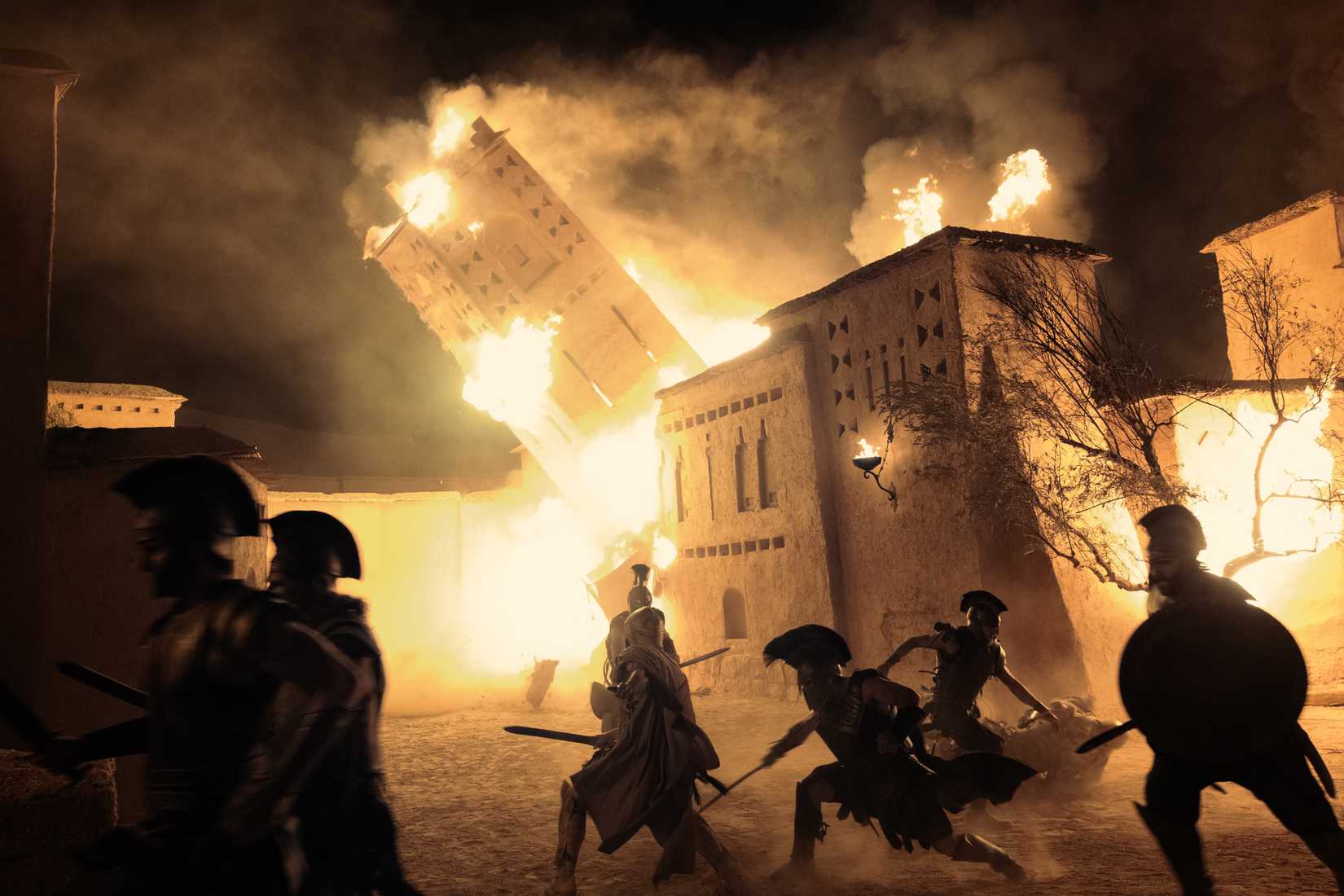 Image: Universal Pictures
Ultimately, while identifying Odysseus’s crew as the Sea Peoples serves as a potent interpretive lens, it diverges somewhat from the rigid archaeological record. Regardless of the historical accuracy, however, the film serves as a poignant reminder: if you see a mysterious fleet approaching your harbor, it’s best to keep your city gates locked—and definitely don’t invite any gift-bearing horses inside.
The Odyssey is in theaters now.
Source: Polygon
Related articles
 Blizzard Shifts Diablo 5 Formula to Mirror Dragon Age and Baldur’s Gate
 Could Marvel’s Wolverine Cost Sony a Top Nomination at The Game Awards Due to Low Scores
 Roblox Discloses Creator Earnings
 $400 Death Stranding 2 Sam Figure Features Typo
 Kojima Discusses Budget and Team Size Limitations for Death Stranding
 Blizzard Details Diablo IV Season 15 Battle Pass Rewards and Deluxe Edition Bonuses
 Clair Obscur: Expedition 33 Director Comments on Sandfall’s Next Game
 Activists Boycott New StarCraft Over Female Marine Character Designs