The Neo-Noir Classic That Sparked Christopher Nolan’s 25-Year Obsession With Time

The filmography of Christopher Nolan is defined by several recognizable hallmarks: the recurring presence of Cillian Murphy, the thunderous compositions of Hans Zimmer, and a commitment to large-format IMAX spectacle. Yet, the most persistent thread in his work is a fascination with temporality, using time as both a narrative engine and a structural experiment. This preoccupation found its genesis in his 2001 breakout, Memento. Debuting a quarter-century ago on March 16, 2001, this psychological thriller serves as the foundational blueprint for the thematic and technical complexities Nolan would spend his career refining.
Memento immediately signals its unconventional nature with an opening sequence played in total reverse: a Polaroid of a freshly killed man gradually fades to white and retracts into the camera, while blood recedes and a bullet returns to the barrel. This striking inversion of cause and effect foreshadowed the elaborate temporal mechanics Nolan would eventually deploy in his 2020 high-concept thriller, Tenet. However, the structural labyrinth of Memento goes deeper still.
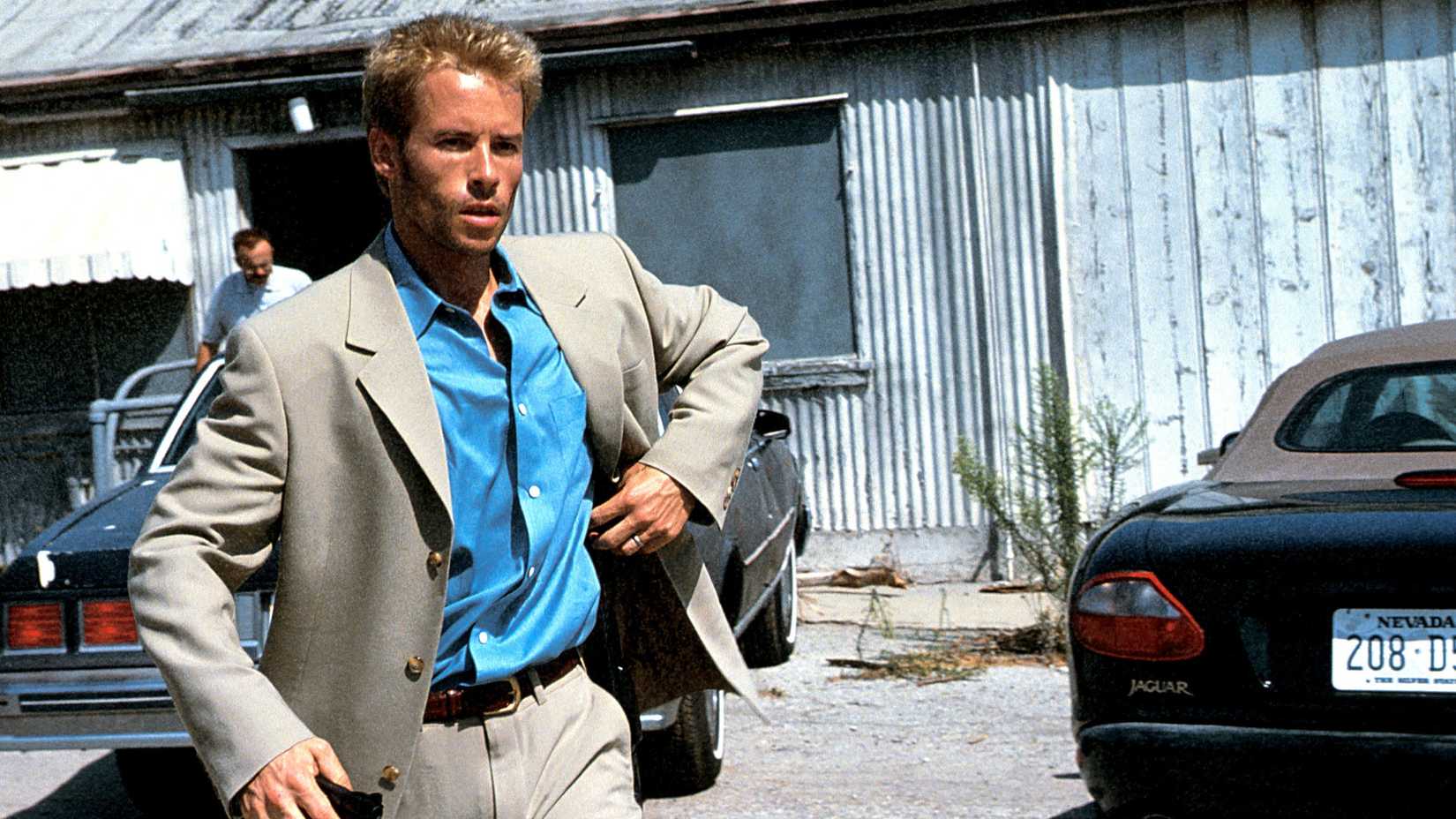 Image: Summit Entertainment/Everett Collection
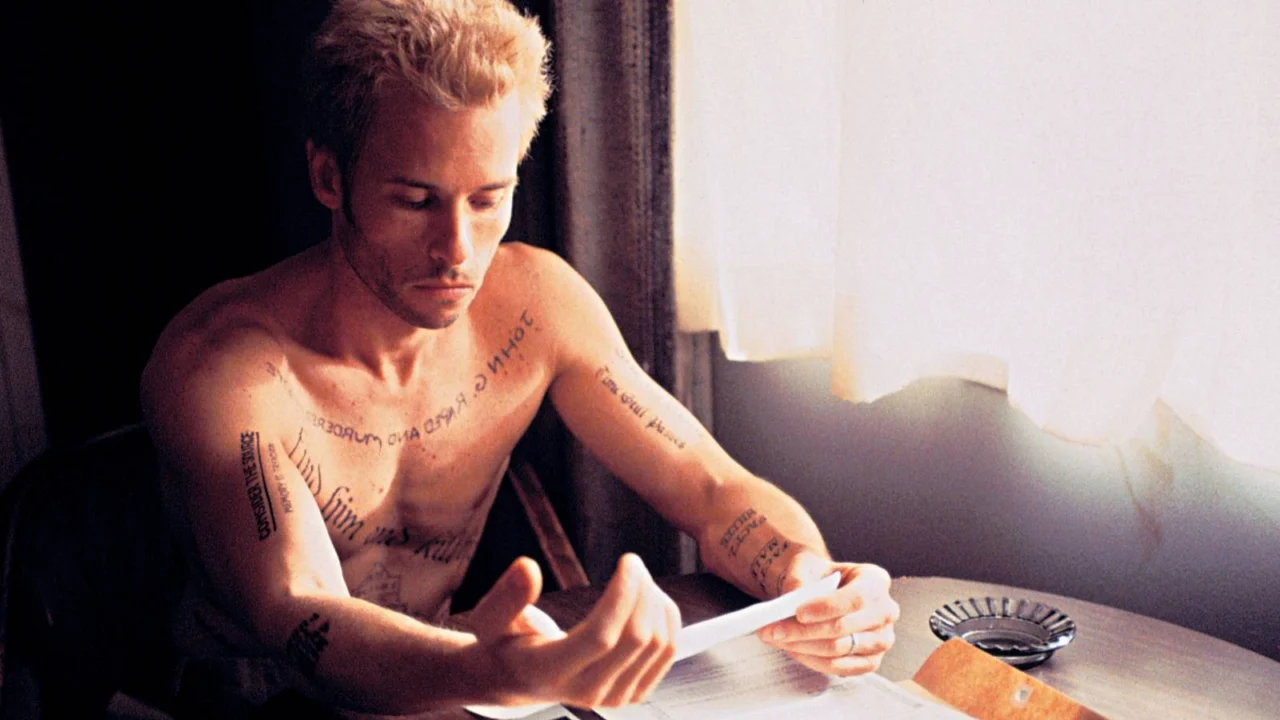
The film employs two distinct narrative tracks, a precursor to the multi-layered temporalities of his 2017 war drama, Dunkirk. Long before he utilized monochromatic and color cinematography to separate the objective from the subjective in 2023’s Oppenheimer, Nolan used color to delineate time’s direction. The black-and-white sequences follow Leonard Shelby (Guy Pearce) chronologically as he recounts his story to an anonymous caller. Leonard suffers from anterograde amnesia, an inability to form new memories after a traumatic brain injury. Intercut with these are vivid color segments that move backward through time, tracing Leonard’s obsessive hunt for “John G.”—the man he believes murdered his wife.
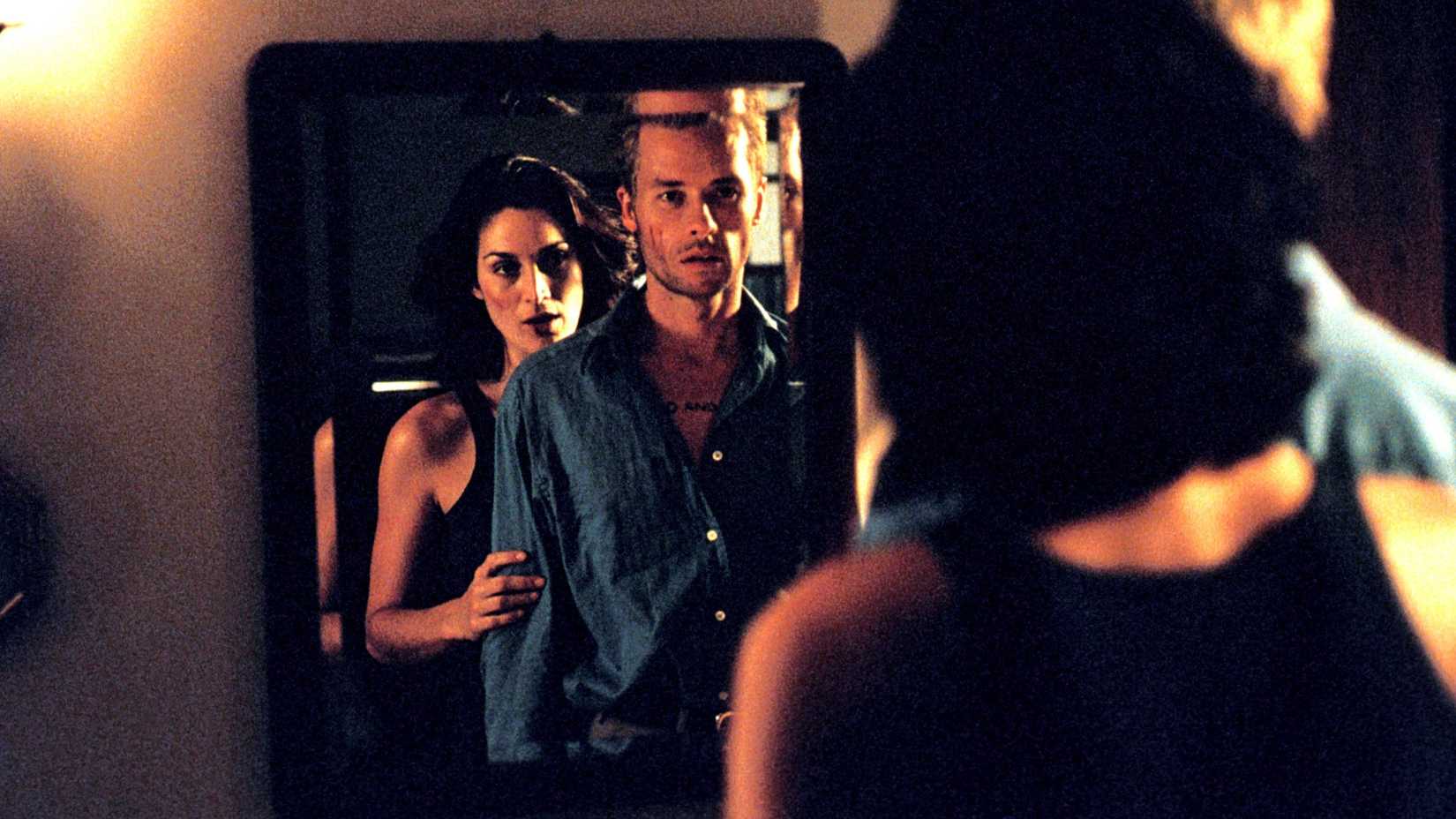 Image: Summit Entertainment/Everett Collection
Experiencing Memento for the first time is a disorienting journey where the payoff constantly precedes the setup. The film effectively begins at its conclusion: the execution of Teddy (Joe Pantoliano), who pleads that Leonard is fundamentally misunderstood. As the story deconstructs itself, we realize Leonard is a pawn in everyone else’s game. Some manipulations are minor—like a motel manager bilking him for extra rooms—but the broader implications are lethal. A man with a fractured memory and a singular, violent purpose is the perfect weapon for those seeking a killer who can never testify against them.
While Nolan is now synonymous with massive, big-budget epics, Memento is a gritty, lean production. It thrives in decaying motels, barren industrial sites, and shadowy bars. These noir-tinged settings stand in stark contrast to the sterile flashbacks of Leonard’s former life as a meticulous insurance investigator.
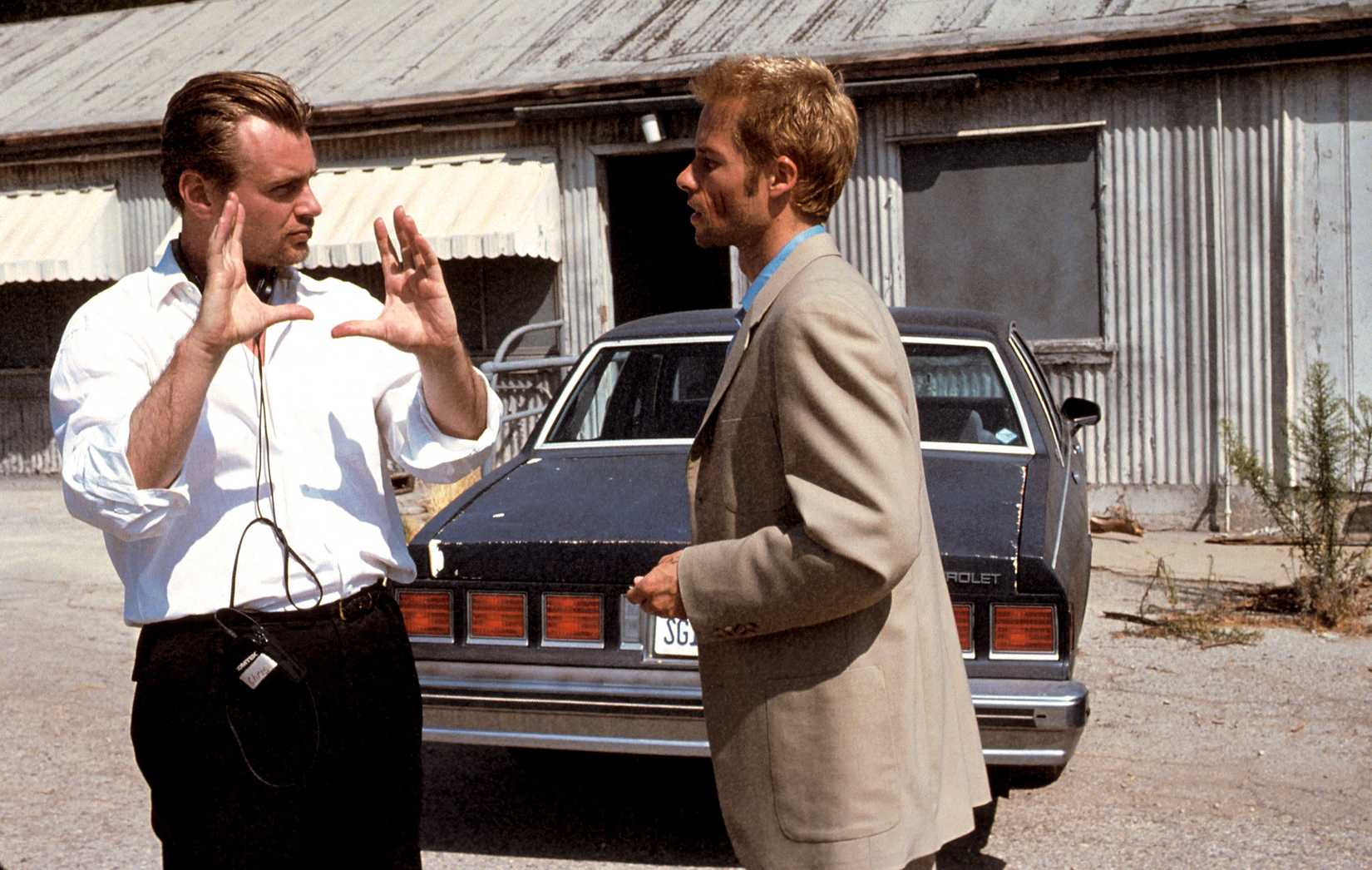 Image: Summit Entertainment/Everett Collection
In his past, Leonard investigated the tragic case of Sammy Jankis (Stephen Tobolowsky), another amnesiac whose life crumbled under the condition. Leonard prides himself on his ability to “manage” his impairment through a rigorous system of tattoos and polaroids, yet the film continuously mocks his perceived control. In one famous sequence, Leonard finds himself running mid-stride, forced to deduce whether he is the hunter or the prey. Despite his status as a profoundly unreliable narrator, Nolan still manages to deliver a gut-punch revelation that redefines the entire narrative.
The brilliance of Memento lies in its subversion of the revenge thriller. Leonard isn’t just a victim of others; he is a victim of his own curated reality. By selectively documenting certain “facts” and ignoring others, he maintains a perpetual state of righteous anger to avoid the crushing guilt of his own involvement in his wife’s tragedy. He has trapped himself in an eternal quest for a mystery he has already solved.
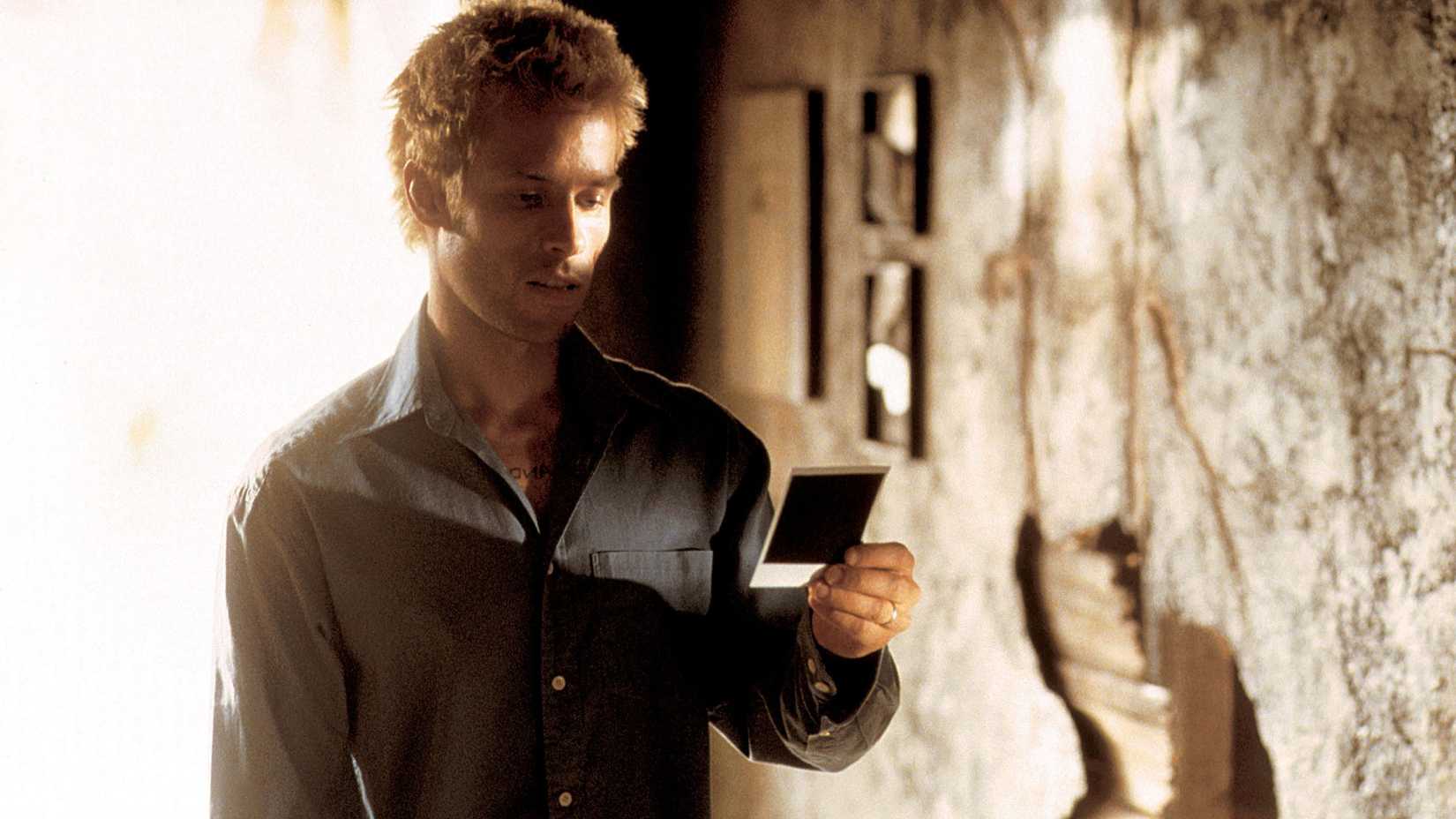 Image: Summit Entertainment/Everett Collection
The two timelines eventually converge in a masterful visual transition where a black-and-white photo slowly develops into color, bridging the past and present. The climax reveals that Leonard’s vengeance was satisfied years ago, but his fractured psyche couldn’t accept the finality. Confronted with the truth of Teddy’s corruption and his own cyclical violence, Leonard makes a conscious choice: he manufactures a new lie, designating Teddy as his next target to ensure his “mission” never ends.
This final twist serves as a thematic precursor to Nolan’s later masterpieces. Much like Leonard, Cobb in Inception is haunted by the ghost of his wife and eventually chooses a subjective “happy ending” over the objective truth. Similarly, The Prestige explores the devastating cost of living a lie in the pursuit of an obsession.
In the twenty-five years since Memento, Nolan has ascended to the pinnacle of Hollywood, finally securing an Oscar for Oppenheimer. His 2014 epic Interstellar has earned a reputation as a modern sci-fi essential, while The Dark Knight remains the gold standard for superhero storytelling. Yet, Memento remains his most pivotal work—the film that not only introduced his genius to the world but also established the temporal obsessions that would define a quarter-century of cinematic innovation.
Source: Polygon
Related articles
 Toxic Arc Raiders Players Found a Way to Harass Others in PvE Mode
 First Look at Drova II Torn Lands, Sequel to the Pixel Art Gothic-Like RPG
 CDPR Didn’t Expect Such Big Interest in The Witcher 3 Remaster, Which Set a New Record
 9 Best Single-Player Zelda-Like Games Nobody Plays, Ranked
 The Video Games And More You Should Play This Weekend – October 16, 2026
 Soulslike Shooter Guns of Eschaton, Viktor Antonov’s Last Project, Gets New Trailer With Release Date
 Experts Identify Cause of The Witcher 3 Performance Problems Even an RTX 6090 Wouldn’t Fix
 The Wolf Among Us to Get October Remaster With Cut Scenes and Noir Mode