
The most underrated innovation in Zelda: Ocarina of Time
 |
Polygon Spicy Takes Week Five days of compelling arguments—served with heat, minus the trolling. |
| Explore the issue→ | |
In today’s gaming landscape, 3D adventures are a dime a dozen. However, there was a formative era when developers had to carefully coach players through vast, uncharted virtual spaces. It was a time of immense ingenuity, where every mechanic felt revolutionary—including a persistent, winged companion named Navi who shepherded us through the masterpiece that was The Legend of Zelda: Ocarina of Time. With Nintendo’s recent announcement of a remake for the N64 classic, it is vital that the developers preserve the integrity of the original experience.
Admittedly, Navi isn’t universally beloved. Her reputation is often marred by complaints about her “nagging,” and while some of these grievances have merit, they frequently overshadow her fundamental role in grounding the player within the game’s world. It is time we stop dismissing her as an annoyance and acknowledge the vital utility she brought to one of gaming’s greatest adventures.

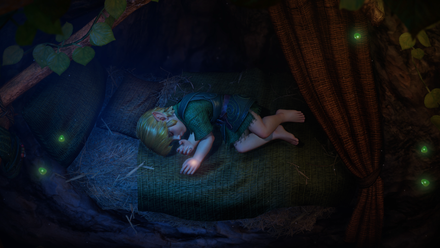
The journey began with the camera trailing this small, luminescent fairy as she descended into a Kokiri Forest hut, awakening a young Link to a destiny he couldn’t yet fathom. While the recent remake trailer conspicuously omits her presence, her impact remains undeniable.
From the moment Link’s adventure began, Navi served as his primary tether to the world, directing him to the Great Deku Tree and acting as the catalyst for his struggle against Ganondorf. She was far more than an interface element; she was a companion who provided tactical cues, illuminated deep lore, and offered emotional support when the journey grew bleak. To dismiss her because of an occasional “Hey, listen!” is to ignore her role as the heartbeat of the game’s narrative.
Certainly, there were moments of frustration—the misplaced button press that triggered an unwanted hint, or the camera fixation that felt intrusive during high-stakes combat. But these minor irritations pale in comparison to the mechanical brilliance she facilitated.

Navi was the backbone of Ocarina’s revolutionary Z-targeting system. In an era where 3D camera controls were still finding their footing, this mechanic was nothing short of a miracle. It allowed for fluid, cinematic combat, enabling Link to dance around foes rather than blindly hacking away. Without her, exploration would have been a disjointed mess of blurry textures and poor depth perception. She gave the world a sense of verticality, pointing out distant ledges and hidden details that turned a static map into a living, breathing realm.
Their bond was the emotional center of the story. From her initial appearance to her agonizing separation at the hands of Ganon, and finally her poignant departure at the end of the quest, Navi’s exit felt like the loss of a true friend. It signified not just the defeat of evil, but the maturation of a hero who had finally outgrown the need for a guide.

This sense of loss carries over into the thematic depth of Majora’s Mask, which depicts a Link adrift in a surreal landscape, ostensibly searching for that very same “beloved and invaluable friend.” It is hard to conclude that this search refers to anyone other than Navi, the companion with whom he shared his most formative transformation.
Navi was never perfect, but she was essential. She was more than just a tutorial tool; she was a masterclass in how to bridge the gap between player and protagonist in a burgeoning 3D medium. She deserves to be remembered with appreciation, not derision.
Nintendo’s Zelda: Ocarina of Time reveal was a mistake
It’s an exciting prospect, but one that invites too much unnecessary speculation.
84
Source: Polygon
Related articles
 Journalists Showcase Switch 2 Version of Dragon’s Dogma 2: Dark Arisen
 Xbox Officially Introduces Disc-to-Digital Program
 Finji Sets October Release Date for Supernatural Action Game Usual June
 Microsoft Asks $900 for Its Anniversary Console
 Knives Chau, Kim Pine, and Stephen Stills Join Scott Pilgrim EX as Playable DLC Characters
 Fortnite Chapter 7 Season 4: All Boss Spawn Locations
 Sony Reveals PlayStation Plus Monthly Games for September
 Cyberpunk Gun-Fu Action Game ‘Spine’ Set to Launch Next Summer