Vampires occupy a different register from ordinary monsters. They’re not mindless corpses lurching toward prey, nor are they purely bestial predators driven only by instinct. Traditionally, vampires are more insidious: an aristocracy of predators who hide in plain view, deploying charm and social finesse to bend others to their will. Their menace doesn’t come from fangs and claws alone but from how they mirror the darker impulses embedded in human institutions.
Cabernet is attuned to that subtle dread. Released this past February on major platforms, it’s a narrative-driven RPG from Party for Introverts set in a 19th-century milieu. The game follows a newly turned vampire navigating a glittering, predatory high society. It lacks the blockbuster gloss of some contemporaries, but it succeeds where many larger productions stumble: it understands how horror can spring from real-world power imbalances.
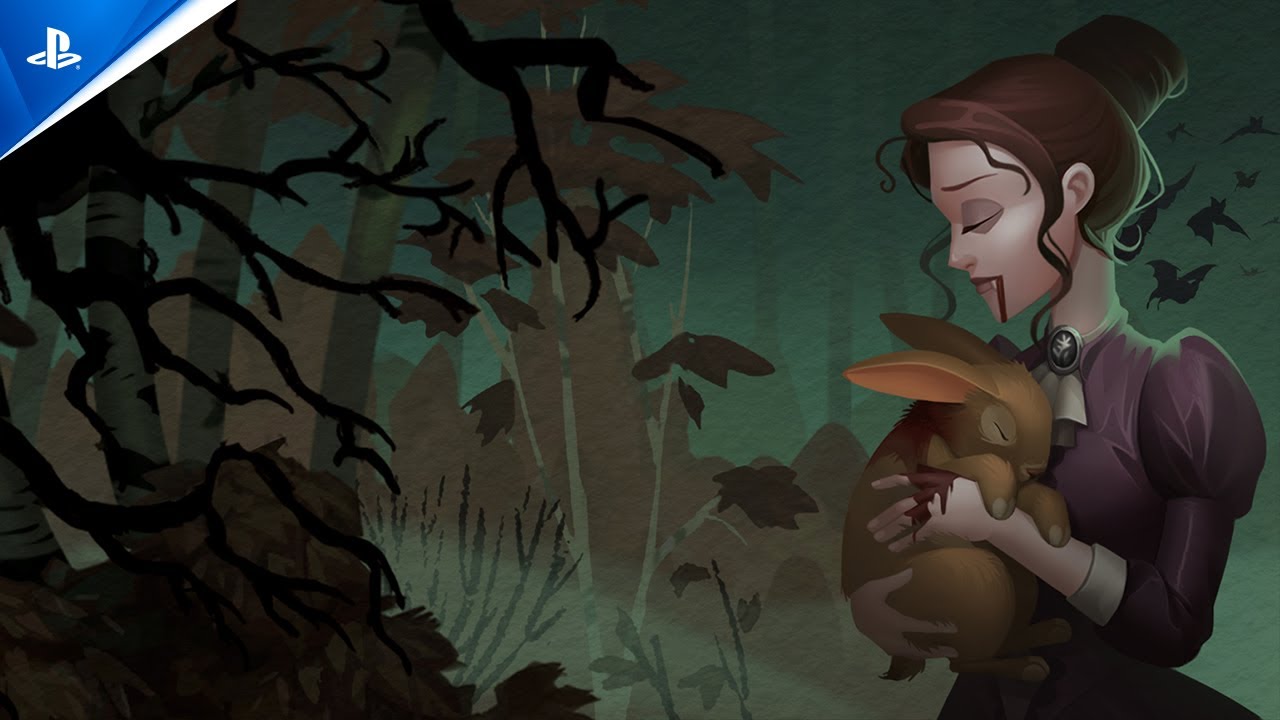
The protagonist, Liza, is a young physician transformed into a vampire after a tragic death. Her rebirth doesn’t begin with blood-soaked terror but with disorientation: she awakens in a manor mid-gala, surrounded by tailored suits, silk gowns, and a table set for the elite. It’s intoxicating from the first moment—wealth, influence, and a promise of belonging all laid out like a banquet.
Alongside status, Liza gains supernatural abilities that the game translates into clever mechanics. She can morph into a bat to traverse the town, vanish into invisibility, lull others with song, and probe minds to sway opinions. Feeding isn’t a simple bite-and-go—Liza must cultivate rapport through conversation to raise a relationship meter, persuade someone to a private place, sing them to sleep, and then take only as much blood as needed to sate her hunger without killing them or becoming over-intoxicated.
Those uncanny talents sit alongside grounded RPG systems. Liza has skills like history and politics that help during social encounters and skill checks; costumes change her stats, and reading books bolsters her knowledge. She’s a monster, but a freshly turned one who still carries memories of human life.
 Image: Akupara Games
That duality fuels Cabernet’s narrative. The game frames Liza’s descent—or resistance—through a morality meter: choices award either humanity or nihilism points. A balance of empathy and ruthlessness is necessary; compassion helps her connect and solve people’s problems, while moral cynicism provides shortcuts and harsher means to secure money and sustenance. The more Liza leans into convenience and exploitation, the more she risks treating humans as expendable resources.
I felt that erosion of self after failing a quest. Early on I befriended an eccentric poet whose storyline I genuinely cared about. I invested time in helping him, and in return I kept him as a reliable source of sustenance. When I missed the in-game deadline to prevent a duel, he was shot and killed. My reaction was jarring—not simply grief, but panic at losing a dependable meal. In that instant my character’s humanity slipped away, reflected in my playstyle as much as the game’s meters.
 Image: Akupara Games
Throughout its roughly ten-hour run, Cabernet continually tempts Liza—and the player—with easy compromises. Residents with real troubles become vulnerable targets whose weaknesses can be exploited for sustenance or profit. Sure, you can hunt animals in the countryside or find other ethical alternatives, but the game repeatedly asks: when the easier path is lined with people’s pain, can you resist it?
That moral tension elevates Cabernet beyond a standard vampire tale. It’s an RPG about preserving what remains of your humanity rather than chasing power for its own sake. How you guide Liza through her choices determines not only her fate but also what the ending reveals about you.
Source: Polygon