I confess to being an unapologetic purist when it comes to the Terminator franchise. If I were ever granted the keys to a time-displacement device, my primary objective would be to travel back to the late 1990s and find a non-violent way to ensure Terminator 3: Rise of the Machines never entered production. In doing so, I would trigger a beneficial butterfly effect, scrubbing Salvation, Genisys, and Dark Fate from the timeline entirely.
In this curated alternate reality, sci-fi aficionados would speak of the series with hushed reverence: “Can you believe they stopped at Terminator 2?” they’d ask. (To which a companion might reply, “Wait, wasn’t there that Sarah Connor Chronicles show?”) Even in this sanitized continuity, we would still possess Terminator 2D: No Fate—arguably one of the most compelling interpretations of the mythos ever rendered in a digital medium.
Arriving in early December, just as the gaming press was finalizing its “Best of 2025” deliberations, No Fate was a title I’d been tracking since its initial, captivating reveal. While it might not necessarily displace the year’s heavy-hitting blockbusters, it is undeniably superb. It is a concentrated, high-octane experience that prioritizes quality over padding.
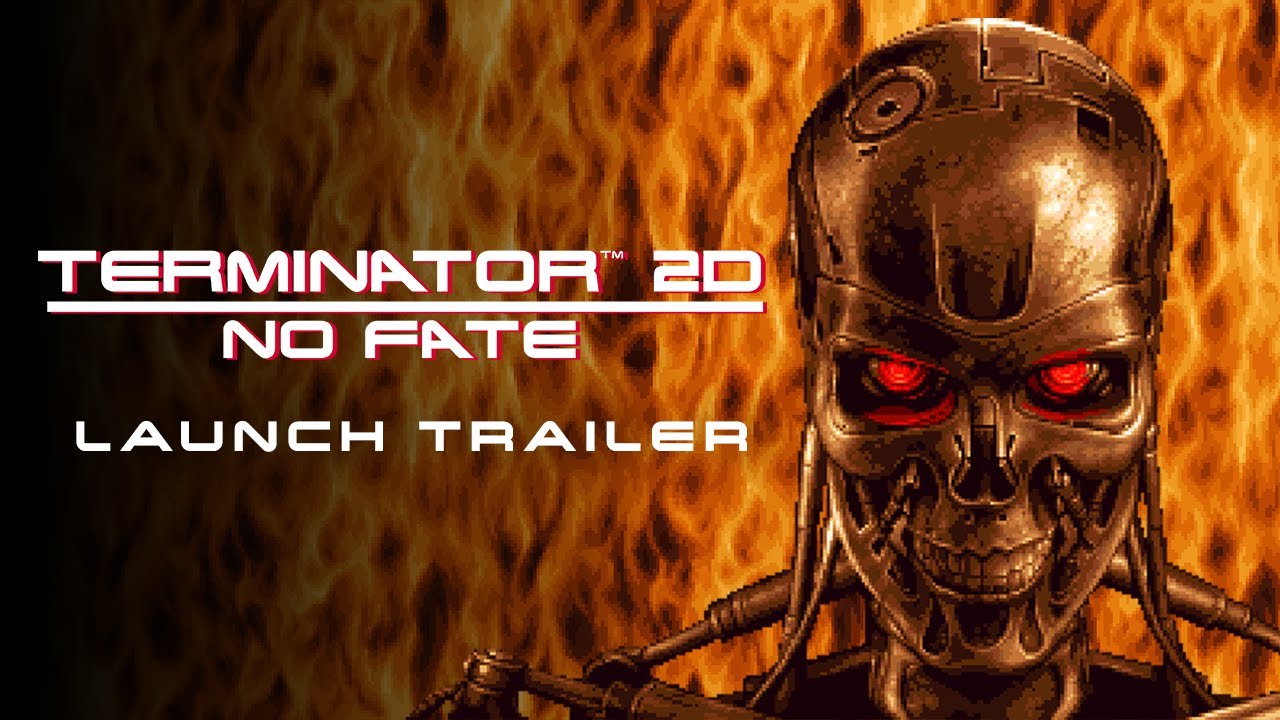
Terminator 2D: No Fate is a love letter to James Cameron’s magnum opus, saturated with a deep reverence for the source material. It serves as a nostalgic playground for fans of legendary arcade titles like Contra and Final Fight, while also nodding to more specialized gems like Rolling Thunder and Sly Spy. However, it doesn’t merely trade on retro sentiment; it adopts the philosophy of the “one-hour arcade run” and masterfully applies it to the Terminator narrative.
The core campaign offers a condensed retelling of Judgment Day, centering on legendary set pieces: the breakout from Pescadero State Hospital, the high-stakes infiltration of Cyberdyne Systems, and the industrial chaos of the steel mill. Yet, No Fate broadens its scope by exploring the fringes of the story, including a skirmish involving a young John Connor and bandits, as well as playable interpretations of the Future War sequences that were famously omitted from the theatrical cut.
The game’s most ambitious flourishes are its divergent paths. Players can influence the outcome of pivotal cinematic moments—such as Sarah’s internal struggle as she targets Miles Dyson, or the surgical maintenance of the T-800’s CPU. These scenes serve as the narrative fulcrums where John’s intervention traditionally dictates the future, but here, the choices feel fresh and interactive.
Uncovering these hidden timelines and bonus modes necessitates multiple playthroughs. Given the game’s brisk pace and accessible standard difficulty, this is a joy rather than a chore. Repeated runs unlock modified futures for Sarah and grant more screen time to the T-800, who is featured in a limited but unforgettable capacity during the main arc. While a $29.99 price point for a sixty-minute campaign might give some pause, the value is found in its density and the compulsion to see every possible permutation of the ending.
Achieving 100% completion is a formidable task. The unlockable difficulty tiers ramp up the intensity significantly; while “No Problemo” is a welcoming entry point, the “Hasta La Vista” mode offers the perfect equilibrium between challenge and adrenaline. The peak difficulty, “Judgment Day,” is a brutal test of reflexes that feels like an arcade machine tuned to maximize quarter consumption.
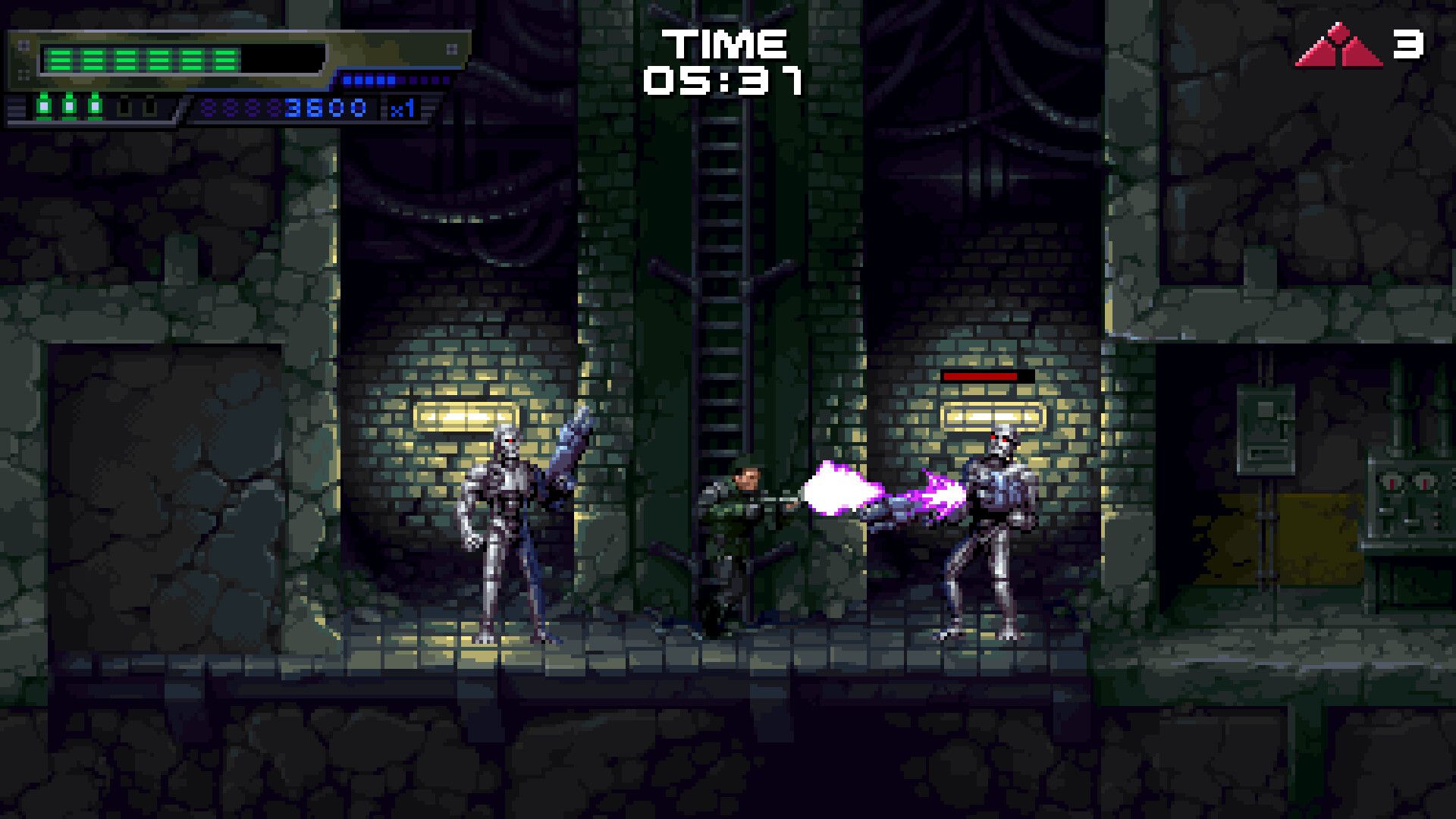
Beyond the replayability, the true delight lies in the craftsmanship. Bitmap Bureau has infused the game with meticulous sprite work and subtle mechanical flourishes. Sarah and John can snag ladder rungs mid-jump, you can dispatch enemies by using their comrades as projectiles, and there is even a non-lethal method for handling police dogs for those seeking a more humane run. The joy of No Fate is found in these Easter eggs and the sheer variety of gameplay scenarios.
For those of us who believe the Terminator story was perfected in 1991, this game is an essential experience. If the price-to-duration ratio still seems lopsided to you, simply wait for a future sale. We’ve spent over thirty years waiting for a sequel that actually understands the source material—waiting a few more months to play the best one yet is a small sacrifice.
Source: Polygon