
The Ambitious PS2 Failure That Birthed Kingdom Hearts 25 Years Ago
The Cinematic Ambition and Clunky Reality of The Bouncer
Years before SEGA’s Yakuza series perfected the art of the cinematic urban brawler, SquareSoft attempted to capture that same lightning in a bottle. Developed by DreamFactory and published through the short-lived Square Electronic Arts partnership in March 2001, The Bouncer arrived as a high-profile technical showcase for the nascent PlayStation 2. It was a project brimming with industry heavyweights, yet it famously became a case study in how a game can be significantly less than the sum of its prestigious parts.
(The brief corporate marriage between Square and EA during the turn of the millennium remains one of gaming’s strangest eras—a fleeting alliance that feels as jarring in retrospect as seeing two mismatched celebrities dating in a tabloid.)
The narrative follows three protagonists—Sion, Kou, and Volt—who serve as muscle for a local bar. Their quiet night is shattered when their friend Dominique is abducted by the shadowy Mikado Corporation. The ensuing rescue mission unfolds in the city of Edge, a metropolis defined by a neon-drenched, gritty aesthetic that sits comfortably between the industrial grime of Final Fantasy VII’s Wall Market and the subterranean levels of Coruscant from the Star Wars prequels.
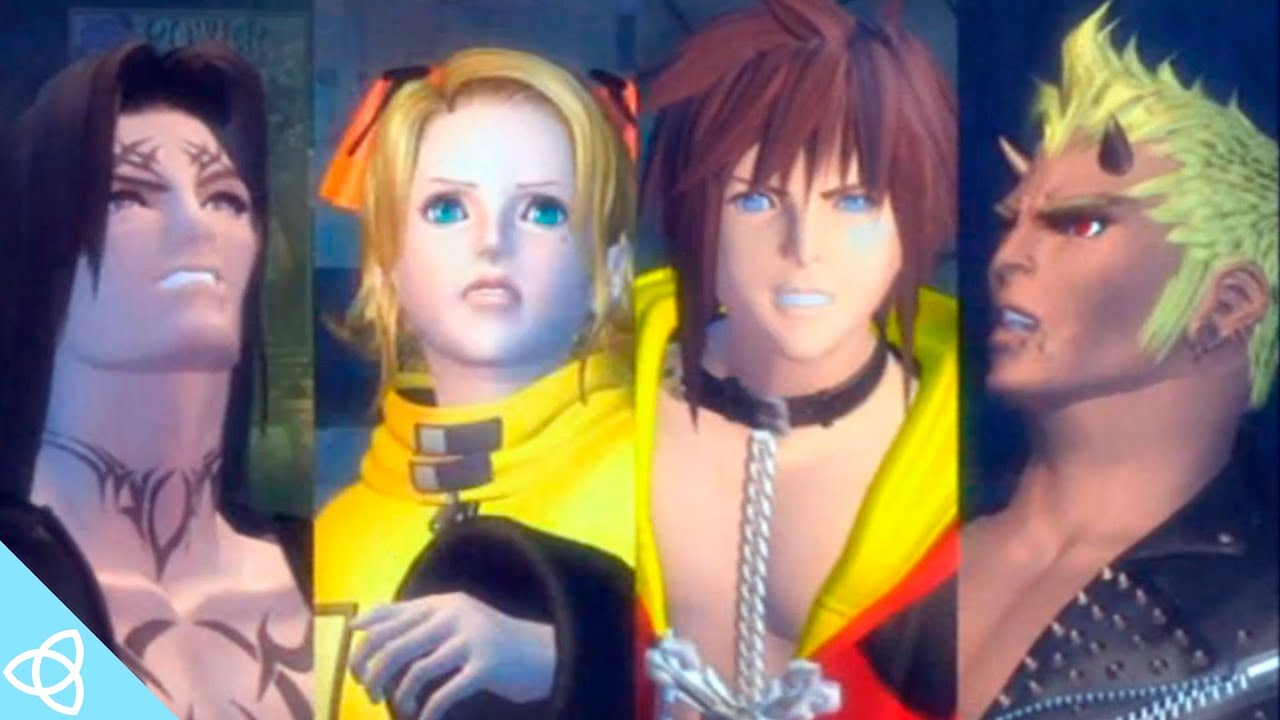
On paper, the game’s directorial pedigree was bulletproof. Takashi Tokita, the mind behind Chrono Trigger and Parasite Eve, shared the helm with Seiichi Ichii, a veteran who helped shape Virtua Fighter and directed the first two Tekken titles. With such expertise involved, expectations for a revolutionary combat system were sky-high. Unfortunately, the reality was a clunky disappointment.
The gameplay in The Bouncer is often cited as its weakest link. A cumbersome control scheme and exaggerated ragdoll physics turned every encounter into a clumsy skirmish where defeated enemies flopped around like inflatable tube men. Even more peculiar was the game’s pacing: most combat encounters lasted barely sixty seconds. With cutscenes making up nearly two-thirds of the total experience, a player skipping the cinematics could breeze through the entire game in roughly 40 minutes.
As one contemporary critic noted: “The Bouncer is undeniably a visual treat, but its beauty is a thin veil for a remarkably shallow experience.”

While the mechanics failed to impress, the game’s visual identity remains unforgettable. Leveraging the power of the PS2, the cinematics offered a massive leap forward from the jagged polygons of the previous generation. Character designer Tetsuya Nomura, fresh off his success with Final Fantasy, leaned into a radical Y2K aesthetic. The cast features an array of tribal tattoos, heavy leather duster coats, oversized footwear, and gothic accessories. The villains even sported leather onesies with high-cut “whale tail” designs—a fashion choice that feels inextricably linked to the Sisqó-inspired trends of 1999.
The most enduring legacy of the game, however, is the striking resemblance between its lead, Sion, and Kingdom Hearts hero Sora. Though Sion is the more mature of the two, the design language is identical: the gravity-defying spiked hair, the red-and-blue hooded silhouette, the voluminous shorts, and the ubiquitous wallet chain. It is less of a coincidence and more of a spiritual blueprint.
Did anybody else think Sora & Sion from “The Bouncer” were strangely similar?
by u/Knownot_Gaming in gaming
In a 2003 interview with Metal Gear artist Yoji Shinkawa, Nomura admitted that Sora was intended to be a “grand compilation” of his previous designs. “He resembles many of my characters; there is a piece of Cloud, a bit of Tidus, and certainly some Sion in him,” Nomura explained. “I was very intentional about that synthesis.”
The Bouncer may have failed to launch a lasting franchise of its own, but its DNA survived in one of the most successful RPG series in history. Nearly a quarter-century later, as the world awaits Kingdom Hearts 4, the shadow of Sion still looms large. Perhaps, in a nod to its experimental roots, we might even see some of those questionable Y2K fashion choices make a comeback in the next chapter of Sora’s journey.
Source: Polygon
Related articles
 Planet Zoo 2 Released with New Trailer Showcasing Animals and Aquariums
 Microsoft Announces ID@Xbox Showcase Featuring 20 Games
 Uncharted 2 Turns 17 as Players Recall Naughty Dog’s Acclaimed Sequel
 House of the Dragon Star Reveals When Final Season Filming Begins
 Vision and Ultron Return as Vision Quest Premieres on Disney+
 Clayface Stuns Critics With Its Brutality
 Rockstar Co-Founder Says GTA III Cover Art Was Created Two Days Before Release
 Battlefield 6 Developers Sell Class Progress and Ranks in New Edition