Ten Years Since the Internet Joined Forces to Mock Gods of Egypt
By the year 2026, social fragmentation has become the global norm. Longstanding bonds are regularly severed over political disagreements, and digital platforms often serve as conduits for hostility. Given our relentless news cycle and the constant pull of technology, it’s easy to believe this state of perpetual conflict is an age-old reality—but it’s actually a relatively modern escalation. To see how much has changed in a decade, we need only look at one man: filmmaker Alex Proyas. Ten years ago, his film Gods of Egypt achieved the impossible: it brought everyone together in a monolithic consensus that the movie was an absolute disaster.
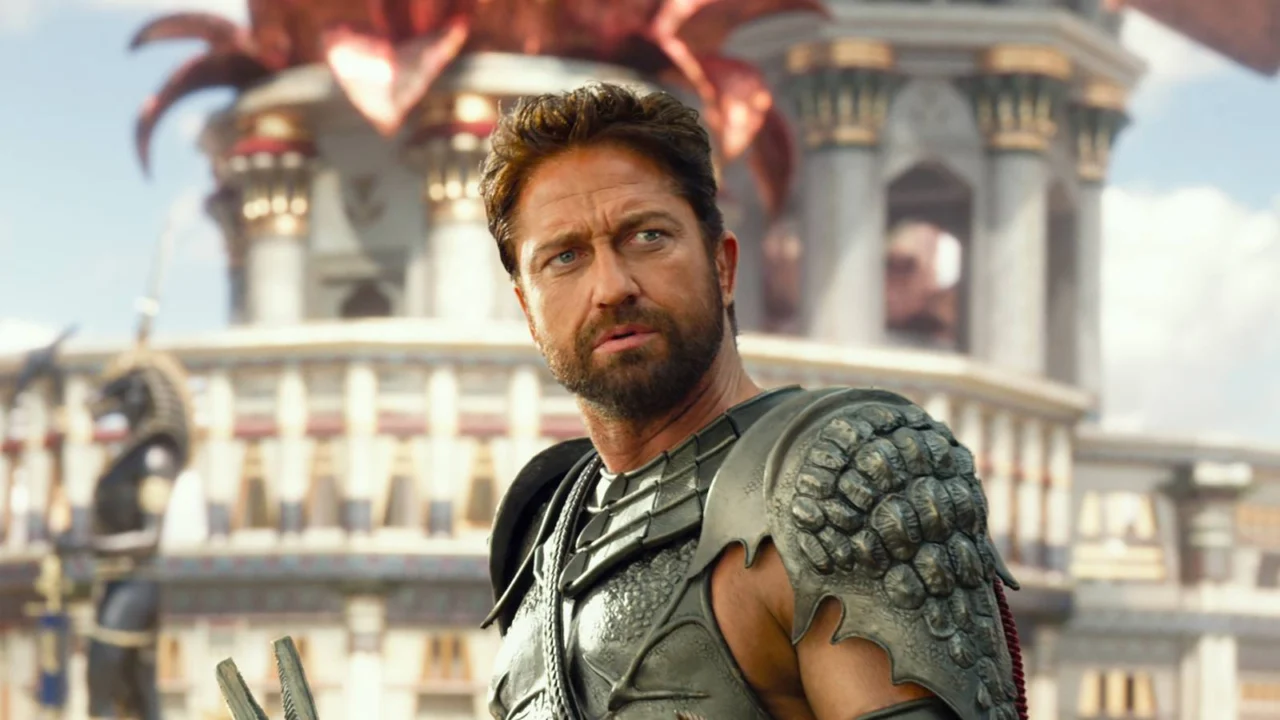
With a staggering $140 million budget, the fantasy-action epic Gods of Egypt was designed to be a CGI-saturated sword-and-sandals blockbuster in the vein of 300 or Clash of the Titans. The story unfolds in a mythic version of ancient Egypt where deities live openly among mortals. The narrative kicks off with the coronation of Horus, the god of the air (played by Game of Thrones star Nikolaj Coster-Waldau). However, the festivities are brutally cut short by his resentful uncle, Set, the god of the desert (Gerard Butler), who murders Horus’s father, Osiris (Bryan Brown), and blinds his nephew by stealing his eyes.
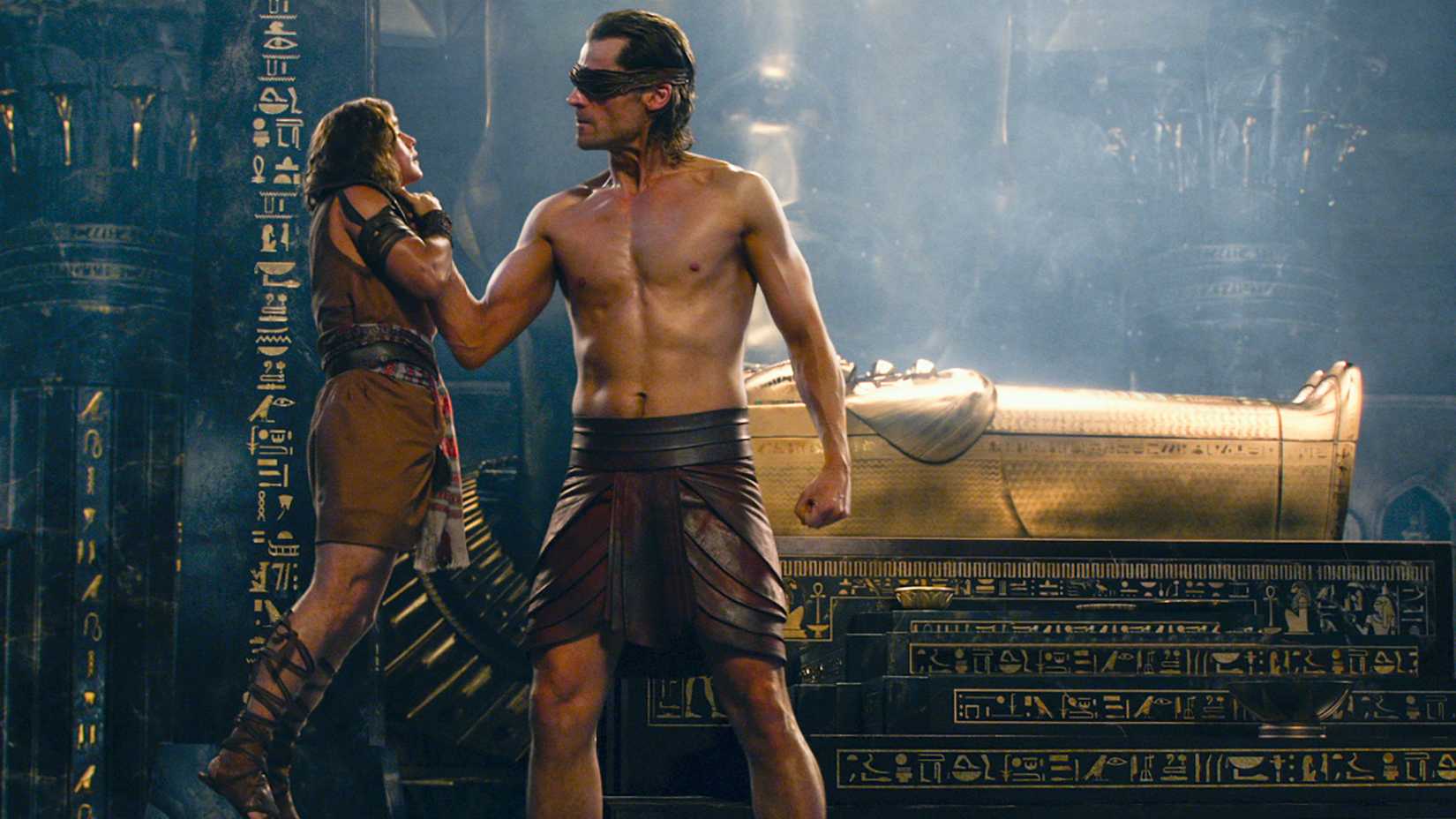
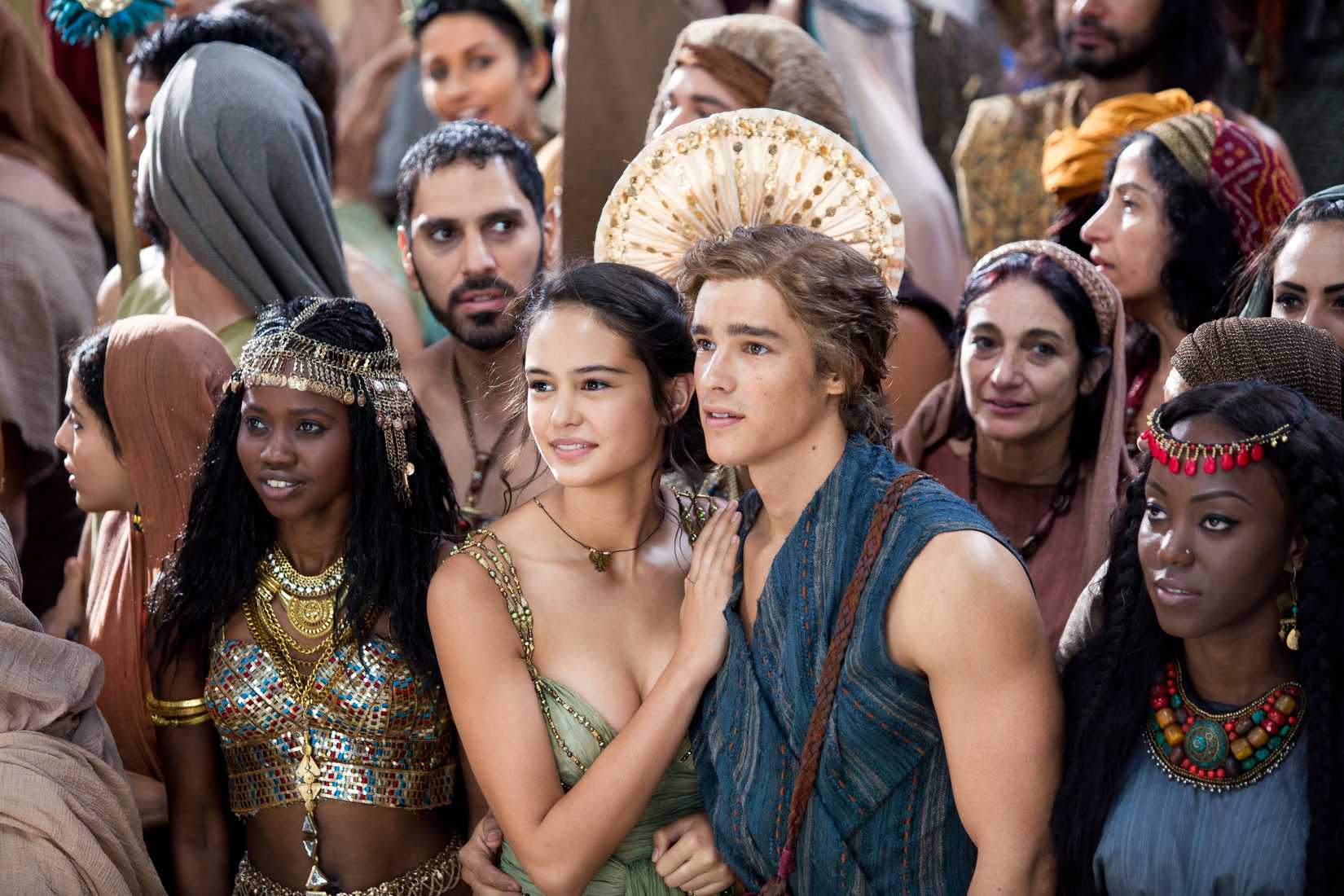
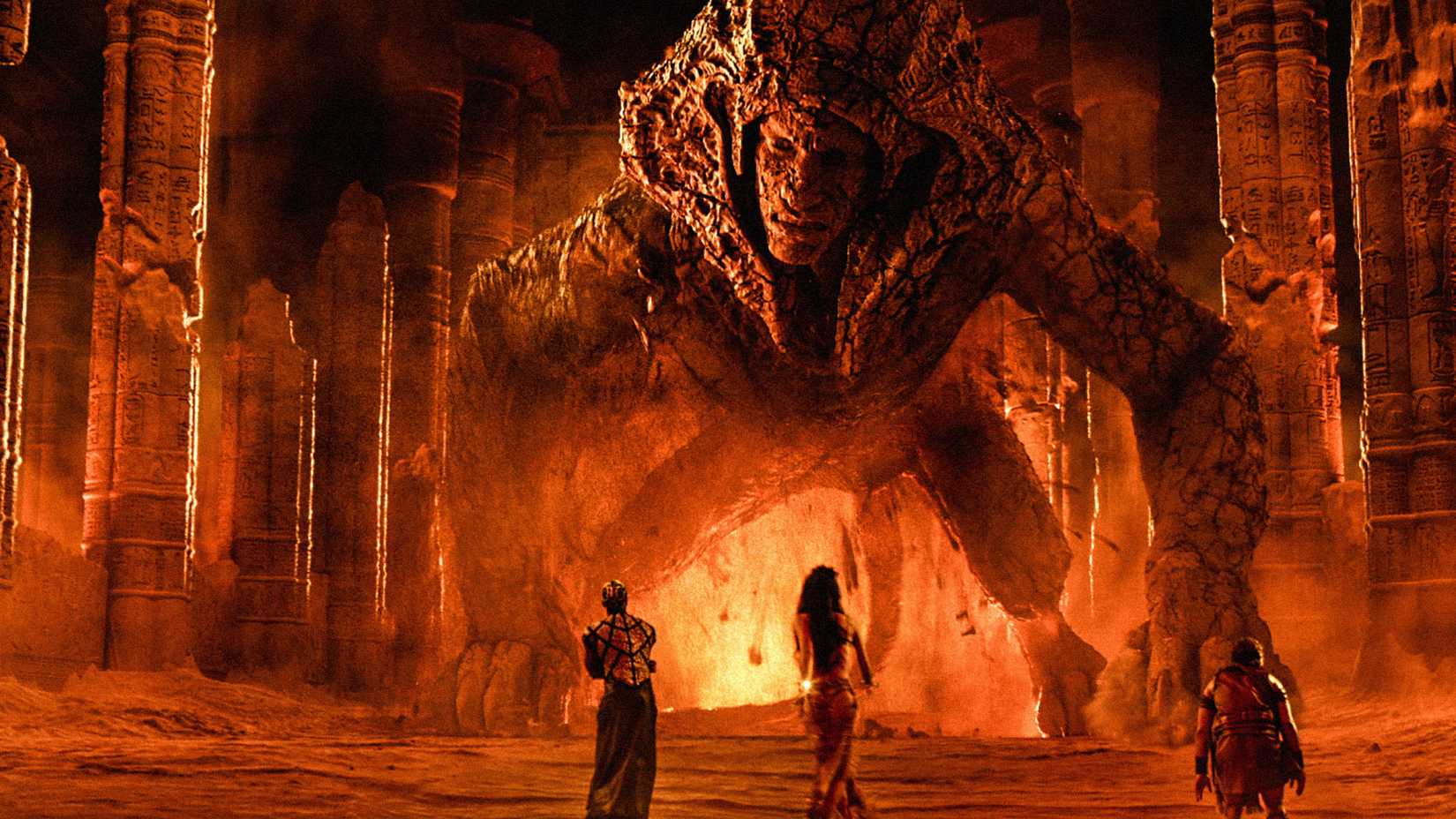
A year later, Egypt groans under Set’s tyrannical reign. A clever thief named Bek (Brenton Thwaites) and his partner Zaya (Courtney Eaton) manage to reclaim one of Horus’s eyes from a secure vault, but the heist costs Zaya her life. This tragedy forces an unlikely alliance between the fallen god and the mortal thief. Horus promises to bring Zaya back from the dead if Bek helps him recover his remaining eye. Their journey is a gauntlet of mythological beasts and divine rivals, all in a quest to overthrow Set and restore balance to the kingdom.
The glaring issue with this production becomes apparent the moment you look at the cast list. Gods of Egypt was mired in controversy from its inception due to its overwhelming “whitewashing.” The primary cast featured a Danish lead, three Australians, and a Scotsman—hardly representative of North African heritage. The only prominent person of color in the film was Chadwick Boseman, who portrayed Thoth, the god of wisdom.
Public outcry regarding the casting decisions intensified in late 2015, prompting Proyas and Lionsgate to issue a rare joint apology months before the film’s debut. As noted in an Associated Press report, while some saw the move as a proactive step, many others viewed it as a cynical attempt to neutralize a growing PR nightmare.
Professor Todd Boyd, an expert on race and popular culture at USC, argued that the apology was an attempt to sidestep accountability. “They want the cast they chose without the social consequences of choosing them,” he observed. Regardless of the intent, the apologies failed to stifle the conversation; the film’s demographic dissonance remained a lightning rod for criticism throughout its theatrical run.
Social issues aside, Gods of Egypt faced a more fundamental problem: it was a poorly constructed film. The critical consensus was unforgiving.
Lauren Humphries-Brooks of We Got This Covered described the movie as a “glittering train wreck.” Screen Rant critic Sandy Schaefer found it to be a tedious, visually lackluster adventure that failed to even achieve “so-bad-it’s-good” status. Vox’s Peter Suderman was even more scathing, writing: “It is a failure on every conceivable level… a movie devoid of merit and the perfect example of modern big-budget hubris.”
Perhaps the most biting critique came from Rolling Stone‘s Peter Travers, who remarked that the film’s true distinction was the sheer “shoddiness” of its effects, comparing the digital creatures to something out of a low-rent app. “All is forgiven, Clash of the Titans,” he quipped.
The online reaction was even more merciless. Famed comics creator Gail Simone famously tweeted that she’d rather endure a debilitating illness than a screening, noting she stood by her choice to skip the movie.
Scholars and historians also weighed in, specifically targeting the erasure of Egypt’s African context. Beth Ann Judas of the Biblical Archaeological Society highlighted the director’s total disregard for geographical reality in his casting. More recently, Egyptologist Anthony Browder noted how the film perpetuated harmful racial hierarchies by positioning white actors as the supreme beings of a Black civilization.
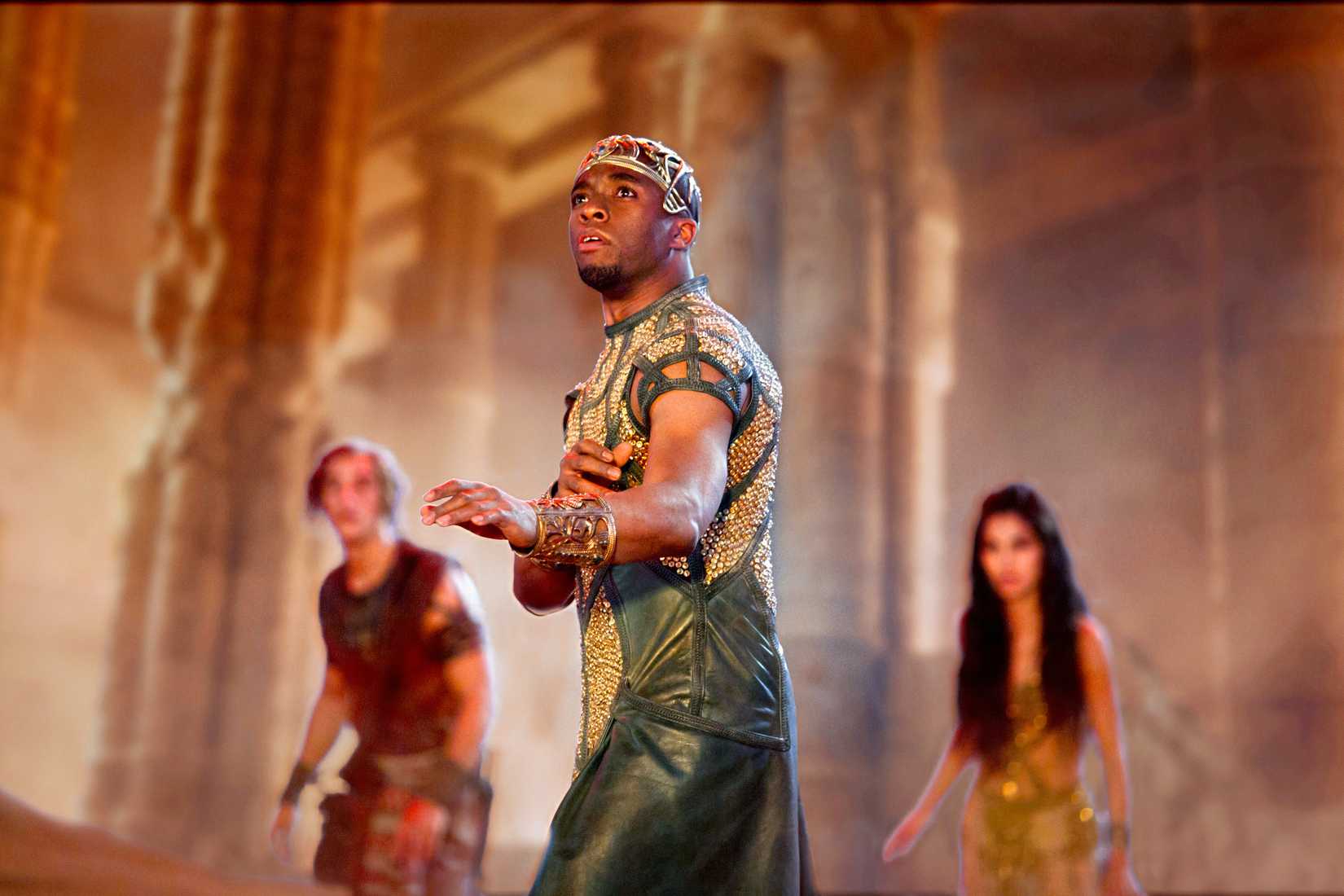
Even Chadwick Boseman expressed reservations about the project. In an interview with GQ, he admitted that he anticipated the backlash and actually agreed with it. He explained his participation as a way to ensure at least one deity—Thoth, the father of mathematics—was played by someone of African descent, while acknowledging the grim industry reality that $140 million budgets were rarely entrusted to diverse leads at the time.
The person most offended by the reception was director Alex Proyas. Following the film’s catastrophic opening weekend, he took to Facebook to vent his frustrations. In a combative post, he accused modern critics of being “deranged idiots” who were more concerned with looking “politically correct” than evaluating his work, predicting that appreciation for the film would only arrive years later.
It has now been a decade since Proyas made that claim, and his prophecy of cinematic redemption remains unfulfilled. Gods of Egypt has largely faded into obscurity, remembered primarily as a watershed moment for audience pushback against culturally insensitive casting—a trend that continues to this day, as seen with the controversy surrounding Emerald Fennell’s upcoming Wuthering Heights adaptation.
However, there is something to be said for the film’s legacy of unity. In an era of deep division, Gods of Egypt gave us one last moment of global agreement. And while Proyas hasn’t released a film since that 2016 stumble, his latest project is currently in the works: a science-fiction musical. It’s an audacious genre mashup that reminds us that even in our most polarized times, there’s always room for a filmmaker who isn’t afraid to take a wild, potentially unifying, swing.
Source: Polygon
Related articles
 Zero Parades: For Dead Spies to Launch on Xbox Series X|S With Expanded Edition in November
 GTA VI Preorders Reportedly Generated $630 Million Before Release, Analysts Say
 Techland CEO Paweł Marchewka Says Players Expect Too Much, Ends Substantial Content Support for Dying Light: The Beast
 Diablo: Unbound Officially Announced for 2027 Release
 FromSoftware Releases Elden Ring Update With Security Improvements and Bug Fixes
 Stranger Than Heaven Director Says the Game Takes a More Serious Tone Than Past Yakuza Titles
 The Blood of Dawnwalker Developers Repeated a Gothic 3 Mistake, but Problem Mobs Will Soon Be Nerfed
 Life Is Strange Creator Praises Amazon’s Upcoming TV Adaptation