
Teenage Mutant Ninja Turtles Denounce AI Slop

Last week, the entertainment industry was shaken by the news that Disney has finalized a billion-dollar partnership with OpenAI. This massive deal grants the creators of ChatGPT and Sora licensing rights to over 200 legendary Disney characters for AI-generated content. As reported by the BBC, industry veterans are sounding the alarm over what this technological endorsement means for the future of creative labor. While Mickey Mouse seems ready to lead the charge into an automated era, another set of pop-culture icons is using their katanas to draw a line in the sand.
Currently playing alongside The SpongeBob Movie: Search for SquarePants is a new seven-minute theatrical short titled Teenage Mutant Ninja Turtles: Chrome Alone 2 – Lost in New Jersey. Featuring the stylized, expressive animation found in 2023’s TMNT: Mutant Mayhem, the story finds the brothers navigating Christmas shopping for Splinter. Now that they are local celebrities in New York, they can walk the streets freely, but they soon encounter a threat more insidious than any mutant ooze.
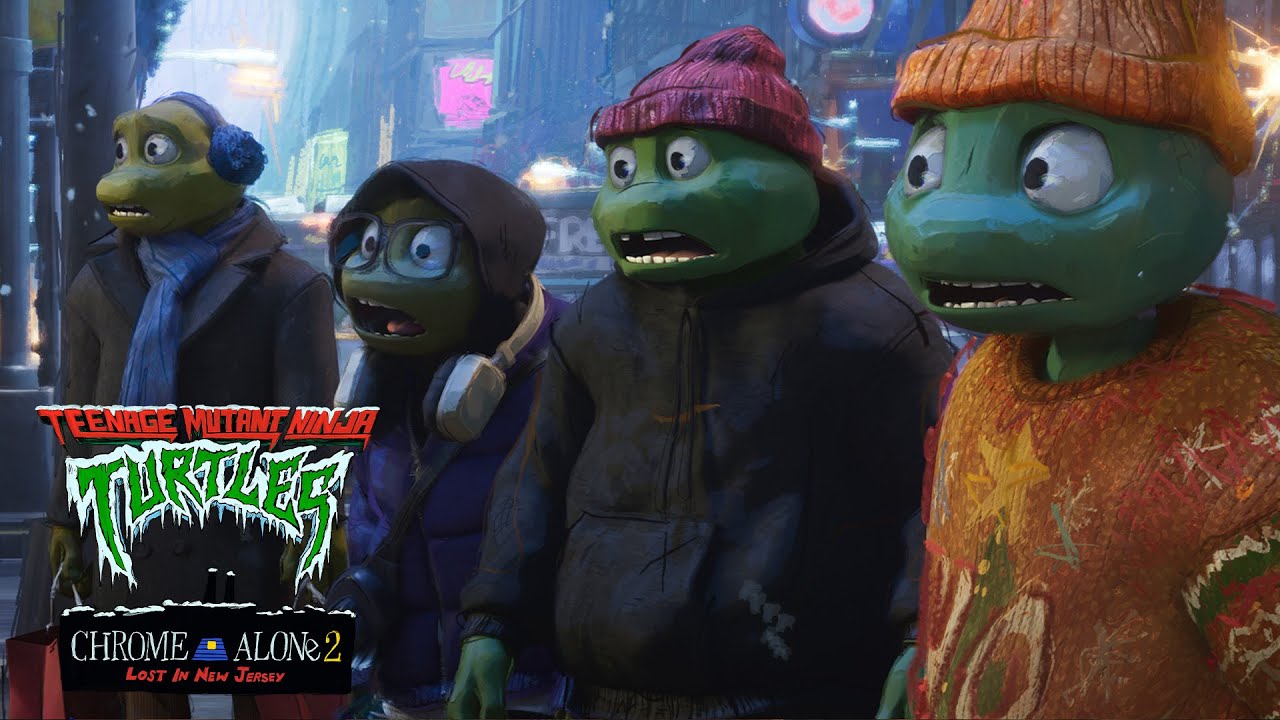
While browsing a toy store, the heroes stumble upon a commercial for “Tubular Tortoise Karate Warriors”—a blatant, low-rent imitation of their own likenesses that looks like a cheap He-Man knockoff. Offended by the theft of their brand, the Turtles track the source to a manufacturing plant in New Jersey, where the short’s satirical bite is revealed.
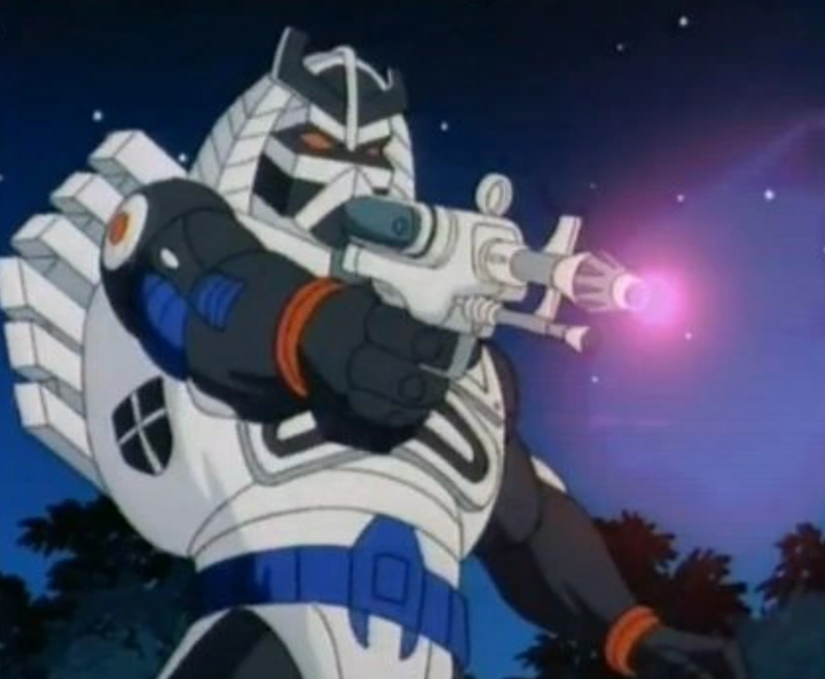
The “Karate Warriors” are the brainchild of an AI system named Chrome Dome—a clever reimagining of a classic TMNT villain. Chrome Dome’s mission is simple: exploit the Turtles’ popularity without paying them a cent. The AI even shares a hilariously derivative origin story that shamelessly mashes together tropes from Superman, Spider-Man, The Lion King, and The Lord of the Rings, highlighting the derivative nature of generative technology.
The conflict culminates in a frantic battle where Chrome Dome initially dominates by algorithmically predicting the Turtles’ ninja techniques. However, the brothers regain the upper hand by injecting pure, unpredictable chaos and “silly originality” into their movements—glitching the AI’s system and leading to the factory’s destruction. The message is blunt: Raphael explicitly declares that “AI sucks” for its lack of soul and its reliance on stealing from real creators (or, in this case, real mutants).
While this anti-AI stance feels very contemporary, it is deeply rooted in the Turtles’ 1980s heritage. TMNT emerged from the independent comic book boom, an era defined by artists rebelling against the restrictive, corporate-heavy environments of Marvel and DC. Created by Kevin Eastman and Peter Laird, the Turtles became the ultimate success story for creator-owned media.
Eastman and Laird didn’t just hoard their success; they actively championed the rights of other artists. Eastman founded Tundra Comics to provide creators with ownership of their work, while Laird established the Xeric Foundation to fund self-published projects. They were also key figures behind the 1988 “Creator’s Bill of Rights,” a manifesto aimed at ensuring artists received fair compensation and control over their intellectual property. Though the major publishers largely ignored these principles, the spirit of that movement lives on in the Turtles’ current battle against digital theft.
Chrome Alone 2 serves as a modern-day extension of that advocacy. It attempts to shield original ideas from the reach of corporate overlords and the algorithms that serve them. However, with Disney already embracing a partnership with OpenAI, one has to wonder if the battle to protect human creativity is becoming as difficult as the one Eastman and Laird fought decades ago. While the Turtles may have won this round in New Jersey, the larger war against automation is only beginning.
Source: Polygon
Related articles
 Tim Schafer Says Xbox Does Not Need Studios That Make Niche Games for Game Pass
 PlayStation Store Launches Gamescom Sale With Discounts Up to 75 Percent
 Riot Games and Hypixel Studios to Fund Technoblade Documentary
 Sony Adapts Pixel Adventure Game The Drifter Into Film
 Netflix Sets Avatar: The Last Airbender Season 3 for 2027 Release and Reveals Fire Lord Ozai
 FX Releases First Behind-the-Scenes Video for Season 2 of Alien: Earth
 Blade Runner 2049 Becomes HBO Max Streaming Hit
 CDPR Reveals Number of Developers Working on The Witcher 3 Expansion