
Stranger Things Season 5 Ruins a Crucial Piece of D&D History

Will Byers (Noah Schnapp) shares an intrinsic bond with his Dungeons & Dragons persona, the wizard known as Will the Wise. This identification is so deep that he often dons the character’s robes, and his woodland sanctuary even bears the wizard’s name. In the series premiere of Stranger Things, the defeat of Will the Wise by the Demogorgon serves as a chilling omen for Will’s own disappearance later that night.
This thematic link deepened during the second season in the episode “Will the Wise,” which revealed that Will’s return from the Upside Down left him tethered to a burgeoning darkness. However, by the fifth season, Mike Wheeler (Finn Wolfhard)—acting as the party’s Dungeon Master—proposes that Will’s nature is less like a studious Wizard and more akin to a Sorcerer. This realization provides Will with a vital breakthrough during the group’s fight for survival. To grasp the weight of this shift, one must understand the mechanical distinctions between these two D&D archetypes.
[Editor’s Note: The following section contains significant spoilers for Stranger Things Season 5, Volume 2.]During the events of episode 3, Will and Joyce (Winona Ryder) are nearly overwhelmed by Demogorgons until the beasts inexplicably halt. Mike theorizes that Will is unconsciously exerting influence over them. This lead culminates in episode 4, titled “Sorcerer,” where Will consciously taps into his link to the hive mind. By channeling the raw strength of his most cherished memories, he successfully obliterates several Demogorgons and protects his allies.
 Image: Netflix
Wizards vs. Sorcerers: Deciphering the Arcane
In the realm of D&D, both Wizards and Sorcerers are powerful arcane conduits, yet they are defined by the origin of their magic. Wizards are scholars who earn their power through years of academic devotion, meticulously transcribing spells into grimoires and memorizing complex incantations each morning to ready themselves for combat.
Labeling Will a “Sorcerer” is a chronological anomaly, as the class did not exist in the game until 2000, following Wizards of the Coast’s acquisition of the brand. Introduced in the 3rd Edition, the Sorcerer offered a more intuitive playstyle. Unlike Wizards, who must curate a specific list of spells from a vast library, Sorcerers possess a smaller, permanent repertoire of magic that they can manifest more spontaneously and frequently.
The core difference is that Sorcerers are born with magic in their blood. While a Wizard’s efficacy relies on Intelligence and book-learning, a Sorcerer’s power stems from their Charisma—their force of will. Mike’s assessment leans even further into the future of D&D; it wasn’t until the 5th Edition in 2014 that Sorcerous origins were expanded to include links to extraplanar entities, demons, or the fey. (Similarly, Paizo’s Pathfinder introduced diverse bloodlines in 2008.)
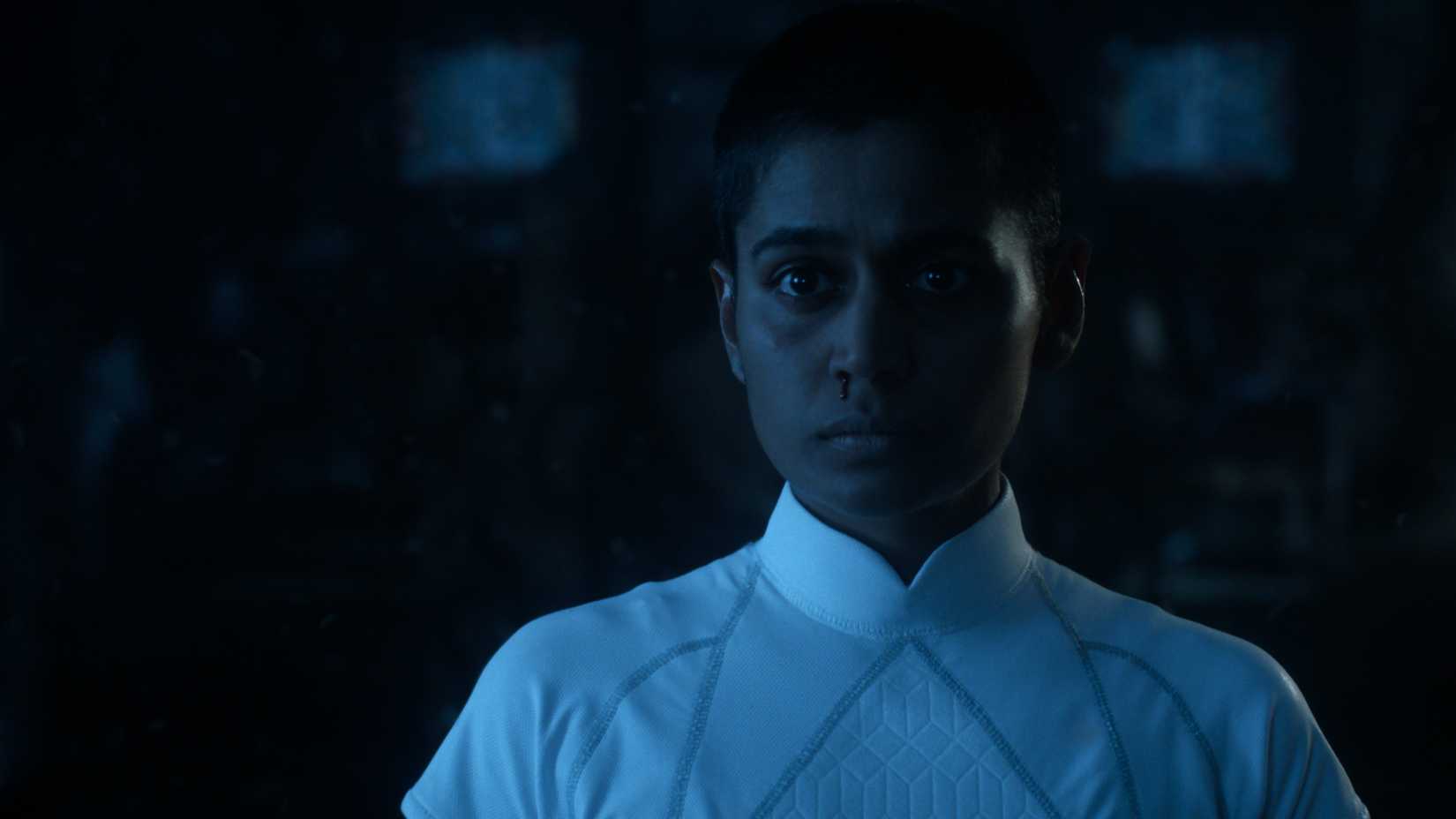 Image: Netflix
The 2020 supplement Tasha’s Cauldron of Everything introduced the “Aberrant Mind” subclass—casters whose psychic abilities are the result of contact with alien forces. This serves as a perfect description for Henry Creel (Jamie Campbell Bower), who gained his abilities through exposure to extra-dimensional energies. The same applies to Eleven (Millie Bobby Brown) and Kali (Linnea Berthelsen), who carry powers derived from Henry’s blood. Consequently, Dr. Kay’s (Linda Hamilton) experiments are essentially an attempt to cultivate a new lineage of sorcerers.
Is Will Byers Actually a Warlock?
There is a compelling argument that Will isn’t a Sorcerer at all. A subtle clue lies in his physical movement—what players would call “somatic components.” During a press event attended by Polygon, Noah Schnapp noted that Will’s gestures differ significantly from Eleven’s.
“Initially, it was meant to be that same forward hand motion Millie uses, but the Duffer brothers adjusted that for Volume 2,” Schnapp revealed. “Will’s powers aren’t innate; they are siphoned from Vecna. Changing the gesture to show him drawing power inward makes his connection much clearer.”
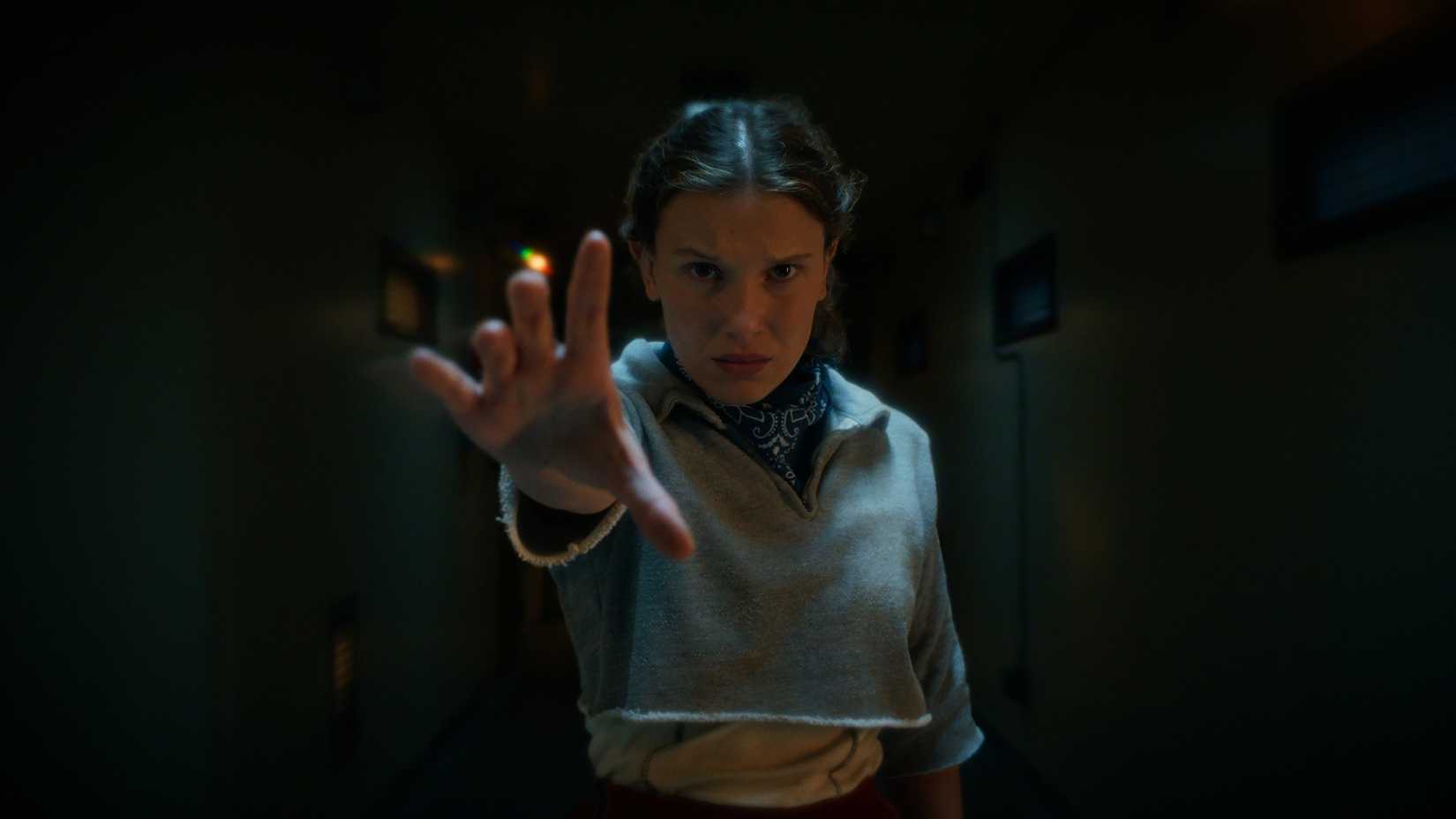 Image: Netflix
This “siphoning” of power defines the Warlock class—a caster who acts as a vessel for an otherworldly patron. While Warlocks often enter these pacts through a deal with a devil, they can also be reluctant tools of a higher power. This mirrors how Vecna utilized Will as a conduit to bridge the gap into Hawkins. Currently, Vecna is attempting to expand this influence, adopting the friendly persona of Mr. Whatsit to entice more children into his service.
Though the term “Warlock” is also historically out of place, it is closer to the show’s timeframe than “Sorcerer,” having appeared as a Wizard variant in the 1990 book The Complete Wizard’s Handbook. Regardless of the label, Will’s newfound mastery over these external forces is set to be the decisive factor in the defense of Hawkins during the grand finale.
The first seven episodes of Stranger Things season 5 are currently streaming on Netflix. The series finale will debut on New Year’s Eve.
Source: Polygon
Related articles
 Cosplayer portrays Lady Dimitrescu from Resident Evil Village
 Rockstar Details New Activities and Depth in GTA VI
 Capcom Well Optimized Onimusha for Switch 2
 Two Nintendo Directs Air Next Week, And One Of Them Celebrates Zelda’s 40th Anniversary
 Brandon Sanderson and Janci Patterson Discuss Cytoverse Novel Blightfall
 Naughty Dog Teases More The Last of Us Games After HBO Season 3
 GTA VI Anticipation Drives Up PS5 Sales in the UK
 Order Automatica launches on PC, consoles and mobile