A dim, amber light spills from the rear of a medieval tavern, where a cluster of patrons surrounds an odd contraption. The device—part clockwork, part arcane apparatus—clicks and whirs with each pull of a lever, and the crowd holds its breath. When the reels align, the room erupts: a critical hit has landed.
That electric moment captures the essence of Slots & Daggers, a fantasy slot-machine roguelike from solo developer Friedemann Allmenröder, who previously created the cozy builder Summerhouse. On his website, he explains his goal was to make players feel like they’re tucked into a shadowy corner of a tavern, fiddling with a strange, mechanical slot machine fashioned from metal, glass and a touch of electricity—and the game absolutely delivers.
Think of it as a hybrid of Slay the Spire’s tactical combat and CloverPit’s slot-focused mechanics. Players start by choosing three symbols—swords, shields, coins and the like—and then advance through the machine’s levels by spinning to resolve encounters. Along the way you’ll encounter oddball foes and whispered lore about exiled kings and a skull-crowned queen; the enemy roster is delightfully eccentric and memorably designed.
The first stage pits you against a sentient egg, and it only grows stranger from there. The creatures aren’t just odd for color—they each have distinct rhythms and tricks you learn to anticipate: a squid-like adversary that doubles its strike each turn, or a rat-like brigand that pinches your coins. Learning those idiosyncrasies becomes part of the satisfaction, much like mastering the enemy patterns in a deckbuilder.
Although the slot rolls introduce randomness, the game still rewards planning and synergy. Several symbols trigger interactive skill checks—simple, twitch-based mini-games that add a layer of engagement beyond pulling the lever. These moments, reminiscent of WarioWare’s bite-sized tests, keep combat tactile and prevent the game from feeling entirely chance-driven.

Between battles you visit the upgrade shop, where symbols, consumables and passive buffs can be bought or upgraded. Some items are straightforward stat boosts—health-restoring gouda, for example—while others, like magic wands, grant active effects usable in combat. You can also refine the set of symbols on your machine, tailoring your RNG to a particular strategy.
There are a few dominant builds that can reliably carry you to victory, but experimentation is far more entertaining. Strength, spellcasting and poison playstyles are all viable, and the roster of unlockable attacks ranges from ninja stars to dark curses. Meta-progression exists through permanent modifiers purchasable with chips (a currency separate from coins), offering small bonuses like damage reduction and larger, run-altering upgrades such as additional symbol slots.
The art direction, sound design and overall ambience are superb. Allmenröder composed the soundtrack himself—melding old-school hip-hop, synth arcade textures and slightly out-of-tune drawbar organs—to evoke an anachronistic, tavern-meets-arcade atmosphere. The audio details—the clink of coins, the crowd’s cheers, the distinct noises of each attack—are finely tuned and add a lot of personality.
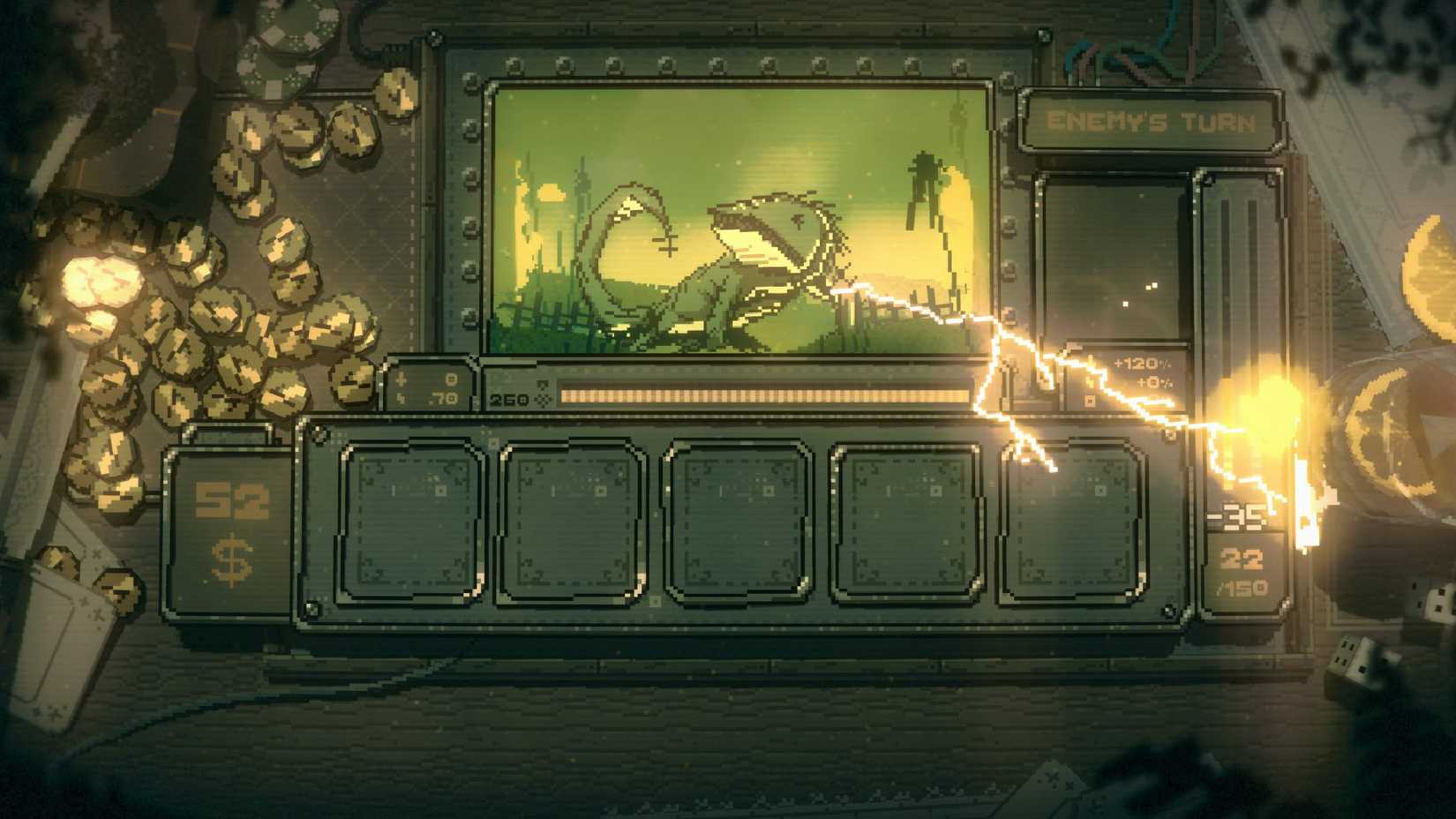
Visually the enemies read like inked comic panels—largely monochrome but transformed by lighting and environmental effects. In the Cathedral of Smoke, for instance, a flame demon glows orange against the blaze, while pixelated smoke coils through the air. The slot machine itself is a joy to watch, its retrofuturistic lights and spinning reels providing constant visual feedback that makes each pull rewarding.
Slots & Daggers is deliberately more streamlined than Slay the Spire—the Steam listing even calls it a mini-roguelike—and that concision is a strength. It’s a compact experience that prompts strategic thinking without overwhelming you; the randomness of the machine reduces decision fatigue while the between-battle choices keep each run meaningful.
I finished the main campaign in roughly five hours, which then unlocked an arena mode—an endless gauntlet where ever-tougher egg monstrosities appear. I still return to face favorites like Leggo (an egg with legs) and the mystical Eggomancer. It’s the ideal pick-up-and-play title, perfect for short sessions that still feel satisfying, as if you’ve spent an hour in the back of that tavern with a steaming mug of mead and a gleeful grin.
Source: Polygon