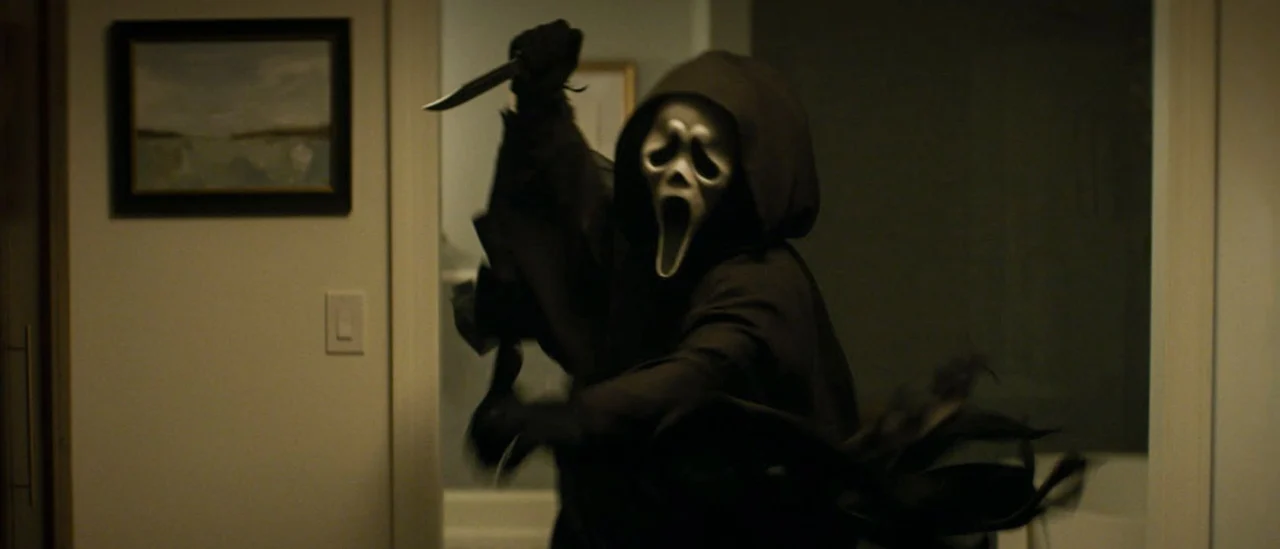
Scream 7 Review: The Franchise Has Officially Become the Very Clichés It Once Mocked
When Wes Craven and Kevin Williamson launched the Scream phenomenon in the mid-1990s, the horror landscape had grown stagnant. While the 1980s produced several gems, the decade was largely defined by an oversaturation of slasher sequels that had long since exhausted their creative potential. Scream arrived as a sharp, post-modern deconstruction of these tired tropes, exposing the formulaic nature of the genre through a self-aware lens.
Scream 7
Release Date: February 27, 2026
Directed By: Kevin Williamson
Written By: Kevin Williamson and Guy Busick
Starring: Neve Campbell, Isabel May, Jasmin Savoy Brown, Mason Gooding, Anna Camp, Mckenna Grace, Asa Germann, Celeste O’Connor, Sam Rechner, Matthew Lillard, Joel McHale, Ethan Embree, and Courteney Cox
Rating: R for pervasive bloody violence, gore, and language
Runtime: 114 minutes
.
There was a hint of irony when the franchise began churning out its own sequels, yet the series maintained its edge by doubling down on its meta-commentary. This intellectual DNA allowed Scream to survive two decade-long hiatuses and emerge as a premier example of satirical slasher cinema. However, that legacy of subversion has officially reached its expiration date.
With Scream 7, the series has fully devolved into the very clichés it once ridiculed. The fact that Kevin Williamson—the architect of the original’s wit—is steering this ship feels like a particularly bitter irony.
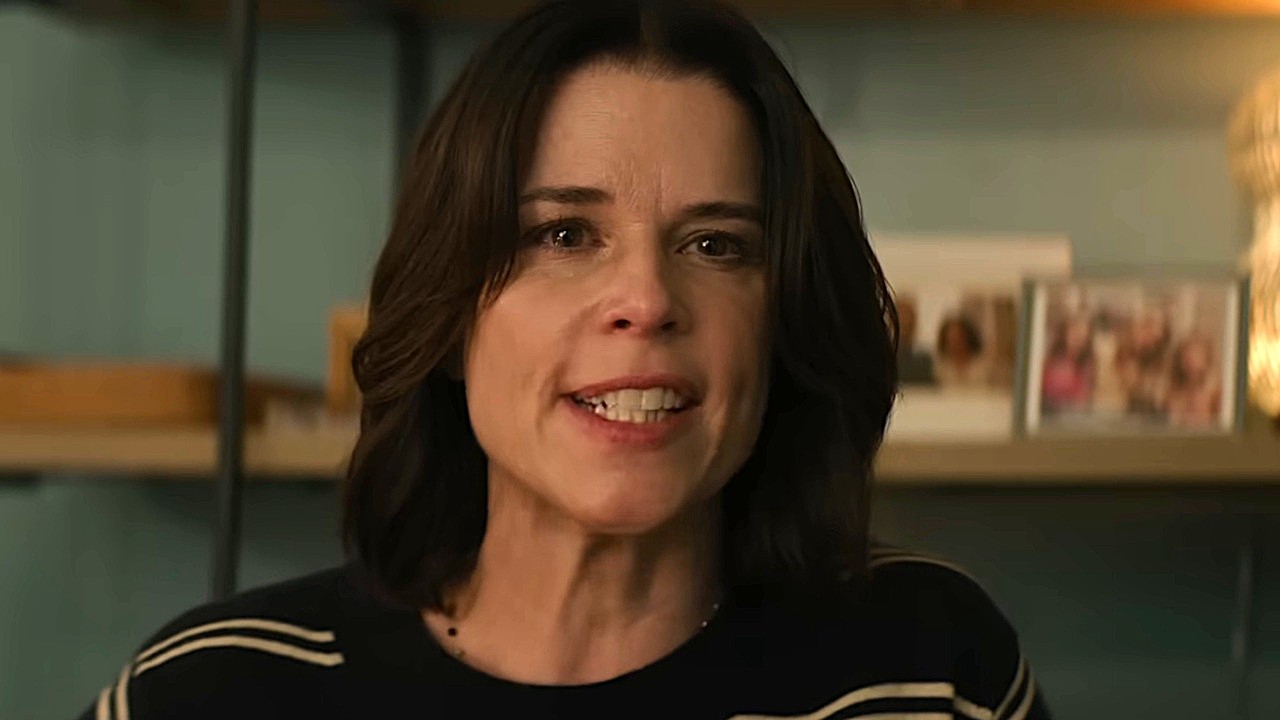
The film’s journey to the screen was marred by a tumultuous production cycle, including the high-profile firing of Melissa Barrera, the departure of Jenna Ortega, and the exit of director Christopher Landon. In hindsight, the project should have been abandoned. While it boasts the return of Neve Campbell’s iconic Sidney Prescott, the film serves only to tarnish her legacy with transparent plotting and uninspired storytelling that offers nothing new beyond further tormenting its central heroine.
(In the interest of the viewer’s experience, I will avoid specific spoilers. However, I must state that any intrigue this review might generate is purely incidental; I strongly advise horror fans to ignore this entry and treat the previous film as the definitive conclusion.)
In this installment, Sidney Prescott-Evans has found a semblance of domestic peace in Pine Grove, Indiana. Now married to the local police chief (Joel McHale) and raising a teenage daughter, Tatum (Isabel May), Sidney’s tranquility is shattered by a familiar voice on the other end of a phone line. What begins as a suspected prank escalates into a digital nightmare when a video call reveals the scarred face of Stu Macher (Matthew Lillard)—a killer long thought dead.
As a fresh wave of Ghostface murders plagues the town, Gale Weathers (Courteney Cox) and the “Core Four” survivors Mindy and Chad Meeks-Martin arrive to assist. Together, they investigate the impossible: has a ghost from the past truly returned to finish the job?
The Narrative Mechanics of Scream 7 Feel Both Predictable and Perplexing
While the film teases the resurrection of an original killer, it simultaneously cycles through a roster of hollow suspects, mostly consisting of Tatum’s one-dimensional friends. The script attempts to modernize the threat by introducing artificial intelligence and deepfakes, but these elements feel like desperate, uninspired retreads of Scream 3‘s logic-defying voice changer. The “protective parent with a secret past” trope is used here in its most basic form, failing to add any meaningful layers to Sidney’s trauma.
The film’s attempts at meta-humor are equally lackluster, relegated to a few throwaway lines about “nostalgia” and a series of fan-service cameos that were spoiled months ago by production leaks. While the franchise was never known for impossible-to-solve mysteries, Scream 7 is the first entry where the audience will likely deduce the culprit by the end of the second act—not because of clever clues, but because the alternative explanations are nonsensical.
Visceral Thrills Provide the Only Silver Lining
If there is one area where Scream 7 succeeds, it is in its commitment to practical carnage. Williamson isn’t afraid to lean into the “splatter” aspect of the genre, delivering at least one sequence that ranks among the most creative kills in the entire franchise. The opening scene also offers a clever, if fleeting, subversion of the classic “favorite scary movie” setup.
Unfortunately, these moments of competence are buried under baffling character choices. Characters flee into panic rooms only to exit them seconds later for no discernible reason, and the opening sequence feels entirely disconnected from the broader narrative. This level of sloppy sequencing is common in bargain-bin slasher sequels, but it is a shocking decline for a brand that once prided itself on precision.
Ultimately, Scream 7 marks the point where the series has become the very monster it once hunted. It is a vacuous cash grab that betrays the franchise’s intellectual roots, standing as a stark reminder that some legacies are better left in the past.
Related articles
 “Glee” to Get an Official Reboot From Hulu
 Christopher Nolan’s “The Prestige” to be re-released for its 20th anniversary
 “Battle of Engines” and “Your Heart Will Be Broken” Make the Golden Eagle Longlist
 Denzel Washington to Lead Thriller From “Mission: Impossible” Director
 “American Horror Story” Renewed for Season 14
 Ridley Scott’s “The Dog Stars” Gets an Online Release Date
 Keanu Reeves Could Star in Remake of “The Gangster, the Cop, the Devil”
 Russia Is Working on a New Adaptation of “Heart of a Dog”