Paizo has steadily broadened the reach of its flagship Pathfinder brand beyond tabletop role‑playing, with releases like the cooperative 2019 Pathfinder Adventure Card Game and the computer RPGs Pathfinder: Kingmaker (2018) and Pathfinder: Wrath of the Righteous (2021). The company is now pursuing a wider audience with Pathfinder Quest, a fully cooperative adventure board game that is available through BackerKit.
“I’ve long wanted Paizo to extend its reach beyond roleplaying games,” Paizo director of games Jason Bulmahn said in a Zoom interview. “Pathfinder and Starfinder have been major successes, but we have more to offer as a company.”
Pathfinder Quest will feel familiar to fans of Pathfinder and to players of scenario-driven board games such as Gloomhaven and Descent. Characters move across maps built from double‑sided tiles, confront foes, and resolve scripted scenes from an adventure book. The boxed game includes 12 distinct adventures, each designed to last roughly 60–90 minutes, plus a 400‑entry book of noncombat challenges that model the moments of choice that shape a group’s story — from how you open a chest to how you respond to a stray animal.
 Image: Paizo
Although it uses Pathfinder’s classes, ancestries, and the Golarion setting, Pathfinder Quest is intentionally approachable for people who have never played a tabletop RPG. Rather than a simplified RP experience, it delivers a cooperative board‑game structure that still offers meaningful decisions and challenge for series veterans.
“We aimed to strike a balance so both board gamers unfamiliar with Pathfinder and Pathfinder fans who don’t usually play board games can jump in and enjoy the experience,” Bulmahn said.
To support that goal, the designers replaced the traditional d20 with custom six‑sided dice. Four faces show pip values for accumulated successes, one face bears a skull that can trigger an enemy’s special ability, and another shows a star that activates class‑specific effects — for example, a cleric might heal or a rogue might gain extra movement. Character skills can mitigate skull results or add stars, letting players manipulate probabilities without excessive randomness.
“The d20 works great in open narrative role‑playing because it produces a wide spread of outcomes,” Bulmahn explained. “For a board game, we wanted a distribution with a tighter, more predictable curve so we could fine‑tune difficulty and avoid overly swingy results.”
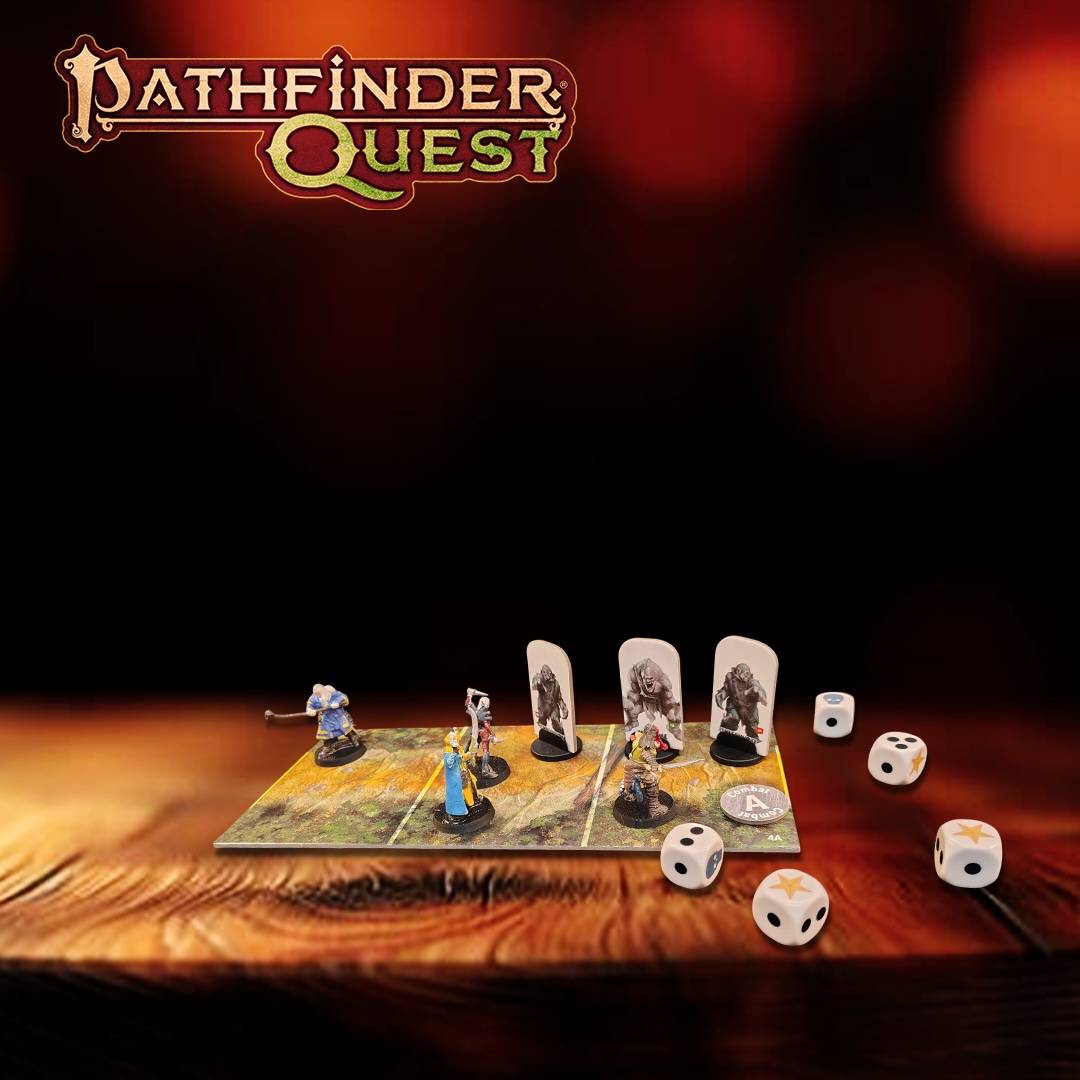 Image: Paizo
Characters gain experience and level up after each adventure; the opening scenario also functions as a tutorial. Some gear is granted automatically to keep the party prepared, while additional items appear as explorers make discoveries during branching storylines. With each level, players choose from class cards that grant new abilities — or they can pick one of Pathfinder’s ready‑made iconic characters to jump straight into play.
“The game lands between the accessible randomness of classic dungeon crawlers like HeroQuest and the deeper, longer‑form systems such as Gloomhaven,” Paizo marketing and media manager Rue Dickey said. “It keeps setup and complexity reasonable while still offering meaningful tactical and narrative choices.”
Pathfinder Quest takes place in Darkmoon Vale, an introductory region of Golarion designed to be welcoming to newcomers.
“Darkmoon Vale is a place you can easily slip into to learn the world one step at a time,” Bulmahn said. “You’re new arrivals who encounter local problems and get drawn into them — you don’t need decades of knowledge about Pathfinder’s history to enjoy the game.”
 Image: Paizo
Although the box contains 12 adventures, any single campaign will include only eight, chosen by player decisions and narrative beats. Bulmahn hinted that replayability is baked into the structure — the reveal of a time dragon miniature is one clear example of how the story can evolve.
“At the end of your campaign you may be invited to replay parts and make different choices,” he said. “It’s part of the story, and we encourage players to use knowledge from previous runs to pursue better outcomes.”
Time itself functions as an in‑game resource. A cardboard hourglass dial tracks time as the party fights, explores, and completes tasks.
“Rushing through an adventure has advantages and penalties,” Bulmahn explained. “Outside combat you can spend time to recover and heal, but moving quickly can create other complications.”
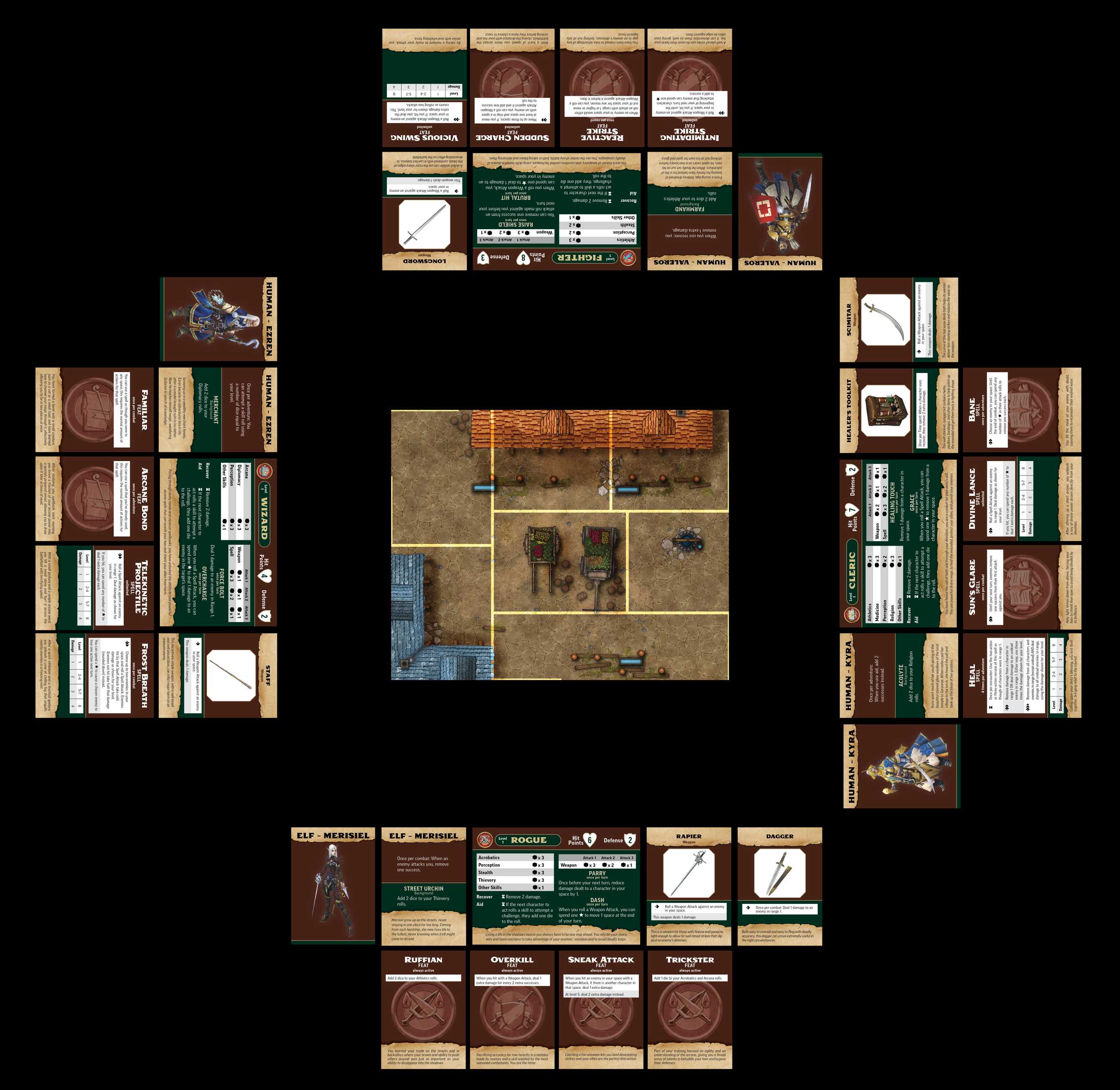 Image: Paizo
The launch set includes four core classes — rogue, cleric, fighter, and wizard — with the oracle class slated as a crowdfunding stretch goal. Base ancestries are dwarf, elf, gnome, goblin, halfling, and human, and additional ancestries may unlock through pledges. The standard edition ships with cardboard pawns for every character and monster, 17 double‑sided map tiles, and more than 100 tokens for locations, objects, and hazards. The deluxe edition upgrades to miniatures for the four iconic characters and includes the time dragon.
The BackerKit campaign primarily gauges demand and determines production quantities and optional add‑ons. Paizo plans numerous miniatures that will be unlockable; all figures use a standard grid so they’re compatible with traditional Pathfinder tabletop sessions. The company is also working with miniature maker Titan Forge to provide STL files for every creature, enabling home 3D printing or third‑party print‑on‑demand services.
“If the campaign performs as expected, we’ll expand the line,” Bulmahn said. “We can release new adventure books and challenge books using the same components, add item cards, and build new stories without redesigning the core box.”
Paizo is targeting spring 2026 for fulfillment, and the standard edition will be distributed through retail channels.
Source: Polygon