
Marvel Rivals Faces a Major Problem Far Beyond Elsa Bloodstone’s Overpowered Kit
Elsa Bloodstone’s arrival in Marvel Rivals via the Season 6.5 update has ignited a firestorm of debate within the community. The prevailing sentiment regarding the legendary monster hunter is that she is fundamentally overtuned—boasting excessive lethality, disproportionate sustain, and a kit that many claim is detrimental to the meta. However, Elsa may not be the root cause of the frustration. Instead, her presence highlights a systemic friction between her modern design and the rest of the roster, exposing a shift in the core philosophy of Marvel Rivals.
Admittedly, certain elements of Elsa’s kit feel anomalous. Granting a shotgun the surgical precision of a rifle with minimal pellet spread and generous damage falloff—allowing for rapid eliminations at 30 meters—is a perplexing design choice by NetEase Games. This is especially true when contrasted with the developer’s recent decision to nerf Blade’s shotgun. Furthermore, the hitbox on her ultimate has been described as borderline absurd, frequently connecting in ways that defy visual logic.
Yet, the viral demonstrations showing Elsa dealing 1,000 damage in the practice range are somewhat misleading. Achieving peak efficiency against a stationary target is a far cry from executing those combos in a dynamic skirmish. Most of Elsa’s high-damage chains require her to commit to melee range; at that distance, a coordinated team should be able to focus her down. Even with her consistent overhealth generation, she is far from invincible when faced with overwhelming fire.
This situation mirrors the current state of Overwatch with Vendetta. As a high-skill floor hero, she can feel like an unstoppable force in the right hands, yet she possesses exploitable weaknesses that the general player base has yet to master. The friction in Marvel Rivals, however, is twofold.
First, NetEase has historically encouraged a casual approach to the game, de-emphasizing role specialization and rigid team compositions. Introducing a hero that demands specific counter-play—after a year of fostering an environment where counters didn’t matter—feels like a betrayal of the game’s social contract. It is no surprise that players in unranked matches struggle against Elsa; they have never been required to prioritize target focus or strategic switching to this degree before.
Second, there is a “power creep” in mobility and cooldown management that began in Season 5 with Gambit and Rogue. Gambit’s kit allows for high-frequency repositioning with multiple charges on short timers, enabling him to engage and disengage with impunity. Contrast this with a legacy hero like Invisible Woman, whose only escape is a sluggish double jump on a seven-second cooldown. Similarly, Rogue and Deadpool utilize short-cycle defensive skills and high-velocity movement to dictate the pace of a fight, leaving older heroes in the dust.
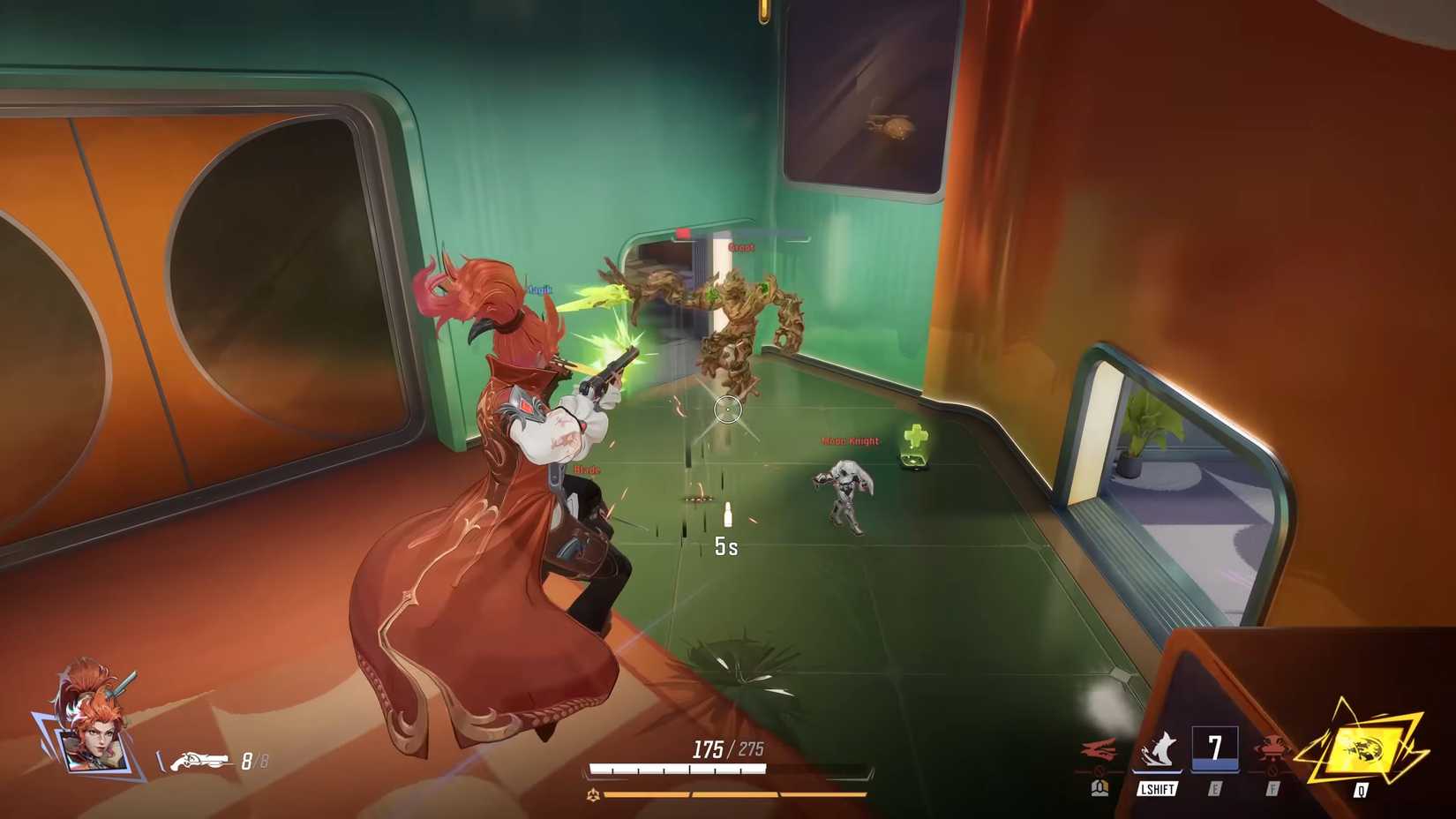
Most of the original Marvel Rivals cast simply wasn’t built for this tempo. Vanguards like Magneto and Hulk are hampered by lengthy shield downtimes and limited self-protection. Melee Duelists like Magik or Psylocke must rely heavily on their primary attacks, often lacking the tools to survive once their initial burst fails. The game is evolving into a high-speed, ability-driven brawler, but only the newest heroes have the tools to play that way.
While Elsa Bloodstone may eventually receive numerical nerfs, that won’t resolve the underlying identity crisis. If the future of Marvel Rivals is a fast-paced game centered on complex skill rotations and hyper-mobility, NetEase must commit to a comprehensive overhaul of its legacy roster. Without modernizing the older heroes, the gap between the “new age” speedsters and the original cast will only continue to widen.
Source: Polygon
Related articles
 Jenna Ortega Wants to Step Away From TV Series After Wednesday and Explains Why
 Two New Trailers Released for Mamoru Oshii’s Armored Trooper Votoms: Die Graue Hexe Ahead of Nov. 20 Premiere
 Lawrence Makoare, Who Played Lurtz in The Lord of the Rings, Says He Is Joining The Hunt for Gollum
 GTA IV Gets Experimental Android Port
 High Plains Drifter, Clint Eastwood’s Western, Now Streaming Free on YouTube
 New Edition of Battlestar Galactica: The Board Game in Development, With Cylons Returning
 Matt Damon’s Contagion Climbs Streaming Charts on HBO Max
 Hulu Confirms Prison Break Revival Is Coming to Streaming