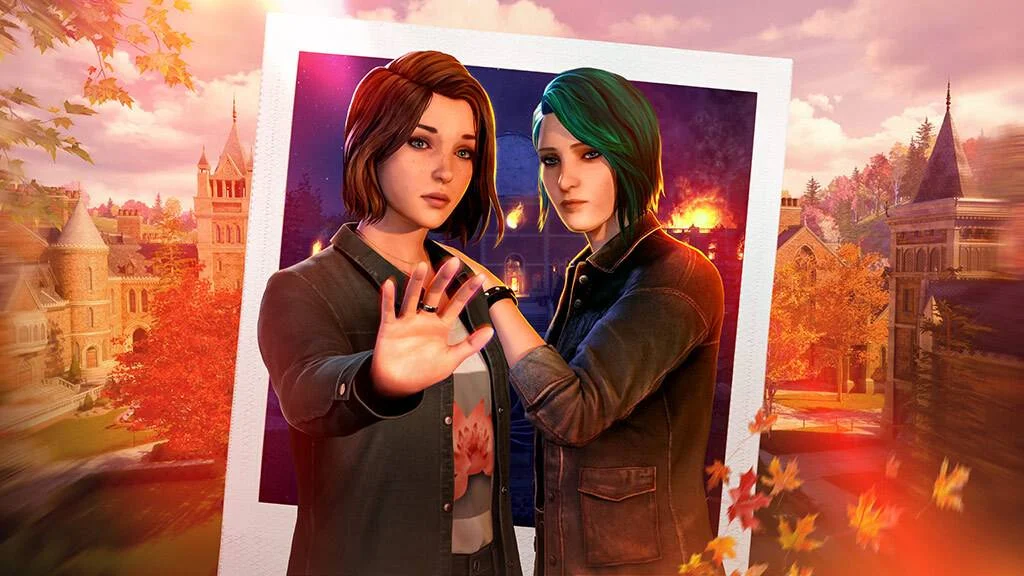
Life Is Strange: Reunion Is the Franchise’s Most Cowardly Installment to Date
When Dontnod Entertainment launched Life Is Strange in 2015, it sparked something profound within me. Having recently come out, I found an infectious sense of empowerment in seeing young queer women depicted as the protagonists of a high-stakes, temporal sci-fi odyssey. This release coincided with a pivotal era for LGBTQ+ advocacy, arriving just as the Supreme Court established marriage equality across the United States. I emphasize this because the context matters: the bond between the introspective photographer Max Caulfield and the rebellious Chloe Price—whether interpreted as platonic or romantic—remains a cornerstone of queer media for me and countless others, even a decade later.
It is with a heavy heart, then, that I find Life Is Strange: Reunion to be an utterly timid resolution to that narrative arc. For those who cherished the nuance of their relationship, this entry feels like a step backward—a staggering overcorrection born from the mixed reception of both the 2015 original and Deck Nine’s 2024 sequel, Double Exposure.
Ten years ago, Life Is Strange presented players with a gut-wrenching ultimatum. Stepping into the shoes of a teenage Max, one had to choose between the survival of Arcadia Bay and the life of Chloe Price. The narrative revealed that Max’s initial attempt to cheat death triggered a catastrophic storm, a cosmic correction for her temporal interference. Regardless of the path taken, the conclusion honored the series’ central mantra: every action carries weight and consequence.
 Image: Deck Nine Games/Square Enix
Even Double Exposure, despite facing criticism for how it handled the Max-Chloe dynamic and its divisive multiversal finale, tried to respect the gravity of previous choices. Choosing to sacrifice Chloe meant Max was perpetually shadowed by grief, while choosing the town suggested their relationship eventually buckled under the weight of shared trauma and survivor’s guilt. Personally, I found that friction grounded and realistic; it highlighted a lingering affection while acknowledging the complexity of healing. It also allowed Max to grow as an independent adult, forging new bonds with Safi and Moses at Caledon University. While sidelining Chloe was never going to be a popular move, it at least offered a path toward character evolution.
Reunion, by contrast, feels like a sequel in name only, abandoning the thematic depth of its predecessors. While it mirrors the original setup—Max facing a three-day countdown before her workplace is engulfed in flames—the similarities are superficial. Chloe’s re-emergence is supposedly a byproduct of the universal rift Max created in Double Exposure, yet Reunion quickly discards that logic in favor of convenient retcons. Rather than exploring the consequences of a merged reality, Deck Nine resorts to puppeteering the protagonists through a series of “greatest hits” callbacks, hoping that nostalgia alone will sustain the experience.
 Image: Deck Nine Games/Square Enix
Unfortunately, the nostalgia feels hollow. This is exacerbated by the blatant reuse of assets from Double Exposure, stripped of the interactive world-building and NPC depth that usually bring these settings to life. In their rush to appease fans, the developers have sidelined the very characters that made the recent sequel interesting. Max’s previous romantic interests are dismissed via off-screen breakups, and the supporting cast seems to have undergone collective amnesia regarding Max’s abilities. Even Safi, whose relationship with Max was the emotional core of the previous game, is relegated to the periphery.
The central relationship itself lacks agency. While you can define Max and Chloe’s status as either platonic or romantic at the start, these choices have negligible impact on the narrative trajectory. In the original game, players could challenge Chloe’s volatility or prioritize other characters; here, Max’s entire world revolves around Chloe to the exclusion of all else. The ethical weight of Max using her powers again—a decision she once swore off due to its devastating toll—is treated as an afterthought. The game seems to assume that as long as Max and Chloe are on screen together, nothing else matters.
To be fair, the vocal performances remain a highlight. Hannah Telle and Rihanna DeVries bring a palpable tenderness to their roles, successfully recapturing the vulnerable intimacy of the original game. There were moments where their chemistry genuinely moved me, transporting me back to the feeling of “us against the world.” However, even stellar acting cannot mask the fact that Square Enix marketed this as the “ending they deserve,” while simultaneously stripping away the player choice that defined the series.
 Image: Deck Nine Games/Square Enix
Gameplay suffers similarly from this lack of direction. In the past, Max’s rewind ability served as a tool for creative problem-solving and character bonding—be it helping a classmate or navigating social hurdles. In Reunion, the mechanic is reduced to a trial-and-error slog, requiring Max to rewind until she hits the “correct” dialogue option. It’s a disappointing shift for a franchise built on the philosophy of consequence. While I understand the commercial pressures of game development, the lack of narrative integrity here is startling; at times, it feels less like a professional sequel and more like a checklist of fan-service tropes.
In an era where anti-LGBTQ+ sentiment is on the rise and legal protections are being rolled back, there is undeniable value in seeing a queer couple find happiness. In that sense, Reunion provides a rare optimistic ending.
Yet, it’s hard to celebrate a victory that comes at the expense of storytelling quality. By undermining the very sequels it was meant to bridge and leaning on a sanitized version of nostalgia, Reunion fails to provide the closure these characters deserved. If this is the “fan-favorite” conclusion, I’d rather have stayed with the difficult choices of the past.
Life Is Strange: Reunion is currently available on PlayStation 5, PC, and Xbox Series X. This review was conducted on PS5 via a digital code provided by Square Enix.
Source: Polygon
Related articles
 Blizzard Restricts Real-Money Traders From WoW: Forever Economy
 Retro Shooter Warhammer 40,000: Boltgun 2 Released on Steam and Consoles
 Take-Two CEO Expressed Shock Over GTA VI Delay
 Epic Games’ Unannounced Marvel And Star Wars Shooter Delayed As Company Goes All-In On AI Development
 Magic: The Gathering Is Officially Reprinting a Powerful $18 Card for the First Time in 20 Years
 Lords of the Fallen II to feature improved combat and reworked story
 Confirmed PS Plus October 2026 Lineup Featuring Newest Mafia Game
 Disney Survival Thriller Whalefall Fails to Replicate The Martian