

While astronauts represent the pinnacle of human achievement, Ronald McNair occupied a realm of his own. A brilliant physicist and a soul-stirring jazz musician, McNair shattered barriers both on Earth and in the heavens. During his February 1984 mission aboard the Space Shuttle Challenger, he made history by bringing his curved soprano saxophone into orbit, becoming the first person to ever play a musical instrument in the weightlessness of space.
Four decades ago, McNair was poised to etch his name into the annals of music history yet again. He was set to perform a groundbreaking saxophone solo from the stars—a piece composed specifically for him by French electronic visionary Jean-Michel Jarre for his 1986 album, Rendez-Vous.
Tragically, this celestial duet never came to fruition. On January 28, 1986, just 73 seconds into its ascent, the Challenger shuttle suffered a catastrophic failure, claiming the lives of all seven crew members. The world watched in collective mourning as a dream of cosmic harmony was silenced by fire and steel.
On the 40th anniversary of the disaster, Jean-Michel Jarre shared a moving reflection on social media. “My heart remains with the families and loved ones who endure the weight of this profound loss,” Jarre stated. “I want to offer a special tribute to my dear friend Ron McNair—an astronaut, a virtuoso, and a pioneer who was destined to perform a live solo from space as part of my Houston celebration.”
To ensure McNair’s spirit was never forgotten, the final track on the *Rendez-Vous* album was titled “Last Rendez-Vous (Ron’s Piece) – Challenger.” Jarre’s subsequent commemorative concert, “Rendez-vous Houston: A City in Concert,” held on April 5, 1986, turned the city’s skyline into a massive canvas of light and sound. Attracting 1.5 million people, the event set a Guinness World Record and served as a massive, public eulogy for the fallen crew.
A native of South Carolina who rose above the limitations of the Jim Crow era, McNair’s life was a testament to resilience. Before his passing, he earned a PhD in physics from MIT, achieved a 5th-degree black belt in karate, and became a master of his craft on the saxophone. Today, his legacy is preserved through the MIT Black History Project and the Ronald E. McNair Post-Baccalaureate Achievement Program, which empowers underrepresented students to reach for their own doctoral stars.
Though the physical performance was lost to time, the music remains. “That solo may have never been played in orbit,” Jarre reflects, “but ‘Ron’s Piece’ endures. His heartbeat is woven into the melody, echoing into eternity.”
 Taylor Swift Says Nashville Songwriters “Raised Me” During Hall of Fame Induction
 Macklemore, Hozier and Kneecap Perform at Sold-Out Free Palestine Benefit Concert in Dublin
 G Flip Splits From Chrishell Stause After 3 Years of Marriage: ‘My Head and Heart Are Feeling Very Heavy’
 Seattle Seahawks Throw Shade at Taylor Swift and Travis Kelce After Ending Kansas City’s Undefeated Streak
 Jack Antonoff Was ‘Worried’ About Performing Songs He Wrote for Margaret Qualley After Their Split
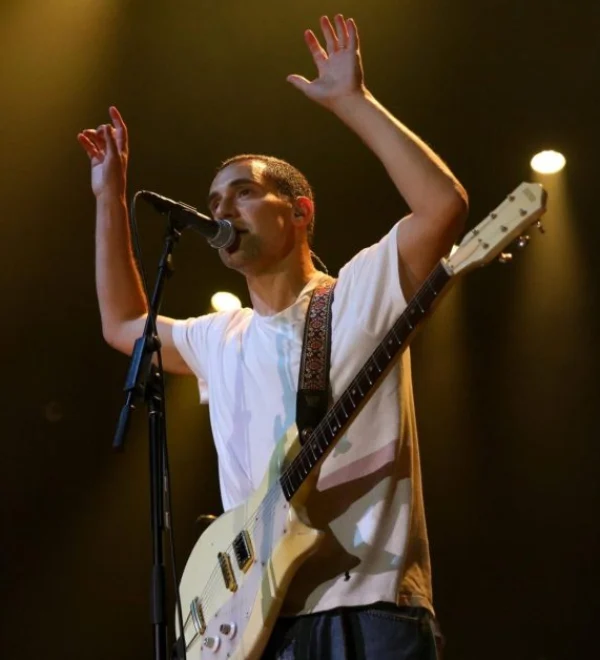 Jack Antonoff Criticizes Ed Sheeran for Bowing to a Billionaire in Macklemore Tour Controversy, Saying ‘Stand the F–k Up’
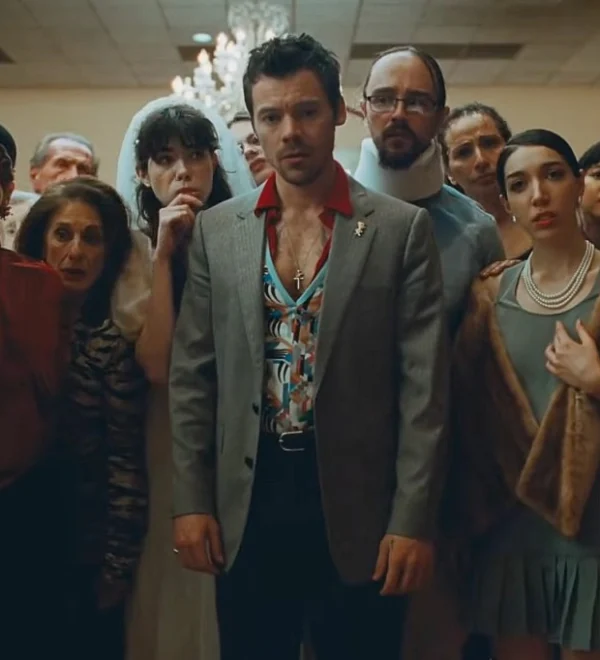 Harry Styles Dances Through Differences With a Group of Strangers in “Coming Up Roses” Video
 Lana Del Rey Helps Stranger ‘Trying to Stay Out of an Abusive Relationship’ While Listening to Tate McRae
Join the Conversation
Share your thoughts on the legacy of Ronald McNair. Required fields are marked *