
Interview: AI Reflects on Her 25-Year Career and New Single ‘Lucky I Love You’

As 2026 unfolds, the renowned singer-songwriter AI is charting a bold new path. Following a monumental 25th-anniversary celebration—highlighted by a sprawling national tour and a comprehensive “best-of” collection—she enters her 26th year with a renewed sense of purpose.
Her latest endeavor, “Lucky I Love You,” serves as the official brand anthem for Kit Kat, delivering a message of affection that is distinctly her own. This release marks what she describes as a “return to her roots,” a sentiment echoed in her latest visual campaign captured by her younger sister, the acclaimed photographer and designer 217…NINA. In an intimate discussion with Billboard Japan, AI reflects on her current artistic evolution and the road ahead.
Your 25th anniversary was an absolute whirlwind of activity. Looking back, how do you process that milestone?
Truthfully, I don’t place much weight on anniversaries. I was simply preoccupied with living every moment to its absolute fullest potential.
You traveled across the entirety of Japan for your performances. Do you find there is a distinct difference between your “touring self” and your everyday persona?
Certainly. As time passes, I’ve realized it’s impossible to maintain a peak energy level 24/7. While on the road, my entire day is structured around ensuring I hit my zenith the moment I step onto the stage. Simultaneously, I am a mother; my children’s needs are always a priority. It’s a delicate, constant balancing act. I’m grateful to my team for being so protective of my space and health during those stretches, allowing me to stay focused.
How has the experience of motherhood redefined your approach to your career?
It has fundamentally fortified me. While I’m still prone to tears, the “self-pity” I felt in my younger years has vanished. There is a profound strength in ego-dissolution. My children are my ultimate source of power.
Has your professional philosophy shifted as well?
In the beginning, I was driven purely by a love for singing. Now, I understand that this vocation is about communication. To speak my truth, I must live with integrity; otherwise, the lyrics lose their weight. I strive to live intentionally so that I “earn” the right to sing those words. That said, I’ve also learned the importance of decompression. To stay mentally stable, you have to allow yourself moments to simply slack off and breathe.
Your live performances are known for a seamless, symbiotic energy between you and your fans. What does that connection represent to you?
There is a raw, visceral honesty in a live setting that can’t be replicated. There are layers to my songwriting that only truly resonate when shared in person. My audience is incredible—they are so locked in that if I stumble on a lyric, they’re right there to shout it back to me. Those interactions are deeply moving.
Is the infusion of love and positivity into your lyrics a conscious choice?
I always aim for a narrative that lands in a place of happiness. I want that for everyone. However, articulating that optimism is a perennial challenge. People are complex and their emotional states are constantly shifting. It’s difficult to step into someone else’s shoes, but my goal is always to guide the listener toward a hopeful conclusion.
Your new single, “Lucky I Love You,” carries a significant brand message. What was the core inspiration?
It centers on a fundamental question: “Is there any affection more profound than this?” I wanted to explore that depth without it feeling burdensome. The track begins with a certain vulnerability and casualness, which I hope allows the message to settle naturally with the listener.
What was the experience like collaborating with your sister, 217…NINA, for the new visuals?
Being sisters, we share an unspoken creative shorthand. But since we are both mothers, the shoot was less about “glamour” and more about efficiency! we were up at 4:00 AM, handled our family responsibilities, and finished the entire project in a single, high-energy day.
Sharing the stage with Alicia Keys at SUMMER SONIC was a major highlight last year. What stayed with you from that encounter?
Alicia is the embodiment of grace. Her reverence for Japanese culture and her genuine love for people are palpable. Encountering an artist of such purity was a gift.
Did you find yourself analyzing her vocal prowess or technical execution?
Not at all! I was completely starstruck. We had corresponded via email, but meeting her in person left me almost speechless. Right before we went on, she played a riff on the keys and asked for my thoughts. I was so captivated by her presence that I just agreed to everything. She is stunning.
Are there specific performances by other artists that have left a permanent mark on you?
Chaka Khan stands alone. At her peak, her vocal clarity was supernatural. I remember her walking out to “Everybody,” and the second she hit that first note, I was in tears. The sheer emotional authority of her voice is staggering.
In terms of pure professionalism, Mariah Carey. I saw her once when she was struggling with her voice. She had tea and honey brought out mid-set, and the audience was tense, wondering if she could pull through. She didn’t just pull through—she was magnificent. That is the mark of a true pro.
Your album RESPECT ALL concludes with a rendition of Bill Withers’ “Lean On Me,” which you also performed at the G7 Hiroshima Summit. Why did that specific song feel so vital?
That song has been part of my soul since childhood, partly because of its role in the 1989 film. It’s a story about transformation and support. When I was invited to perform at the G7 Summit for the world leaders’ partners, I felt a immense weight. A song like “We Are the World” felt almost too audacious—who am I to claim I can save the world? “Lean On Me” was the perfect alternative. It acknowledges that everyone experiences pain and sorrow. It’s an accessible, human promise of friendship and support. It still moves me to tears on my own difficult days.
As you look toward the future of your 26th year and beyond, what is your vision?
I’ve reached a point where I understand my own capabilities. My mission now is to stop pursuing fleeting trends and focus on what I find authentically “cool.” True quality is timeless; it doesn’t care about eras or ages. I want to hit the reset button and build from the ground up once more.
Does that future include a specific “endgame,” or do you see yourself performing indefinitely like legends such as Diana Ross?
I always want to provide a performance that leaves people in awe. There is still so much room for my voice to grow. If I can reach a point where my artistry feels complete and my voice continues to evolve, I would love to be doing this forever. But I also check in with myself: if the day comes where I can no longer give my best, I’m okay with stepping away. I’ve been doing this since my twenties, and while music is my life, I think it’s important to keep learning and stay open to whatever the next chapter might bring.
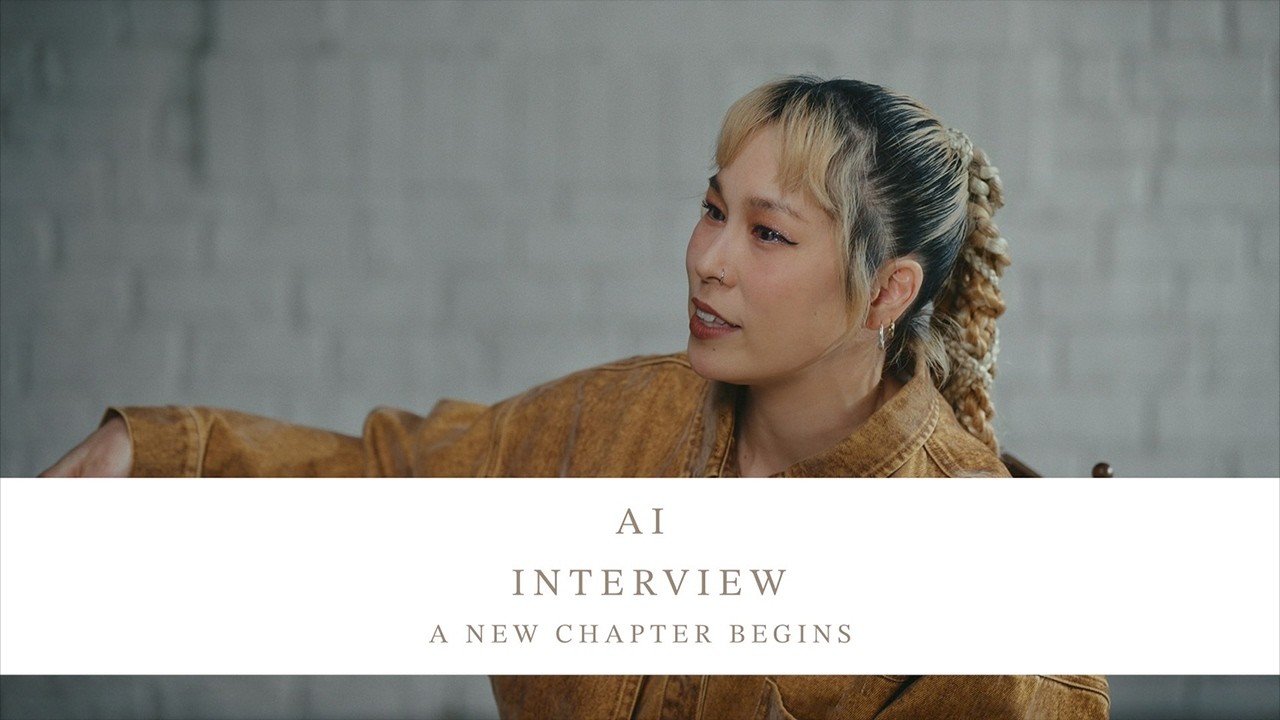

—Interview by Shiho Watanabe, originally featured on Billboard Japan.
Related articles
 Taylor Swift Wears Pale Blue Gown to 2026 Academy Museum Gala
 Taylor Swift Performs “The Fate of Ophelia” Live for First Time at 2026 Academy Museum Gala
 Harry Styles Pays Tribute to Liam Payne With Unreleased Song on Anniversary of Payne’s Death
 Kelly Clarkson Coincidentally Briefly Had Some Bird-Themed Ornaments in Her Holiday Collection
 Tate McRae, Olivia Rodrigo and Chappell Roan’s Remix Among New Music Releases in Reader Poll on Favorite This Week
 Post Malone Says He Has a Large Number of Songs Coming, Apologizes for Taking So Long
 Britney Spears Calls Janet Jackson Her Pop “God,” Says “She’s Not Trying to Be Sexy … She Just Is”
 Olivia Rodrigo feat. Chappell Roan, Tate McRae, Zach Bryan and Angèle feature in New Music Friday Guide