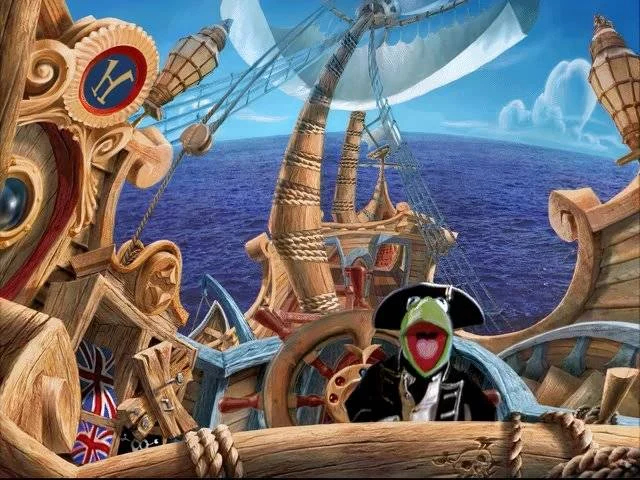
How the Muppet Treasure Island PC Game Almost Revolutionized Muppet Gaming 30 Years Ago
Building on the momentum of 1992’s cinematic triumph, The Muppet Christmas Carol, Jim Henson’s iconic troupe embarked on a swashbuckling journey with Muppet Treasure Island. This loose interpretation of Robert Louis Stevenson’s maritime classic debuted thirty years ago on February 16, 1996. The film was a whimsical success, spawning a treasure trove of tie-in merchandise—most notably a memorable collection of McDonald’s Happy Meal toys—and a somewhat uneven PC adaptation.
Produced by Activision, the Muppet Treasure Island video game was a point-and-click adventure that functioned as an interactive tour of the movie’s plot. Players navigated through static backdrops populated by live-action Muppets and human stars, who provided comedic relief or mission objectives. The gameplay largely consisted of scouring scenes for hidden items and solving straightforward puzzles.
While the title might seem sluggish by contemporary standards, it earned high marks from critics at PC Zone and Entertainment Weekly upon release. The latter publication even asserted that among the sea of children’s software, few titles could rival its “depth, ingenuity, and humor.” One of its most impressive feats was the inclusion of original footage featuring the full Muppet cast and Hollywood heavyweights Billy Connolly and Tim Curry. More importantly, this Activision project signaled a genuine—if occasionally stumbling—attempt to elevate Muppet gaming beyond mere shovelware.
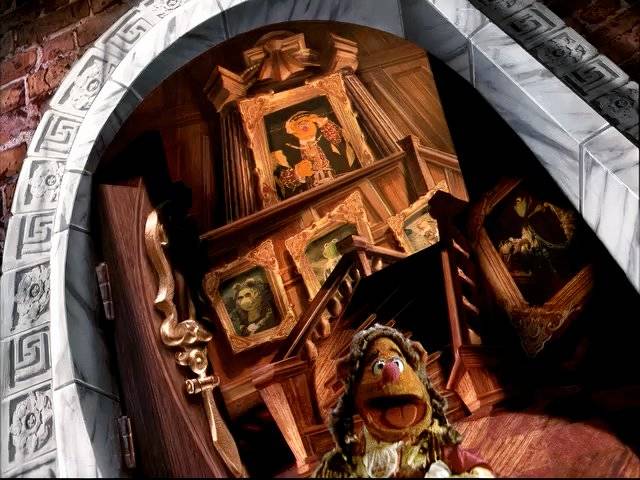
Prior to the mid-90s, the Muppets’ digital footprint was remarkably small. Their debut, Pigs in Space for the Atari 2600, was a collection of three uninspired mini-games that shamelessly mimicked Space Invaders, Frogger, and River Raid. Another planned title, Miss Piggy’s Wedding, was shelved before it could see the light of day.

In 1989, Hi Tech Expressions released Muppet Adventure: Chaos at the Carnival. Originally for home computers and later ported to the NES, the game featured predictable challenges: Kermit inner-tubing down a river and Gonzo piloting a spaceship. Completing these tasks led to a basic side-scrolling finale where Kermit rescues Miss Piggy. Despite some charming character sprites, the experience was largely hollow.
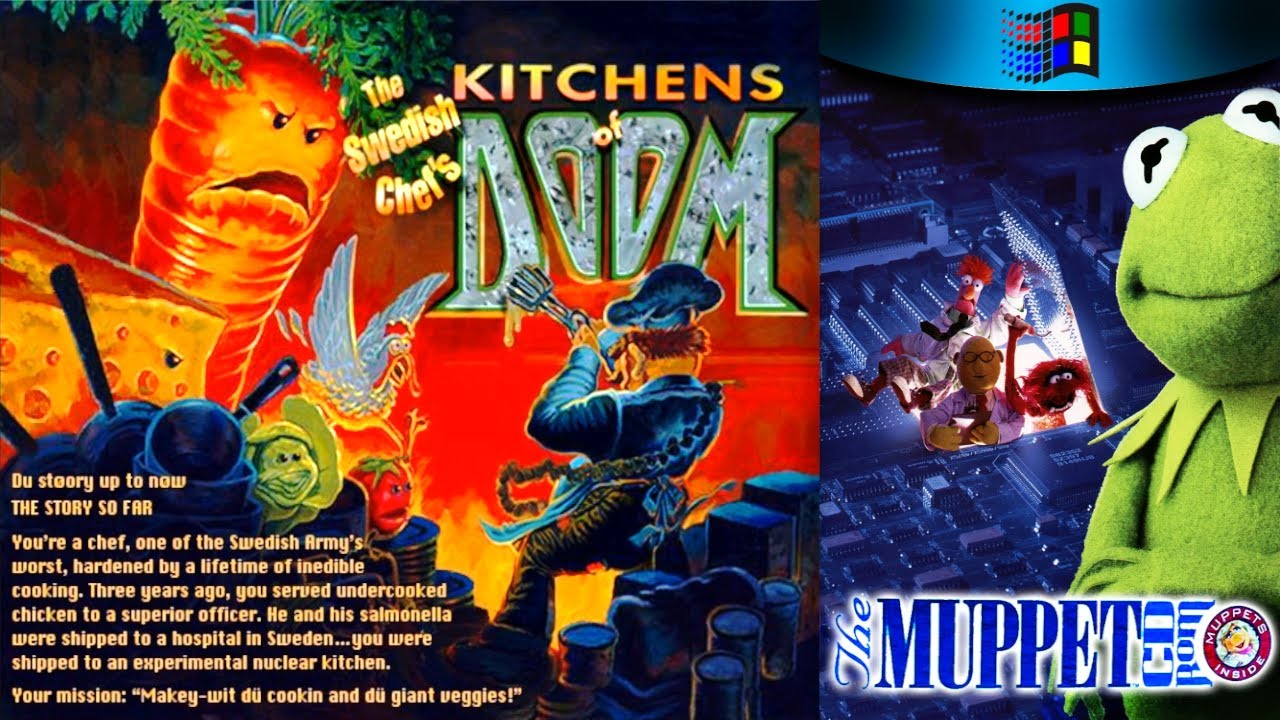
The 1994 formation of Jim Henson Interactive brought a renewed focus on the gaming sector. This era yielded Muppet Treasure Island and The Muppet CD-ROM: Muppets Inside. The latter, while arguably a flawed product, holds significant nostalgic value. It was a chaotic mix of puzzles and mini-games inspired by Hollywood Squares and Name That Tune, interspersed with classic clips from The Muppet Show. The undisputed highlight was a cheeky Doom parody where the Swedish Chef battled sentient vegetables using kitchen implements.
The year 2000 saw a trio of Muppet releases, including the Game Boy Color title Jim Henson’s Muppets. It was widely panned, with IGN labeling it a “badly-botched” license with “wretched” mechanics. On the PlayStation, Muppet Monster Adventure adopted a Spyro-esque formula, starring Kermit’s nephew Robin on a quest to save his transformed friends from a monstrous fate.
By this point, a repetitive cycle had emerged: Muppet games were either lackluster mini-game compilations or generic rescue missions. Neither format truly captured the essence of the characters. However, Muppet RaceMania finally broke the mold.
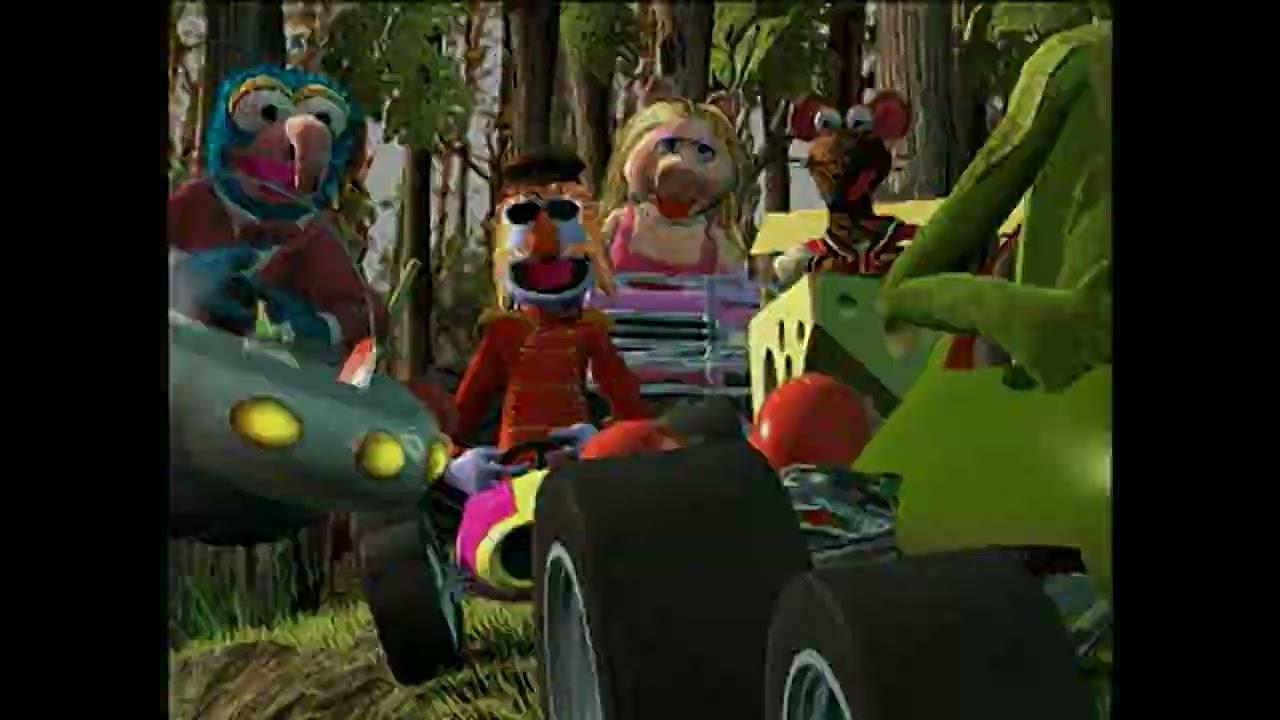
Released late in 2000 for the PlayStation, RaceMania was a kart racer that, despite its technical clunkiness, understood its source material. With 25 playable characters and 34 imaginative tracks, it felt like a celebration of the franchise. The vehicle designs were particularly clever—Gonzo steered a spaceship, while Rizzo the Rat zipped around in a motorized wedge of cheese.
Just as superhero fighting games thrive on roster personality, a kart racer provides the perfect vehicle for the Muppets’ brand of chaos. The seated position of the racers even solved the practical issue of Muppet legs—a rarity in traditional media. Though NextGen dismissed it as “substandard,” it remains one of the few titles that moved the franchise in the right direction.
The early 2000s saw a return to mediocrity with titles like Muppet Pinball Mayhem and The Muppets: On with the Show!. 2003’s Spy Muppets: License to Croak also failed to leave a lasting impression. However, Muppets Party Cruise attempted to replicate the Mario Party success. It featured 30 distinct mini-games and allowed players to explore a cruise ship as their favorite characters. It didn’t set the world on fire, but it possessed a charm that many previous entries lacked.

This period of experimentation ended abruptly with Disney’s acquisition of the Muppets in 2004. For the next decade, the characters vanished from the gaming landscape. It wasn’t until 2014 that The Muppets Movie Adventures arrived on the PlayStation Vita. While this cinematic-themed side-scroller was visually polished, it was criticized for its short length and overly simple mechanics.
Since then, Disney has largely relegated the Muppets to minor mobile apps. Despite controlling a massive gaming empire, the company has notably sidelined the property for the better part of two decades. Translating the Muppets to gaming is undeniably difficult; adventure titles often miss their wit, while mini-game collections often lack mechanical depth.
Understandably, Disney’s primary focus should be revitalizing the brand on screen. The recent success of the Sabrina Carpenter holiday special suggests there is still a massive appetite for the franchise. Should a new television series take flight, perhaps a modern gaming revival will follow. A high-definition reimagining of Muppet RaceMania might be the perfect way to let these characters cross the finish line into a new era.
Source: Polygon
Related articles
 New «Avengers: Doomsday» Teaser Features Two Captain Americas and Fantastic Four Baseball Game
 One Piece: Grand Gourmet Restaurant Sim Launches on Mobile and PC
 Jenna Ortega Wants to Step Away From TV Series After Wednesday and Explains Why
 Two New Trailers Released for Mamoru Oshii’s Armored Trooper Votoms: Die Graue Hexe Ahead of Nov. 20 Premiere
 Lawrence Makoare, Who Played Lurtz in The Lord of the Rings, Says He Is Joining The Hunt for Gollum
 GTA IV Gets Experimental Android Port
 High Plains Drifter, Clint Eastwood’s Western, Now Streaming Free on YouTube
 New Edition of Battlestar Galactica: The Board Game in Development, With Cylons Returning