
Former Overwatch Game Director Jeff Kaplan Explains Why He Left Blizzard
Jeff Kaplan, the veteran game director who served as the public face of Overwatch for years, ended his 19-year tenure at Blizzard Entertainment in 2021. Since his departure, Kaplan has remained largely out of the spotlight while developing a new project. However, in a recent deep-dive interview, he finally articulated the reasons behind his exit from the studio he once considered his lifelong professional home. To the surprise of few, Kaplan cited corporate encroachment and systemic greed within Activision Blizzard as the primary catalysts for his resignation.
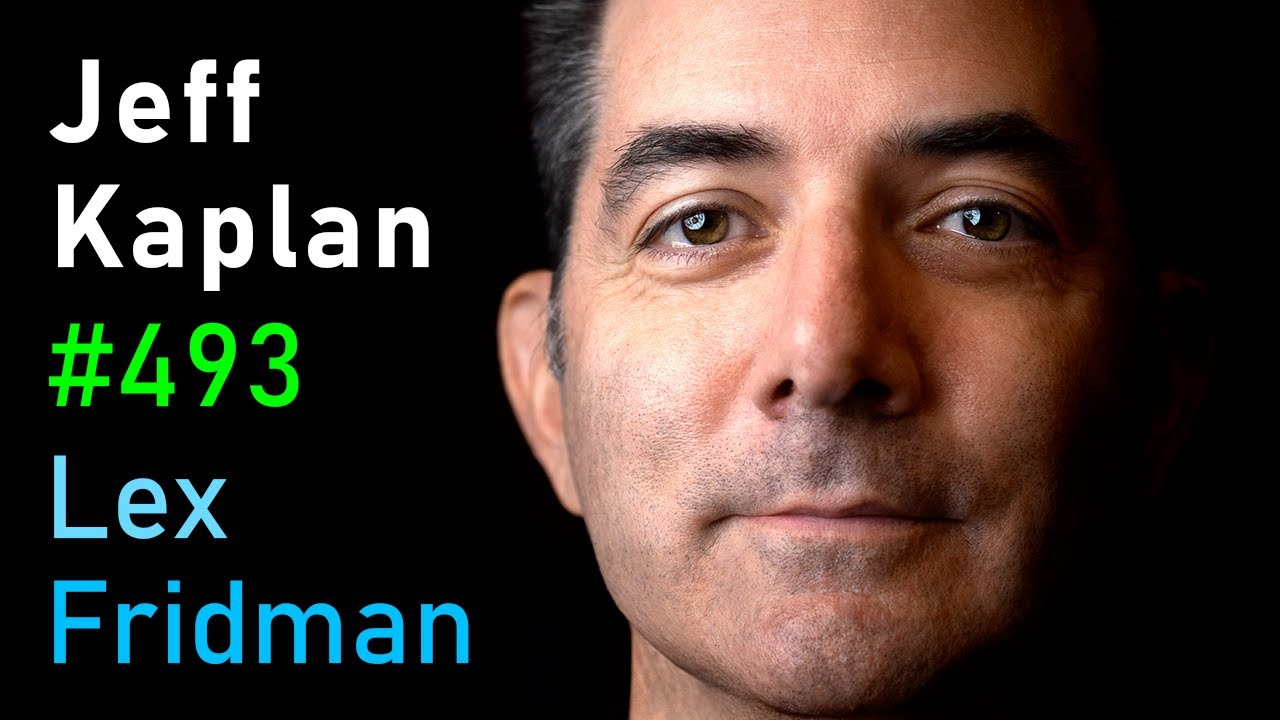
During a sprawling five-hour appearance on the Lex Fridman podcast, Kaplan traversed his career history, from his foundational work on World of Warcraft to the meteoric rise and subsequent complications of Overwatch. While he spoke fondly of Blizzard’s creative culture, he pinpointed the exact moment the project’s trajectory shifted toward disaster.
Kaplan identified the Overwatch League (OWL)—the ambitious, now-defunct esports venture launched in 2017—as the “major derailment.” According to Kaplan, the executive pressure became suffocating because leadership had fundamentally misrepresented the league’s potential to stakeholders.
“There was an excess of excitement regarding the Overwatch League—to a fault,” Kaplan explained. “It was over-marketed to potential team owners. They were essentially selling the Brooklyn Bridge, claiming the Overwatch League would eventually eclipse the NFL in popularity.”
After high-profile investors committed roughly $20 million per slot, they began demanding specific game features that the development staff was ill-equipped to prioritize. Balancing a live-service game while simultaneously building tools for Twitch integration, broadcast-specific camera controls, and team-specific cosmetics placed an immense strain on the developers.
“At that point, your roadmap evaporates,” Kaplan noted. “You aren’t crafting new seasonal events or focusing on the development of Overwatch 2; you’re simply treading water to keep the league afloat.”
Kaplan characterized the Overwatch League as a “house of cards,” describing it as a concept driven by the wrong impulses. “The focus was entirely on rapid monetization,” he said.
The reality check arrived when owners realized the league would not, in fact, outperform traditional professional sports. The original vision of localized, in-person global matches proved logistically impossible for teams spanning from London to Shanghai. As the dream of NFL-level revenue faded, corporate pressure pivoted back to the game itself.
“Management looked at the $500 million the live game generated and started asking what else we could sell,” Kaplan recalled. “The demand to ship Overwatch 2 intensified, and the resources we previously dedicated to the heart of the game—new heroes, maps, and events—were siphoned away.”
While Kaplan felt a sense of autonomy in 2016, the Overwatch League eventually became an “albatross” around the team’s neck. Yet, it wasn’t the league’s failure alone that forced his hand. The breaking point occurred during a chilling confrontation with an Activision Blizzard executive.
“What finally shattered my career at Blizzard was a meeting in the CFO’s office,” Kaplan revealed. “He sat me down and stated that Overwatch needed to hit specific revenue targets in 2020 and every year thereafter. He told me that if those numbers weren’t met, he would lay off a thousand people, and that blood would be on my hands. It was a surreal, ‘f*** you’ moment. I realized then that I was done.”
Though the specific financial figures were redacted in the podcast due to non-disclosure agreements, the ultimatum was clear. Kaplan, who had never envisioned working anywhere else, resigned in April 2021. Notably, the CFO at the time, Dennis Durkin, departed the company just one month later.
Today, Kaplan is forging a new path with his studio, Kintsugiyama. Their debut title, The Legend of California, marks a significant departure from his previous work. Described as a multiplayer action-survival FPS set during the California gold rush, the game is being published by Dreamhaven, the firm established by former Blizzard co-founder Mike Morhaime.
Source: Polygon
Related articles
 The Blood of Dawnwalker Patch 1.1 to Remove Regional Censorship and Add New Features
 Euro Truck Simulator 2 and American Truck Simulator Launch Halloween Event Return to Brackenreach With New Rewards
 Battlefield 6 Is Temporarily Free, and a New UFO Easter Egg Has Drawn Criticism From Many Players
 Differences Between Coppola’s Apocalypse Now and George Lucas’s Original Vision for the Film
 Studio Behind Crime Action Game Samson Reportedly Goes Bankrupt, Leaving Employees Unpaid
 Modder Restores Cut Mass Effect 3 Multiplayer in Mass Effect Legendary Edition
 Sci-Fi Series on Netflix With Consistently Strong Runs From Start to Finish
 Video Memory Leaks Fixed in Bloodborne on PC, Improving Performance