
Fallout Season 2 Ends the Longtime Fan Debate: The Games Need Vehicles

As the Fallout Season 2 finale looms, fans are bracing for resolutions to the mysteries that have lingered since the debut season. Yet, the most striking takeaway from the penultimate episodes wasn’t a lore revelation, but rather the revival of a long-dormant wish: the introduction of pilotable vehicles in the gaming franchise’s future.
In the seventh episode of the current season, Hank MacLean (Kyle MacLachlan) and Lucy (Ella Purnell) trek toward the Vault-Tec mainframe in New Vegas to undo Hank’s cognitive conditioning. Rather than making the journey on foot, Hank opts for a golf cart. Having been raised in the Pre-War era, he operates the vehicle with instinctive grace. In contrast, Lucy—a product of the post-apocalypse—struggles to distinguish the gas from the brake, nearly colliding with a wall. It is a charming sequence that subtly underscores the cultural chasm between the two generations.

This moment serves as a poignant reminder that within the games, functional cars are little more than set dressing or volatile obstacles that detonate in radioactive bursts during a firefight. Authentic driving mechanics have been largely absent from the series, with rare exceptions like the Highwayman in Fallout 2—essentially a fast-travel tool—and the tactical vehicles featured in Fallout Tactics: Brotherhood of Steel.
Both Bethesda and Obsidian have historically addressed this omission. During the development of Fallout 3, New Vegas, and Fallout 4, engine limitations made vehicle implementation a technical nightmare. Furthermore, the lore provides a convenient deterrent: fossil fuels have long since vanished, and the nuclear-powered alternatives used by the NCR and Brotherhood are essentially “bombs on wheels.” A single well-placed shot from a raider could turn a commute into a mushroom cloud.
The prevailing argument against mechanized travel is that it would compromise the franchise’s focus on granular exploration. Purists often contend that zipping across the map would erode the immersion of a world where derelict cars symbolize a lost, unattainable Golden Age.
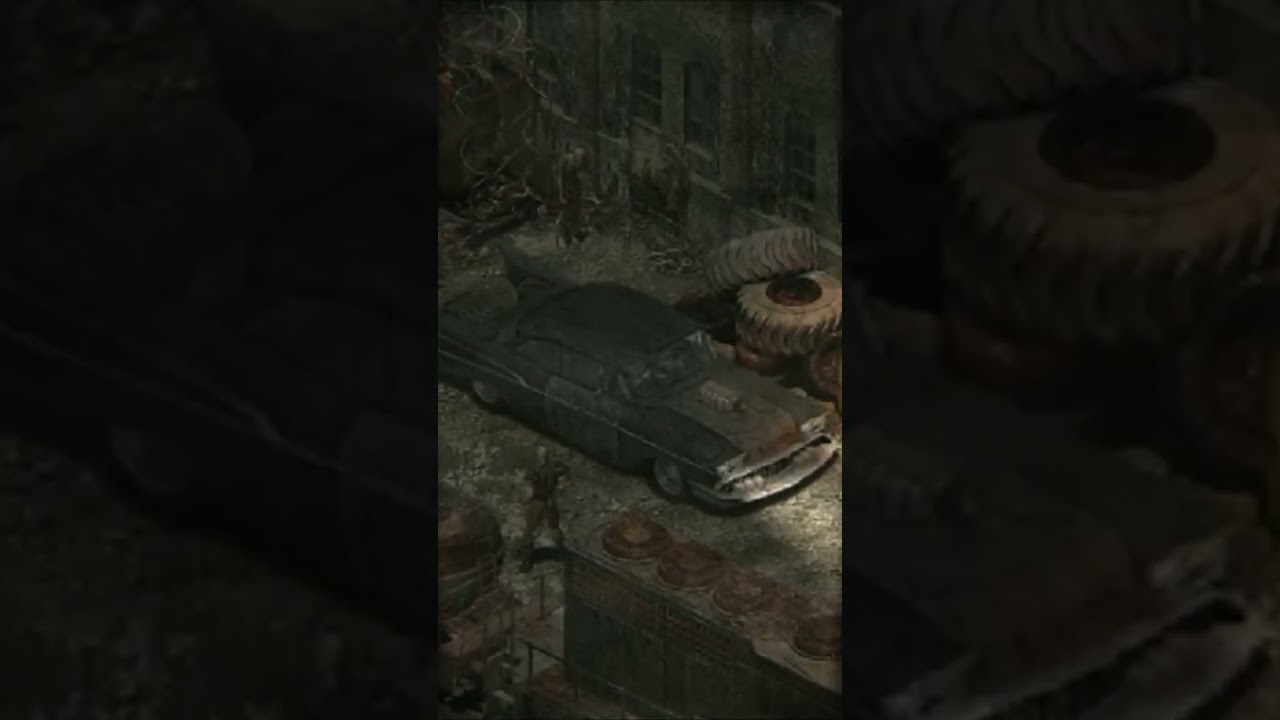
However, the notion that vehicles would break the “Fallout feel” is debatable. Functional transport is already woven into the world’s fabric, from NCR cargo trucks to the monorails of the Mojave and Nuka-World. Even Fallout 4‘s Far Harbor DLC utilized a boat to ferry players to new territories. The technology exists in-universe; the players have simply been denied the steering wheel.
Introducing drivable vehicles doesn’t have to mean handing the player a supercar. A compelling gameplay loop could involve salvaging a chassis, scouring the wasteland for rare parts, and maintaining a fragile engine. Much like the Highwayman of old, a car should be a hard-won luxury, not a starting perk.
From a role-playing standpoint, the show’s depiction of Lucy’s driving struggles offers a blueprint for game mechanics. Imagine a system where a player’s Intelligence or Agility stats dictate their proficiency behind the wheel. A low-skill character might stall out or damage the vehicle, turning transportation into a strategic trade-off rather than a “get out of jail free” card.
With the television series pushing the timeline further than ever before, the advent of cold fusion could revolutionize the wasteland’s infrastructure. Bethesda’s Todd Howard has confirmed that Fallout 5 will integrate the show’s canon. If infinite clean energy becomes a reality, the return of the automobile feels like an inevitable evolution for the next chapter of the saga.
The first seven episodes of Fallout Season 2 are currently streaming on Prime Video. The season finale premieres Tuesday, Feb. 3.
Source: Polygon
Related articles
 Boxed Games Become a Problem for Collectors as Issues Reach PS5
 Gears of War: E-Day Reportedly Planned as Start of a New Trilogy, Rumors Say
 Shenmue III Enhanced Edition Delayed to Improve Graphics and Add New Features
 Ridley Scott Finds Screenwriter for New Film That May Continue the Prometheus and Alien: Covenant Story
 Zendaya to Be Promoted for Best Lead Actress Oscar for Third Dune Film
 Crimson Desert Charting the Unknown Expansion Will Add Sea Monsters and Ship Boarding, Details Revealed
 Ticket Presales Suggest Dune: Part Three Will Lose Heavily to Avengers: Doomsday at the Box Office
 DC Horror Film Clayface Earns Unusually High CinemaScore