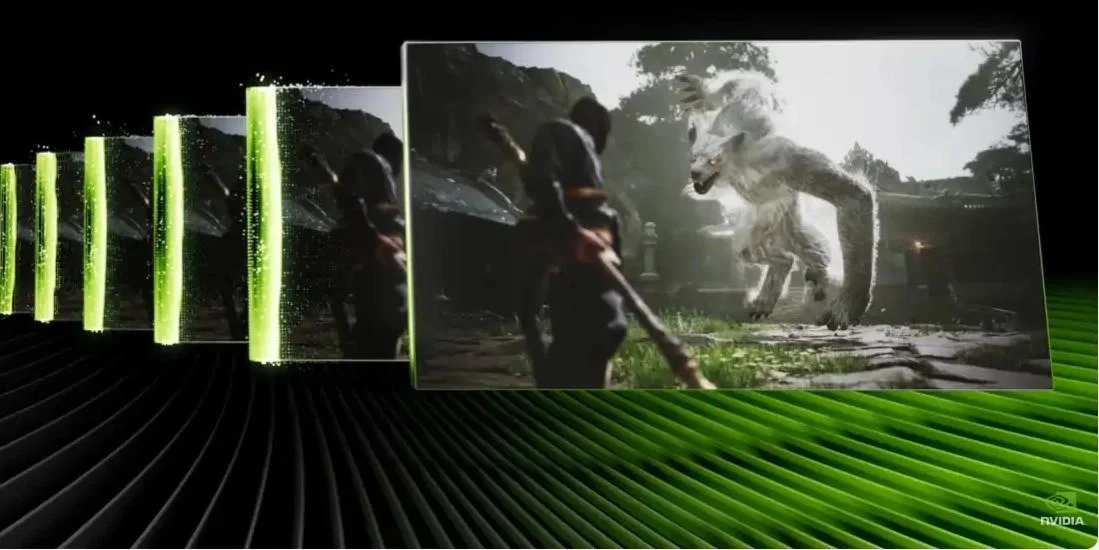
DLSS 4.5 is available to all RTX owners, but not everyone will want to use it: First tests have appeared
While the latest iteration of DLSS significantly enhances visual fidelity, users of legacy RTX graphics cards may face a substantial performance penalty for the upgrade.
At CES 2026, NVIDIA unveiled DLSS 4.5, which utilizes a second-generation transformer-based architecture. This update is compatible with all GeForce RTX GPUs from the 20-series onward and has already been integrated into the latest driver releases. However, preliminary benchmarks indicate that the gains in image clarity come at the cost of a noticeable frame rate drop, particularly on older hardware generations.
The discrepancy lies in hardware architecture: RTX 40 and 50-series cards support the FP8 compute format, which optimizes workloads and accelerates processing. Conversely, RTX 20 and 30-series GPUs must rely on alternative methods that require nearly twice the video memory and up to five times as many computational operations to achieve the same results.
According to NVIDIA’s technical documentation, DLSS 4.5 consumes 40–53% more VRAM on RTX 40 and 50-series cards compared to DLSS 4.0. On RTX 20 and 30-series hardware, this overhead can surge by as much as 103%. Cards equipped with only 8GB of VRAM, such as the RTX 3070, quickly hit memory bottlenecks, leading to further performance degradation. In contrast, the performance impact on newer FP8-capable cards typically stays within a negligible 2–3%.


Independent testing confirms these trends. For instance, running Cyberpunk 2077 at 4K with ray tracing and DLSS 4.5 set to “Quality” mode on an RTX 3080 Ti results in a 24% performance loss compared to DLSS 4.0. At 1440p, the deficit is roughly 14%, while disabling ray tracing altogether still sees a drop of up to 20%.

Despite the performance trade-off, the update delivers a significant leap in image quality, offering finer details and a reduction in artifacts across various titles. Ultimately, owners of RTX 20 and 30-series GPUs should enable DLSS 4.5 only when they have enough performance headroom to justify trading roughly 15–20% of their frame rate for superior visual clarity.
Source: iXBT.games
Related articles
 Three Major Xbox Games Cannot Be Converted to Digital Versions
 Analysts Predict Strong Sales for New The Witcher 3 DLC
 Christopher Judge Explains Why He Did Not Return as Kratos in God of War Series
 Journalists Preview First 30 Minutes of New Resident Evil Game
 Sony Threatens Players With Legal Action Amid Disc Protests
 Gamers Find Way to Beat Modern Warfare 4 Developer Records
 ‘Someone Needs A Lesson’ Quest Walkthrough in The Blood of Dawnwalker
 An Explanation of the Court System in The Blood of Dawnwalker