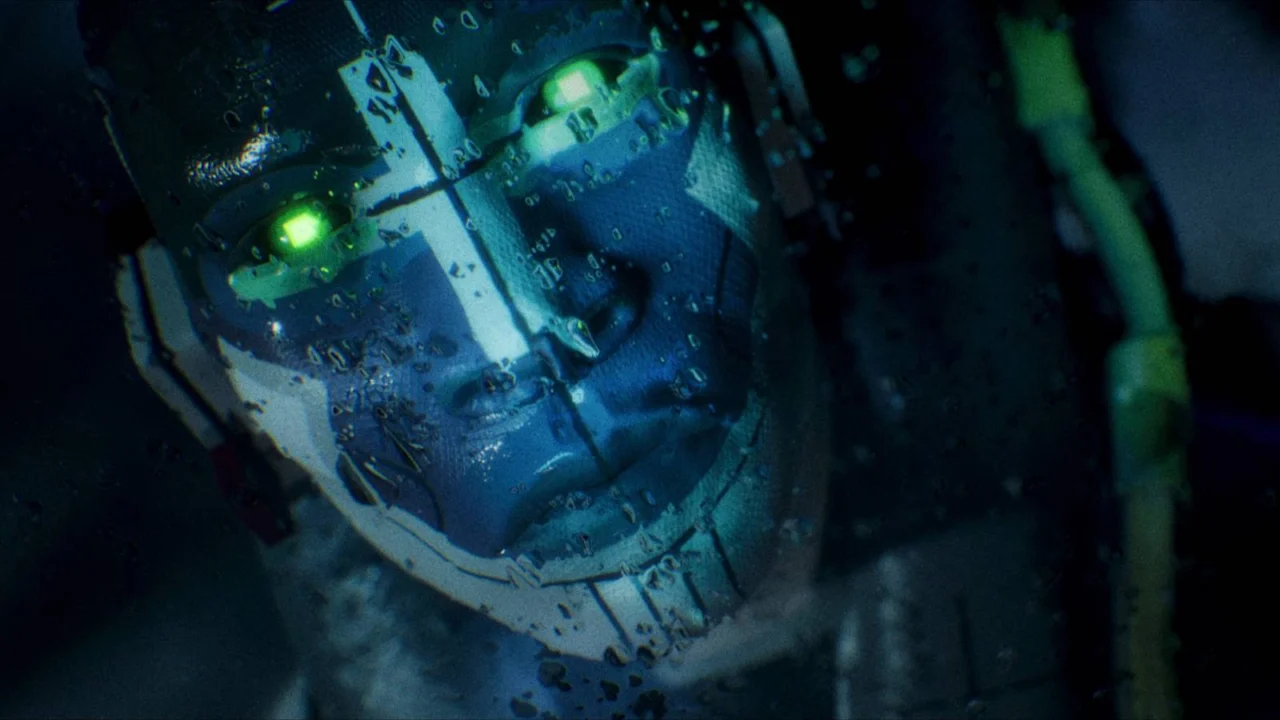
Bungie Reveals the Horrifying Meaning Behind Marathon’s Moth Loading Screen
Venturing into the Marathon server slam on February 27 alongside two long-time Destiny companions, the immediate sensation was one of profound disorientation. Bungie’s extraction shooter utilizes a chaotic, information-heavy UI set against a cyberpunk aesthetic that feels like a glitch-laden fever dream. Amidst the visual noise, one particular image stands out: a haunting, lo-fi video loop of a moth gnawing on electrical wiring, which serves as the backdrop for every deployment.
“Is that a nod to the original computer bug—the one involving a moth in a relay?” asked one of my teammates, a software engineer by trade. The anecdote is more than just industry folklore; it is a documented milestone in computing history. On September 9, 1947, a team of researchers at Harvard discovered a moth trapped within the relay contacts of the massive Mark II computer. While Thomas Edison had previously appropriated the word “bug” to describe technical flaws, this specific event—and its frequent retelling by pioneer Grace Hopper—solidified the concepts of “bugs” and “debugging” in the programmer’s lexicon.

In a narrative defined by fractured software and disembodied consciousnesses being uploaded into synthetic shells, the imagery of a moth interfering with hardware felt like a deliberate meta-commentary. However, the truth behind the design is more thematic than historical.
“I’d love to claim we were that clever, as the parallel is fascinating,” Marathon creative director Julia Nardin shared via email. “Within our narrative framework, moths represent the cycle of expiration, metamorphosis, and rebirth—concepts central to the Marathon experience. More specifically, the ‘shells’ players inhabit are fabricated by WEAVEworms, which represent the pinnacle of biological 3D printing in this universe.”
Nardin elaborated that the loading sequence functions as a “sense-memory” or “sense-mem.” These are artificial, manufactured dreams intended to anchor a Runner’s psyche during the jarring transition into a new body. “They are intentionally abstract, designed to evoke visceral emotional responses rather than provide literal context,” she noted.

The concept of the WEAVEworm is grounded in real-world biology, drawing inspiration from silkworms that produce liquid protein to weave massive cocoons. In nature, this process leads to metamorphosis, though human domestication for silk production has resulted in moths that are physically incapable of flight. Nardin views the “sense-mem” as something both beautiful and tragic.
“Viewing the moth as a sense-mem is almost an aspirational promise—a suggestion that you might eventually transcend your current existence,” Nardin said. “In reality, humans often exploit silkworms, boiling them to harvest their threads. It’s unlikely the corporations within Marathon treat their WEAVEworms or their Runners with any more dignity.”
Is the moth in the loading screen consuming the wire, or is it a symbol of something being born? Nardin leaves that to the audience: “What resonates most with you?” While the sequence was originally part of a longer cinematic created by Antibody, Bungie adapted it to define the standard user experience. Though the imagery became a source of community memes during the server slam, Nardin confirmed that the cryptic symbolism will evolve alongside the game’s live-service narrative.
“We plan to expand this area as the world grows and the community develops its own identity,” she explained. “A live-service game is a collaborative journey, and we want our creative choices to reflect that evolution. In the meantime, we’re certainly enjoying the moth memes.”
Source: Polygon
Related articles
 Valve Employees Doubtened Steam Success Prior to Launch, Says CS Creator
 Activists Demand Physical PS5 Games Be Preserved While Amazon Destroys Unsold Discs
 Blizzard Employees Taking Leave in November Due to GTA VI Release
 Bulkhead Head Says Wardogs Will Cost More at Release
 Rumor: PlayStation 6 to be Twice as Powerful as PlayStation 5 but Weaker Than Project Helix
 Double Fine Head Calls Video Game Executives Greedy and Says He Does Not Understand Industry Operations
 Games Based on Non-Gaming Franchises Generated Over $900 Million in Revenue in 2026
 Details Emerge for Rayman Legends Retold Remake Including Fully Voiced Cutscenes and Dragon Riding