I made a rookie mistake before my journey in Borderlands 4 even began: instead of researching which Vault Hunter would suit my playstyle, I picked one by instinct. I chose Harlowe, the combat scientist, drawn to her gadgetry and utility. That gut call eventually let me sculpt a devastating build from her skill tree — but it came with a price: I had to spend dozens of hours listening to one of the most ham-fisted comedic performances in the series.
That contradiction — exhilarating mechanics paired with abrasive tonal choices — is emblematic of Gearbox’s gargantuan new entry. Everything beloved about Borderlands — sharp shooting, inventive loot, rich audio — is dialed up to the extreme. If those core elements are what you play for, you’ll find them at their most polished. If, however, the franchise’s penchant for groan-worthy quips has long irritated you, this title multiplies that annoyance across an open world.
Isn’t excess basically the franchise’s personality by now?
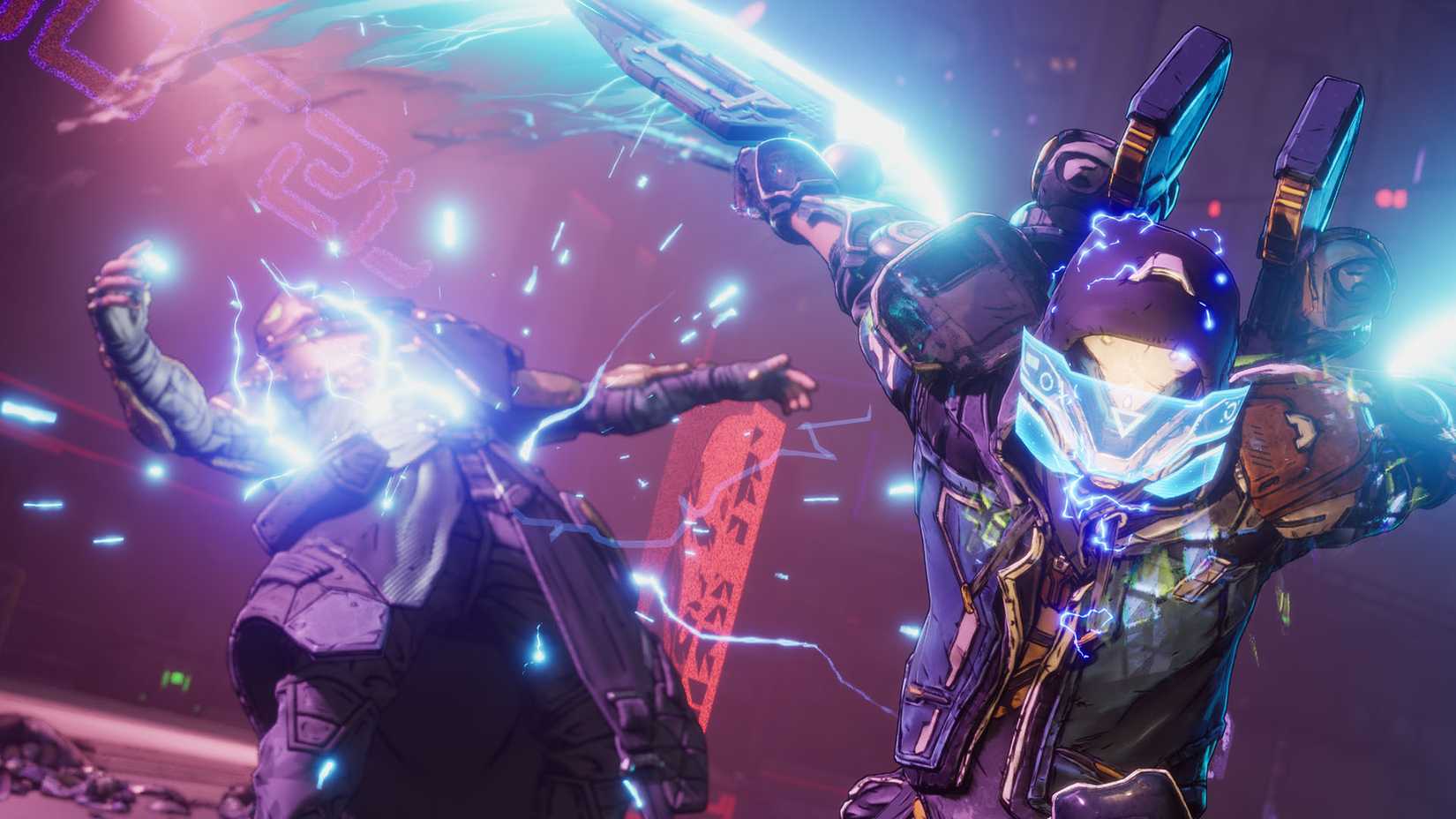 Image: 2K Games/Gearbox Software
Set on the newly introduced planet Kairos, Borderlands 4 follows a fresh roster of Vault Hunters locked in conflict with a tyrant known as the Timekeeper. He rules from Dominion City while various lieutenants control three distinct biomes, and the game’s arc revolves around rallying resistance and reclaiming territory one region at a time.
The narrative ambit is cinematic and continent-sized, but it rarely lands with much weight. Rather than exploring the politics of rebellion in any meaningful way, the story reads like a superhero blockbuster populated by interchangeable antagonists who exist mainly to be beaten up. Gearbox frames this as a more “grounded” sequel compared to the meme-heavy chaos of its predecessor, but the change mostly means longer-winded quest givers — not deeper storytelling. The result is a vaguely topical backdrop that you can either hang real-world frustrations on or simply tune out as sci‑fi spectacle.
The humor hasn’t vanished; the pop-culture barrage is pared back, yet punchlines remain frequent and often miss. In trying to curb the franchise’s self-parody, the writing team seems to have mistaken one symptom for the disease: the issue isn’t memes, it’s lazy jokes.
The comedy now has to fill the gaps of an open world — and it carries that load poorly.
Harlowe, for example, peppers missions with shrug-worthy catchphrases that grow tiresome after a few hours. There are strong moments where design and humor intersect — a clever Pokémon-style side quest that sends you capturing sentient guns, or a duo of enemies that riff on classic pairings — but most spoken lines simply don’t land.
That problem is magnified by the game’s scale. The open world needs a lot of background noise to feel alive, so one-liners and vocal barks appear constantly whether you’re looting a camp or cruising on your mount. Side missions can bloat into 45-minute affairs that shuttle you between half a dozen objectives, and limited fast-travel points mean you’re often driving hundreds of meters for relatively thin returns. Combine that with a deliberate leveling curve and you’ll find yourself grinding long stretches to make any measurable progress — a structure that undermines Borderlands’ traditional strength of quick, satisfying sessions.
Played solo, much of the game’s pace feels misaligned with what made the series shine. But the design choices make more sense in co-op: the world is dense with repeatable encounters and small activities that friends can casually leap into, and the loot economy rewards group play with rare drops and challenging bosses. In that context, the game’s MMO-like scaffolding — bounty boards, public world events, and weekly resets — actually becomes an advantage rather than a hindrance.
 Image: 2K Games
Viewed through the lens of co-op, Borderlands 4’s maximalism becomes more palatable. The RPG systems have expanded to support a sprawling environment: skill trees are deeper, allowing for wildly different builds within a single Vault Hunter archetype. On Harlowe, I invested in overshield capacity and bonuses tied to shield thresholds, then augmented my Flux Generator — a disc‑like entangling ability — with a mod that reduced incoming damage per bound enemy. Kept my shields up and I was effectively unstoppable.
Each Hunter feels versatile. Amon stands out: he starts by hurling dual elemental axes and can be specialized into either a durable frontline bruiser or a high-damage melee crit machine that burns and weakens foes. Watching a friend’s Vex summon an army of clones to carve up crowds while my Flux Generator set up chaos was a highlight of my co-op sessions.
Traversal has improved as well. Vault Hunters gain a hover pack and a grappling hook, which make encounters more kinetic — soaring above a firefight to rain down fire or yanking explosive objects into enemy clusters creates memorable, emergent moments that feel broader than the one-off clutch plays of earlier titles.
 Image: 2K Games
And then there are the guns — the heart of the franchise. Borderlands 4 keeps rewarding the curious player who wants to test oddball weapon synergies: a revolver that empty-fires its cylinder in a blink, a pistol that lobs tagging darts which detonate after a delay, a cryo SMG that functions on cooldown rather than magazine size, or a chain gun that perpetuates its fire on successful crits. That sense of discovery — trying a strange drop and seeing it click — remains the game’s most reliable thrill.
Even when the script grows cloying, the mechanical joys are enough to keep me invested. The series has always been about carving out a role in a brutal sandbox, and Borderlands 4 accentuates that with robust cosmetic and progression rewards scattered through the world. By the time I finally breached Dominion’s gates, the collection of gear and appearance options made progress feel like a personal arc — yes, a touch like a coming-of-age movie, only with more explosives.
That makes the main campaign’s superhero framing feel hollow. Rather than letting you wander and adapt, it often places you in a commander’s role too early; looting starts to feel like stockpiling for an inevitable war rather than piecing together how you survive in the first place.
 Image: 2K Games/Gearbox Software
Some of the most memorable moments, unsurprisingly, come from smaller, stranger side quests. I helped a rocket racially insecure about its lift-off, and in another detour I accidentally became a self-help figure to a troubled NPC. Those intimate, oddball vignettes — about anxious, well-meaning weirdos — are where the game’s heart actually beats.
That heart is sometimes overwhelmed by blockbuster scale, but the underlying freedom to build yourself — mechanically and cosmetically — still makes Kairos a gratifying place to carve out a life. Or at least create a lot of glorious chaos.
Release details: Borderlands 4 is scheduled for release on September 12, 2025 for PlayStation 5, Windows PC, and Xbox Series X. The review was conducted on Windows PC using a prerelease download code provided by 2K Games. For more information about this publication’s ethics policy, please see the publisher’s official statement.
Source: Polygon