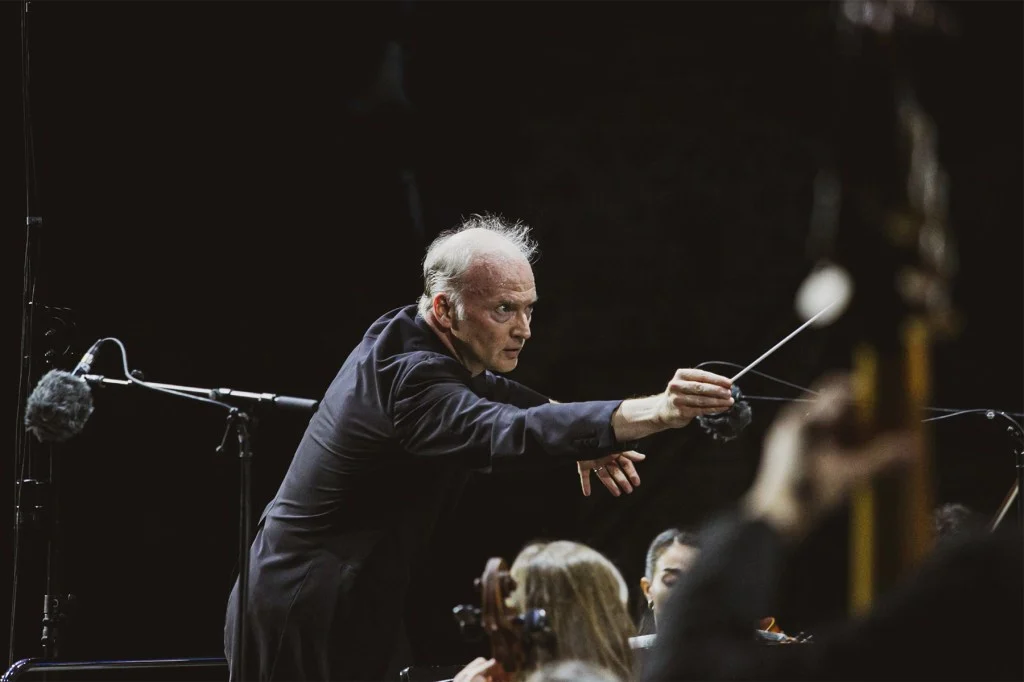
After Kennedy Center Shakeup, Renowned Conductor Presses On and Launches Peace Project Abroad
After Kennedy Center Turmoil, a Leading Conductor Stays — and Advances a Cross‑Border Peace Orchestra
The National Symphony’s music director finds cause for hope and solidarity at a Georgian festival where young musicians from rival countries perform together.
By ,

When the Kennedy Center underwent a sudden leadership upheaval — a decision that prompted high‑profile resignations and a wave of subscriber cancellations — the National Symphony Orchestra endured a period of uncertainty. Yet Gianandrea Noseda, the NSO’s music director and an internationally acclaimed conductor, chose to remain. In March he extended his tenure through 2031, the orchestra’s centennial, saying he still has work to do with the ensemble and that steady leadership matters in unsettled times.
“I respect those who take strong public stands,” Noseda says, invoking the spirit of Leonard Bernstein, who famously blended artistry and activism. “But right now my duty is to the musicians and to the music.” That conviction has earned him praise for preserving continuity during a fractious chapter.
Noseda also directs an orchestra with an explicitly diplomatic aim: the Pan‑Caucasian Youth Orchestra (PCYO). Composed of roughly 80 players from Georgia, Armenia and Azerbaijan — and joined by young musicians from neighboring states including Ukraine, Turkey, Kazakhstan, Turkmenistan and Moldova — the PCYO assembles each September in Tsinandali, Georgia. More than a training ensemble, the PCYO functions as a cultural bridge: young artists from historically adversarial countries rehearsing and performing side by side.

The Tsinandali festival draws illustrious soloists and chamber groups; this season featured pianists Sir András Schiff and Nikolai Lugansky, cellist Misha Maisky and the Jerusalem Quartet. Many guest artists travel to Tsinandali to support the festival’s humanitarian mission and to hear the PCYO, which under Noseda’s direction has evolved into a finely calibrated ensemble despite its limited national pool and the disruption of two pandemic years.
Repertoire at the festival ranged from Shostakovich and Mahler symphonies to concertos by Tchaikovsky and Dvořák. When Kent Nagano, originally scheduled to lead Brahms’s Third, withdrew for health reasons, Noseda stepped in on short notice — and, he says, was gratified when the orchestra’s performance surpassed expectations and received a standing ovation in the festival’s 1,200‑seat amphitheater.
Musicians in the PCYO are typically between 18 and 28. In a rehearsal room this season, violinists and cellists from Kazakhstan, Ukraine, Turkey and Moldova spoke warmly of Noseda’s hands‑on approach and his ability to remember and nurture individual players. About 30 percent of this year’s roster were newcomers, yet the ensemble’s cohesion remained striking.
The players credit more than one person for the PCYO’s rapid maturation. Coaching comes largely from first‑desk players at major orchestras, and Italian conductor Claudio Vandelli travels the region to audition prospects. Vandelli, who scouts talent for other prestigious festivals as well, typically evaluates hundreds of applicants for the PCYO and occasionally invites exceptional candidates from beyond the core countries to fill specific needs.
Asked whether political tensions seep into rehearsals or backstage interactions, the students were unanimous: not at Tsinandali. Several members carry direct memories of conflict — the Ukrainian violinist Grigori Ambartsumian described the trauma of the invasion and its effects on daily life and sleep — but they said the festival provides a rare space to make music without political labels.
“Sometimes we don’t speak about everything,” said cellist Lale Efendiev of Turkey, “because people are fragile. But we all understand the purpose of being here: to play, learn and stand together.”

The festival takes place on the Tsinandali estate, a verdant 12‑acre property whose tranquil gardens and historic buildings offer an oasis amid a region with a long history of geopolitical friction. Georgia itself has avoided large‑scale hostilities since 2008, yet political unease remains, especially after recent elections that drew criticism from international observers and a wave of protests in Tbilisi earlier this month.
Political conversations did surface at the festival — most notably when András Schiff, who has declined to perform in Russia since the Ukraine invasion, made an oblique remark about language choices during a recital. But these incidents were rare and did not overshadow the larger spirit of cooperation that organizers and participants emphasized.
George Ramishvili, founder of Silk Road Group and the driving force behind Tsinandali, spoke optimistically about the festival’s future. His investments — including the amphitheater, a chamber hall and accommodation with practice facilities — have created infrastructure to sustain the PCYO. Ramishvili is already planning a new indoor concert hall and continues to expand cultural offerings in Georgia.
Noseda, for his part, is bullish about the project’s longevity: “We are already planning the next three years,” he says. He also shared a small but telling sign that the festival’s mission is working: two musicians from traditionally opposed countries, one Russian and one Ukrainian, developed a personal relationship during the season. “That’s exactly what this work is about,” Noseda said. “Human connection through music.”
Related articles
 Travis Kelce reacts to Taylor Swift showing wedding ring in touchdown celebration
 Hilary Duff Announces 32 More Dates for Lucky Me Tour
 Red Hot Chili Peppers, Dave Grohl, and Vince Staples are set for the 2026 Silverlake Conservatory of Music 25th Anniversary Benefit Concert
 Coldplay’s Chris Martin Salutes John Farnham With Original Song
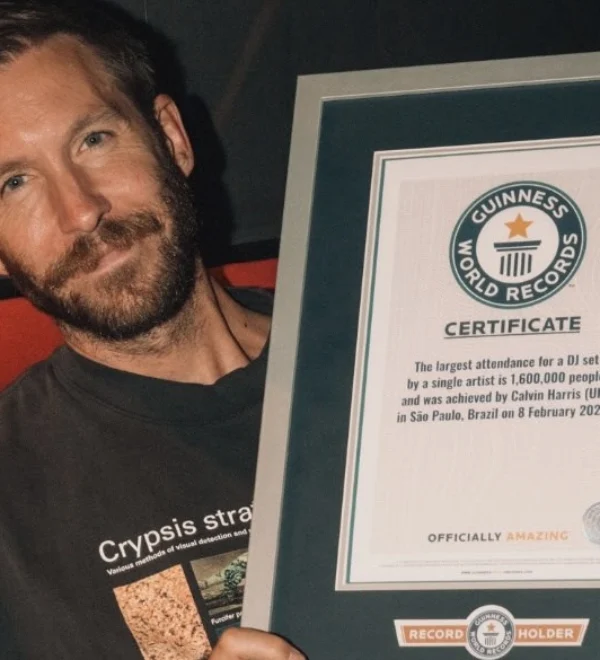 Calvin Harris Enters Guinness World Records
 Zayn Malik shares photos from daughter Khai’s 6th birthday
 Niall Horan Honors Liam Payne by Playing Late One Direction Bandmate’s Voice Onstage for End of an Era
 Ella Langley Earns Billboard Hot 100 Entry With ‘Choosin’ Texas’