
After 40 Years in Development Hell, Stephen King’s “Unfilmable” Thriller Hits #1 on HBO Max

At this stage in his prolific career, one might assume every Stephen King narrative has been mined for cinema—ignoring the half-dozen new ones he’s likely penned since you started reading this sentence. While casual viewers might immediately recall blockbuster adaptations like It or The Shining, King’s influence is just as profound in acclaimed dramas like The Shawshank Redemption and Stand By Me.
Yet, throughout King’s bibliography, only a select few stories earned the reputation of being “unfilmable.” For decades, The Long Walk sat firmly in that category, alongside visceral tales like the macabre “Survivor Type” and the incendiary early novel Rage. Unlike his other works, however, The Long Walk felt genuinely cursed. Over nearly 40 years, the rights cycled through a roster of visionary directors—including George Romero, Frank Darabont, James Vanderbilt, and André Øvredal—none of whom managed to bring the project to fruition.
Given that history of development hell, it is remarkable that a film was ever produced, and even more surprising that the final product is genuinely compelling. Directed by Francis Lawrence, The Long Walk arrived last year and has since surged to the top of the charts on HBO Max, securing the #1 spot just 24 hours after its streaming debut.
The story unfolds in an alternate United States gripped by a military dictatorship in the aftermath of a civil war. In a horrific display of televised state control, 50 teenage boys—each representing a different state—volunteer for the annual “Long Walk.” They are forced to trek across a desolate Midwest; those who stumble or fail to maintain the pace are executed on the spot. The last youth standing receives a fortune and the fulfillment of their greatest desire.
King penned The Long Walk around 1966 as a university freshman, though it wasn’t published until 1985 under his pseudonym, Richard Bachman. It eventually found a home in the collection The Bachman Books. The oddity of the Bachman era lies in its uncanny foresight; much like The Running Man, which satirized reality television long before it became a cultural staple, these works often felt like grim prophecies.
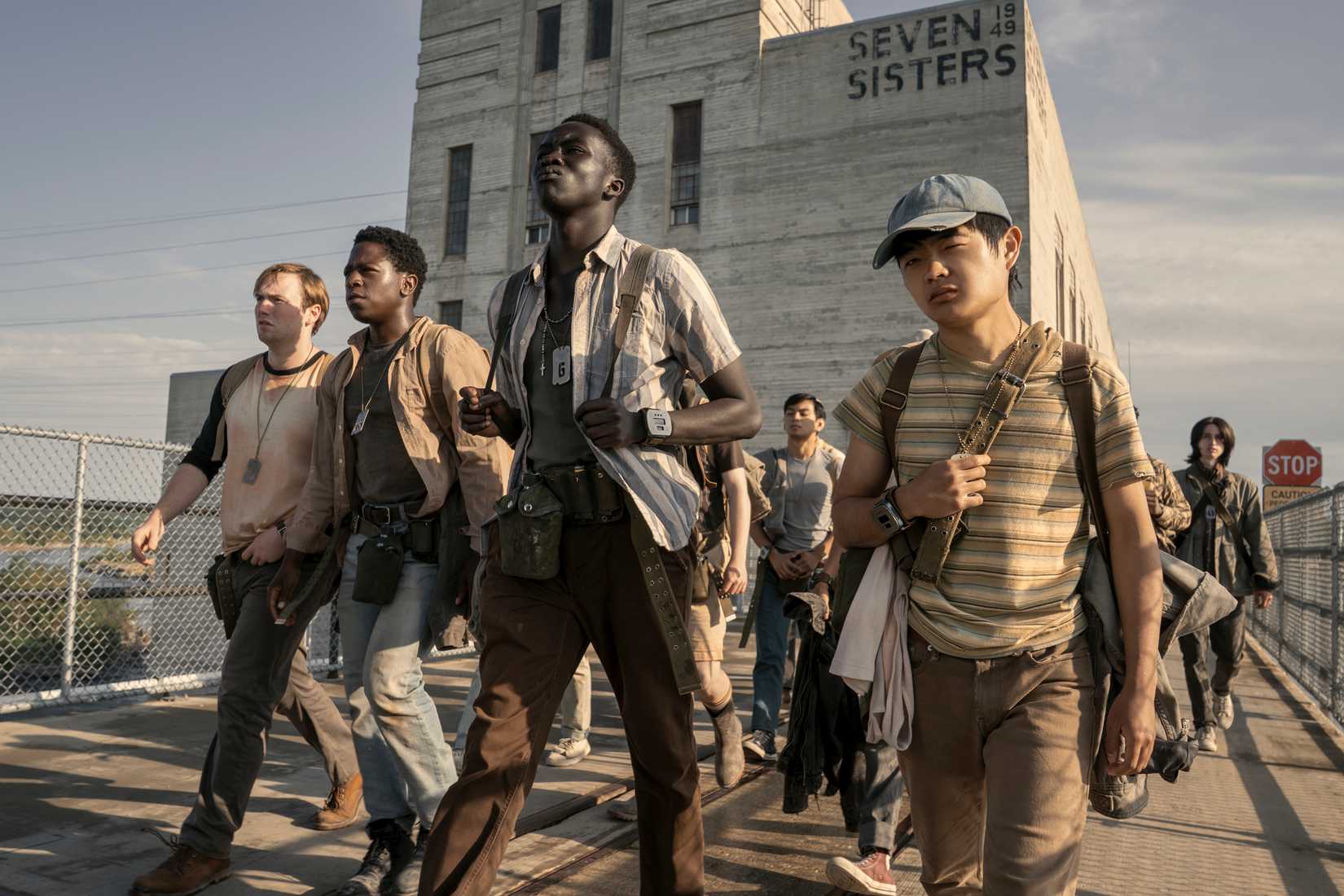
Photo: Murray Close/Lionsgate
The film acts as a grim precursor to the “young-adult dystopia” genre. Modern audiences will undoubtedly draw parallels to Battle Royale or The Hunger Games, both of which echo the same harrowing concept: youths coerced into lethal environments they neither control nor comprehend.
While King has never explicitly defined the story’s metaphorical intent, critics have long interpreted The Long Walk as an allegory for the Vietnam War—a fitting reading for one of the Baby Boomer generation’s most iconic authors. The story portrays a system where young lives are sacrificed by the older generation for obscure objectives. Its themes remain chillingly relevant, easily mapping onto contemporary issues ranging from the climate crisis to modern political instability. It functions as a powerful, haunting mirror of the societal traps we still face today.
Lawrence’s direction keeps the film’s momentum relentless. The narrative balances intimate character moments between Garraty (Cooper Hoffman) and McVries (David Jonsson) with the abrupt, senseless deaths of their companions. By refusing to let the story stagnate into mere dialogue, the film creates a tense, inescapable experience that keeps the viewer locked in.
Much like the adaptation of The Mist, Lawrence takes liberties with the source material. Without spoiling the outcome, the film’s conclusion diverges from the novel. While some of these creative departures may spark debate, they offer a fresh perspective on King’s original vision. Even if you are a devoted fan of the book, this 2025 adaptation demands a viewing.
The Long Walk is currently streaming on HBO Max.
Source: Polygon
Related articles
 Spider-Man: Brand New Day is $1.5 Million Away From Another Historic Record After Seven Weeks
 New Gundam Anime Directed by Ghost in the Shell: Stand Alone Complex Director to Release in April 2027
 Hit Roguelike Absolum Ported to Android and iOS
 Christopher Nolan’s The Odyssey Becomes Universal’s Highest-Grossing Film in History
 James McAvoy Shares Advice for the New Professor X in the X-Men Reboot
 Ranma 1/2 Season 3 Receives New Trailer Featuring Opening and Ending Themes
 Xbox Head Asha Sharma Spends Hours Each Month Answering Player Inquiries
 Annihilation Battles Mode Returning to Ace Combat 8: Wings of Theve