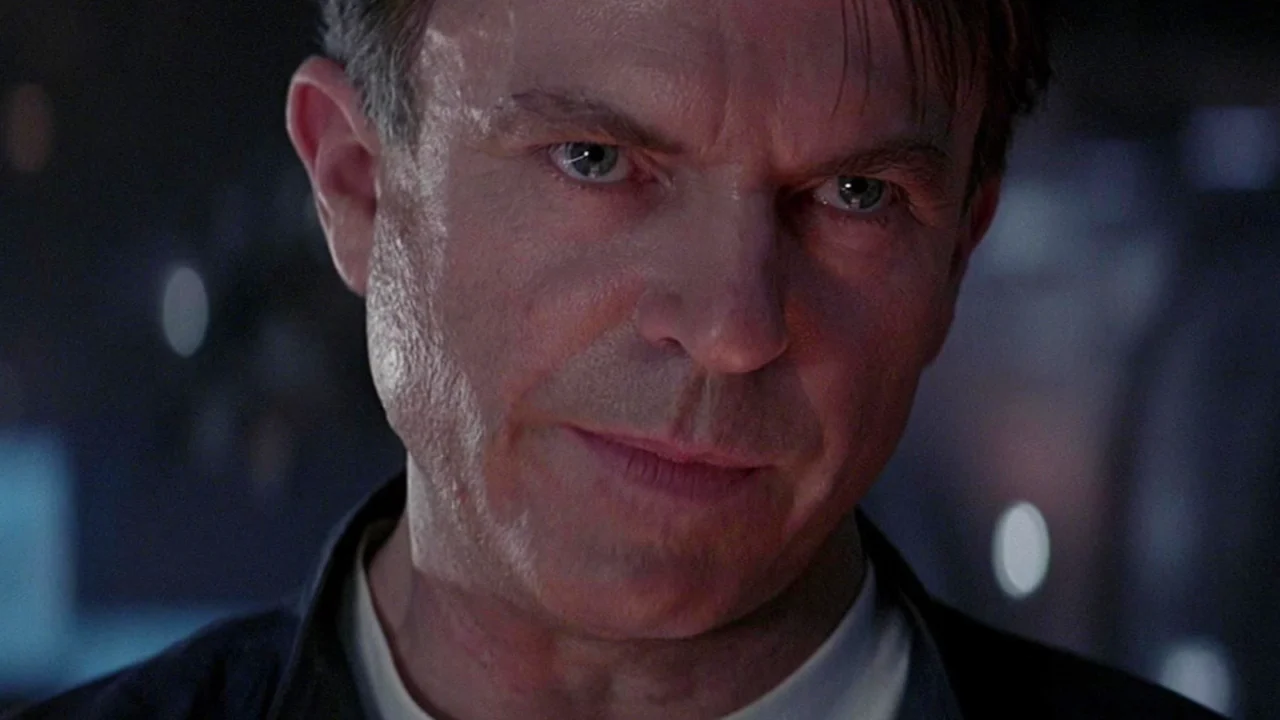
29 Years Later, Sam Neill’s Masterpiece Remains the Greatest Cosmic Thriller Ever Filmed
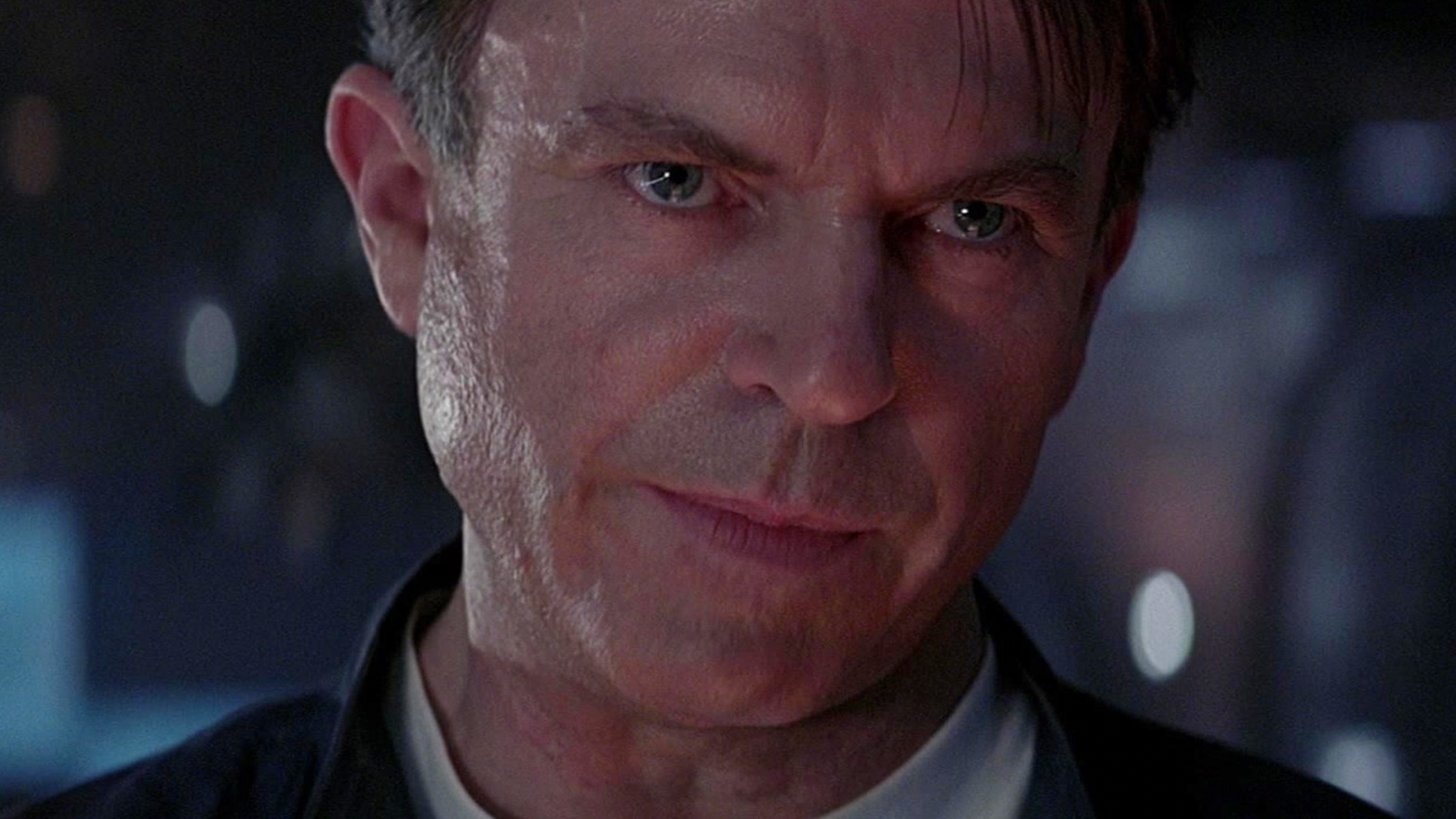
Cosmic horror is currently experiencing a massive cultural renaissance. Over the past decade, visionary filmmakers have reinvented the genre, from the disorienting, recursive loops of The Endless and the haunting, surreal decay in Annihilation, to the oppressive, claustrophobic dread of The Void. The existential malaise underpinning Coherence remains criminally overlooked, while digital-age phenomena like Backrooms have effectively tapped into a primal fear: that the vast, empty reaches of space—or even an abandoned room—can be far more terrifying than any creature lurking in the shadows.
I’ve devoured these films, yet following the passing of Sam Neill, I found myself returning to the one movie that captures the true essence of cosmic terror better than any other.
Rooted in the Lovecraftian tradition, cosmic horror thrives on the confrontation between humanity and forces so vast and incomprehensible that survival feels trivial. It is the chilling realization that we are insignificant specs in a universe indifferent to our existence. While many films have flirted with these nihilistic concepts, few have embraced them as fully as the 1997 cult classic Event Horizon.
Directed by Paul W.S. Anderson, Event Horizon was initially dismissed as a messy, over-the-top commercial failure. Critics at the time fixated on its visceral gore and melodrama, missing the film’s deeper, darker pulse. However, over the decades, it has rightfully claimed its throne as a definitive pillar of sci-fi horror. While Sam Neill’s legacy is anchored in iconic roles ranging from Jurassic Park to Peaky Blinders, to genre aficionados, he remains the definitive Dr. William Weir—a brilliant, grief-stricken engineer whose hubris invites an unspeakable darkness into reality.
The film sets a deceptive stage: a standard rescue mission involving the crew of the Lewis and Clark, led by the stoic Captain Miller (Laurence Fishburne). They are tasked with locating an experimental vessel that vanished seven years prior. Accompanied by Neill’s Dr. Weir, the rescue party soon discovers that the ship’s gravity drive didn’t just fold space; it tore a hole into a dimension of pure, sentient chaos. The ship returned, but it didn’t come back alone.
Despite its flaws, Event Horizon succeeds because it understands that true horror is found in the unseen. It avoids reliance on generic monsters, focusing instead on the inevitable descent into madness that occurs when humans encounter knowledge that breaks the mind. Dr. Weir’s arc is particularly haunting; he isn’t merely a “mad scientist,” but a man who has looked into the abyss and realized that salvation is an illusion. When he famously claims, “Where we’re going, we won’t need eyes to see,” he isn’t making a threat—he is sharing a terrifying, cosmic truth.
As Neill noted in his final interview with The Guardian, the film’s power was initially hampered by truncated pacing and the loss of its most subtle, eerie sequences. “It’s what you don’t see that’s scary,” he reflected, lamenting the missing moments that elevated the atmosphere beyond mere jump scares. Anderson’s ambition was to capture that ancient, unknowable dread, turning a science fiction premise into a nightmare where the universe itself acts as a predator.
Nearly three decades later, Event Horizon endures. Its DNA is woven into modern staples like Dead Space and Pandorum, and it remains a touchstone for filmmakers exploring the fragility of human reality. It is a rare piece of cinema that has only improved with age, proving that while some secrets are meant to remain buried, their legacy can be impossible to contain.
Source: Polygon
Related articles
 Sony and Amazon Developing Four More Spider-Man Universe Series Following Spider-Noir Cancellation
 The Red Cathedral Arrives on PC, Android and iOS on November 11
 Jump Space Adds Anniversary Update Ahead of September 17–21 Free Weekend
 The Second Reality Room: Unspoken Truths Enters Steam Early Access on October 9
 Deified Sets September 21 Steam Launch with Relic-Based Tactical Combat
 Batomon Showdown 1.0 Launches on Steam with Asynchronous Monster Battles
 Right Now, You Can Keep This Overlooked Steam Puzzle Fighter for Free
 Reviews of Onimusha: Way of the Sword and Star Wars Zero Company lead weekly highlights