
70 Years Later: The Legendary Manga Ahead of Its Time Poised to Be Netflix’s Next Anime Hit
Shōjo manga, a genre traditionally aimed at young women, began its evolution at the dawn of the 20th century. While the 1950s and ’60s provided the foundational spark for artistic experimentation, the category truly blossomed by the 1980s. Yet, any historical examination of shōjo would be hollow without acknowledging Osamu Tezuka’s seminal work, Princess Knight, which enchanted audiences from its debut in 1953 through 1968.
The legacy of Princess Knight echoes through countless anime staples, including Sailor Moon, The Rose of Versailles, and the avant-garde Revolutionary Girl Utena. On April 23, Netflix confirmed plans to adapt Tezuka’s masterpiece into a new film titled The Ribbon Hero. Directed by Yuki Igarashi (known for Star Wars: Visions), the project is currently in development at his studio, Outline.
Set in a mythic version of medieval Europe, Princess Knight follows the noble Sapphire, who must masquerade as a male prince to secure her right to the throne of Silverland. While the trope of cross-dressing as a catalyst for gender exploration dates back to Shakespearean classics like Twelfth Night, Tezuka’s work was one of the first to weave this narrative into the fabric of shōjo storytelling.
Modern hits like Ouran High School Host Club and Hana-Kimi have continued to challenge rigid gender norms using this framework. Although Tezuka’s original vision was forward-thinking for its time, some of its mid-century thematic elements require a more nuanced, contemporary perspective. Igarashi faces significant pressure to modernize these tropes while honoring the source material. “I poured in my respect for Osamu Tezuka… [and] for Ichizo Kobayashi of the Takarazuka Revue, which lies at the root of the work,” Igarashi noted in an interview with Tudum.
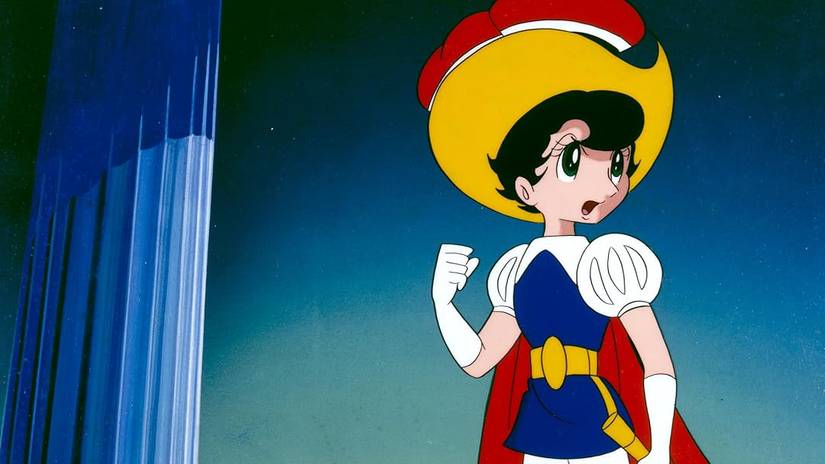
The Takarazuka Revue—an all-female troupe renowned for performing both male and female roles—is the true spirit behind Princess Knight. To capture this distinct theatrical flair, Igarashi is collaborating with visionary designers Kei Mochizuki and Mai Yoneyama, both celebrated for their work on projects like Cyberpunk: Edgerunners.
Sapphire’s struggle is far more than a simple disguise; it is a battle for autonomy in a kingdom that views her identity through a restrictive lens. Born to a father who declared her a boy to protect the royal succession from the villainous Duke Duralumin, Sapphire has spent her life navigating the pressures of perceived masculinity. While the original manga leans on a binary “blue heart/pink heart” conceit that feels dated today, Sapphire’s fluidity remains a pioneering example of queer-coded storytelling.
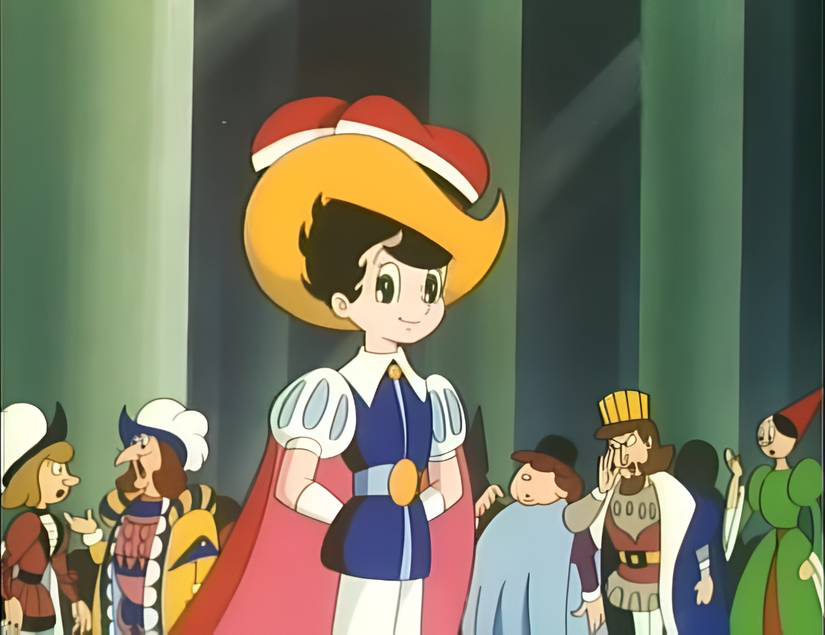
Ultimately, Princess Knight is a story of reclaiming one’s own narrative. It questions the societal boxes that define us, making the material ripe for a modern retelling. Characters like the swashbuckling Friebe serve as excellent templates for this; she is a woman defined by her own terms, providing a refreshing counterbalance to the constraints placed upon Sapphire. If The Ribbon Hero leans into this spirit of empowerment while embracing the campy charm of the 1967 series, it stands to be a truly transformative viewing experience.
The Ribbon Hero is scheduled to premiere on Netflix in August 2026.
Source: Polygon
Related articles
 First Xbox Game Pass Games for November Revealed
 Former Sony Head Says He Ignored Leadership Orders to Benefit PlayStation
 Sony Patents System Allowing Viewers to Control Games During Streams
 EU Investigates Ubisoft and Activision Over Video Game Microtransactions
 Rumor: Switch 2 May Feature Replaceable Batteries Outside Europe
 Trump Administration Criticizes Xbox After Mass Layoffs and Tightens Rules for Foreigners
 Final Fantasy IX: Reclusion Announced as Non-Video Game Project
 Alfred Hitchcock’s Psycho Starts Streaming on Netflix