
29 years later, cult sci-fi classic Event Horizon receives an unexpected sequel

In 2040, the starship Event Horizon vanished near Neptune following the activation of an experimental “Gravity Drive” designed to puncture the fabric of spacetime. Seven years later, the ship unexpectedly reappeared, transmitting a haunting distress call.
Upon boarding, the rescue mission discovered a gruesome scene: the original crew had perished after the drive inadvertently opened a gateway to a hellish dimension. This breach effectively brought the vessel to life, driving its occupants to insanity and mutual destruction. History repeated itself with the rescuers, though a handful of survivors narrowly escaped by jettisoning the ship’s bow, ultimately sacrificing the rear section—and the accursed drive—to the void.
This harrowing narrative defined the 1997 sci-fi horror cult classic Event Horizon. Though it struggled at the box office, the film’s legacy has only grown, leading IDW to recently publish Event Horizon: Dark Descent, a prequel miniseries that chronicled the ship’s doomed maiden voyage.
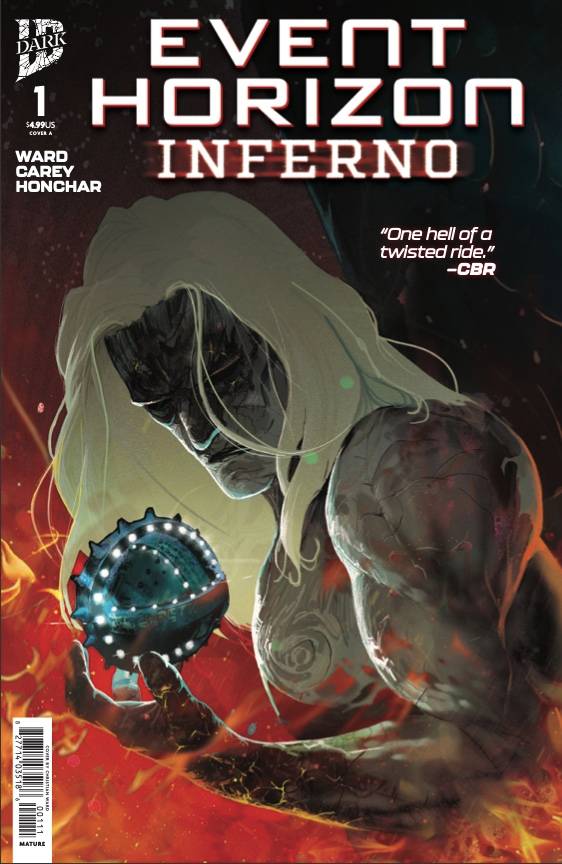
Building on this lore, IDW has now released a direct sequel comic set two centuries after the film’s events. It follows an expedition led by a tech-obsessed CEO, Daniel Durante, as he attempts to salvage the wreckage.
Event Horizon: Inferno, a five-issue limited series penned by Christian Ward—who also authored Dark Descent—delves deeper into the franchise’s enduring terror. We sat down with Ward to discuss why the original film remains a pinnacle of cosmic horror, the narrative necessity of destroying his own prequel, and what readers can anticipate in this terrifying new chapter.
Looking back at the original film, why do you think it maintains such a potent legacy?
It boils down to the immaculate production design. It is a visually arresting, sophisticated film that feels utterly singular. The ship itself functions like a cathedral of nightmare—its juxtaposition of cold, industrial steel and gothic arches creates a space that feels inherently wrong. It captures the essence of cosmic horror perfectly: that terrifying realization that there are truths in the universe fundamentally beyond the reach of human perception.
While the film is occasionally disjointed, those gaps in the narrative actually heighten the mystery. They force the audience to lean into that primal, cosmic fear of the unknown.
How did you approach developing the story for this sequel?
I’ve always felt the original had an “industrial Star Trek” vibe, with its diverse international crew navigating the cosmos. I wanted to lean into that, while reflecting modern space exploration. Today, we see billionaire tech moguls trying to build their own version of the future; I wanted to explore what a corporate, privatized version of that “starfaring” dream looks like.
I also drew inspiration from James Cameron’s Aliens. While Dark Descent focused on slow-burn dread, Inferno shifts toward an action-horror hybrid. We’ve introduced space marines, which begs a fascinating question: how do you combat demonic, metaphysical entities with conventional ballistics? That’s the core of the conflict.
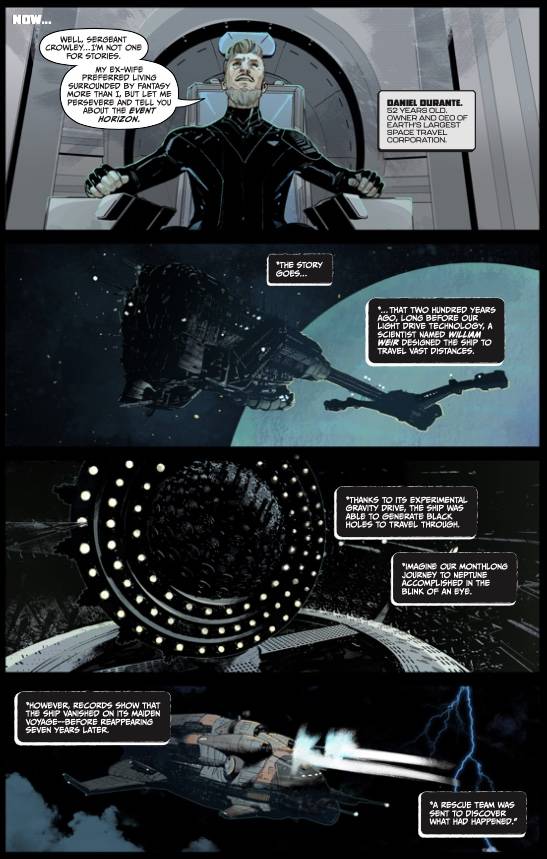
Image: IDW/Paramount
Your prequel featured Paimon as the antagonist, but you’ve pivoted to someone new here. Can you elaborate on that choice?
My primary goal with Dark Descent was to explain *why* the ship became sentient. I insisted on destroying the vessel at the climax—which was a point of contention—because the ship had to die so that Paimon, a demon linked to resurrection, could possess it. That was the origin of its twisted life.
In Inferno, we introduce Samael, a fallen angel. He operates much more subtly, acting as a tempter who whispers into the ears of the vulnerable. His true objectives are shrouded in mystery, and the full extent of his influence won’t be revealed until the final issue.
How involved have the original filmmakers been with these new stories?
They’ve been incredibly supportive and have final approval on all our creative choices. Philip Eisner, who wrote the original screenplay, has been especially enthusiastic. He’s arguably even more excited about Inferno than the prequel, simply because the scope of the madness we’re exploring this time around is so much broader.
Event Horizon: Inferno #1 is currently available, with the second issue set to debut on June 3 at your preferred local comic shop.
Source: Polygon
Related articles
 Nintendo Showcases New Map for The Legend of Zelda: Ocarina of Time
 Hot Toys Reveals Tomorrow Figurine From Death Stranding 2: On the Beach
 Against the Storm City-Building Simulator to Get a Board Game Based on Return of the Blightstorm
 How to Solve the Projector Puzzle in Silent Hill Townfall
 Developers of Potato Peeling Simulator Accused of Copying Another Game Using AI Technologies
 One Of Mouthwashing Publisher Critical Reflex’s Demos Made Me Gag (Plus, Three Other Games I Can’t Wait For)
 Control Resonant Leaked on PC Before Release While PlayStation Players Paid for Early Access
 Where to Find the Arashiyama Bamboo Forest in Forza Horizon 6