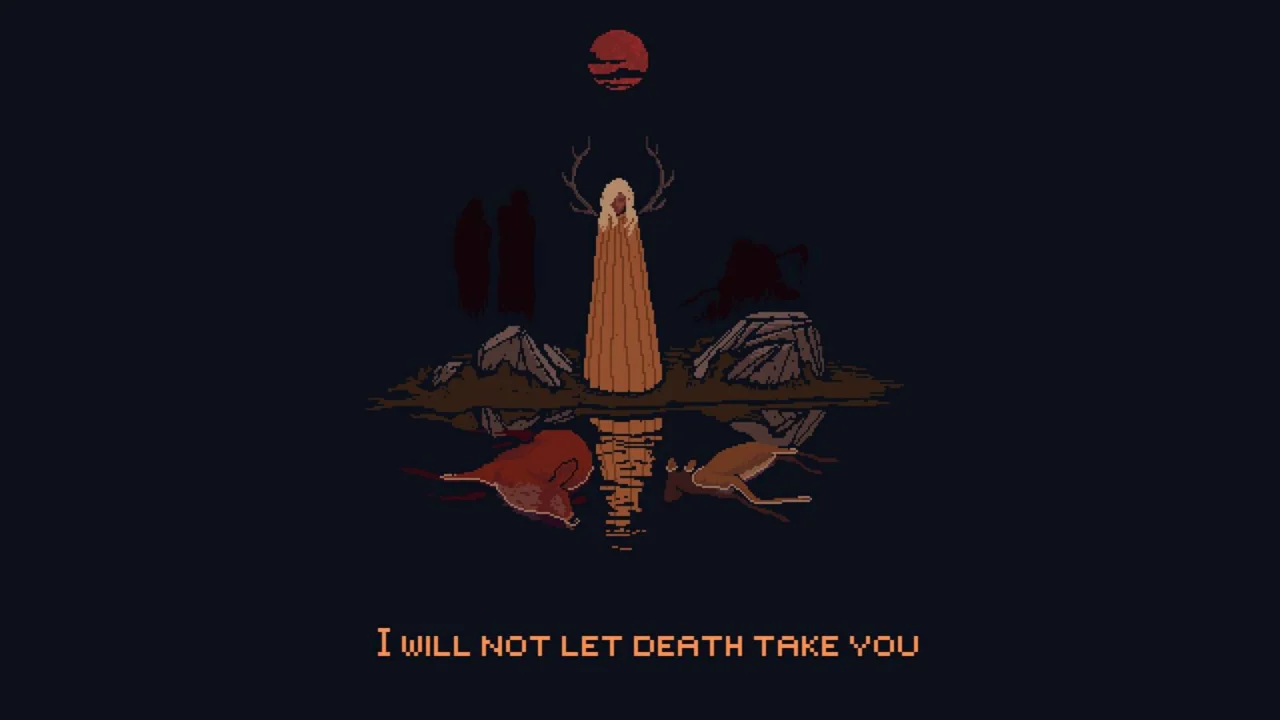
2025’s Most Challenging Title Returns to PS5 and Switch
Grief is not a beast to be tamed or a hurdle to be cleared; it is an insidious shadow that trails your every step, waiting for a moment of weakness to strike. Even when you manage to push it back, the reprieve is fleeting. Like a nightmare reborn at a Dark Souls bonfire, it inevitably returns, fueled by a relentless, spectral energy. In a conflict with no clear resolution, your only recourse is to refine your tactics, ensuring that each subsequent encounter is met with a sharper edge and a steadier hand.
This grim realization is fundamental to enduring Death Howl. Originally debuting on Windows PC in December 2025, this evocative tactics title arrives on Nintendo Switch, PlayStation 5, and Xbox Series X on February 19. The narrative follows Ro, a bereaved mother traversing a haunted wilderness in a desperate bid to reclaim her son from the clutches of death. It is a punishing deck-building odyssey that utilizes the mechanics of the Soulslike genre to translate emotional trauma into demanding turn-based trials. While it uses difficulty as a poignant tool for storytelling, a lack of defensive options in its most brutal skirmishes can occasionally make the experience feel more draining than revelatory.
Drenched in the atmosphere of Scandinavian myth, Death Howl casts players into a vast ethereal realm. Ro’s objective is clear: harvest “Death Howls” from fallen spirits and offer them at Sacred Groves to facilitate a resurrection. This mechanic elegantly integrates a staple of the genre; resting at these groves mends Ro’s wounds but simultaneously breathes life back into the monsters she has slain. It is a clever narrative justification for the traditional “bonfire” loop, proving that Death Howl aims to do more than just mimic the aesthetic of its inspirations.
Guidance comes through cryptic conversations with local spirits, who reveal the existence of four Great Spirits guarding the corners of the world. Their defeat is the only hope for Olvi’s return. This sets the stage for a non-linear journey through stark, minimalist pixel-art environments. The visual style is hauntingly lean, reflecting the hollow ache of loss through its absence of clutter. As Ro wanders, she gathers materials to craft region-specific cards and unlocks fast-travel points. The open-ended structure is vital, allowing players to retreat and seek progress elsewhere whenever they encounter an insurmountable obstacle.
And obstacles are plentiful. The core of the game lies in its grid-based combat, where Ro must outmaneuver a host of enemies using a limited hand of movement and attack cards. With a meager pool of action points and no option to undo a mistake, every move carries immense weight. The influence of Into the Breach is palpable here; every encounter is a lethal puzzle. You might shove a foe backward to set up a long-range strike, only to realize that the ranged card requires you to discard another, perhaps triggering a passive armor bonus. Whether you charge in for a risky finishing blow or retreat to safety is a constant, high-stakes calculation.

Precision in deck-building is mandatory, as Death Howl offers no safety net. Ro’s health is capped at a fragile 20 points, and healing cards are vanishingly rare. Surviving long enough to bank your currency at a Sacred Grove often requires perfection across several consecutive battles. Success doesn’t come from inflated stats, but from discovering potent synergies within your deck. It reinforces the idea that grief is a mental endurance test rather than a physical brawl.
However, there are times when the game’s difficulty feels unnecessarily punitive. Each region features its own card pool; using “off-region” cards incurs an action point penalty, forcing players to constantly rebuild their strategy. This restriction, combined with skill trees that reset their bonuses in new areas, can make the journey feel like a treadmill. Because Death Howls serve as the currency for both skills and card crafting, the game often necessitates repetitive grinding. Die, and you lose it all—a classic Soulslike trope that feels particularly harsh when combined with armor-piercing enemies and unpredictable movement patterns. The boss fights against the Great Spirits are even more grueling, often introducing mid-battle twists that can shatter even the most carefully constructed deck.

This approach to difficulty is a double-edged sword. From a mechanical standpoint, the forced repetition and regional resets can feel like artificial padding. While Death Howl wears its Soulslike label with pride, it occasionally overlooks the nuanced progression systems that make FromSoftware’s titles feel fair. In those games, even when skill fails, players can lean on RPG growth. Here, the deck-building randomness can sometimes make failure feel inevitable rather than earned.
Yet, there is a thematic resonance to this brutality. Ro’s quest is inherently desperate; she is a woman braving a world designed to crush her spirit for a slim chance at a miracle. The player’s exhaustion mirrors her own. There were moments where the sheer weight of the struggle made me want to walk away, but the desire to see Ro find closure kept me engaged. I found myself obsessing over enemy patterns and deck tweaks, pushing through the tedium to find that one winning combination. Death Howl reminds us that grief isn’t something you simply “level up” to beat. It scales with you, demanding everything you have.
Overcoming Death Howl requires patience and a high tolerance for frustration. You may step away from it in anger, or find yourself unable to cross the finish line. But for those who persevere, every hard-won inch of progress feels like a profound triumph over despair.
Source: Polygon
Related articles
 Cult Shooter Black Gets Fan-Made Android Port
 Details Emerge on Canceled Mass Effect Universe, Reportedly With Hitman-Style Missions and a Setting 600 Years After Shepard
 Xbox COO Helen Chiang leaves Microsoft after 21 years
 Aaron Paul Originally Had a Larger Role in Clayface Before His Part Was Reduced to a Cameo
 Pixel Body Horror Game Look Outside Is Coming to Consoles
 Paramount’s Scream 7 Becomes a Streaming Hit on Prime Video
 New Details Emerge About Marvel’s Zodiac Series, Featuring Spies Against People With Superpowers
 Fallout Day 2026: All the Major Announcements from Bethesda’s Fan Event