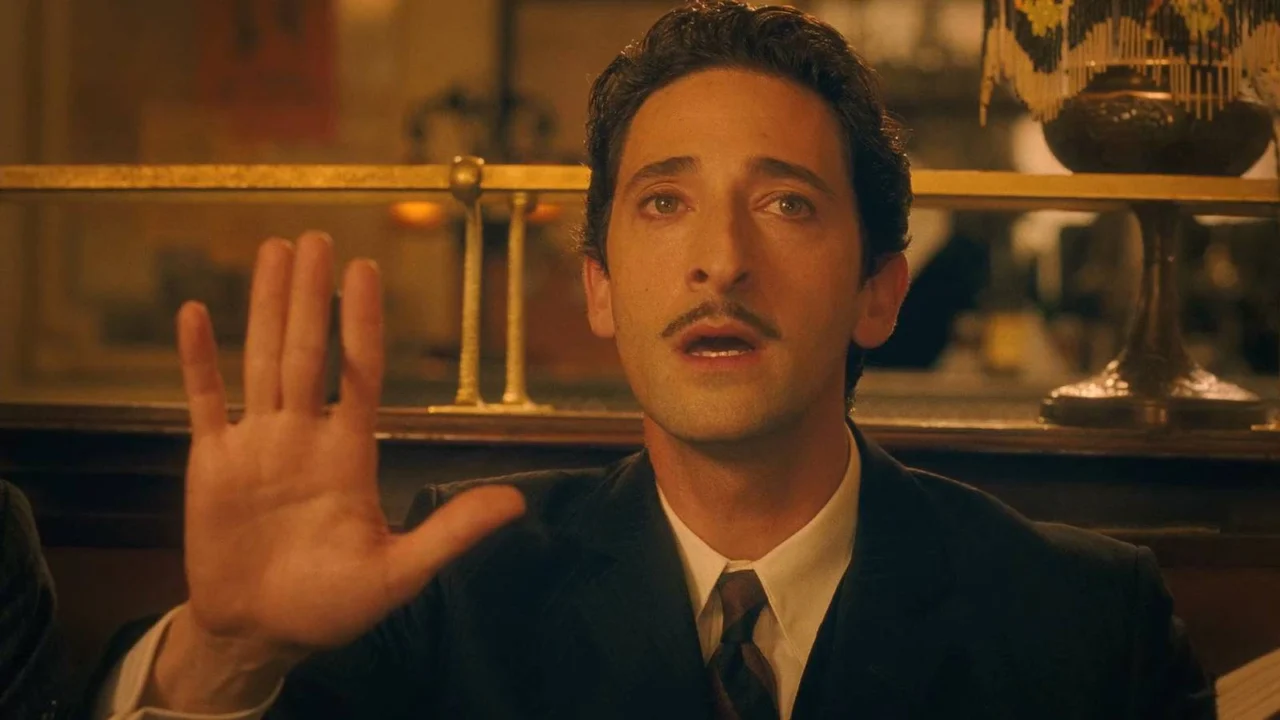
Woody Allen’s perfect time-travel movie exposes a dark truth about the genre

Fifteen years ago, I walked across the graduation stage with a degree in literature and absolutely no map for what came next. The world outside the university bubble felt fragile and uncertain; the economy was struggling, journalism was in flux, and the reassuring millennial narrative—that hard work and intellect guaranteed a bright future—felt increasingly like a fairy tale.
Only months prior, I had devoured The Great Gatsby in a single sitting, and The Sun Also Rises had quickly become a cornerstone of my library. To me, the hazy, alcohol-fueled legends of Fitzgerald, Hemingway, and Gertrude Stein in Paris had transcended history, becoming something closer to a sacred mythology.
So, when I finally watched Midnight in Paris in the summer of 2011, it struck a chord with almost eerie accuracy. At the time, I was entirely oblivious to the complex, contentious history surrounding Woody Allen; I was simply captivated by the film’s approach to time travel as a narrative instrument. Every night, in a quiet, unassuming corner of Paris, Gil Pender (Owen Wilson)—a neurotic, soft-spoken screenwriter longing to be a novelist—is transported to the 1920s. There, he trades barbs with Hemingway, keeps company with the Fitzgeralds, and seeks validation from Gertrude Stein, all while chasing the intoxicating dream of true artistic greatness.
The brilliance of Midnight in Paris lies in its willingness to fully embrace this romantic fantasy, only to dismantle it with quiet, devastating precision.
Even now, fifteen years later, that specific vision of Paris remains impossibly alluring. The film avoids the pitfalls of a travelogue; instead of postcard-perfect vistas, it paints the city through intimate fragments—the flicker of a streetlight in an alleyway, the hum of a hidden café, the bustle of a local shop. The city feels lived-in, experienced through footsteps rather than tourist maps.
This intimacy is crucial because it highlights Gil’s profound detachment from his contemporary life. His fiancée, Inez, and her affluent family view Paris solely as a playground for luxury, constantly bemoaning their experiences and treating art as a mere inconvenience. In many ways, the film’s true villain is that very brand of hollow cynicism. Take the character of Paul, played with grating perfection by Michael Sheen; he is the ultimate “dinner party intellectual.” He relishes in correcting guides and dissecting art until all the life is sucked out of it. He is insufferable, yet vital, as he gives voice to the skeptical side of the human condition—the side that views romanticism as a weakness and nostalgia as a symptom.

Gil romanticizes the Lost Generation as the pinnacle of human expression. However, as he falls for Adriana, a muse who feels equally adrift, the film pivots. When they travel further back to the 1890s, they discover that even the artists of the 1920s longed for a “Golden Age” of their own—the Renaissance. The realization is humbling: every generation is haunted by the suspicion that the real magic happened just before they arrived.
It brings to mind Fitzgerald’s famous closing words: “So we beat on, boats against the current, borne back ceaselessly into the past.” Adriana chooses to remain in the 1890s, a decision Gil watches with dawning disillusionment. Ultimately, the film suggests that nostalgia is a defense mechanism—a way to avoid the inherent difficulties of the present. That insight is as timeless as the city itself; it was true in 2011, holds up in 2026, and will likely remain relevant for decades to come.
Perhaps the film’s most poignant takeaway comes from Gertrude Stein: “We all fear death and question our place in the universe. The artist’s job is not to succumb to despair, but to find an antidote for the emptiness of existence.” It is a profound sentiment: art isn’t born from fleeing our burdens, but from learning to carry them and, in doing so, making the world a little less lonely for someone else.
Midnight in Paris succeeds because it balances sharp intellectual wit with deep emotional vulnerability—a credit to Wilson’s raw performance and a cast that brings literary ghosts to life with surprising humanity. Fifteen years on, I no longer harbor illusions about the 1920s; I know that Hemingway was often tormented and that Fitzgerald was haunted by failure. But if a mysterious, vintage car pulled up to the curb at midnight tonight? I would probably still get in.
Midnight in Paris is currently available to stream on Tubi.
Source: Polygon
Related articles
 DIY Enthusiast Builds Miniature Arcade Machine Controlled by Toothpick
 Tencent Seeks to Develop Baldur’s Gate 3 and Elden Ring Rivals with Focus on Long-Term Studio Support
 Microsoft Reportedly Developing Multiple Next-Generation Xbox Helix Consoles
 Analysts Report EA Sports FC 27 Outearned Resident Evil Requiem and Forza Horizon 6
 Supermassive Games Announces The Conjuring Interactive Horror Game
 Sony Faces New Wave of PS5 Account Hacks as Some Users Lose Access to Libraries
 Former Activision CEO Bobby Kotick Joins Skydance Board
 Reports Indicate Widespread PS5 Hacking Posing Major Issue for Sony