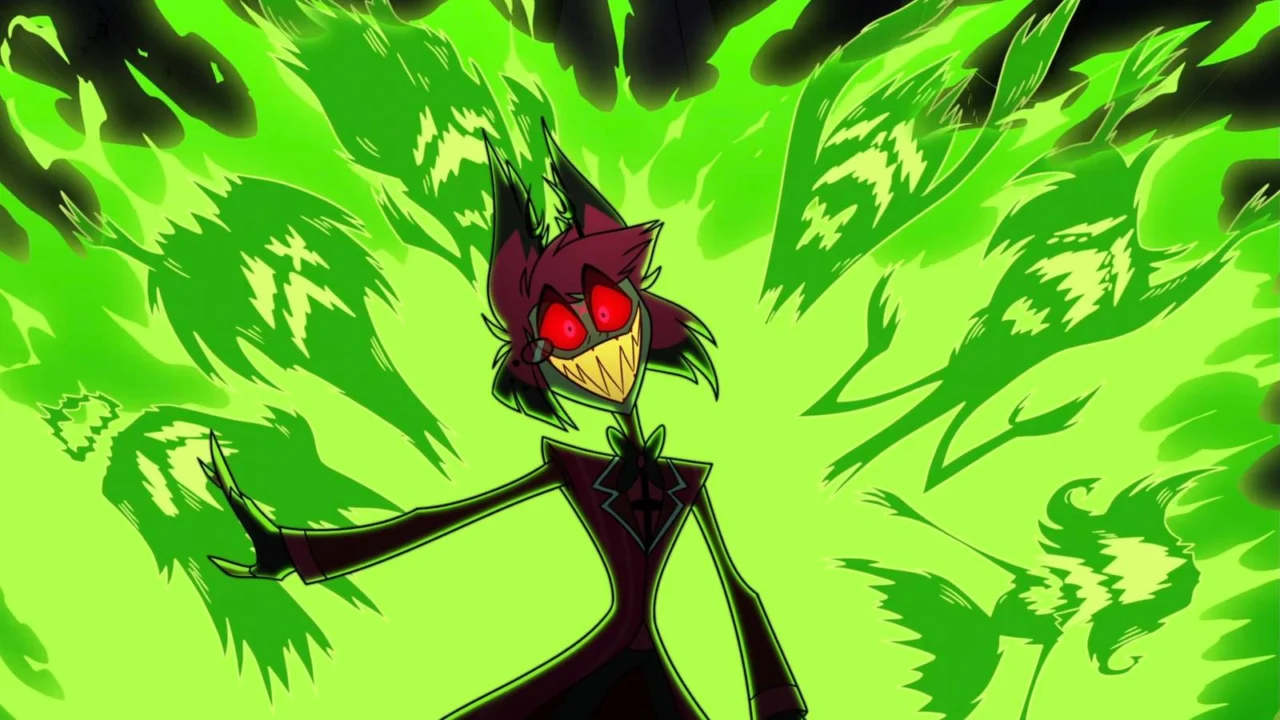
Vivienne Medrano Breaks Down Hazbin Hotel’s Season Finale, Teases Season 3

Across season 2 of Vivienne Medrano’s audacious adult animated musical, Hazbin Hotel, viewers have dissected each new revelation. Charlie Morningstar (Erika Henningsen) — Lucifer Morningstar’s daughter (Jeremy Jordan) — continues her campaign to redeem human souls in Hell, and every episode added fresh context about the lore: who financed Alastor’s power, the origins and consequences of the Speaker of God, the mysteries of the sky spheres, and more. Medrano (Vivziepop) has been deep in conversation with Polygon throughout the season about those unfolding details.
Now that season 2 has concluded, what’s next? A24 and Prime Video have already approved seasons 3 and 4 (Medrano has said she hopes to extend the story to five seasons), though a release timetable hasn’t been announced. Polygon spoke with Medrano about the finale — including Vox and Alastor’s rematch, the unresolved fallout from Lute’s fury over Adam’s death, the strands she was most eager to release to viewers, and what fans can anticipate when season 3 arrives.
This interview has been edited for clarity and brevity. Spoilers for season 3 follow.
 Image: Prime Video
I rewatched Hazbin’s 2019 pilot and noticed how many of season 2’s conflicts are sown there — the media showdown and the larger question of whether sinners are redeemable. Was much of this season already outlined when the pilot debuted?
Vivienne Medrano: Both yes and no. It’s been years since the pilot, and many things evolved, but the backbone of the story has lived in my head for a long time. That allowed me to tuck seeds and tonal cues into the pilot that naturally led into the series instead of rehashing it. In that sense, the season was already gestating — the pilot contains Easter eggs and beats that we were able to expand on later. They age well against the wider arc.
 Image: Prime Video
There’s a big midseason clash between Vox and Alastor and then an even larger showdown in the finale. How did you differentiate those battles in storyboarding so each felt distinct?
I can’t take all the credit — our board artists are extraordinary. The midseason brawl with the Vees was designed to be kinetic and entertaining: a showcase of the groups we’ve built, their fighting styles, and how they bounce off one another. The finale, however, carries much heavier emotional freight. That sequence was more expansive, more destructive, and more personal — it needed multiple artists to stitch it together so the emotional beats landed properly. Tone, scale, and intent differed between the fights, and that dictated very different approaches in boarding and animation.
 Image: Prime Video
Lute’s rage and her refusal to accept Heaven’s restraint is a throughline that didn’t resolve by the finale. Will her arc peak in season 3 or 4?
I can’t pinpoint a definitive season, but it’s likely within those two. Lute is slowly unraveling — her grief and fury over Adam’s death were planted early so future episodes can build toward a meaningful payoff. She’s the most black-and-white character in terms of worldview, so watching her reaction to shifting events and relationships throughout the series is crucial to her eventual catharsis. That payoff needs careful buildup, which is why it will come later rather than immediately.
 Image: Prime Video
What are you most glad viewers have seen? Which discoveries from season 2 have you enjoyed fans unpacking?
Vox surprised me the most in terms of how gratifying it was to write and see performed. I’ve always loved complex antagonists, and this season let us explore his range and contradictions — he shifts in ways that make him compelling and unpredictable. I’m also relieved and thrilled with how the animation and tone elevated the material. Season 3 contains some of our biggest narrative reveals, but season 2 finally gave viewers the backstories for characters like Sir Pentious and Alastor in ways that felt satisfying to share.
 Image: Prime Video
Can you hint at season 3?
Season 3 is my favorite segment of the overall saga — it’s emotionally intense and leans heavily into romance and dramatic tension, which I love as a storyteller. One of the characters we’ve established as sympathetic or ambiguous will shift into a decidedly darker role; I won’t name names, but viewers will see that arc unfold and understand the motivations behind the turn. We’ll also spend more time with the Morningstar family, bringing the narrative inward after two seasons of larger, external conflicts. Expect twists, heartbreak, and revelations.
Hazbin Hotel season 2 is now streaming on Prime Video.
Source: Polygon
Related articles
 Actors cast as Dobby and Tom Riddle for Harry Potter season two
 International “Doker” Film Festival Kicks Off in Moscow
 Milla Jovovich to Appear in the New Season of “Hot Rivalry”
 The first excerpt from Zach Cregger’s “Companion” has been released
 “Obsession” Star to Play Waitress in Apple Sci-Fi Series
 Paul Thomas Anderson is working on a new project
 Gal Gadot’s “Heart of Stone” receives scathing reviews
 Netflix and Alfonso Cuarón Developing Dungeons & Dragons Horror Series