The Visionary Director Who Tried to Create His Own Version of Beetlejuice 25 Years Ago

Anyone familiar with the gothic whimsy of The Nightmare Before Christmas or the eerie precision of Coraline recognizes Henry Selick as a visionary. Within the meticulous realm of stop-motion animation, his artistry is unparalleled. However, a quarter-century ago, Selick pivoted toward a live-action hybrid—a chaotic blend of puppetry, CGI, and stop-motion—that resulted in an experience so grating I’d sooner endure Oogie Boogie’s torture chamber than sit through it a second time.
The film, Monkeybone, centers on Stu Miley (Brendan Fraser), a sensitive cartoonist on the cusp of mainstream success as his mischievous creation, Monkeybone, prepares for an animated debut. Stu is overwhelmed by the soulless machinery of merchandising and the pressure of a looming proposal to his girlfriend, Julie (Bridget Fonda). His life takes a tragic, surreal turn when a freak car accident plunges him into a deep coma.

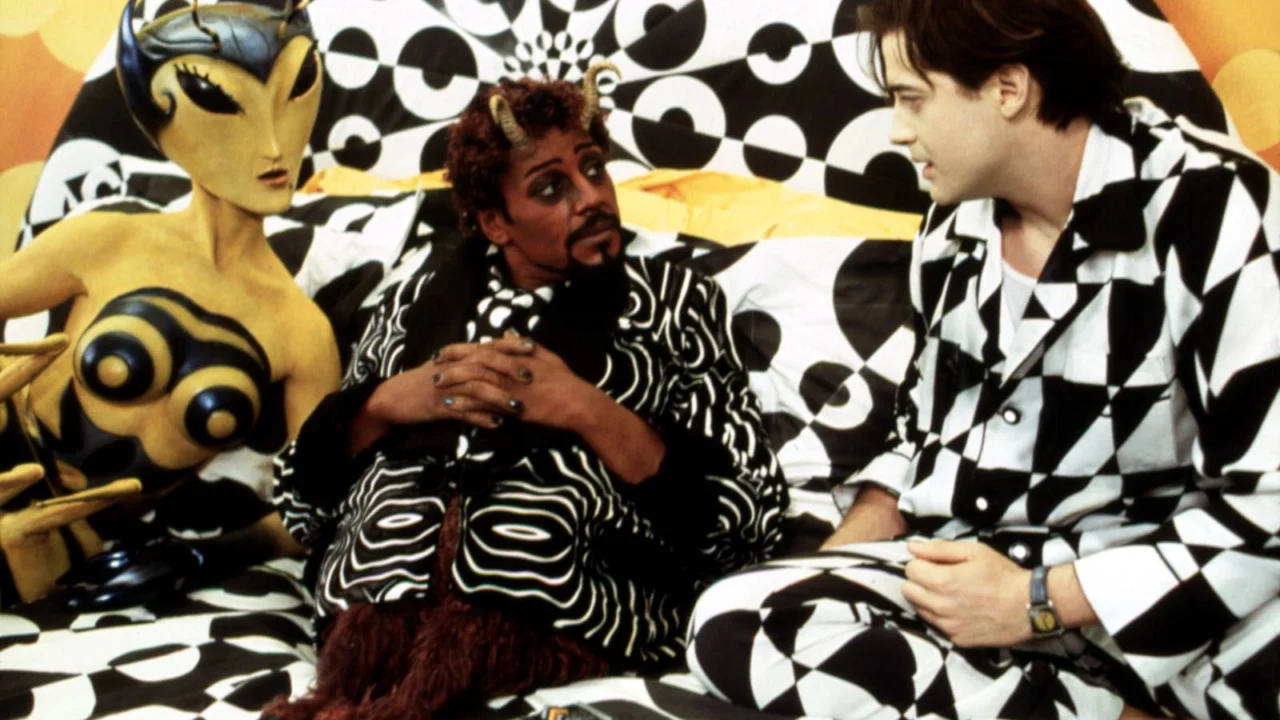
While his body lingers in a hospital bed, Stu’s consciousness drifts into “Down Town,” a purgatorial carnival populated by mythological entities and the spirits of those in limbo. Here, he encounters Monkeybone (voiced by John Turturro) in the flesh—or rather, the fur. The cartoon monkey is a hyperactive, salacious pest who quickly exhausts his creator’s patience. Desperate to return to reality, Stu discovers he can reclaim his life via a special exit pass. But in a betrayal of animated proportions, Monkeybone hijacks the pass, leaping into Stu’s physical body and leaving the artist stranded in the afterlife.
What follows is a frantic body-swap comedy where Monkeybone-as-Stu wreaks havoc in the real world, indulging in every base impulse and corporate sell-out Stu previously loathed. To reclaim his existence, Stu strikes a deal with Death (Whoopi Goldberg), who harbors a soft spot for his comic strips. She facilitates his temporary return by transplanting his soul into the reanimated corpse of a gymnast (Chris Kattan).

Before dissecting the film’s failures, it is worth noting its aesthetic triumphs. Down Town is a marvel of production design—a vibrant, palm-shaped floating island suspended in an infinite void. Its trippy, tactile world-building mirrors the dark imagination found in Selick’s superior works. The stop-motion rendering of Monkeybone himself is technically flawless, capturing a level of detail that remains impressive today.
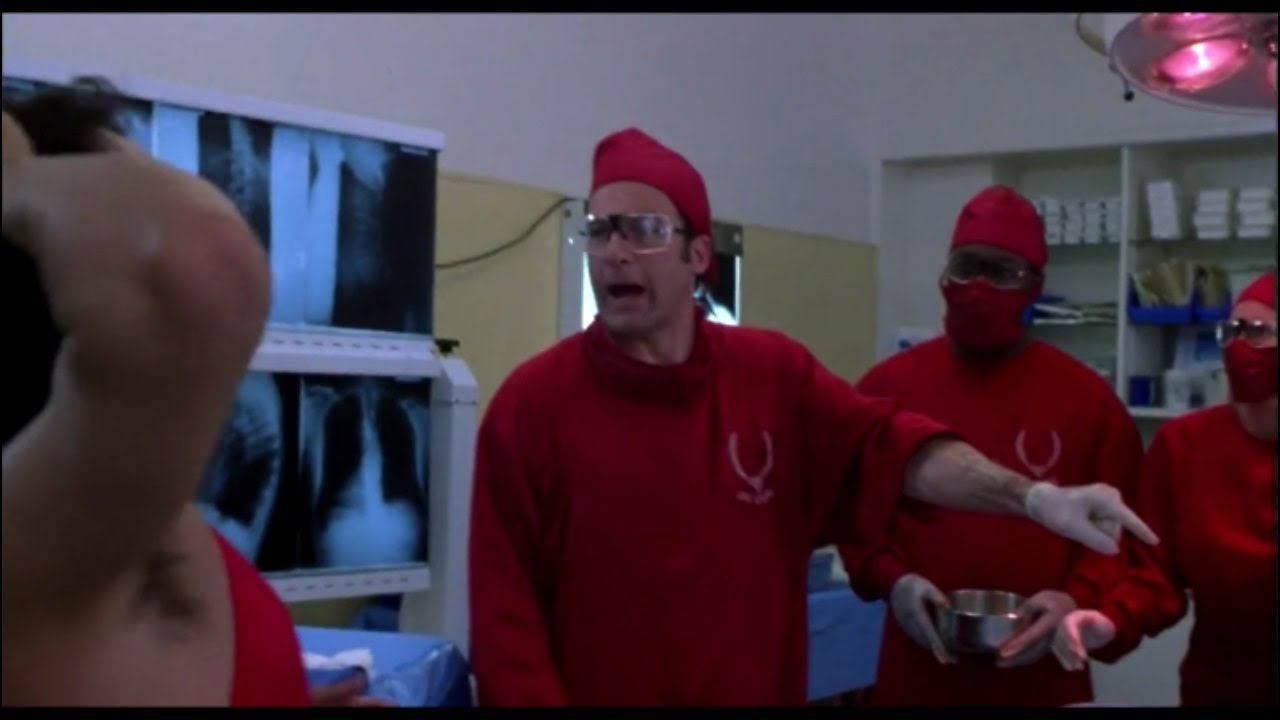
The film also features two standout supporting turns. A pre-Breaking Bad Giancarlo Esposito is mesmerizing as Hypnos, the God of Sleep. The seamless integration of his live-action performance with stop-motion satyr legs is a visual highlight. Equally impressive is Chris Kattan, who brings a jarring, rubber-limbed physicality to his role as a “fresh” corpse. The sequence where he flees organ-harvesting doctors (led by Bob Odenkirk) while his broken neck flops uncontrollably is the rare moment where the film’s dark humor actually lands.
Despite these sparks of brilliance, Monkeybone is an exercise in auditory and visual exhaustion. The titular monkey is an incessant, unfunny chatterbox, clearly modeled after Beetlejuice but lacking any of the phantom’s dark charm. While Tim Burton wisely used Beetlejuice in small, impactful doses, Monkeybone is omnipresent and agonizingly abrasive. John Turturro’s vocal performance is a rare misfire, opting for a piercing, cartoonish register that grates on the nerves.
Brendan Fraser, though a beloved figure in the midst of a modern-day “Brenaissance,” is equally difficult to watch here. His portrayal of the possessed Stu is defined by a soul patch and a series of increasingly frantic, shrill outbursts. Even before the character is taken over by a cartoon monkey, Fraser’s performance is over-the-top, relying on exaggerated facial contortions that blur the line between the human and the caricature, making the transformation feel redundant.
The film also exposes Selick’s early discomfort with live-action direction. While the stop-motion segments feel deliberate and precise, the live-action sequences are sluggish and unfocused. A pivotal brawl over an afterlife exit pass should feel kinetic and high-stakes, yet it comes across as staged and strangely hollow, lacking the rhythmic energy Selick brings to his animated puppets.

Ultimately, the narrative is the film’s greatest weakness. Monkeybone is a frustrating contradiction: it possesses wildly imaginative visuals but relies on derivative storytelling. The influence of Who Framed Roger Rabbit is palpable, yet the film never reaches the same level of technical or emotional sophistication. Most of the interactions in Down Town involve standard puppets rather than groundbreaking stop-motion integration, representing a significant lack of ambition given the talent involved.
Moreover, the film feels like a hollow attempt to replicate the lightning-in-a-bottle success of Beetlejuice. While Burton’s film explored themes of isolation and the acceptance of mortality, Monkeybone uses its afterlife setting as a mere backdrop for a series of loud, disconnected sketches. There is no resonance to Stu’s journey; he simply survives an ordeal and returns to his status quo, unchanged by the experience.

The tragedy of Monkeybone lies in its squandered potential. The conceptual foundation—a creator battling his own unruly creation within a purgatorial dreamscape—is fertile ground for a masterpiece. However, the screenplay by Sam Hamm fails to provide the wit or structure necessary to support the visuals. We are left with a lead character whose own designer loathes him; if the artist finds his creation detestable, there is very little reason for the audience to feel otherwise.
Monkeybone is currently available to rent on Prime Video, Apple TV, and YouTube.
Source: Polygon
Related articles
 Enthusiast Ports GTA IV to PS5, With Part of the Work Done by AI
 Resonance: A Plague Tale Legacy Fell Short of Publisher’s Expectations
 Sony Pulls Its Last UHD Blu-ray Player From Sale in Japan
 Players Launch Petition Hoping to Save Mass Effect 5
 Assassin’s Creed Black Flag Resynced Developers Confirm New Mode
 Best Visions to Use in Final Fantasy Resonance
 Activision’s Polish Studio Reportedly Developing Open-World RPG to Rival GTA VI and Cyberpunk 2077
 The 25 Best Switch 2 Games