
The Super Mario Galaxy Movie: More Major Characters, Fewer NPCs
For long-term Nintendo loyalists, The Super Mario Galaxy Movie acts as a relentless parade of nostalgia. From the obscure Wart and Birdo to R.O.B. and the hyper-realistic T-Rex of Super Mario Odyssey—even Fox McCloud makes an appearance—the film is a meticulously crafted playground for Easter-egg hunters. It offers the thrill of a 98-minute guessing game, reminiscent of a viral “identify these characters” social media reel. However, this focus on quantity comes at a narrative cost; while the roster is immense, the majority of the cast functions merely as digital set dressing.
In the lexicon of gaming, an “NPC” stands for a Non-Playable Character. While the term technically covers everything from vital quest-givers to static vendors, it has recently transitioned into modern slang as a derisive label for individuals who lack agency or independent thought. It’s a sharp critique, but one deeply rooted in gaming fundamentals: main characters propel the plot, while NPCs recite scripted lines to guide those heroes to their next objective.
The cinematic shortcomings of The Super Mario Galaxy Movie become more transparent when viewed through this rigid structural lens. In many ways, it is perhaps the most literal video game adaptation ever produced. The journey is ignited when Bowser Jr. abducts Princess Rosalina, who is promptly sidelined for most of the runtime. Mario and his companions launch into an interstellar trek, planet-hopping through environments that mirror game levels. Whether it’s a cosmic casino or a prehistoric wasteland, each location is a self-contained vignette with a specific aesthetic theme.
On every world, the protagonists encounter a functional NPC who facilitates their progress. R.O.B. serves as a mechanical GPS for Peach; Fox McCloud acts as the guardian of the fast-travel network; Wart and his Super Mario Bros. 2 cohorts are reduced to minor hurdles. Even Queen Bee (voiced by Issa Rae) feels more like a quest objective—”earn the queen’s trust to unlock the next gate”—than a person. These figures exist solely for their utility. We never learn who Wart is or the history of his topsy-turvy domain; he is simply there to perform his signature bubble-burping mechanic from the 1980s.
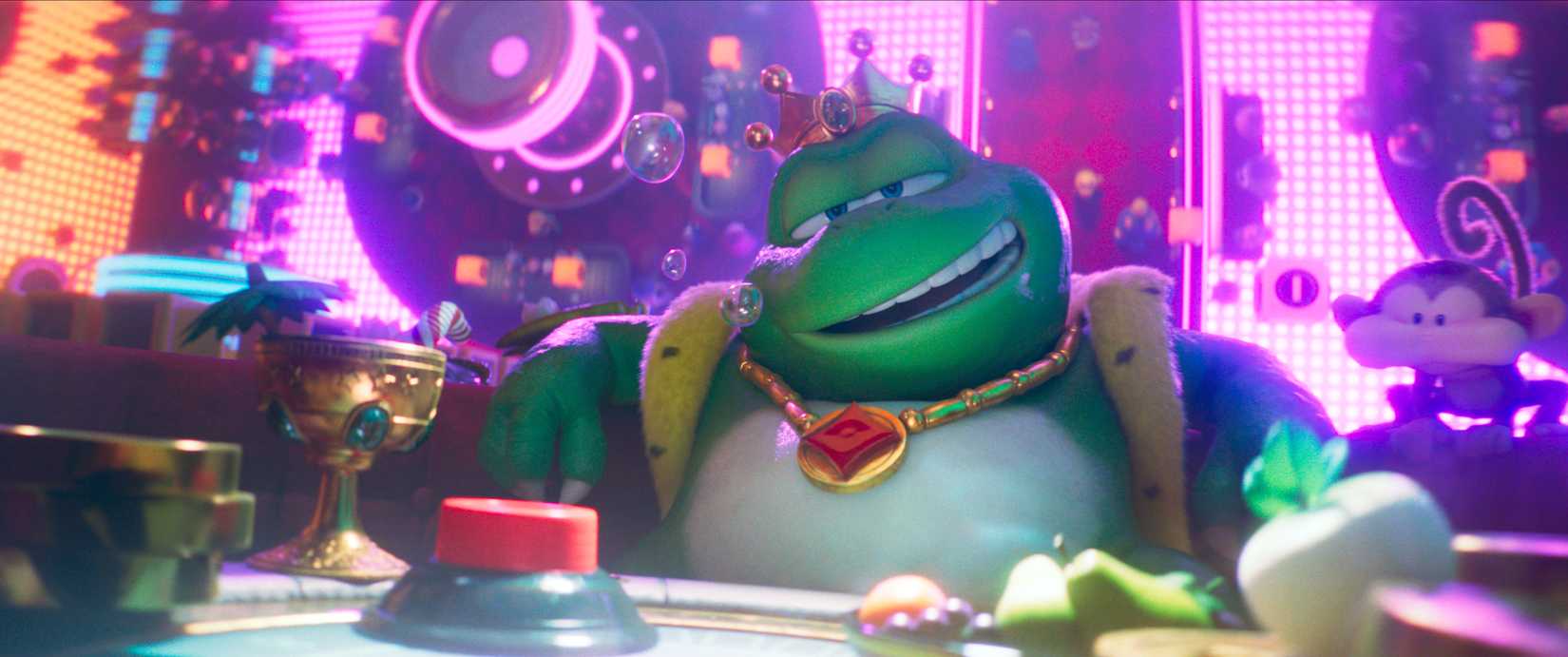
Admittedly, this episodic structure can be effective. Many Hollywood spectacles borrow the grammar of gaming; one could argue that Star Wars often follows a hero visiting different “levels” to consult local “NPCs.” At its height, The Super Mario Galaxy Movie flourishes as a vibrant children’s comedy where each cameo launches a brief, entertaining skit. R.O.B.’s imitation of the glacial sloth from Zootopia provides a comedic high point, while Mr. Game and Watch serves as a cleverly implemented deus ex machina.
Yet, the absence of genuine character development makes the deluge of cameos feel like an intrusion rather than a bonus. Take Fox McCloud: despite being voiced by a major star like Glen Powell and receiving a dedicated backstory sequence, his arc is non-existent. He delivers a few quips, chauffeurs the party in his Arwing, and exits the story once his utility is exhausted. He is essentially a high-budget version of Queen Bee—a figure with no defining traits beyond his ability to move the plot forward.
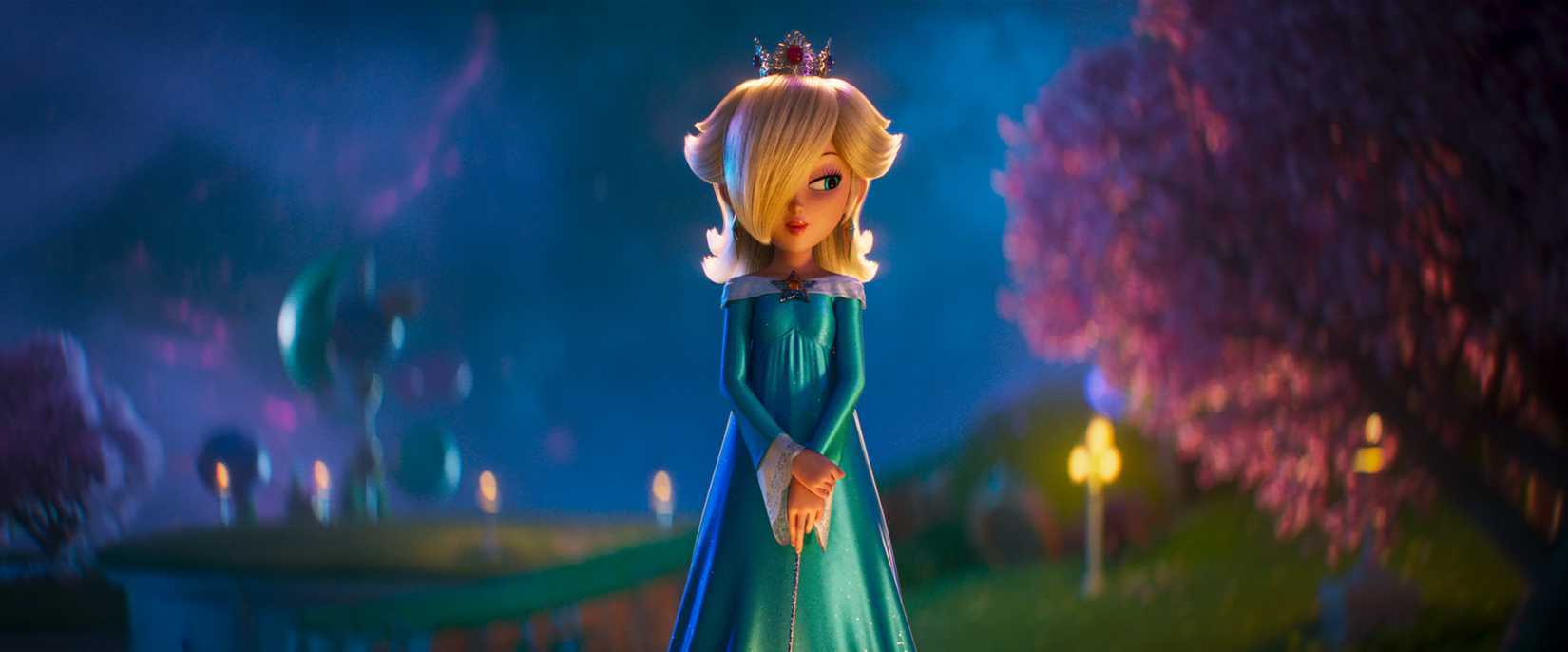
This shallowness plagues the primary heroes as well. Rosalina is relegated to a passive “damsel” whose presence only serves to reveal a minor detail about Peach’s origins. Yoshi remains a one-note companion, lacking the emotional resonance of characters like Groot. Luigi’s contribution is largely forgettable, save for a standout line read by Charlie Day. Even Mario is static; his primary motivation—gaining the confidence to pursue Peach—is introduced early on only to be drowned out by the film’s frenetic, neon-soaked chaos. The entire cast feels swept along by the momentum of the script rather than their own choices.
It is a perplexing shift from 2023’s The Super Mario Bros. Movie, which successfully grounded its spectacle in character beats. Mario underwent a traditional hero’s journey, Anya Taylor-Joy portrayed Peach as a formidable and proactive ruler, and Jack Black’s Bowser became an instant icon by balancing villainy with pathetic vulnerability. He was the emotional anchor of the first film.
Get sharper analysis on game-to-film adaptations
In The Super Mario Galaxy Movie, Bowser remains the only character showing psychological complexity. His evolution from a reformed antagonist to a fiercely protective father—loyal enough to return to villainy for his son’s sake—is the film’s only source of genuine heart. However, even this compelling dynamic is rushed to make room for superficial cameo appearances. We cannot explore their relationship because the film must move on to its next “world.”
Ultimately, if you desire a cinematic experience that functions exactly like a highlight reel of game levels, The Super Mario Galaxy Movie delivers. This likely explains the stark contrast between critical scores and audience reception. Where critics find a narrative void lacking internal logic, fans find a faithful recreation of the gaming experience, complete with quest-givers and boss fights. Hopefully, the inevitable third installment will find a way to reconcile these two perspectives, balancing cinematic rigor with the series’ undeniable charm before the roster becomes too crowded for its own good.
Source: Polygon
Related articles
 How to Fish Reaches 10 Million Players as Developers Prepare Major Update and Console Ports
 Roguelike Strategy Game Crown Must Hold Announced
 Xbox 360 Software Jailbreak Released Nearly 20 Years After Launch
 Asha Sharma Says Xbox Needs New Gaming Franchises to Survive
 Nexus Mods Removes Gears of War: E-Day Mod Replacing Megs’ Dialogue with Broken Record Sounds
 Valor Mortis Confirmed for PS5 and Xbox Series X/S with 60 FPS Support
 Activision Shuts Down Fan-Made Call of Duty Projects Featuring Black Ops 2 and Zombies Maps
 Space Horror Game Directive 8020 to Feature Online Co-op