
The Iron Lung Movie’s Approach to Mystery Reveals Exactly Who It Was Made For
David Szymanski’s 2022 submarine horror hit Iron Lung manages to pack staggering conceptual weight into a minimalist gameplay loop. Its core premise is expansive enough to anchor an entire cinematic universe, leaving players with cosmic questions that linger long after the credits. Mark Fischbach’s highly anticipated film adaptation seemed the logical place to resolve these mysteries or flesh out the lore. Paradoxically, the movie chooses a more daring path: instead of offering closure, it leans into the enigma, introducing new layers of uncertainty that deepen the franchise’s haunting allure.
While some viewers—particularly those unfamiliar with the source material—might find this ambiguity polarizing, the creative choice aligns perfectly with the sensibilities of its core audience. For the Gen Z demographic raised on digital folklore, the film’s refusal to provide easy answers is its greatest strength. Judging by the fervent online discourse, keeping Iron Lung shrouded in mystery has struck a chord with the massive community Fischbach has cultivated as gaming icon Markiplier.
The original game is deceptively simple. Players take on the role of a convict bolted into a decaying, windowless submersible, tasked with navigating a sea of blood on a desolate moon. The experience is defined by rising dread as the vessel fails, the external sensors capture increasingly disturbing imagery, and the soundscape shifts from mechanical groans to something far more predatory. Despite the intensity, the game is a brief, linear affair that typically concludes abruptly upon reaching the final objective.
Fischbach, whose YouTube channel boasts over 38 million subscribers, famously brought widespread attention to the game with a playthrough that lasted under an hour. Yet, the lore suggested a much grander scale.
Szymanski’s world-building centers on the “Quiet Rapture,” a cataclysmic event where every star and inhabited planet in the universe vanished, leaving survivors stranded on isolated space stations. Why did the universe go dark? How did a moon end up filled with human blood? The film adaptation embraces the Lovecraftian scale of these horrors but provides no definitive explanations, focusing instead on the harrowing perspective of its protagonist.
Fischbach, who produced, directed, and stars in the film, portrays Simon—the “Convict” analogous to the game’s player. Simon’s history is tied to Eden, a cult-like space station involved in a catastrophic act of sabotage against another vessel. Labeled a terrorist by the “Consolidation of Iron,” Simon maintains his innocence, claiming he was a reluctant witness rather than a participant. This expansion of the protagonist’s history adds weight to the narrative without sacrificing the overarching sense of isolation.
The film places a heavy emphasis on subjective reality. Trapped in a metal tomb and bombarded by radiation from his own navigation equipment, Simon’s sanity begins to fray. The visual style reflects this breakdown; through blood-tainted leaks and haunting flashbacks, the audience is forced to question whether what Simon sees—and feels—is actually happening. This approach transforms the story into a Rorschach test for fans, where key plot points and the film’s finale are open to diverse interpretations.
Fischbach and Szymanski’s script avoids the “hero” tropes typical of Hollywood horror. Simon isn’t a savior; he is a pawn in a cosmic tragedy far beyond his comprehension. By keeping the protagonist—and the audience—in the dark, the film mirrors the structure of internet “creepypastas.” These open-ended mysteries are designed to fuel community participation and viral speculation. On platforms like the Markiplier subreddit, fans are already dissecting every frame to distinguish between hallucination and reality.
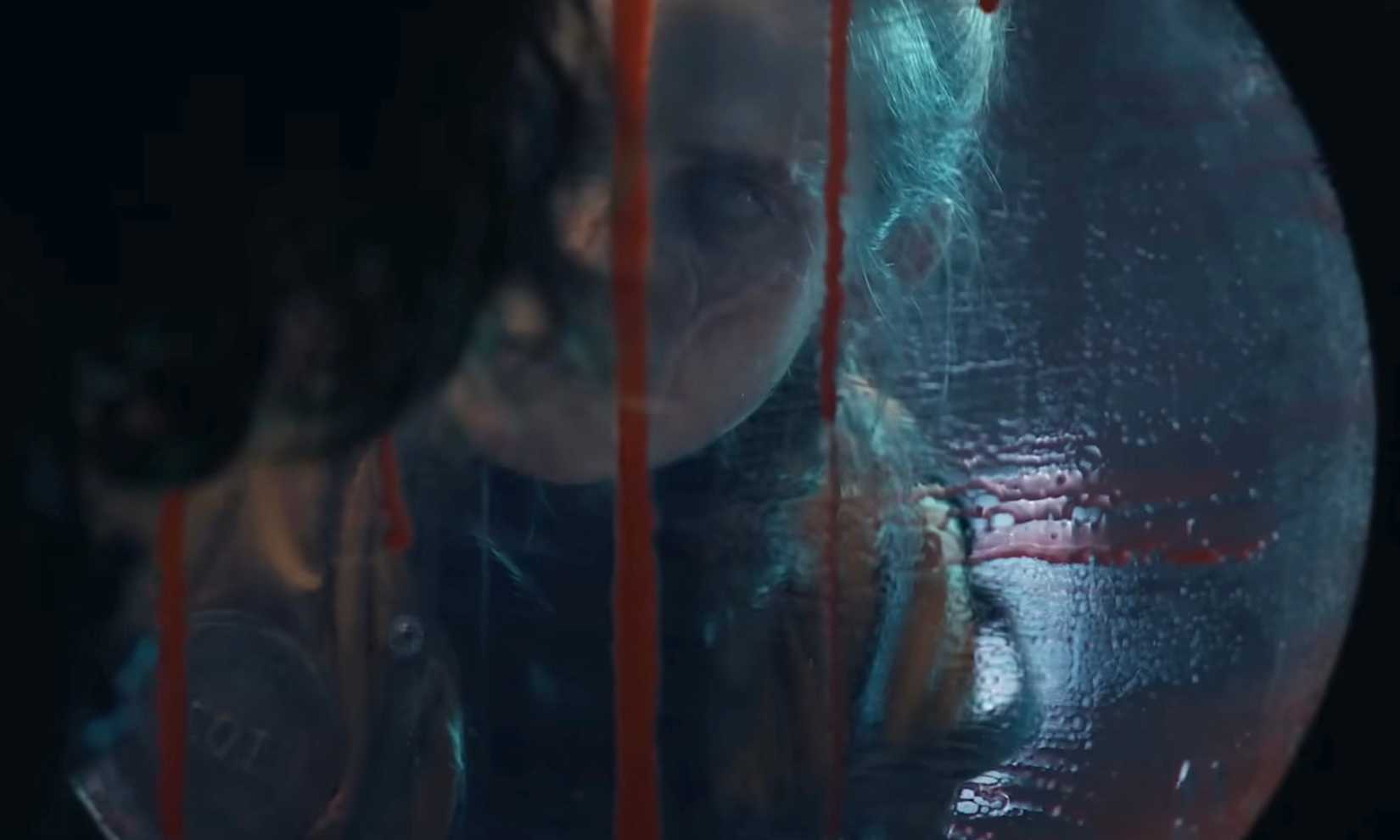
Fischbach’s success lies in his deep understanding of this audience. Having already produced hit podcasts and interactive YouTube Originals, he knows that modern horror fans value engagement over exposition. Iron Lung utilizes traditional scares—monstrous silhouettes and sudden jolts—but its true power lies in its calculated limitations. It is a snapshot of a much larger, darker world.
POLY Report: Stay Ahead of the Game
While a major studio might have stripped away the ambiguity to ensure mass-market appeal or set up a franchise of predictable sequels, Fischbach and Szymanski have prioritized creative integrity. They’ve built a narrative that functions as a conversation starter rather than a closed loop. Iron Lung isn’t just a movie to be watched; it’s a mystery to be solved by the very community that made the game a phenomenon in the first place.
Source: Polygon
Related articles
 Xbox Set to Get Nearly 40 New Games in Coming Days, Including Some Unexpected Releases
 Popular YouTuber Reportedly Breaks Rockstar Agreement Over GTA VI Access
 Japanese Gamers Buy New Releases in Large Numbers as Newcomers Take Entire Sales Podium
 Enthusiasts Find Unusual Way to Run Steam Games on PS5 Without a PC
 Enthusiasts Find Hidden Potential to Nearly Double Performance of NVIDIA RTX 20, RTX 30 and RTX 40 GPUs
 Canceled Mass Effect Universe Was Built Around “Absolute Autonomy,” Franchise Technical Director Says
 Steam Frame Gets New Feature a Day After Player Asks Valve for Improvement
 Fans Launch Petition to Restore Classic Jiggle Physics After Blizzard Removes Them From WoW