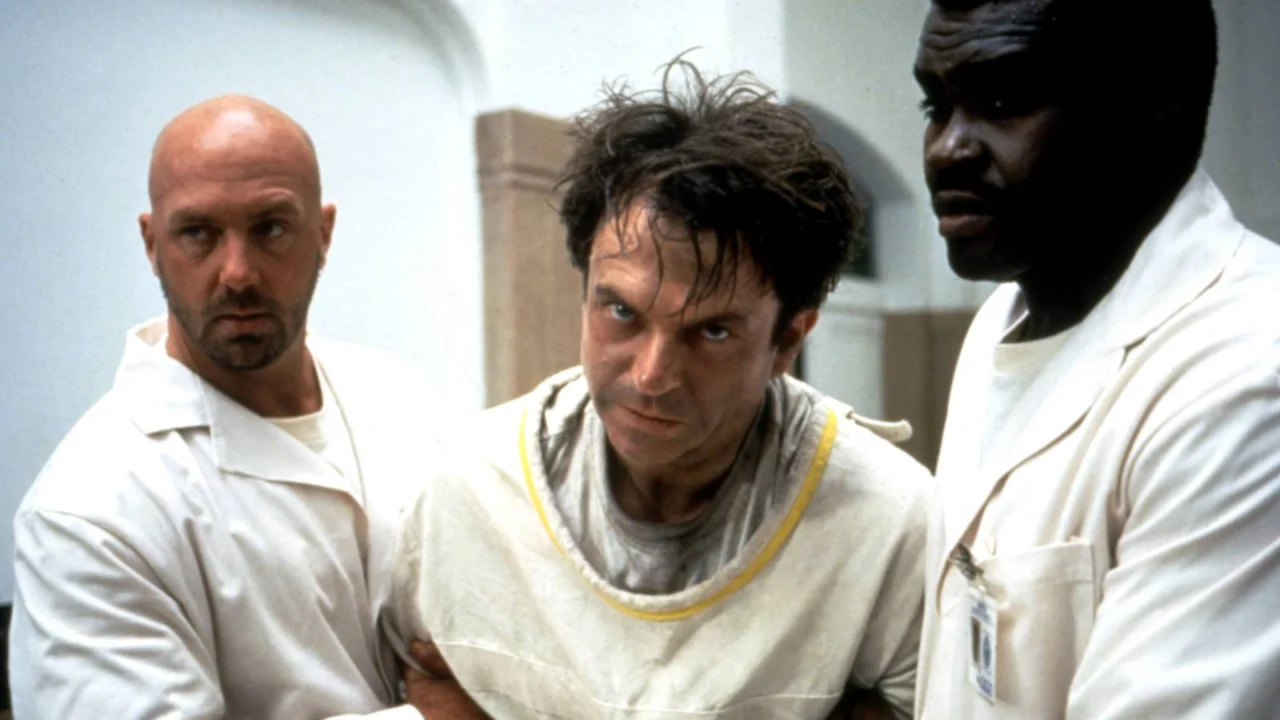
Sam Neill’s cult classic thriller features one of the greatest mic-drop endings of all time

Among the pantheon of iconic cinematic moments defined by “Sam Neill staring in disbelief,” one performance remains the undisputed king. The New Zealand legend, who has passed away at 78, cemented his place in film history alongside Steven Spielberg with a singular, wordless sequence in Jurassic Park. As Dr. Alan Grant finally lays eyes on a living dinosaur, Neill creates a moment of awe that transcended the screen and became universal.
Before the camera reveals the prehistoric creatures, Spielberg focuses entirely on Neill: his jaw drops, his eyes widen in uncomprehending shock, and he slowly removes his sunglasses with trembling hands. It is the definitive “Spielberg Face,” a masterclass in emotional storytelling where the actor effectively dictates the audience’s reaction, inviting us to share in his profound astonishment.
It says volumes about Neill’s range that his second-most iconic gaze occurred just a year later in John Carpenter’s unsettling 1994 masterpiece, In the Mouth of Madness. The film features several sequences of “Sam Neill looking at things,” most notably where he stares directly through the camera into the rift between realities, witnessing horrors that defy description.
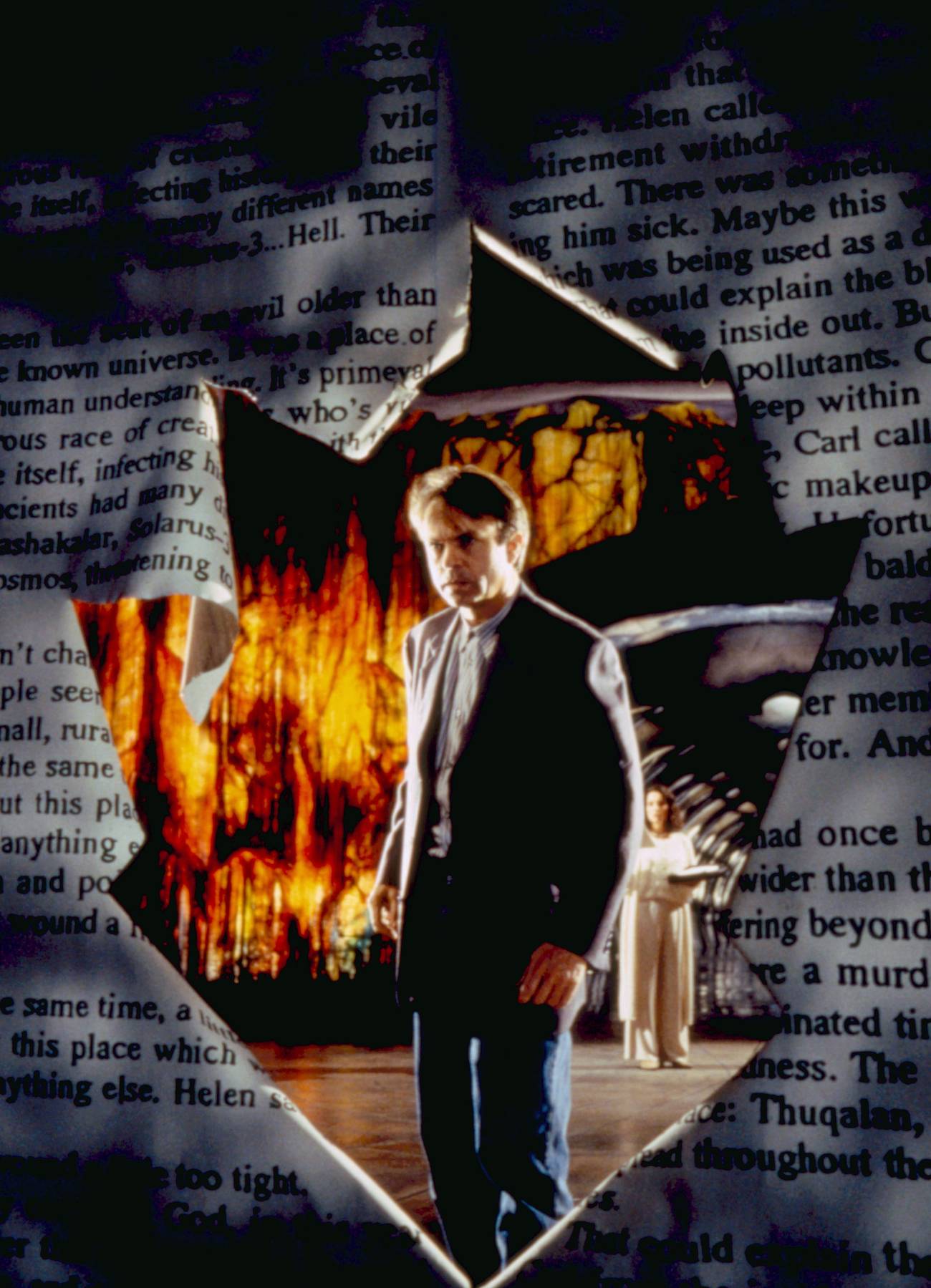 Image: New Line Cinema via Everett Collection
While Carpenter eventually pulls back the curtain on the film’s terrors, the images pale in comparison to the dread reflected in Neill’s eyes. Unlike the wonder-struck Dr. Grant, Neill’s character here—cynical insurance investigator John Trent—attempts to cling to his skepticism. Watching that shield of human arrogance shatter in real time is the film’s true psychological horror.
Trent is tasked with tracking down Sutter Cane, a horror novelist whose books are driving the public into a state of violent mania. Initially, Trent dismisses the phenomenon as a savvy marketing ploy, only to find himself entangled in the very fiction he sought to debunk. Neill perfectly navigates the nuance of a protagonist who is inherently unlikable and stubbornly in denial, serving as the ultimate audience stand-in.
The brilliance of In the Mouth of Madness lies in its meta-commentary, exploring the porous boundaries between sanity and storytelling. John Carpenter’s visceral, direct approach meshes perfectly with Neill’s restrained, almost icy performance. As the film progresses, the distinction between Hobb’s End and reality dissolves, dragging the viewer into a dizzying vortex of fiction.
The film concludes with perhaps the second-greatest gaze of Neill’s career: a moment of realization that transcends terror and settles into a haunting, uncontrollable cackle. As Trent understands the apocalyptic trap he is caught in, his laughter becomes unhinged and infectious. It is a bleak, brilliant “mic drop” moment that leaves the audience with no choice but to join him in the madness. It is a joke, after all, and a darkly funny one at that.
In the Mouth of Madness is currently available to stream on Tubi.
Source: Polygon
Related articles
 Lies of P Developers Register Trademark for Wonders of O
 Composer Mick Gordon Contributed to Music for First StarCraft Shooter Trailer
 Insomniac Fails to Explain Logan’s Telepathic Link to Jean Grey in Marvel’s Wolverine
 Stephen King Time Travel Thriller 11.22.63 Is a Top Streaming Sci Fi Series
 Tempest Rising Expansion The Veti’s Wrath Gets Release Date and New Campaign
 Crimson Desert Expansion Release Canceled in Multiple Regions
 Classic Detective Thriller Series Angel Streams Free on Tubi
 Graveyard Keeper 2 Demo Released Alongside Gameplay Trailer