Reacher Star Alan Ritchson Leads Netflix’s Sci-Fi Thriller War Machine, a Gritty Remix of Aliens and Predator
The visceral appeal of Netflix’s War Machine lies in its unapologetic, high-octane simplicity. It is a cinematic tribute to resilience, following hardened professionals as they navigate grueling circumstances and extraterrestrial threats. Director Patrick Hughes, known for The Hitman’s Bodyguard, draws inspiration from the legendary survival horror and action beats of John McTiernan’s Predator and the atmospheric tension of the Alien franchise. Beyond its sci-fi trappings, the film functions as a masterclass in “competence porn,” showcasing the technical prowess of both the characters on screen and the stunt teams working behind the scenes.
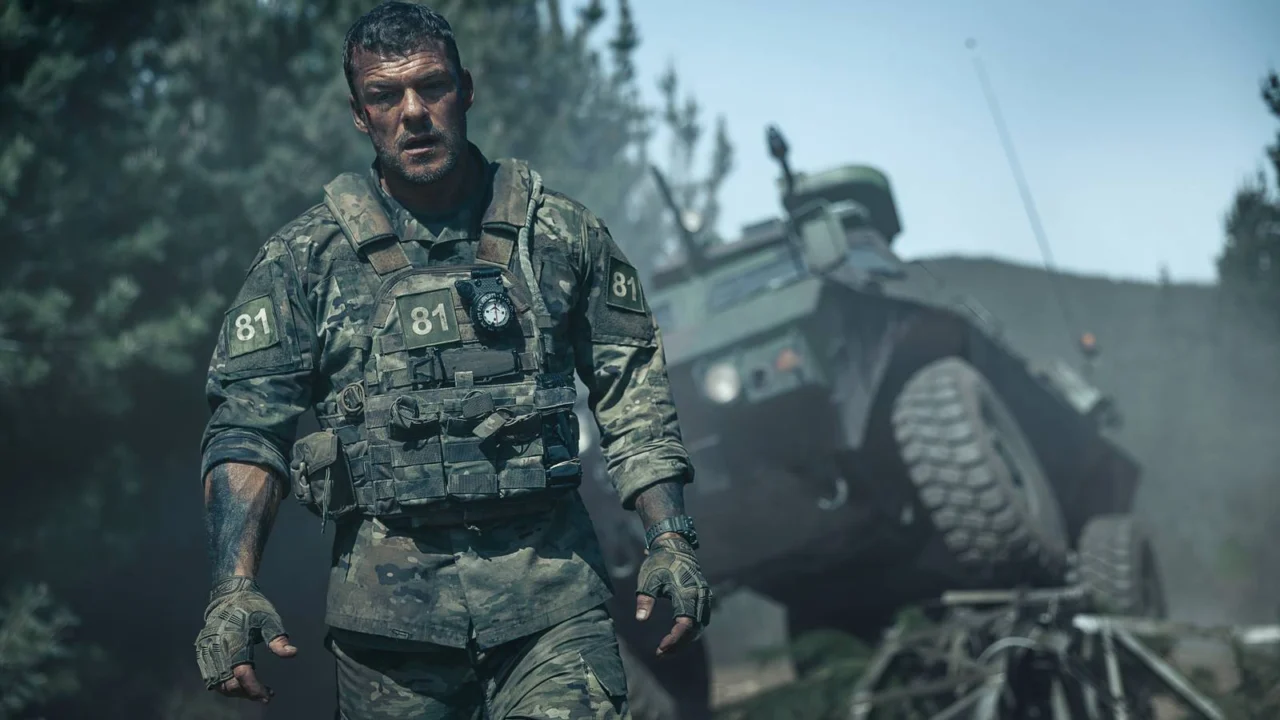
Alan Ritchson, the imposing lead of Reacher, portrays a stoic Army sergeant haunted by a traumatic tour in Afghanistan. Motivated by a solemn vow to his younger brother, he seeks entry into the elite Ranger Assessment and Selection Program (RASP). This legendary gauntlet serves as the film’s initial crucible, testing the limits of human endurance and psychological fortitude under simulated combat duress.
Ritchson’s character remains largely anonymous, identified only by his candidate number, “81.” Having been previously sidelined by medical discharge, he is a man of few words and even fewer connections. Despite his seniority, he rejects leadership roles, clearly terrified by the prospect of being responsible for the lives of others. His isolation creates friction within his squad, and with the age limit for qualification looming, this is his final opportunity to redeem himself.
The narrative stakes escalate when 81 and his peers are deployed to a desolate mountain range for their final evaluation. What begins as a mock exercise turns into a desperate fight for survival when an alien combat machine crash-lands in their AO. Suddenly, the objective shifts from passing a test to surviving a predator. To make it out alive, 81 must dismantle his emotional defenses and embrace the leadership role he has spent the entire film avoiding.

The film doesn’t aim for narrative complexity. The conflicts are broad and the antagonist is a singular, lethal force of nature. While the supporting cast fits familiar archetypes—the joker, the specialist, the quiet observer—the lack of deep characterization is offset by the relentless momentum of the action. The film focuses on the nobility of the struggle: how these soldiers protect one another and honor their duty in the face of an impossible mechanical threat.
Ritchson, who has demonstrated significant range in projects like The Ministry of Ungentlemanly Warfare and Fast X, delivers a remarkably restrained performance here. While it limits his charismatic flair, this approach emphasizes his incredible physical presence. War Machine excels through its tactile realism, favoring practical effects and location shooting over sterile CGI. From navigating Class V rapids to bone-jarring cliffside stunts, the film’s commitment to authentic physicality is palpable, making the squad’s survival feel hard-earned and gritty.
For aficionados of the genre, Hughes’ influences are worn proudly on his sleeve. Certain beats, such as a panicked breakdown amidst wreckage, feel like direct homages to Bill Paxton’s iconic “Game over, man!” in Aliens. Other sequences evoke the mechanical terror of The Terminator or the scale of Spielberg’s War of the Worlds. War Machine isn’t reinventing the wheel; it is a polished “greatest hits” compilation of action cinema, designed for those who enjoy the language of furrowed brows and explosive set pieces.
While the film occasionally leans into the territory of a high-budget military recruitment ad—emphasizing the “Thin Green Line”—the final act cements its status as a propulsive, single-minded chase thriller. Ritchson remains a magnetic anchor, even when playing a man who has shut the world out. Ultimately, War Machine is a lean, effective actioner that successfully scratches the itch for a well-executed survival story.
War Machine is currently available for streaming on Netflix.
Source: Polygon
Related articles
 Rockstar Continues Work on GTA VI Ahead of Release
 Game Freak Winds Down Beast of Reincarnation Support With One Major Patch Left
 Hugh Jackman’s The Death of Robin Hood Hits No. 1 on Streaming
 Where to Find Shroud Mushrooms in Enshrouded
 Steam’s No. 2 Driving Game Raises the Bar for Realism on PS5
 Assassin’s Creed Creator Shows 1666: Amsterdam Gameplay With Daytime Investigations and Nighttime Hunting
 BeamNG.drive: Split-Screen Multiplayer Arrives in v0.40
 Call of Duty: Modern Warfare 4 Enters Steam Top Sellers Days Before Release